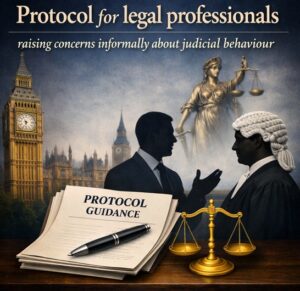
Categories
Law Legal Analysis

Open Justice

The Open Justice Principle refers to the idea that justice should be administered openly, transparently and in a manner that is accessible to the public. Here are the key aspects of this principle:

  1. Public Access to Courts: Legal proceedings, especially criminal trials, should generally be open to the public. This allows citizens to observe how justice is administered, ensuring accountability and fostering trust in the judicial system.
  2. Transparency: Information about court proceedings, including judgments, should be available to the public to ensure transparency. This includes not only the outcomes but also the reasoning behind judicial decisions.
  3. Media Reporting: The media plays a crucial role by reporting on court cases, which helps inform the public about legal proceedings. Media access to courts is often seen as an extension of the public’s right to know.
  4. Fairness and Impartiality: By conducting trials openly, there’s an added layer of scrutiny which can help ensure that the process is fair and impartial. The knowledge that proceedings are public might also encourage all parties involved to act more responsibly.
  5. Exceptions: While the principle advocates for openness, there are recognised exceptions where privacy or security concerns might necessitate closed sessions. Examples include cases involving minors, national security, or sensitive personal information where privacy rights might override the principle of open justice.
  6. Educational Role: Open courts serve an educational function, allowing the public, including future generations of legal professionals, to learn about the law in practice, the rights of citizens, and how justice is served.
  7. Legislative and Policy Impact: The principle can influence legislation and policy-making, ensuring that laws are not only made in the public interest but are seen to be applied in the public interest as well.

The Open Justice Principle is fundamental in democratic societies as it underpins the rule of law and democratic governance by ensuring that justice is not only done but is seen to be done. However, the balance between openness and necessary privacy or security is continually debated and adjusted through legal frameworks around the world.

The principle of open justice are enshrined in Article 6 of the European Convention on Human Rights and Article 14 of the International Covenant of Civil and Political Rights. which protects the right to a fair trial. These inalienable protections should not be breached to render public scrutiny void.

Open justice serves several important purposes

Firstly, it ensures that Justice should not only be done, but should manifestly and undoubtedly be seen to be done. This is important because the public must have confidence in the justice system. If court proceedings were held behind closed doors, it would be difficult for the public to know whether justice was being served. The transparency of open justice allows the public to see that the court is conducting proceedings fairly, and that justice is being done.

Secondly, open justice promotes accountability. The media and the public can attend court proceedings, and they can report on what happens in court. This means that the legal system is subject to public scrutiny, and that any problems or injustices are likely to be exposed. This is important because it helps to prevent abuses of power, and ensures that the justice system is accountable to the public.

Open justice helps to promote the rule of law. When the legal system is transparent and accountable, people are more likely to obey the law. This is because they have confidence that the legal system is fair, and that justice will be served if they are accused of a crime. This also helps to ensure that society is orderly and peaceful.

Notable Cases

There have been several notable cases in which the principle of open justice has been violated.

A notable case where justice was not open was the trial of the Guildford Four, who were wrongly convicted of bombings in Guildford, Surrey, in 1974. The trial of the Guildford Four was held in camera, and the defendants were not allowed to have legal representation.

The trial was held in secret because the judge was concerned that the defendants might be targeted by terrorists if their identities were made public.

However, the decision to hold the trial in secret was widely criticised, and the Guildford Four were eventually cleared of all charges in 1989.

The importance of open justice was also highlighted in the Hillsborough disaster, where 96 football fans were killed in a crush at the Hillsborough stadium in Sheffield in 1989.

The initial inquest into the disaster was heavily criticised for its lack of transparency and accountability. The families of the victims were denied access to evidence and were not allowed to question witnesses.

The inquest was widely seen as a cover-up, and it was eventually quashed in 2016, paving the way for a new inquest that was held in a much more open and transparent manner.

Secret trials

In recent years, there have been concerns that the principle of open justice is being undermined. One issue is the increasing use of secret trials. These trials are held behind closed doors, and the evidence is not made public.

Secret trials are used in cases where national security is at stake, but critics argue that they are being used too frequently, and that they undermine the principle of open justice.

Reporting Restrictions

Another issue is the use of reporting restrictions, which prevent the media from reporting on certain aspects of a trial or other court proceedings. Critics argue that these restrictions can be used to protect the powerful, and that they limit the public’s right to know.

Sara Sharif judge who gave father custody will not be named

Mr Justice Williams, a Family High Court judge, has been widely criticised for his Reporting Restriction Order. The order prohibits the press from publishing “the name of any third parties referred to in the historic proceedings for the avoidance of doubt including social worker, guardian other named professionals and experts instructed in the proceedings and any judge who heard the historic proceedings”.

Banning the press from identifying judges is said to be unprecedented.

Tuesday 14 – Wednesday 15 January 2025

Before The Master of the Rolls Lady Justice King Lord Justice Warby

By Appellant’s Notice lodged on 16 December 2024, on behalf of Louise Tickle and Hannah Summers (journalists), this is an appeal from an order made by Williams J, sitting in the High Court Family Division on 9 December 2024 (perfected on 11 December 2024), regarding the historic family court cases involving Sara Sharif.

In particular, the appellants challenge the decision to restrain the naming of “any Judge who heard the historic proceedings” concerning Sara Sharif and her siblings.

Court of Appeal – Williams J Sharif Case

Did Mr Justice Williams attempt a cover up for “his mates” in the South East Circuit ?

Open Justice around the world

Open justice is not just a UK principle, but a principle that is upheld in many countries around the world. It is a fundamental aspect of a democratic society, and one that is essential to upholding the rule of law and protecting the rights of citizens.

Open Justice Conclusion

It is important to ensure that the principle of open justice is upheld, and that the legal system remains transparent and accountable. This requires a commitment from the government, the judiciary, and the legal profession to ensure that court proceedings are held in public, that the media and the public are allowed to attend trials, and that court documents are accessible. It also requires a commitment to addressing any violations of the principle of open justice, such as the use of secret trials and reporting restrictions.

Check out our articles on Justice System, Rule of Law, Open Justice Licence ?, R v Sussex Justices, Litigants in Person, McKenzie Friend, Reasonable Person Test, What is Bail ?, Do you Have to Bow to a Judge ?, Can you Email a Judge ?, Can you Criticise a Judge ? and the highly dubious Sussex Family Justice Board.


The Ministry of Injustice is not the Ministry of Justice nor is it affiliated in any way with the justice system, legal profession, police or any other law enforcement agencies.


Latest Articles


Most Popular


You should always seek formal legal advice from a qualified and reputable lawyer (solicitor or barrister).

There are a number of links to Free and Paid For Legal Resources and Legal Organisations on the Free Legal Advice , Legal Aid and Pro Bono pages.


Categories
Judiciary Law

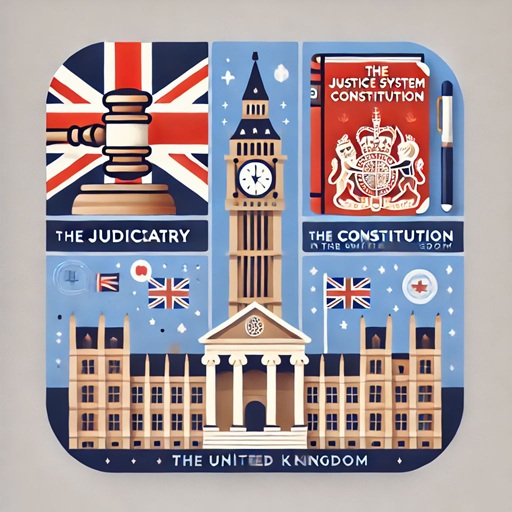
Justice System and the Constitution in the United Kingdom

The United Kingdom has three separate legal systems; one each for England and Wales, Scotland and Northern Ireland. This system operates within a constitutional framework where the powers are distributed among three branches: the Judiciary, the Legislature (Parliament), and the Executive (Government).

This reflects its historical origins and the fact that both Scotland and Ireland, and later Northern Ireland, retained their own legal systems and traditions under the Acts of Union 1707 and 1800.

The Justice system and the Constitution – Courts and Tribunals Judiciary

1. The Judiciary

  • Role: Judges and magistrates interpret and apply the law, making decisions in both civil and criminal matters. They ensure laws are applied fairly and impartially.
  • Structure:
    • Magistrates’ Courts: Handle minor criminal cases and some civil matters.
    • Crown Courts: Deal with more serious criminal cases.
    • High Court: Handles complex civil cases, judicial reviews, and appeals.
    • Court of Appeal: Reviews decisions from lower courts.
    • Supreme Court: The highest court, deciding on significant legal issues and constitutional matters.
  • Independence: Judicial independence is protected by law to maintain impartiality. Judges are appointed through a process involving the Judicial Appointments Commission, and once appointed, they can only be removed for misconduct or incapacity.
  • Function in the Constitutional Framework: The Judiciary interprets statutes, develops common law, and can review the actions of the other branches for compliance with human rights and other legal principles.

2. The Legislature (Parliament)

  • Composition: Comprises the House of Commons (elected MPs), the House of Lords (appointed members, including life peers, bishops, and hereditary peers), and the Monarch (in practice, the role is mostly ceremonial).
  • Legislative Power: Parliament has the authority to create, amend, or repeal laws. This sovereignty is fundamental to the UK’s unwritten constitution.
  • Checks and Balances: While Parliament can pass any law, the judiciary can interpret these laws in ways that ensure they comply with broader legal principles, including human rights.
  • Interaction with Judiciary: Parliament can change laws in response to judicial interpretations or declarations of incompatibility under the Human Rights Act.

3. The Executive (Government)

  • Role: The government proposes legislation, administers justice through departments like the Ministry of Justice, and enforces laws through agencies like the police and prosecution services.
  • Accountability: The Executive is accountable to Parliament, which can scrutinize and censure government actions.
  • Influence on Judiciary: While the Executive has no direct control over judicial decisions, it influences the legal system through policy-making, resource allocation, and sometimes through the appointment to judicial positions.
  • Constitutional Conventions: These are unwritten practices like ministerial responsibility, which guide how the government interacts with the Judiciary and Parliament.

Constitutional Framework

  • Unwritten Constitution: The UK’s constitution is not codified but consists of statutes, court judgments, conventions, and treaties. This allows for flexibility but can also lead to ambiguities.
  • Rule of Law: A foundational principle where all are subject to the law, including government officials.
  • Common Law: Much of the law derives from judicial precedents, allowing for the legal system to evolve with society.

Challenges and Developments

  • Modernization: Efforts include digital transformation of court processes, enhancing access to justice, and reducing backlogs.
  • Human Rights: The Human Rights Act 1998 has integrated the European Convention on Human Rights into UK law, affecting how laws are interpreted and applied.
  • Judicial Review: This process checks the legality of government decisions, ensuring they do not overstep constitutional bounds.

Conclusion

The justice system in England and Wales, interacting within this tripartite structure, balances power to maintain democracy and the rule of law. The Judiciary’s independence, the legislative sovereignty of Parliament, and the administrative functions of the Government together form a dynamic yet stable constitutional environment. This interplay ensures that the system can adapt to societal changes while safeguarding individual rights and justice.

Check out our articles on Open Justice, Rule of Law, R v Sussex Justices, Litigants in Person, McKenzie Friend, What is Bail ?, Do you Have to Bow to a Judge ?, Can you Email a Judge ?, Can you Criticise a Judge ? and the highly dubious Sussex Family Justice Board.


The Ministry of Injustice is not the Ministry of Justice nor is it affiliated in any way with the justice system, legal profession, police or any other law enforcement agencies.


Latest Articles


Most Popular


You should always seek formal legal advice from a qualified and reputable lawyer (solicitor or barrister).

There are a number of links to Free and Paid For Legal Resources and Legal Organisations on the Free Legal Advice , Legal Aid and Pro Bono pages.

Categories
Judiciary Law Legal Analysis

What is is Sub Judice ?

Sub judice is a Latin term meaning “under judgment.” In legal contexts, it refers to a case or matter that is currently under judicial consideration and has not yet been decided. Here are some key points:

  • Legal Principle: It’s a principle in many legal systems that matters under court consideration should not be publicly commented on or discussed in a way that could prejudice the judicial proceedings.
  • Purpose: The purpose is to prevent any influence on the judicial process, ensuring fairness and impartiality in legal outcomes. This includes avoiding prejudicial publicity or influencing potential jurors, witnesses, or even the judge or judges involved.
  • Restrictions:
    • In some jurisdictions, there might be strict rules prohibiting publication or discussion of certain details of the case while it is sub judice.
    • This can apply to media, individuals, and sometimes even legislative bodies discussing the case in detail.
  • Application:
    • In common law countries like the UK, it’s often cited in contempt of court laws where discussing a case publicly might be seen as contempt if it could influence the case’s outcome.
    • The rule helps maintain the integrity of the judicial process by ensuring decisions are based purely on evidence and law, not on public opinion or external commentary.
    • This principle underscores the separation between judicial proceedings and public or political influence, aiming for an unbiased legal process.

The sub judice rule prevents MPs or Lords from referring to a current or impending court case. Although the House is entitled under parliamentary privilege to discuss any subject, sub judice applies to avoid the House from debating a subject and possibly influencing the legal outcome of a case. 

4.68 The privilege of freedom of speech in Parliament places a corresponding duty on members to use the freedom responsibly. This is the basis of the sub judice rule. Under the rule both Houses abstain from discussing the merits of disputes about to be tried and decided in the courts of law.

4.69 The Joint Committee on Parliamentary Privilege recommended that the two Houses should adopt a resolution on sub judice set out in the committee’s report.[155] The House of Lords did this on 11 May 2000. The resolution is as follows:

“That, subject to the discretion of the Lord Speaker,[156] and to the right of the House to legislate on any matter or to discuss any delegated legislation, the House in all its proceedings (including proceedings of committees of the House) shall apply the following rules on matters sub judice:

(1) Cases in which proceedings are active in United Kingdom courts shall not be referred to in any motion, debate or question.

(a) (i) Criminal proceedings are active when a charge has been made or a summons to appear has been issued, or, in Scotland, a warrant to cite has been granted.
(ii) Criminal proceedings cease to be active when they are concluded by a verdict and sentence or discontinuance, or, in cases dealt with by courts martial, after the conclusion of the mandatory post-trial review.

(b) (i) Civil proceedings are active when arrangements for the hearing, such as setting down a case for trial, have been made, until the proceedings are ended by judgment or discontinuance.

(ii) Any application made in or for the purposes of any civil proceedings shall be treated as a distinct proceeding.

(c) Appellate proceedings, whether criminal or civil, are active from the time when they are commenced by application for leave to appeal or by notice of appeal until ended by judgment or discontinuance.

But where a ministerial decision is in question, or in the opinion of the Lord Speaker a case concerns issues of national importance such as the economy, public order or the essential services, reference to the issues or the case may be made in motions, debates or questions.

(2) Specific matters which the House has expressly referred to any judicial body for decision and report shall not be referred to in any motion, debate or question, from the time when the Resolution of the House is passed, until the report is laid before the House.

(3) For the purposes of this Resolution—

(a) Matters before Coroners Courts or Fatal Accident Inquiries shall be treated as matters within paragraph (1)(a); and
(b) “Question” includes a supplementary question.

4.70 The House has agreed that the practice governing motions and questions relating to matters sub judice should be similar in both Houses of Parliament.[157] It is desirable that each House should be in the same position to debate a sub judice matter when the circumstances warrant it.

4.71 The rules governing sub judice do not apply to bills, Measures or delegated legislation or to proceedings on them. Nor do they apply to matters being considered by departmental inquiries and the like; but it is recognised that Parliament should not generally intervene in matters where the decision has been delegated to others by Parliament itself.

4.72 A case is deemed to be sub judice from the moment a petition for leave to appeal is presented to the House of Lords.[158]

4.73 The Lord Speaker must be given at least 24 hours’ notice of any proposal to refer to a matter which is sub judice. The exercise of the Speaker’s discretion may not be challenged in the House.[159]

Companion to the Standing Orders and guide to the Proceedings of the House of Lords

Check out our related articles on What is a Non Crime Hate Incident ?, What is a Cover Up ?, Rule of Law, Open Justice, Policing by Consent, Innocent until Proven Guilty, R v Sussex Justices and the highly questionable Sussex Family Justice Board.


The Ministry of Injustice is not the Ministry of Justice nor is it affiliated in any way with the justice system, legal profession, police or any other law enforcement agencies.


Latest Articles


Most Popular


You should always seek formal legal advice from a qualified and reputable lawyer (solicitor or barrister).

There are a number of links to Free and Paid For Legal Resources and Legal Organisations on the Free Legal Advice , Legal Aid and Pro Bono pages.

Categories
Criminal Justice Free Speech Law Legal Analysis Police

What is a Non-Crime Hate Incident (NCHI) ?

A Non-Crime Hate Incident (NCHI) in the UK refers to any incident where an individual or group perceives that they have been subjected to hostility or prejudice based on race, religion, sexual orientation, disability, or transgender identity, even if no criminal activity has taken place. Here are key points about NCHIs:

  • Definition: It is defined as any non-crime incident which is perceived by the victim or any other person to be motivated by hostility or prejudice. This perception does not require evidence or justification from the victim regarding the hostility.
  • Purpose: NCHIs are recorded by the police to monitor community tensions, potential risks of escalation into more serious incidents or crimes, and to provide data for understanding patterns of prejudice or hostility.
  • Recording Criteria: Not all perceived hate incidents are recorded as NCHIs. There are specific criteria:
    • The incident must disturb an individual’s, group’s, or community’s quality of life or cause concern.
    • The incident must meet an additional threshold if personal data is to be recorded, indicating a real risk of significant harm or future criminal offence against individuals or groups with the same characteristic.
  • Legal Implications: While NCHIs do not result in criminal charges, they can appear in enhanced Disclosure and Barring Service (DBS) checks, which might affect employment opportunities, especially in sectors requiring such checks.
  • Freedom of Speech: Recent guidance and legal reviews have emphasized balancing the recording of NCHIs with the protection of free speech, ensuring that trivial, irrational, or malicious reports do not lead to the recording of personal data unless necessary. The Free Speech Union published An Orwellian Society: Non-Crime Hate Incidents and the policing of speech.
  • Public and Legal Scrutiny: There has been scrutiny over NCHIs, with concerns that they might infringe on free speech or be used maliciously. Changes in guidance now aim for a more proportionate approach where NCHIs are only recorded when deemed absolutely necessary and not merely based on someone being offended.

The Home Office published Statutory guidance – Non-Crime Hate Incidents: Code of Practice on the Recording and Retention of Personal Data (accessible)

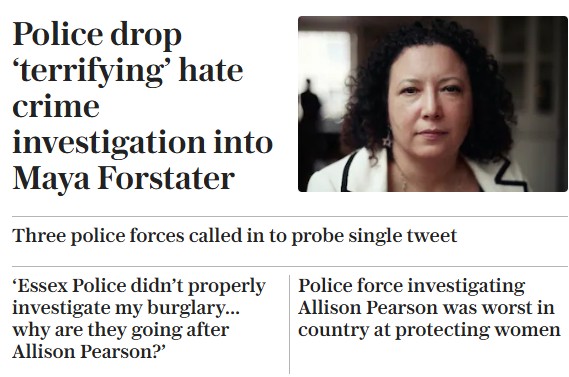
Allison Pearson, an award-winning writer, is being investigated by Essex Police for allegedly stirring up racial hatred in a social media post last November.

The scale of the investigation has now become clear, with officers from the Metropolitan Police, Sussex Police and Essex Police all having handled the complaint over the past year.

The Telegraph understands that the post was reported to the Metropolitan Police as a potential breach of the Malicious Communications Act in November last year. The case was then passed to Sussex Police, which marked it as a possible non-crime hate incident (NCHI) as well as a potential malicious communication.

Sussex Police passed it to Essex, where Pearson lives.

The TelegraphNon-Crime Hate Incident (NCHI) or Stirring Up Racial Hatred ?
Non Crime Hate Incident Headlines – The Telegraph

Essex Police sets up ‘gold group’ normally reserved for major crimes to lead Allison Pearson probe

Keir Starmer says police should focus on ‘what matters most’ – amid growing anger over police investigation into Allison Pearson’s tweet

It should be noted that Article 10 of the Human Rights Act 1998 gives the right to freedom of expression.

The Public Order Act 1986, Part III defines Racial Hatred. What is Christophobia ? What is Islamophobia ?

The BlackBelt Barrister published a video Police Will come for YOU Next which examines the right to Free Speech.

“Free speech encompasses the right to offend, and indeed to abuse another.” Para 43 Scottow v CPS [2020] EWHC 3421 (Admin)

Attack on Free Speech ? Black Belt Barrister

Incidents such as the Allison Pearson tweet are supposed to be part of a broader effort to address and monitor hate-related issues in society without necessarily involving criminal law and sanctions. They can still have implications for the individuals involved due to the recording of such incidents by the police.

Check out our articles on Policing by Consent, Are the Police for Hire ?, Police Impartiality, Police Surveillance, Police Professional Standards, Independent Office for Police Conduct (IOPC), Police Public Confidence and Engagement, Crime Reporting, What is a Police and Crime Commissioner ?, Sussex Police, Policing, Police News, Two Tiered Policing, Thought Police, Wasting Police Time, Police Community Support Officers (PCSO), Met Police, Free Speech Union, R v Sussex Justices and the highly questionable Sussex Family Justice Board.


The Ministry of Injustice is not the Ministry of Justice nor is it affiliated in any way with the justice system, legal profession, police or any other law enforcement agencies.


Latest Articles


Most Popular


You should always seek formal legal advice from a qualified and reputable lawyer (solicitor or barrister).

There are a number of links to Free and Paid For Legal Resources and Legal Organisations on the Free Legal Advice , Legal Aid and Pro Bono pages.
Categories
Government Law Legal Professionals

Government Legal Department (GLD)

The Government Legal Department (GLD) serves as the principal legal adviser to the UK Government. The core purpose of the GLD is to help the government to govern well, within the rule of law. The GLD is a non-ministerial government department and executive agency.

The GLD has more than 3,000 employees, around 2,500 of whom are solicitors or barristers.

The Government Legal Profession (GLP) is the collective network of qualified lawyers embedded across UK government departments and agencies, providing expert legal advice, litigation support, policy guidance, and compliance services to ensure the government operates within the rule of law.

Susanna McGibbon is the Treasury Solicitor and Permanent Secretary of the Government Legal Department. The Treasury Solicitor is the government’s most senior legal official 

Susanna took up the role of Treasury Solicitor and Permanent Secretary of the Government Legal Department on Monday 8 March 2021.

Her previous roles include:

  • Director General, Directorate B, Government Legal Department, 2018 to 2021
  • Director of Litigation, Government Legal Department, 2012 to 2018
  • Legal Director, Department of Communities and Local Government, 2009 to 2012
  • Legal Director, Department for Business Innovation and Skills, 2006 to 2009
HM Procurator General, Treasury Solicitor and Head of the Government Legal Profession
  • Role and Function: The GLD provides legal advice on the development, design, and implementation of government policies and decisions. It drafts secondary legislation and works with the Office of the Parliamentary Counsel on primary legislation. The department represents the government in court proceedings, offering litigation services for most government departments and agencies.
  • Structure: The GLD is organised into various teams:
    • Parliamentary and Advisory Teams: These provide legal advice across numerous policy areas, ensuring government actions are legally sound and compliant.
    • Litigation Group: Handles legal disputes in various courts, covering public and private law, and supports public inquiries.
    • Commercial Law Group: Focuses on commercial law issues, including procurement, contracts, intellectual property, and state aid to ensure value for money in public spending.
  • Leadership: The GLD is headed by the Treasury Solicitor, who also holds the title of His Majesty’s Procurator General. This role involves managing the department and reporting to the Attorney General for England and Wales.
  • Scope: Besides serving Whitehall departments, the GLD extends its services to other organizations like HM Revenue & Customs, MI5, MI6 and various other governmental bodies. It’s also involved in handling ownerless property (bona vacantia) in England, except in certain regions where it’s delegated.
  • Significance: Its work is critical for ensuring that government operations, policy-making, and legal proceedings are conducted within the rule of law. This includes both advising on policy legality and defending or bringing legal actions on behalf of the government.

We are the government’s principal legal advisers. Our core purpose is to help the government to govern well, within the rule of law.

We do this by providing legal advice on the development, design and implementation of government policies and decisions, drafting secondary legislation and working with Parliamentary Counsel on primary legislation, and representing the government in court.

Government Legal Department

Government Legal Department
102 Petty France
Westminster
London
SW1H 9GL
United Kingdom

Email : [email protected]

inetnum:        212.161.51.64 - 212.161.51.95
netname:        NET-GB-Government-Legal-Department
descr:          Government Legal Department
Government Legal Department IP Addresses

The GLD’s work underscores its role in maintaining legal integrity and accountability in governmental functions, ensuring that the government operates legally and ethically.

Check out our related articles on Government Legal Profession (GLP), Attorney General, Solicitor General, Lord Chancellor, Justice Secretary, Rule of Law, Open Justice, Law, Is the Law Black and White ?, Crown Prosecution Service (CPS), Law Society, Law Commission, Solicitors, Solicitors Regulation Authority, Barristers, Bar Council of England and Wales, Bar Standards Board, R v Sussex Justices and the highly questionable Sussex Family Justice Board.


The Ministry of Injustice is not the Ministry of Justice nor is it affiliated in any way with the justice system, legal profession, police or any other law enforcement agencies.


Latest Articles


Most Popular


You should always seek formal legal advice from a qualified and reputable lawyer (solicitor or barrister).

There are a number of links to Free and Paid For Legal Resources and Legal Organisations on the Free Legal Advice , Legal Aid and Pro Bono pages.

Categories
Law Legal Analysis

What is the Civil Justice Council ?

The Civil Justice Council (CJC) is a non-departmental public body in the United Kingdom, specifically for England and Wales. Its primary role is to advise the Lord Chancellor, the Judiciary, and the Civil Procedure Rule Committee on matters related to civil justice and civil procedure. Here are some key points about the CJC:

  • Establishment: It was established under the Civil Procedure Act 1997, specifically section 6, to help keep the civil justice system under review.
  • Functions:
    • To keep the civil justice system under review.
    • To consider how to make the civil justice system more accessible, fair, and efficient.
    • To advise on the development of the civil justice system.
    • To refer proposals for changes in the civil justice system to the Lord Chancellor and the Civil Procedure Rules Committee.
    • To make proposals for research into civil justice matters.
  • Structure:
    • The Council is chaired by the Sir Geoffrey Vos, Master of the Rolls, who is also one of the senior judges in England and Wales.
    • It includes members from the judiciary, civil servants, legal professionals, and others representing various perspectives within the civil justice system. Current CJC membership January 2024
  • Recent Activities: The CJC has been involved in various initiatives like reviewing the role and potential future of Alternative Dispute Resolution (ADR) in civil justice, examining the impact of legislative changes like the Litigation Funding Agreements (Enforceability) Bill, and looking into issues like costs in civil litigation.
  • Public Engagement: The CJC often seeks public and professional input on its reviews and projects, indicating an open process for stakeholder engagement in shaping civil justice reforms.

Civil Justice Council 13th National Forum

The Civil Justice Council (CJC) announced that registration is now open for its 13th National Forum ‘Access to Justice: Working Together’. The Forum will take place on Friday 29 November 2024 at Friends House, London and online. 

Full details of speakers, the event’s agenda and how to register can be found here.

The CJC announce the following speakers (in order of appearance): 

“This year’s National Forum promises to be the best ever. We have an excellent line-up of speakers addressing the theme of working together, and discussing the CJC’s exciting work programme including civil case data, enforcement, litigation funding, mental capacity and digital disadvantage. I very much hope you will join us.” 

Sir Geoffrey Vos – Master of the Rolls

The Civil Justice Council 2023-24 Annual Report is available online.

Minutes and Synopsis of CJC meetings are also available online.

Check out our related articles on Rule of Law, Open Justice, Is the Law Black and White ?, Family Justice Board, Civil Justice Council, Youth Justice Board, Abuse of Process, What Does Lady Justice Symbolise ?, McKenzie Friend, Wasted Costs Order, Can a Judge Direct a Jury to Find a Defendant Not Guilty ?, Law Society, Law Commission, McKenzie Friend Right of Audience, Solicitors, Solicitors Regulation Authority, Barristers, Bar Council of England and Wales, Bar Standards Board, Contra Mundum, R v Sussex Justices, Police Impartiality and the highly questionable Sussex Family Justice Board.


The Ministry of Injustice is not the Ministry of Justice nor is it affiliated in any way with the justice system, legal profession, police or any other law enforcement agencies.


Latest Articles


Most Popular


You should always seek formal legal advice from a qualified and reputable lawyer (solicitor or barrister).

There are a number of links to Free and Paid For Legal Resources and Legal Organisations on the Free Legal Advice , Legal Aid and Pro Bono pages.

Categories
Criminal Justice Law Legal Analysis

Detention at His Majesty’s Pleasure ?

Detention at His Majesty’s Pleasure is a term used in the United Kingdom for an indeterminate sentence where the offender is detained for an unspecified period. This kind of sentence is typically used for young offenders or those convicted of particularly serious crimes, where the length of detention is not fixed at the time of sentencing.

Detention during His Majesty’s Pleasure is a mandatory life sentence and will be imposed when a child or young person is convicted or pleads guilty to murder. Schedule 21 of the Sentencing Act 2020 states that the starting point for determining the minimum sentence where the offender is under 18 years of age is 12 years as opposed to 15 years for those over the age of 18.

Types of sentences for children and young peopleSentencing Council
  1. Purpose: The main idea is that the offender should be detained until they are no longer considered a threat to society or until they have been rehabilitated. This could theoretically mean detention for life, or until the offender’s behaviour and development indicate that release is appropriate.
  2. Who It Applies To: Historically, this sentence was often used for juveniles convicted of serious crimes like murder, where an adult would receive a life sentence. However, it can also apply to adults in certain contexts, particularly where mental health issues are involved. The Mental Health Act 1983 allows for the detention of individuals who have committed offenses but are also suffering from mental disorders. When someone is detained at His Majesty’s Pleasure, especially under a mental health context, it’s often because they’ve been found not guilty by reason of insanity or unfit to plead, or they’ve been convicted of an offense where a psychiatric disposal is deemed more appropriate than a penal sentence.
  3. Legal Framework: The phrase “at His Majesty’s Pleasure” reflects the historical power of the monarch to detain subjects. In modern times, this power is exercised through the Home Office or relevant judicial or parole boards who decide when it’s safe to release the individual.
  4. Review and Release: The detention period is subject to periodic review. Decisions regarding release are based on assessments of risk, rehabilitation progress, and changes in the offender’s maturity and mental state.
  5. Differences from Life Sentences: Unlike a life sentence with a tariff (a minimum term to be served before parole can be considered), detention at His Majesty’s Pleasure doesn’t set a minimum term upfront, although in practice, a minimum term might be recommended by the judge.
  6. Criticism and Reform: This type of sentencing has faced criticism for its uncertainty, which can be psychologically challenging for detainees. There have been calls for reform to provide more clarity or to set tariffs in a way similar to life sentences but tailored to the developmental needs of young offenders.
  7. International Perspective: The concept is somewhat unique to the UK legal system, though other countries have similar provisions for indefinite detention for the purposes of rehabilitation or public protection, particularly for juvenile offenders or those with mental health issues.

In 2002 the then The Lord Chief Justice of England and Wales Baron Woolf published a statement Review of Minimum Terms set for Young Offenders detained at her Majesty’s Pleasure.

King Charles III, formerly known as The Prince of Wales, became King on the death of his mother Queen Elizabeth II on 8 September 2022.

Image of King Charles III created by Grok-3


The Ministry of Injustice is not the Ministry of Justice nor is it affiliated in any way with the justice system, legal profession, police or any other law enforcement agencies.


Latest Articles


Most Popular


You should always seek formal legal advice from a qualified and reputable lawyer (solicitor or barrister).

There are a number of links to Free and Paid For Legal Resources and Legal Organisations on the Free Legal Advice , Legal Aid and Pro Bono pages.
Categories
Law

Licensed Conveyancer

A Licensed Conveyancer in the UK is a legal professional specialising in property law, particularly in the conveyancing process which involves transferring property from one party to another. Put simply, they deal with the legal and financial sides of buying and selling property and land.

  • Role and Responsibilities:
    • A Licensed Conveyancer manage all aspects of property transactions, from drafting contracts to conducting searches, ensuring all legal aspects are covered for buying, selling, remortgaging, or transferring property.
    • Unlike solicitors, who might handle a broader range of legal issues, Licensed Conveyancers focus primarily on property law, offering specialized service.
  • Qualifications and Training:
    • In the UK, to become a Licensed Conveyancer, one must complete the appropriate qualifications, which include the Level 4 and Level 6 Diplomas in Conveyancing Law and Practice, provided by recognized educational bodies and endorsed by the Council for Licensed Conveyancers (CLC).
    • After academic qualifications, candidates require 1200 hours of practical experience, which must be verified and can be obtained while working under a supervisor with a valid CLC licence.
    • After training, one must apply for a licence from the CLC, which evaluates whether the applicant is a “fit and proper person” to hold such a licence.
  • Regulation and Professional Bodies:
    • The CLC regulates Licensed Conveyancers in England and Wales. This body ensures adherence to professional standards, ethics, and continuing professional development (CPD), where conveyancers must undertake a certain amount of training annually to maintain their licence.
  • Benefits of Choosing a Licensed Conveyancer:
    • Specialisation: A Licensed Conveyancer bring deep expertise in conveyancing, potentially making the process smoother and quicker due to their focus.
    • Cost: Sometimes, Licensed Conveyancers might offer their services at a lower cost than general law firms or solicitors due to potentially lower overheads.
    • Community and Professional Support: Organizations like the Society of Licensed Conveyancers (SLC) provide networking, support, and resources, enhancing service quality through shared knowledge and best practices.
  • Online Competition:
    • It is a competitive market where conveyancers are keen to emphasise service quality and speed to attract clients.

When considering hiring a Licensed Conveyancer, it’s wise to check their credentials through the CLC “Find a Licensed Conveyancer“, understand their fee structure and get recommendations or reviews from previous clients for a well-rounded view of their service quality.

Check out the review of PM Property Lawyers.


The Ministry of Injustice is not the Ministry of Justice nor is it affiliated in any way with the justice system, legal profession, police or any other law enforcement agencies.


Latest Articles


Most Popular


You should always seek formal legal advice from a qualified and reputable lawyer (solicitor or barrister).

There are a number of links to Free and Paid For Legal Resources and Legal Organisations on the Free Legal Advice , Legal Aid and Pro Bono pages.

Categories
Criminal Justice Family Law Law

The Courts of England and Wales

The jurisdiction of the courts in England and Wales refers to the legal authority or power that they have to hear and determine certain types of legal cases. The jurisdiction of the courts is determined by a combination of legislation, legal precedent, and court rules.

In England and Wales, there are several levels of courts with varying degrees of jurisdiction. These include:

Magistrates’ Courts: These are the lowest level of courts in England and Wales and they have jurisdiction over a wide range of criminal offenses, such as minor assaults, theft, and driving offenses. They also have limited jurisdiction in civil cases, such as small claims and some family law matters.

County Courts: These courts have jurisdiction over a wider range of civil cases, including contract disputes, personal injury claims, and landlord-tenant disputes. They also have some limited jurisdiction in family law matters, such as divorce and child custody.

Crown Court: This court has jurisdiction over the most serious criminal offenses, such as murder, rape, and drug trafficking. It also has some limited jurisdiction over civil cases.

High Court: This is the highest level of court in England and Wales, and it has jurisdiction over the most complex civil and criminal cases. The High Court has several divisions, including the Family Division, the Chancery Division, and the King’s Bench Division.

The Supreme Court: This is the final court of appeal in the UK for civil cases, and for criminal cases from England, Wales and Northern Ireland

In addition to these courts, there are also specialist courts in England and Wales, such as the Employment Tribunal, the Immigration and Asylum Tribunal, and the Mental Health Tribunal, which have jurisdiction over specific areas of law.

It is important to understand the jurisdiction of the courts in England and Wales when bringing a legal case, as it determines which court has the power to hear and determine your case. It is advisable to seek legal advice if you are unsure about which court has jurisdiction over your case.

Find contact details and information on courts and tribunals in England and Wales, and some non-devolved tribunals in Scotland.

Check out our related articles on Judiciary, Law Society, Solicitors, Barristers, Bar Council of England and Wales, Bar Standards Board, Solicitors Regulation Authority, Rule of Law, Open Justice and the highly questionable Sussex Family Justice Board.


The Ministry of Injustice is not the Ministry of Justice nor is it affiliated in any way with the justice system, legal profession, police or any other law enforcement agencies.


Latest Articles


Most Popular


You should always seek formal legal advice from a qualified and reputable lawyer (solicitor or barrister).

There are a number of links to Free and Paid For Legal Resources and Legal Organisations on the Free Legal Advice , Legal Aid and Pro Bono pages.
Categories
Law Legal Analysis

Legal Deposit Libraries

The British Library and the other legal deposit libraries are entitled to copy UK published material from the internet for archiving under legal deposit.

If you publish anything in the UK and Ireland, you need to give one copy to the British Library. This system, called legal deposit, has existed in English law since 1662. It was updated in 2013 to include electronic publications.

British Library – Legal Deposit

Legal deposit libraries in the United Kingdom are also known as “copyright libraries” or “legal deposit institutions” Here are the six legal deposit libraries:

  1. The British Library – Located in London, it is the national library of the United Kingdom and one of the largest libraries in the world.
  2. Bodleian Library – Part of the University of Oxford, it is one of the oldest libraries in Europe.
  3. Cambridge University Library – The central library of the University of Cambridge, known for its extensive collections.
  4. National Library of Scotland – Located in Edinburgh, it serves as Scotland’s legal deposit library.
  5. National Library of Wales (Llyfrgell Genedlaethol Cymru) – Situated in Aberystwyth, it holds the national collection of Welsh and Welsh-related materials.
  6. Trinity College Library, Dublin – Although located in Ireland, it was included in the legal deposit system when Ireland was part of the United Kingdom. This arrangement continues post-independence for works published in the UK.

These libraries are protected by law to ensure that there is a complete collection of the UK’s published output preserved for posterity.

The Legal Deposit Libraries Act 2003 extended the legal deposit requirement to include non-print works, such as websites, blogs, and other digital and multimedia publications ensuring that modern forms of publication are also archived.

Archiving of UK websites is governed by legal deposit law:

The legal deposit libraries use web crawling software wherever possible, especially when collecting for the UK Web Archive. Web crawling is an automated process used to collect content and metadata that is available without access restriction on the open web. Crawled websites and material are preserved in the legal deposit libraries’ web archive. We may also use manual or other methods of downloading content and metadata when necessary.

Legal deposit and web archiving – British Library

The UK Web Archive is a collection of archived UK websites created by the Legal Deposit libraries in the UK as part of their commitment to preserve web resources permanently for future researchers. 

The UK Government Web Archive captures, preserves and make accessible UK central government information published on the web. The Web Archive includes videos, tweets, images and websites dating from 1996 to the present day.

There are a number of other internet archives including The Wayback Machine which is a digital archive of the global World Wide Web and other information on the Internet. It was created by the Internet Archive, a non-profit organization based in San Francisco.

“What goes on the internet, stays on the internet forever !”

Check out our related articles on Rule of Law, Open Justice, What is Law, Is the Law Black and White ?, Abuse of Process, What Does Lady Justice Symbolise ?, McKenzie Friend, Can a Judge Direct a Jury to Find a Defendant Not Guilty ?, Law Society, Law Commission, McKenzie Friend Right of Audience, Solicitors, Solicitors Regulation Authority, Barristers, Bar Council of England and Wales, Bar Standards Board, Contra Mundum, R v Sussex Justices, Police Impartiality and the highly questionable Sussex Family Justice Board.


The Ministry of Injustice is not the Ministry of Justice nor is it affiliated in any way with the justice system, legal profession, police or any other law enforcement agencies.


Latest Articles


Most Popular


You should always seek formal legal advice from a qualified and reputable lawyer (solicitor or barrister).

There are a number of links to Free and Paid For Legal Resources and Legal Organisations on the Free Legal Advice , Legal Aid and Pro Bono pages.

Rule of Law - Open Justice - Policing By Consent