Categories
Law Legal Analysis

Ministry of Justice

The United Kingdom’s Ministry of Justice is responsible for the country’s justice system, ensuring that it is fair, transparent, and accessible to all.

The Lord Chancellor, The Right Honourable Shabana Mahmood KC MP, heads the Ministry of Justice as the Secretary of State for Justice.

The Ministry of Justice role encompasses a wide range of responsibilities, including the provision of legal services, the management of the court system, and the oversight of the country’s prisons and probation services.

The Ministry of Justice is not responsible for the regulation of the legal profession in England and Wales. This function is carried out by the independent regulatory bodies, such as the Solicitors Regulation Authority and the Bar Standards Board

The history of the Ministry of Justice can be traced back to the Magna Carta

The Magna Carta, also known as the Great Charter, is one of the most important legal documents in history. It was originally issued by King John of England in 1215, in response to the demands of rebellious barons who sought to limit the power of the monarch.

The Magna Carta established the principle that everyone, including the king, is subject to the law, and it protected basic rights such as the right to a fair trial and the right to due process.

Over time, the Magna Carta was revised and reissued by various kings, and it became a symbol of individual liberty and the rule of law. The version of the Magna Carta that is most commonly referenced today is the one issued by King Edward I in 1297.

Of the original 63 clauses in the Magna Carta, only four have survived into modern law. These are clauses 1, 13, 39, and 40.

Clause 1 establishes the principle that the English Church is free from interference by the king. It states that “the Church of England shall be free, and shall have its rights undiminished, and its liberties unimpaired.”

Clause 13 provides for the seizure of property by the king only if it is done in accordance with the law. It states that “No man shall be taken or imprisoned, or disseised of his freehold, or liberties, or free customs, or outlawed, or exiled, or in any way destroyed, nor will we go upon him nor send upon him, except by the lawful judgment of his peers or by the law of the land.”

Clause 39 establishes the principle of due process, stating that “No free man shall be seized or imprisoned, or stripped of his rights or possessions, or outlawed or exiled, or deprived of his standing in any other way, nor will we proceed with force against him, or send others to do so, except by the lawful judgment of his equals or by the law of the land.”

Finally, Clause 40 establishes the right to a fair trial, stating that “To no one will we sell, to no one will we deny or delay, right or justice.”

Together, these surviving clauses represent the enduring legacy of the Magna Carta, and they continue to influence modern legal systems around the world.

In the Crime, Justice and Law section of the gov.uk website, the government regularly publish justice information and statistics as part of the Justice System Transparency


The Ministry of Injustice is not the Ministry of Justice nor is it affiliated in any way with the justice system, legal profession, police or any other law enforcement agencies.


Latest Articles


Most Popular


You should always seek formal legal advice from a qualified and reputable lawyer (solicitor or barrister).

There are a number of links to Free and Paid For Legal Resources and Legal Organisations on the Free Legal Advice , Legal Aid and Pro Bono pages.

Categories
Law

Statute of Limitations

The Statute of Limitations in the United Kingdom (UK) establishes time limits within which legal actions can be brought against individuals or entities for various offenses.

These limitations aim to strike a balance between the interests of justice and the need for legal certainty.

In the UK, each jurisdiction—England and Wales, Scotland, and Northern Ireland—has its own legislation governing limitation periods.

This article explores the key aspects of the Statute of Limitations in each jurisdiction, including time limits for offenses and exceptions.

Limitation Act 1980

The Limitation Act 1980 is a piece of legislation that governs the time limits within which legal actions can be brought for civil claims in England, Wales, and Northern Ireland.

It provides a framework for determining when a claim becomes “time-barred” or statute-barred, meaning that it cannot be pursued in court after a certain period has elapsed.

The key provisions of the Limitation Act 1980 include:

  1. General Limitation Period: Section 2 of the Act establishes a general limitation period of six years from the date the cause of action arises for most civil claims. This includes claims for breach of contract, personal injury, and negligence.
  2. Personal Injury Claims: Section 11 of the Act sets a specific limitation period of three years for personal injury claims arising from negligence, nuisance, or breach of duty. The three-year period usually begins from the date the injury occurred or from the date the injured party became aware of the injury.
  3. Latent Damage: Section 14A of the Act addresses claims for latent damage, where the injury or damage may not be immediately apparent. It allows for an extended limitation period of either three years from the date of knowledge or 15 years from the date of the negligent act or omission, whichever occurs first.
  4. Actions to Recover Land: Section 15 of the Act deals with actions to recover land, setting a limitation period of 12 years. This means that legal action to reclaim land or property must be initiated within 12 years from the date the right of action arose.
  5. Contracts and Specialty Debts: Section 5 of the Act establishes a six-year limitation period for actions founded on simple contracts or specialty debts. This includes debts arising from written agreements or deeds.

It is important to note that the Limitation Act 1980 does not apply to criminal offenses, which have separate rules and time limits for prosecution.

In the case of criminal acts, there are no statutory limits on the prosecution of crimes in the UK except for ‘summary’ offences (offences which are tried in the magistrates’ court). In these cases, criminal proceedings must be brought within 6 months. The Magistrates’ Courts Act 1980 (MCA 1980) applies.

There is no time limit for prosecution in England and Wales, including indictable crimes such as murder, manslaughter, war crimes and drug dealing offences.

Prescription and Limitation (Scotland) Act 1973

The Prescription and Limitation (Scotland) Act 1973 governs limitation periods for civil and criminal matters in Scotland.

  1. Time Limits for Offenses:
    • Section 6 of the Limitation (Scotland) Act 1973 establishes a five-year limitation period for most personal injury claims, contracts, and torts.
    • The limitation period for actions based on a right to recover land is 20 years from the date the right of action accrued.

Serious offenses such as murder, rape, and treason generally do not have a time limit for prosecution and can be brought forward at any time.

The Criminal Procedure (Scotland) Act 1995 sets out the procedures and powers of the lower courts in Scotland, which include the Justice of the Peace Courts and Sheriff Courts. The Criminal Procedure (Scotland) Act 1995 outlines the jurisdiction, powers, and functions of these courts, as well as the procedures for criminal cases in Scotland.

The Limitation (Northern Ireland) Order 1989

The Limitation (Northern Ireland) Order 1989 provides the framework for limitation periods for civil claims in Northern Ireland.

  1. Time Limits for Offenses:
    • Section 6 of the Limitation (Northern Ireland) Order 1989 sets a general limitation period of six years for most civil claims, including contract disputes and personal injury cases.
    • Actions to recover land have a limitation period of 12 years.

The Magistrates’ Courts (Northern Ireland) Order 1981. This order sets out the powers, procedures, and jurisdiction of the magistrates’ courts in Northern Ireland. It governs the operation of these courts and provides the legal framework for their functions and processes.

The Statute of Limitations in the UK varies across its jurisdictions. The Limitation Act 1980 applies to England and Wales, the Prescription and Limitation (Scotland) Act 1973 governs limitation periods in Scotland and the Limitation (Northern Ireland) Order 1989 sets the framework for Northern Ireland.

Check out our articles on Solicitors, Solicitors Regulation Authority (SRA), Solicitors from Hell, Barristers, Direct Access Barristers, Bar Standards Board, Bar Council, Law Society, Legal Services Board, Rule of Law and the highly questionable Sussex Family Justice Board.


The Ministry of Injustice is not the Ministry of Justice nor is it affiliated in any way with the justice system, legal profession, police or any other law enforcement agencies.


Latest Articles


Most Popular


You should always seek formal legal advice from a qualified and reputable lawyer (solicitor or barrister).

There are a number of links to Free and Paid For Legal Resources and Legal Organisations on the Free Legal Advice , Legal Aid and Pro Bono pages.

Categories
Judiciary

Master of the Rolls

The Keeper or Master of the Rolls and Records of the Chancery of England, also known as the Master of the Rolls, is the President of the Civil Division of the Court of Appeal of England and Wales.

The Master of the Rolls is a senior judge and is second in seniority in England and Wales only to the Lady Chief Justice who is currently Sue Lascelles Carr, Baroness Carr of Walton-on-the-Hill, DBE, PC.

The Master of the Rolls is consulted on matters such as the civil justice system and rights of audience.

As President of the Court of Appeal’s Civil Division they are the Head of Civil Justice and are responsible for the deployment and organisation of the work of judges in the civil division. They also hear the most complex cases across the full range of civil, family and tribunal matters.

The current Master of the Rolls is Sir Geoffrey Vos.

Address (in Correspondence)….
The Right Honourable
The Master of the Rolls

Dear….Master of the Rolls

In court….My Lord

What do I call a judge? Courts and Tribunals Judiciary

You may also be interested in our article on the Lady Chief Justice and Lord Chancellor.

History of the Master of the Rolls

The Master of the Rolls has a long and fascinating history that dates back to the 13th century. Originally, the position was responsible for keeping the “rools” or records of the Court of Chancery, which was a court of equity that dealt with disputes not covered by common law. As the legal system evolved, the Master of the Rolls became a senior judge in their own right, with responsibilities that extended beyond the Chancery.

During the reign of King Henry VIII, the Master of the Rolls was appointed to the Privy Council, a group of advisers to the monarch. In the 19th century, the position of Master of the Rolls became one of the most prestigious legal positions in the country. In 1833, the Master of the Rolls was made a member of the House of Lords and was granted the right to sit and vote in that chamber.

The Rolls Court was to last 50 years as a court of first instance; it was abolished by the Judicature Act of 1881.  The Master of the Rolls ceased to be a judge of the High Court and became a judge of the Court of Appeal.

A list of previous Masters of the Rolls is maintained at Wikipedia.

Appointment

The Heads of Division are appointed by the King on the recommendation of a selection panel convened by the Judicial Appointments Commission (JAC).

The selection panel comprises the Lady Chief Justice as Chair, a nominee of the Lord Chief Justice, the Chair of the JAC, a lay member of the JAC and a nominee of the JAC Chair agreed with the Lord Chief Justice.

The panel reports to the Lord Chancellor, who can then accept the selection, reject it, or require the panel to reconsider. If practical the panel must consult the current holder of the office for which a selection is being made.

By law, candidates for the post must be qualified for appointment as a Lord Justice of Appeal or to be a judge of the Court of Appeal.

In practice, Heads of Division are generally appointed from among the Lords of Appeal in Ordinary (the Law Lords) or Lord or Lady Justices of Appeal.

Master of the Rolls – Courts and Tribunals Judiciary

Current Master of the Rolls

Sir Geoffrey Vos was appointed as Master of the Rolls on 11th January 2021, succeeding Sir Terence Etherton. He brings a wealth of experience to the position, having had a distinguished legal career spanning several decades.

Sir Geoffrey Vos was born on 22nd August 1955 and was educated at Cambridge University, where he studied law. After graduating, he worked as a solicitor for several years before being called to the Bar in 1985. He was made a Queen’s Counsel in 1999.

Sir Geoffrey Vos has held a number of prominent legal positions, including serving as a judge in the Chancery Division and as the Deputy Head of Civil Justice. Before his appointment as Master of the Rolls, he served as Chancellor of the High Court from 2016 to 2021, overseeing the work of the Chancery Division of the High Court.

Sir Geoffrey Vos is highly respected in the legal community and is known for his expertise in commercial and chancery law. He has also been involved in a number of professional and charitable activities, serving as a trustee of several charities and on the Council of the British Institute of International and Comparative Law. He has also been a member of the Lord Chancellor’s Advisory Committee on Private International Law.

The Salary of the Master of the Rolls from from 1st April 2025 to 31st March 2026 is £290,213

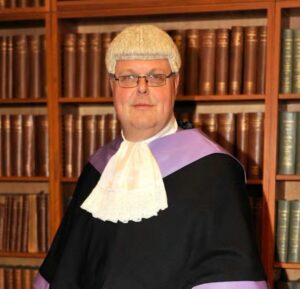
Image of Sir Geoffrey Vos from the Courts and Tribunal Judiciary website.

The Master of the Rolls is a highly esteemed position in the UK legal system, responsible for managing the administrative and procedural matters of the Court of Appeal of England and Wales, as well as serving as President of the Civil Division.

Sir Geoffrey Vos is the current holder of the position and brings a wealth of experience to the role, having had a distinguished legal career spanning several decades. His expertise in commercial and chancery law, combined with his leadership skills, make him well-suited to the position of Master of the Rolls and President of the Civil Division.

Check out the related articles on the Attorney General, Solicitor General, Lady Chief Justice, Lord Chancellor, Chancellor of the High Court,Justice Secretary, Rule of Law, Open Justice, Law, Is the Law Black and White ?, Government Legal Department, Crown Prosecution Service (CPS), Government Legal Department (GLD), Abuse of Process, What Does Lady Justice Symbolise ?, McKenzie Friend, Can a Judge Direct a Jury to Find a Defendant Not Guilty ?,Law Society, Law Commission, McKenzie Friend Right of Audience, Solicitors, Solicitors Regulation Authority, Barristers, Bar Council of England and Wales, Bar Standards Board, R v Sussex Justices, Police Impartiality and the highly questionable Sussex Family Justice Board.


The Ministry of Injustice is not the Ministry of Justice nor is it affiliated in any way with the justice system, legal profession, police or any other law enforcement agencies.


Latest Articles


Most Popular


You should always seek formal legal advice from a qualified and reputable lawyer (solicitor or barrister).

There are a number of links to Free and Paid For Legal Resources and Legal Organisations on the Free Legal Advice , Legal Aid and Pro Bono pages.

Categories
Law Police

Wasting Police Time

The offence of wasting police time is committed when a person causes any wasteful employment of the police. Wasting Police Time – section 5(2) of the Criminal Law Act 1967 applies :-

Penalties for concealing offences or giving false information.

(2)Where a person causes any wasteful employment of the police by knowingly making to any person a false report tending to show that an offence has been committed, or to give rise to apprehension for the safety of any persons or property, or tending to show that he has information material to any police inquiry, he shall be liable on summary conviction to imprisonment for not more than six months or to a fine of not more than [F3 level 4 on the standard scale] or to both.

(3)No proceedings shall be instituted for an offence under this section except by or with the consent of the Director of Public Prosecutions.

Criminal Law Act 1967 Section 5

The Crown Prosecution Service (CPS) publish detailed guidance for prosecutors in relation to wasting police time :-

The offence of wasting police time is committed when a person causes any wasteful employment of the police:

Proceedings may only be instituted by or with the consent of the Director of Public Prosecutions: s.5(3). Consent may be granted after charge but must be before a plea of guilty is entered or summary trial. Consent must be obtained before proceedings are started by way of summons.

Examples of the type of conduct appropriate for a charge of wasting police time include:

  • false reports that a crime has been committed, which initiates a police investigation;
  • the giving of false information to the police during the course of an existing investigation.
Wasting Police Time – CPS

If you are caught wasting police time you could be jailed for up to six months and/or fined. Instead of taking you to court, the police might issue you with a fixed penalty notice under the Criminal Justice and Police Act 2001 (CJPA 2001).

The Code for Crown Prosecutors is a public document, issued by the Director of Public Prosecutions, that sets out the general principles Crown Prosecutors should follow when they make decisions on cases.

Check out our articles on Sussex Police, Chief Constable Jo Shiner Sussex Police, Policing, Police News, Policing by Consent, Police Impartiality, Police Professional Standards, Two Tiered Policing, Thought Police, What is a Police and Crime Commissioner and a Police and Crime Panel ?, Met Police and the highly questionable Sussex Family Justice Board.


The Ministry of Injustice is not the Ministry of Justice nor is it affiliated in any way with the justice system, legal profession, police or any other law enforcement agencies.


Latest Articles


Most Popular


You should always seek formal legal advice from a qualified and reputable lawyer (solicitor or barrister).

There are a number of links to Free and Paid For Legal Resources and Legal Organisations on the Free Legal Advice , Legal Aid and Pro Bono pages.
Categories
Law Legal Analysis

What is Stalking and Harassment ?

Stalking and harassment is when someone repeatedly behaves in a way that makes you feel scared, distressed or threatened. Stalking and harassment is a criminal offence.

There are different types of stalking and harassment and anyone can be a victim. Stalking and harassment are offences under the Protection from Harassment Act 1997.

You may be interested in our article What is Harassment and R v O’Neill [2016] EWCA Crim 92, [2016] from the Court of Appeal.

There is no legal definition of cyberstalking but it is recognised as being different from harassment as it involves fixated and obsessive behaviour. This maybe to gather information, monitor or discredit the victim.

Social Media and other Electronic Communications – Crown Prosecution Service

Harassment

Someone you know could be harassing you, like a neighbour, or people from your local area or it could be a stranger.

Harassment may include:

  • bullying at school or in the workplace
  • cyber stalking (using the internet to harass someone)
  • antisocial behaviour
  • sending abusive text messages
  • sending unwanted gifts
  • unwanted phone calls, letters, emails or visits

It’s harassment if the unwanted behaviour has happened more than once.

What is stalking and harassment? Police UK

Sexual harassment

Sexual harassment is unlawful, as a form of discrimination, under the Equality Act 2010.

Some of these are also forms of sexual or indecent assault.

The Act says it’s sexual harassment if the unwanted behaviour:

  • violates your dignity
  • creates an intimidating, hostile, degrading, humiliating or offensive environment (this includes the digital environment, online)

Some examples of sexual harassment would include:

  • sexual comments, jokes or gestures
  • staring or leering at your body
  • using names like ’slut’ or ‘whore’
  • unwanted sexual communications, like emails, texts, DMs
  • sharing sexual photos or videos
  • groping and touching
  • someone exposing themselves
  • pressuring you to do sexual things or offering you something in exchange for sex
What is stalking and harassment ? – Police UK

Stalking

Stalking is like harassment, but it’s more aggressive. The stalker will have an obsession with the person they’re targeting.

Stalking may include:

  • regularly following someone
  • repeatedly going uninvited to their home
  • checking someone’s internet use, email or other electronic communication
  • hanging around somewhere they know the person often visits
  • interfering with their property
  • watching or spying on someone
  • identity theft (signing-up to services, buying things in someone’s name)

It’s stalking if the unwanted behaviour has happened more than once.

What is stalking and harassment ? – Police UK

Online stalking and harassment

Social networking sites, chat rooms, gaming sites and other forums are often used to stalk and harass someone, for example:-

  • to get personal information
  • to communicate (calls, texts, emails, social media, creating fake accounts)  
  • damaging the reputation
  • spamming and sending viruses 
  • tricking other internet users into harassing or threatening
  • identity theft 
  • threats to share private information, photographs, copies of messages
What is stalking and harassment ? – Police UK

Stalking or Harassment Crown Prosecution Service (CPS)

The CPS publish prosecution guidance to assist prosecutors with the general principles to be applied when making decisions about prosecutions involving stalking or harassment. It provides guidance on:-

  • the importance of focusing on whether conduct experienced by the victim in its entirety amounts to stalking or harassment, whether the police have investigated those or other individual offences
  • selecting appropriate charges, in order to apply the Code for Crown Prosecutors where there is an overlap between stalking, harassment and/or controlling or coercive behaviour
  • acceptance of pleas
  • the prosecutor’s role in supporting the victim

Stalking or harassment offences can be found in sections 2, 2A, 4 and 4A of the Protection from Harassment Act 1997 (PHA 1997) and section 42A (1) Criminal Justice and Police Act 2001. There are racially and religiously aggravated forms of the PHA offences: see sections 28 and 32 Crime and Disorder Act 1998 and the Racist and Religious Hate Crime prosecution guidance.

Stalking or Harassment – Crown Prosecution Service (CPS)

Report Stalking and Harassment

You should contact the police if you’re being stalked or suffering harassment. Call 999 if you or someone else is in immediate danger of stalking and harassment.

What is the maximum sentence for harassment or stalking ?

Parliament sets the maximum (and sometimes minimum) penalty for any offence. When deciding the appropriate sentence, the court must follow any relevant sentencing guidelines, unless it is not in the interests of justice to do so.

If the offence is harassment or stalking:

  • the maximum sentence is six months’ custody
  • if racially or religiously aggravated, the maximum sentence is two years’ custody

If the offence is harassment (putting people in fear of violence) or stalking (involving fear of violence or serious alarm or distress):

  • the maximum sentence is 10 years’ custody
  • if racially or religiously aggravated, the maximum sentence is 14 years’ custody
Harassment and stalking – Sentencing Council

False Allegations of Stalking and Harassment

If false allegations of stalking and harassment are made to the Police, then this can also classed be as a criminal offence.

The offence of wasting police time is committed when a person causes any wasteful employment of the police. Wasting Police Time – section 5(2) of the Criminal Law Act 1967.

If you are caught wasting police time you could be jailed for up to six months and/or fined. Instead of taking you to court, the police might issue you with a fixed penalty notice under the Criminal Justice and Police Act 2001 (CJPA 2001).

Check out our articles on National Stalking Awareness, Policing by Consent, Police Impartiality, Two Tiered Policing, What is a Police and Crime Commissioner ?, Sussex Police, Policing, Police News, Thought Police, Wasting Police Time, Police Community Support Officers (PCSO), Met Police, Chief Constable Jo Shiner, R v Sussex Justices and the highly questionable Sussex Family Justice Board.


The Ministry of Injustice is not the Ministry of Justice nor is it affiliated in any way with the justice system, legal profession, police or any other law enforcement agencies.


Latest Articles


Most Popular


You should always seek formal legal advice from a qualified and reputable lawyer (solicitor or barrister).

There are a number of links to Free and Paid For Legal Resources and Legal Organisations on the Free Legal Advice , Legal Aid and Pro Bono pages.
Categories
Law

What is the Slip Rule ?

The Slip Rule is a legal tool in England and Wales that allows judges to correct typographical or other errors in court orders or judgments.

The Slip Rule is included in both the Family Procedure Rules and the Civil Procedure Rules. This article will provide an overview of the Slip Rule, its application in Family and Civil cases, and the relevant rules and practice directions.

Errors may be caused by incompetence, typographical errors, clerical errors, or accidental slips or omissions. The Slip Rule is a common law principle that allows judges to make minor changes to their own orders, judgments, or directions to ensure that they accurately reflect the intention of the court.

The Slip Rule in Family Law Cases

The Family Procedure Rules (FPR) were introduced in 2010 and apply to family law cases in England and Wales. The FPR govern the procedure for family law cases, including divorce, child custody, and financial settlements. Family Procedure Rule 29.16 sets out the Slip Rule in family law cases.

Family Procedure Rule 29.16 states :-

(1) The court may at any time correct an accidental slip or omission in a judgment or order.

(2) A party may apply for a correction without notice.

Correction of errors in judgments and orders FPR 29.16

In addition to the Family Procedure Rule, there is also a Family Practice Direction that provide guidance on the use of the Slip Rule.

Family Practice Direction 29D provides guidance on the use of the Slip Rule in family law cases.

Note the careless typo by the Ministry of Justice in PD29D para 1.1 p6ovides. I would imagine this should be provides. Slip up or more evidence of incompetence at the MoJ ?

FPD29A Para 1.1

1.1 Rule 29.10 FPR p6ovides that the court may correct an accidental slip or omission in a judgment or order. Corrections under that rule must be approved by a judge, or by a Justices’ Legal Adviser where Practice Direction 2C so provides.

1.2 A court officer may make an amendment to an order, without prior reference to a judge or Justices’ Legal Adviser (as applicable), in the following circumstances-

(a) where a court officer has wrongly transposed details in the draft order approved by the court;

(b) where the error is obviously typographical such as-

(i) the spelling of a party’s name, a date of birth, a place of birth or marriage, where that can be corrected by reference to the application or supporting evidence on the court file such as a birth or marriage certificate; or

(ii) a nonsensical word clearly included in error (but see paragraph 1.4);

(c) changes to references in the order to the venue at which a hearing took place, where this can be verified from the court file, court diary or cause list;

(d) the date of the order, where this can be verified from the court file, court diary or cause list;

(e) details of a party’s legal representatives at a hearing when this can be verified from the court file or other record of hearing;

(f) the date of a hearing, where the court officer has listed a matter for hearing but transposed the details incorrectly into the order that notifies the parties of the hearing date;

(g) to improve the formatting (but not the numbering) of an order.

1.3 If a court officer concludes that-

(a) it would be inappropriate to make an amendment to an order even where they consider that a case falls within paragraph 1.2; or

(b) they are not certain whether or not a case falls within paragraph 1.2 (for example whether an error is obviously typographical),

the court officer must refer the matter to a judge to determine whether to make the amendment.

1.4 Save as specified in paragraph 1.2, a court officer must never make linguistic, grammatical or textual amendments to an order, or alter its numbering,  without reference to a judge or, where Practice Direction 2C applies, to a Justices’ Legal Adviser.

1.5 A court officer must never make an amendment to a judgment or written ruling without reference to a judge or, where Practice Direction 2C applies, to a Justices’ Legal Adviser.

FAMILY PRACTICE DIRECTION 29D – COURT OFFICERS MAKING CORRECTIONS TO ORDERS

The Slip Rule in Civil Law Cases

The Civil Procedure Rules (CPR) were introduced in 1998 and apply to civil law cases in England and Wales. The CPR govern the procedure for civil law cases, including personal injury claims, contract disputes, and defamation claims. Civil Procedure Rule 40.12 sets out the Slip Rule in civil law cases.

Civil Procedure Rule 40.12 of the CPR states :-

(1) The court may at any time correct an accidental slip or omission in a judgment or order.

(2) A party may apply for a correction without notice.

Correction of errors in judgments and orders CPR 40.12

In addition to the Civil Procedure Rule, there is also a Practice Direction that provide guidance on the use of the Slip Rule.

Civil Practice Direction 40B provides guidance on the use of the Slip Rule in civil law cases.

4.1 Where a judgment or order contains an accidental slip or omission a party may apply for it to be corrected 8.

4.2 The application notice (which may be an informal document such as a letter) should describe the error and set out the correction required. An application may be dealt with without a hearing:

(1) where the applicant so requests,

(2) with the consent of the parties, or

(3) where the court does not consider that a hearing would be appropriate.

4.3 The judge may deal with the application without notice if the slip or omission is obvious or may direct notice of the application to be given to the other party or parties.

4.4 If the application is opposed it should, if practicable, be listed for hearing before the judge who gave the judgment or made the order.

4.5 The court has an inherent power to vary its own orders to make the meaning and intention of the court clear.

CIVIL PRACTICE DIRECTION 40B – JUDGMENTS AND ORDERS

The Slip Rule is a legal tool in England and Wales that allows judges to correct typographical or other errors in court orders or judgments. The Slip Rule is included in both the Family Procedure Rules and the Civil Procedure Rules, and there are also Practice Directions that provide guidance on its use.

While the Slip Rule can be used to correct minor errors, it cannot be used to change the substance of a court order or judgment.


The Ministry of Injustice is not the Ministry of Justice nor is it affiliated in any way with the justice system, legal profession, police or any other law enforcement agencies.


Latest Articles


Most Popular


You should always seek formal legal advice from a qualified and reputable lawyer (solicitor or barrister).

There are a number of links to Free and Paid For Legal Resources and Legal Organisations on the Free Legal Advice , Legal Aid and Pro Bono pages.

Categories
Judiciary Legal Professionals

HHJ Stuart Farquhar

HHJ Farquhar was appointed as a Deputy District Judge in 1999, as a District Judge in 2005 and as a Recorder in 2009.

Stuart Alastair Farquhar was appointed a circuit judge, assigned to the South Eastern Circuit, based at Brighton County Court, with effect from October 9th 2013. Judge Farquhar who was 51 at the time, was called to the Bar (I) in 1985. Judge Farquhar was born on the 4th June 1962.

Stuart Alastair Farquhar is called His Honour Judge Farquhar or abbreviated to HHJ Farquhar. In Court he is addressed as Your Honour.

HHJ Farquhar is the Lead Financial Remedies Court (FRC) Judge for Kent, Surrey and Sussex. From KFC to the top of the roost in Sussex !

“I have no family connection to lawyers; father was an engineer and mother looked after me and my two brothers. Attended state schools.

1980-1983 Manchester University

1983-1984 Worked at solicitors during the day and KFC at night & weekends to pay for Bar

School
1984-1985 Bar School

1985-2005 Barrister in Nottingham (after pupillage in London where I was not offered tenancy)
Started doing all types of work but after about five years began to specialise in Family work and then just in money cases on divorce

2005-2013 District Judge in Cambridgeshire – Family and Civil jurisdiction

2013-present Circuit Judge in Brighton – Family Court and Court of Protection

Interests:

Supporting AFC Wimbledon, walking the dog in the rain (other weather conditions are accepted), preferably near pubs with good real ale.

Married: my wife works as an advisor for a Carers Support Organisation.
Two children, neither following a legal career (having seen the impact upon me!)”

University of Brighton Law Careers Question Time 2018

Sussex Family Justice Board Membership

HHJ Stuart Farquhar was listed (up to 18th April 2023) as a board member of the highly questionable Sussex Family Justice Website (SFJB), along with a number of Senior Sussex Judges.

HHJ Farquhar was previously listed as a SFJB member in a SFJB document SFJB-List-of-Members.docx dated September 2018. HHJ Farquhar appears to have been a SFJB board member for at least 5 years !

“The judge is not a member of the board as to be so would be incompatible with the independent position of the judiciary.”

Judiciary and the local justice system

A Google Search on the 3rd April 2023 returned the following which clearly shows HHJ Farquhar as a board member :-

Google Search 3rd April 2023

A Bing Search on the 3rd April 2023 returned the following which clearly shows HHJ Farquhar as a board member :-

Bing Search 3rd April 2023

The Sussex Family Justice Board website showed :-

Sussex Family Justice Board Members 3rd April 2023
Sussex Family Justice Board Judicial Board Members 3rd April 2023

The Sussex Family Justice Board website, according to their public RSS Feed, was updated on the 18th April 2023 at 20:37.

Sussex Family Justice Board (SFJB) RSS Feed XML <lastBuildDate>Tue, 18 Apr 2023 20:37:32 +0000</lastBuildDate>

HHJ Farquhar, HHJ Lusty and DJ Pollard have mysteriously been removed as board members. Is this a cynical attempt at a cover up ? Who removed them and why ?

Sussex Family Justice Board Judicial Board Members as of 22nd April 2023
SFJB-List-of-Members.docx dated September 2018
  • HHJ Farquhar has denied he is a member of the SFJB and that he was ever invited to join.
  • HHJ Farquhar claims he did not know that he was listed on the SFJB website as a board member.
  • HHJ Farquhar stated that he had covered for His Honour Judge Robin Bedford at several SFJB events. He also confirmed that HHJ Bedford, The Designated and Most Senior Family Judge in Sussex, was definitely a member of the board.
  • HHJ Farquhar said that the SFJB had no income and was surprised to learn that they had a treasurer listed as a board member. He accepted that the SFJB must therefore have income and expenditure which should be publicly accounted for.

This is fraud or at the very least highly misleading behaviour by the SFJB by listing a Senior Judge as a board member without their knowledge or approval.

I can only assume this was done to give the SFJB some sense of importance and credibility but only serves to make their activities even more suspicious.

Financial Remedies Court Lead Judge

In the 4th July 2022 Revision of the FINANCIAL REMEDIES COURT (FRC) – OVERALL STRUCTURE OF THE FINANCIAL REMEDIES COURT AND THE ROLE AND FUNCTION OF THE LEAD JUDGE, HHJ Farquhar is listed as the Lead Financial Remedies Court (FRC) Judge for Kent, Surrey and Sussex.

Farquhar Commitee

“HHJ Stuart Farquhar (Lead Judge of the Kent, Surrey & Sussex Financial Remedies Court (FRC)) was asked by The Honourable Mr Justice Mostyn earlier in 2021 to convene and lead a committee (consisting of a geographically diverse collection of judges at all levels of the judiciary and practitioners).

The committee was to consider in depth and report on the role of remote courts in the post-pandemic environment (Part 1) and the procedures of the Financial Remedies Court (Part 2).

The carefully considered and substantial final reports of the Farquhar Committee (Parts 1 and 2) are now being published so that they may inform decisions on moving matters forward in both these areas.

Report of the Farquhar Committee Part 1

The Financial Remedies Court – The Way Forward
A Paper to consider the future use of Remote Hearings in the FRC (PDF)

Report of the Farquhar Committee Part 2

The Financial Remedies Court – The Way Forward
A Paper to consider changes to the Practices and Procedures in the Financial Remedies Court (PDF)

Reports of the Farquhar Committee on the Financial Remedies Courts – Parts 1 and 2

Transparency Implementation Group Chair

On the the 11th February 2022 The President of the Family Division (PFD) announce that the Financial Remedy Court Transparency Group, will become the fifth sub group of the Transparency Implementation Group (TIG). This group will be chaired by HHJ Stuart Farquhar and will report to the main TIG.

Please refer to the Announcement for the Family Transparency Implementation Group (TIG)

On the 2nd June 2022 an article entitled Transparency in the FRC – The workings of the TIG Sub-Group written by HHJ Farquhar was published on the Transparency Project website.

Company Appointments

HHJ Stuart Farquhar was a Director of KESTEVEN AND GRANTHAM GIRLS’ SCHOOL ACADEMY TRUST (08133675), listing his occupation as District Judge, but resigned on the 9th October 2013 for unknown reasons.

HHJ Farquhar Contact Details

HHJ Stuart Farquhar judicial email address is [email protected] and he is based at the following Court :-

Brighton County Court Family Centre
1-2 Edward Street,
Brighton
BN2 0JD

Tel: 01273 674421
Email: [email protected]

HHJ Farquhar on the Internet

The Ministry of Injustice is delighted to be the No 1 Search result on Google for HHJ Farquhar (6th April 2023)

“Scandalising the judiciary (also referred to as scandalising the court or scandalising judges) is abolished as a form of contempt of court under the common law of England and Wales.”

Crime and Courts Act 2013 Section 33Can you criticise a judge ?

HHJ Farquhar Published Judgments

There are a number of HHJ Farquhar judgments available to view online !

His Honour Judge Farquhar admonished solicitor Paul Gardner for branding obsessed LiP a ‘sociopath’. Mary-Jane Grace v Ian Douglas Grace Neutral Citation Number[2025] EWFC 37 (B)

Judge Farquhar Notable Cases

A woman has been ordered to pay half of her ex-husband’s £160,000 gender reassignment surgery bill after a judge ruled the operation was a “need”, not a “whim”.

The 60-year-old woman had argued it was unfair for her to contribute £80,000 towards the cost of the surgery, saying her former spouse’s decision to transition was the reason their marriage ended.

But Judge Stuart Farquhar, sitting at Brighton Family Court, said it was “reasonable” for the couple to split the cost “out of joint resources”.

Judge Farquhar rules woman must pay half of ex-husband’s £160,000 gender surgery bill – The Standard

Is trans surgery really as essential as cancer treatment – Judge Farquhar ?

It’s worth spelling out what this means: a UK court (HHJ Farquhar) considers it reasonable to expect a mother of two children to pay £80,000 towards the cost of her ex-husband obtaining a fake vagina.

Unherd.com – Joan Smith on Judge Farquhar Case

Judge (Farquhar) tells divorcee to pay her ex-husband half the £160,000 cost of his trans surgery in millionaire couple’s court battle

Judge Stuart Farquhar said that while ‘this has been a hugely difficult and emotionally draining experience’ for the trans woman, the husband had ‘shown no understanding whatsoever that her decision to transition to a woman has had an impact on anyone else, and particularly’ his ex-wife.

Daily Mail

Divorcee forced (by Judge Farquhar)to pay half of ex-husband’s trans surgery in legal first

In his ruling the judge noted that the husband had provided medical evidence of gender dysphoria which had caused “significant anxiety, depression and distress” and for which “the vaginoplasty surgery was considered the next appropriate step”

The Telegraph

This article contains personal opinions protected by common law and Article 10 of the Human Rights Act 1998 along with publicly available information.

Image shown is an amateur artists impression by the author and for illustration only. It is not His Honour Judge Stuart Farquhar (HHJ Farquhar)

“Publicity is the very soul of justice. . . . It keeps the judge himself, while trying, under trial….Where there is no publicity there is no justice”

Jeremy BenthamMr Justice Cobb: ‘Justice must be seen to be done’

Check out our articles on Dodgy JudgesJudges Salaries and Fees, Mr Justice Williams, His Honour Judge Melbourne Inman KC, His Honour Andrew Menary KC, His Honour Now His Dishonour, His Honour Judge Michael Slater, His Honour Judge Martin Davis, HHJ Farquhar, HHJ Bedford, DDJ Nicholes, Do you Have to Bow to a Judge ?, Can you Email a Judge ?, Can you Criticise a Judge ? and the highly dubious Sussex Family Justice Board.


The Ministry of Injustice is not the Ministry of Justice nor is it affiliated in any way with the justice system, legal profession, police or any other law enforcement agencies.


Latest Articles


Most Popular


You should always seek formal legal advice from a qualified and reputable lawyer (solicitor or barrister).

There are a number of links to Free and Paid For Legal Resources and Legal Organisations on the Free Legal Advice , Legal Aid and Pro Bono pages.
Categories
Judiciary Legal Professionals

HHJ Robin Bedford

HHJ Bedford was appointed as a Deputy District Judge on the North Eastern Circuit in May 2002, a District Judge in 2007 and a Circuit Judge on the 10th April 2013.

“HM the Queen has appointed Robin Steven Bedford, to be a District Judge on the advice of the Lord Chancellor, Lord Falconer. The Lord Chief Justice, Lord Phillips of Worth Matravers, has assigned him to the North Eastern Circuit, based in North and West Yorkshire with effect from Monday 19 February 2007. Mr Bedford, 43, was admitted as a solicitor in October 1988.”

Appointment of a district judge – Robin Steven Bedford

Robin Stephen Bedford is called His Honour Judge Bedford or abbreviated to HHJ Bedford. In Court he is addressed as Your Honour.

HHJ Bedford is the Designated Family Judge for Sussex and was originally appointed on the 1st July 2017.

On the 5th August 2025, The Lady Chief Justice of England and Wales, the Right Honourable The Baroness Carr Of Walton-On-The-Hill has appointed His Honour Judge Bedford to be a Senior Circuit Judge, Designated Family Judge, based at Brighton Family Centre.

Sussex Family Justice Board Membership

HHJ Robin Bedford was listed as board member of the highly questionable Sussex Family Justice Website (SFJB), along with a number of Senior Sussex Judges.

“The judge is not a member of the board as to be so would be incompatible with the independent position of the judiciary.”

Judiciary and the local justice system

A google search returns the following which clearly shows HHJ Bedford as a board member :-

A Bing search returns the following which clearly shows HHJ Bedford as a board member :-

“His Honour Judge Bedford. Designated Family Judge for Sussex. 21 December 2020.

Dear all,. It’s some months since I inflicted one of my bulletins upon you.”

Sussex Family Justice Board 21st December 2020

HHJ Farquhar stated that he had covered for His Honour Judge Robin Bedford at several SFJB events. He also confirmed that HHJ Bedford, The Designated and Most Senior Family Judge in Sussex, was definitely a member of the Sussex Family Justice Board.

It’s refreshing to see an Honour “Stitched Up” by another Honour after an Honour attempted to “Stich” me up !

Is there no such a thing as “Honour” amongst thieves ?

Check out our articles on Dodgy JudgesHis Honour Judge Melbourne Inman KC, His Honour Judge Jeremy Richardson KC, His Honour Now His Dishonour, His Honour Judge Michael Slater, His Honour Judge Martin Davis, HHJ Farquhar, DDJ Nicholes ,Can you Email a Judge ?, Can you Criticise a Judge ?, Do you Have to Bow to a Judge ? and the highly dubious Sussex Family Justice Board.

HHJ Bedford Contact Details

HHJ Robin Bedford judicial email address is [email protected] and he is based at the following Court :-

Brighton County Court Family Centre
1-2 Edward Street,
Brighton
BN2 0JD

Tel: 01273 674421
Email: [email protected]

HHJ Bedford on the Internet

“Two years ago today this lowlife scumbag made an order knowing it would lead to a fathers death through ill health. Dishonour Judged Bedford will be exposed as the murderer he is. We will never forgive or forget. Still no apology to those involved either from this despicable oxygen thief.”

UK Corrupt Family Courts Name and Shame

“Another mother has come forward about this Monster who calls himself a judge, Bedford.

Again he was swinging on his chair gnawing on a pen while staring around a room in a world of his own.

He put costs before a child’s family being kept together. The family needed either a mother and baby unit to prove they can parent or a home. He ignored this and went with adoption.

How this twisted moron sleeps at night we have no clue. Probably doesn’t and why he’s daydreaming all day!

Wake up Bedford and start helping these families instead of breaking them you twisted individual.”

UK Corrupt Family Courts Name and Shame

His Honour Judge Robin Bedford led the walk this year as posted by Herrington Solicitors.

“Meet ‘Dishonour’ Judge Robin Bedford. (Wonder if there’s something about the name Robin)
He can normally be found masquerading as a Judge at Hastings Court.
He is usually swinging on his chair while daydreaming staring at the ceiling and chewing a Bic Pen. All this while making sure he ignores vital evidence in a case.
This guy is not fit to be a judge and is someone who should never be allowed to preside over the lives of children. In short he is a danger.
The first time we came across this individual he was defending a violent father while the mother suffered the stress of being bullied and having him breach court orders. He ignored the fact that this father had no interest in his own son and the son making sexual allegations against the father. Instead he palmed the case off with a supervised contact order on the daughter and a care order with placement with the mother leaving The Local Authority to sort out the sorry mess of the case.
In the second case we come across him he signed an order of adoption on a second hearing due to a young mum having mental health problems. Knowing the mother didn’t understand the process was of no interest to him. This mother has since proved she can function and should be given a chance with her son.
The third case is the most terrible. Despite warnings and being shown evidence of why he shouldn’t he sent a 2 year old to go and live with her father who was mentally ill and physically disabled. He agreed he would take personal responsibility if anything went wrong. To date he has never apologised. The child was happily attached living with mother, well cared for meeting all her milestones and had minimal attachment to the father. In four months the child regressed in development and was abused as well as neglected. The father then died alone with the child in a flat which the mother warned would happen! The child now back in the mothers care is thriving and ahead of what’s expected of a child. There’s no local authority involvement and in their own words no role for them, they also agree this judge took a dangerous risk and it backfired to the detriment of the child.
This man should never preside over another child case. Any further screw ups by this twisted individual please inbox us!”

UK Corrupt Family Courts Name and Shame

“Scandalising the judiciary (also referred to as scandalising the court or scandalising judges) is abolished as a form of contempt of court under the common law of England and Wales.”

Crime and Courts Act 2013 Section 33Can you criticise a judge ?

Images of HHJ Bedford

The images shown on this page are from the Facebook Group UK Corrupt Family Courts Name and Shame . These images are believed to be of His Honour Judge Robin Bedford (HHJ Bedford).

Permission to use these images was sought from UK Corrupt Family Courts Name and Shame but no response was forthcoming.

I use these images under the Copyright exception of fair dealing, education and in the spirit of public interest.

This article contains personal opinions protected by common law and Article 10 of the Human Rights Act 1998 along with publicly available information.

“Publicity is the very soul of justice. . . . It keeps the judge himself, while trying, under trial….Where there is no publicity there is no justice”

Jeremy BenthamMr Justice Cobb: ‘Justice must be seen to be done’

Check out our articles on Dodgy JudgesMr Justice Williams, His Honour Judge Melbourne Inman KC, His Honour Andrew Menary KC, His Honour Now His Dishonour, His Honour Judge Michael Slater, His Honour Judge Martin Davis, HHJ Farquhar, HHJ Bedford, DDJ Nicholes, Do you Have to Bow to a Judge ?, Can you Email a Judge ?, Can you Criticise a Judge ? and the highly dubious Sussex Family Justice Board.


The Ministry of Injustice is not the Ministry of Justice nor is it affiliated in any way with the justice system, legal profession, police or any other law enforcement agencies.


Latest Articles


Most Popular


You should always seek formal legal advice from a qualified and reputable lawyer (solicitor or barrister).

There are a number of links to Free and Paid For Legal Resources and Legal Organisations on the Free Legal Advice , Legal Aid and Pro Bono pages.
Categories
Legal Analysis

CAFCASS – Children and Family Court Advisory and Support

Cafcass stands for Children and Family Court Advisory and Support Service. Cafcass “independently advise the family courts about what is safe for children and in their best interests”

Cafcass has come under scrutiny in recent years due to a number of controversies and criticisms. One of the main criticisms has been utter incompetence, bias and the high caseloads faced by FCAs. This made it difficult for Cafcass to provide the level of support and attention needed by children and families.

Cafcass has a number of resources available on its website to help families understand the court process and their rights, including guides on child arrangements, parental responsibility, and adoption. Cafcass also provides a range of support services for children, including counselling and therapy.

Children and Family Court Advisory and Support Service and Family Court Reform

The research briefing Children and Family Court Advisory and Support Service and Family Court reform was published on the House of Commons Library website in advance of the Westminster Hall debate held on Wednesday 22nd March 2023.

Hansard which is the the official report of all Parliamentary debates, published the full transcript of the debate on the webpage Family Court Reform and CAFCASS Volume 730.

Cafcass and the Sussex Family Justice Board (SFJB)

Cafcass staff are listed as board member of the highly questionable Sussex Family Justice Website (SFJB), along with a number of Senior Sussex Judges including HHJ Bedford and HHJ Farquhar.

Is the Sussex Family Justice Board evidence of bias, secrecy and injustice rife within the judiciary, justice system and legal profession in the UK ?

About Cafcass

Cafcass represents children in family court cases in England. Cafcass independently advise the family courts about what is safe for children and in their best interests. Cafcass put their needs, wishes and feelings first, making sure that children’s voices are heard at the heart of the family court setting. Operating within the law set by Parliament (Criminal Justice and Court Services Act 2000) and under the rules and directions of the family courts, we are independent of the courts, social services, education and health authorities and all similar agencies.

Cafcass duty is to safeguard and promote the welfare of children going through the family justice system, supporting over 140,000 children every year by understanding their experiences and speaking up for them when the family court makes critical decisions about their futures.

Cafcass is the largest employer of qualified social workers in England and is deeply committed to making a positive difference to each child we support. We are proud that everyone working for Cafcass is united in improving the lives of children, families and carers.

Our experienced Family Court Advisers (FCA) may be asked by the court to work with families and then advise the court on what we consider to be the best interests of the children involved in three main areas:

  • divorce and separation, sometimes called ‘private law’, where parents or carers can’t agree on arrangements for their children
  • care proceedings, sometimes called ‘public law’, where social services have serious concerns about the safety or welfare of a child
  • adoption, which can be either public or private law.

Cafcass also actively work with our partners to identify solutions to help reduce the increasing pressures on the family courts and to improve the experiences and outcomes for children and families.

Cafcass About Us

History of Cafcass

The Children and Family Court Advisory and Support Service (Cafcass) was formed on 1 April 2001 as part of the Government’s commitment to supporting families and children.

It brought together the services previously provided by the Family Court Welfare Service, the Guardian ad Litem Services and the Children’s divisions of the Official Solicitor’s Office.

Cafcass is sponsored by the Ministry of Justice and is a non-departmental public body.

Cafcass History

Cafcass Annual report and accounts

Cafcass annual reports and accounts are laid before Parliament and show how Cafcass performed each year and how they spent their budget.

The Annual Report and Accounts 2021-22  were approved by the Cafcass Board in October 2022, subject to any changes from the National Audit Office (NAO). The accounts were signed off by the NAO on 12 December 2022.

Cafacss logo used under Copyright exception “Fair dealing for criticism, review or quotation.”

Check out our article on the highly questionable Sussex Family Justice Board and make up your own mind.


The Ministry of Injustice is not the Ministry of Justice nor is it affiliated in any way with the justice system, legal profession, police or any other law enforcement agencies.


Latest Articles


Most Popular


You should always seek formal legal advice from a qualified and reputable lawyer (solicitor or barrister).

There are a number of links to Free and Paid For Legal Resources and Legal Organisations on the Free Legal Advice , Legal Aid and Pro Bono pages.

Categories
Judiciary

What is a Magistrate ?

In the United Kingdom, magistrates are volunteer judges who are appointed to serve in local courts. Magistrates are also known as justices of the peace (JP).

Magistrates hear a range of criminal and civil cases, and they are responsible for making decisions on whether a case should be heard by a higher court or not. In this article, we will explore the role of magistrates in the UK, their responsibilities, and how they are appointed.

History of Magistrates

The history of magistrates in the UK can be traced back to the 12th century when the first justices of the peace were appointed by King Henry II. These justices of the peace were responsible for keeping the peace and enforcing the law in their local communities.

Over time, the role of justices of the peace evolved, and they began to hear cases and make judgments in local courts. The modern magistrates’ court system can be traced back to the 19th century when the first modern magistrates’ court was established in Bow Street, London.

The creation of magistrates’ courts was part of a wider reform of the criminal justice system in the 19th century. Before this, the criminal justice system was based on a system of punishment and retribution, with little emphasis on rehabilitation or the rights of the accused.

The creation of magistrates’ courts marked a significant shift in the approach to criminal justice in the UK. The emphasis was now on rehabilitation and addressing the root causes of criminal behavior, rather than simply punishing offenders.

Magistrates were initially appointed by local justices of the peace, but in 1919, the responsibility for appointing magistrates was transferred to the Lord Chancellor.

Despite the changes in the role of magistrates over the years, their fundamental principles remain the same. They are volunteers who serve their local community and uphold the law in a fair and impartial manner.

The Role of Magistrates

Magistrates are responsible for hearing cases in the magistrates’ court, which is the lowest tier of the court system in the UK. They are also responsible for making decisions on whether a case should be sent to a higher court, such as the Crown Court. Magistrates’ courts deal with around 95% of all criminal cases in England and Wales.

Magistrates’ duties vary from deciding whether a defendant should be granted bail to deciding whether a defendant is guilty or not guilty of a criminal offence. They also have the power to impose sentences, such as fines, community service orders, and prison sentences of up to six months.

Magistrates also hear civil cases, such as disputes over unpaid debts, and family cases, such as child custody and adoption. In these cases, magistrates are responsible for making decisions on issues such as child custody arrangements, financial support, and visitation rights.

How to become a Magistrate ?

Before you can apply to become a magistrate, you must visit your local court or research how family courts work to prepare for your application.

You must visit a criminal court at least twice in the 12 months before you apply. You’ll be asked about this in your application.

Find your nearest court. The court will tell you when to visit and which courtrooms to see.

Research how family courts work (*)

You cannot visit a family court because these cases are heard in private. To prepare for your application, you must research what it’s like working as a family court magistrate.

Prepare for your application

When you apply you’ll be asked to give examples to show that you can:

  • understand and appreciate different perspectives
  • communicate with sensitivity and respect
  • work and engage with people professionally
  • make fair, impartial and transparent decisions
  • show self-awareness and be open to learning

You also need to provide 2 references. If you’re employed, one of them must be from your employer. They cannot be a relative or someone you live with.

How to apply online

Visit the magistrates website to find a role in your area and apply.

If your application is successful, you’ll be invited to an interview.

If there are no roles available near you

You can register your interest. You’ll get an email when a role in your area is available.

Become a magistrate gov.uk

(*) Unsurprisingly the gov.uk website is out of date and this statement is untrue.

Open justice is a fundamental principle in our courts and tribunals system, and will continue to be as we increase the use of audio and video technology.

Requests from the media and others to observe a hearing remotely In The County Court and The Family Court at Brighton should be made direct to: [email protected] or by calling 0300 1235577. Arrangements will then be made to enable you to attend.

Family Courts and Open Justice / Brighton County Court Courtserve

The Appointment of Magistrates

Magistrates are appointed by the Lord Chancellor, who is the UK government’s Minister of Justice. Magistrates are not required to have any legal qualifications, but they must be over 18 years old and under 70 years old. They must also have no criminal convictions.

Magistrates are selected by local advisory committees, which are made up of people from the local community. These committees are responsible for assessing candidates’ suitability for the role and making recommendations to the Lord Chancellor. The Lord Chancellor then appoints the successful candidates.

Magistrates are appointed for a period of five years and can be reappointed for another five years. Magistrates are volunteers and are not paid for their work. However, they are reimbursed for their expenses, such as travel costs and subsistence.

Training for Magistrates

Magistrates receive training before they take up their role, which includes classroom-based training and on-the-job training. The training covers areas such as court procedures, legal principles, and sentencing guidelines.

Magistrates also receive ongoing training throughout their term of office to ensure that they are up to date with changes in the law and court procedures.

Diversity among Magistrates

There has been criticism in the past that magistrates are not representative of the communities they serve, with concerns that they are predominantly white, middle-class, and elderly. In recent years, efforts have been made to address this issue, with initiatives to encourage a more diverse range of people to become magistrates.

The Judicial Diversity Committee was established in 2010 to promote diversity in the judiciary, including magistrates. The committee’s aim is to encourage more women, ethnic minorities, and people with disabilities to apply for judicial positions.

In 2019, the Ministry of Justice launched a campaign to encourage more young people to become magistrates. The campaign highlighted the benefits of becoming a magistrate, such as gaining new skills, meeting new people, and contributing to the community.

Magistrates play a crucial role in the UK’s justice system, ensuring that justice is administered fairly and efficiently at the local level. They are appointed based on their suitability, and they receive training to ensure that they are able to carry out their duties effectively. Efforts are being made to encourage a more diverse range of people to become magistrates, to ensure that the magistrates are more representative of the communities they serve.

Magistrates provide a valuable service to their local community by hearing cases and making decisions that affect the lives of individuals. Their role is an important one and is essential in ensuring that the justice system is accessible to all.

For more information on the role of magistrates in the UK, the following websites may be useful:

  1. The Magistrates Association – https://www.magistrates-association.org.uk/ The Magistrates Association is a membership organization that represents magistrates in England and Wales. They provide support, training, and guidance to magistrates, and they also work to promote the role of magistrates in the justice system.
  2. Her Majesty’s Courts and Tribunals Service – https://www.gov.uk/government/organisations/hm-courts-and-tribunals-service Her Majesty’s Courts and Tribunals Service is responsible for the administration of the courts and tribunals in England and Wales. Their website provides information on the different types of courts and tribunals, including magistrates’ courts.
  3. Judicial Appointments Commission – https://judicialappointments.gov.uk/ The Judicial Appointments Commission is responsible for selecting and appointing judges in England and Wales, including magistrates. Their website provides information on the appointment process, as well as guidance for potential candidates.

Check out our related articles on Chief Magistrate, Dodgy Magistrates, Judiciary, Complain About a Magistrate, Rule of Law, Open Justice, Is the Law Black and White ?, Abuse of Process, What Does Lady Justice Symbolise ?, McKenzie Friend, Law Society, Law Commission, McKenzie Friend Right of Audience, Solicitors, Solicitors Regulation Authority, Barristers, Bar Council of England and Wales, Bar Standards Board, R v Sussex Justices, Police Impartiality and the highly questionable Sussex Family Justice Board.


The Ministry of Injustice is not the Ministry of Justice nor is it affiliated in any way with the justice system, legal profession, police or any other law enforcement agencies.


Latest Articles


Most Popular


You should always seek formal legal advice from a qualified and reputable lawyer (solicitor or barrister).

There are a number of links to Free and Paid For Legal Resources and Legal Organisations on the Free Legal Advice , Legal Aid and Pro Bono pages.

Rule of Law - Open Justice - Policing By Consent