The Bar Standards Board publish Past disciplinary findings on their website in accordance with their Publication Policy. The Bar Standards Board regulate the Bar in England & Wales in the public interest.
The Bar Standards Board post new findings within seven days of a decision, but it can take up to 24 hours after this for the finding to appear on their website (or for a finding to disappear from there after it has been removed).
The Secret Barrister was reported to the Bar Standards Board on the 8th August 2024.
Before instructing a Barrister it is worth checking if they have any past disciplinary findings and if they are registered as a Barrister of England of Wales.
Here is a list of the Bar Standards Board Disciplinary Findings for the last 3 months (as of 13th August 2024). Click Sanction to see the full Disciplinary Statement or Barrister to see their full details.
Lincoln’s Inn has the most badly behaved barristers (disciplined in the last 3 months by the Bar Standards Board) !
Fines, sanctions and costs from Bar Standards Board disciplinary findings against Barristers are normally pitiful. Almost pointless !
i. made comments during the exam as set out in Schedule 1,
ii. used language during the exam as set out in i, ii, iv, and vii of Schedule 1 which was directed towards the proctor,
iii. made an offensive hand gesture by holding up his middle finger to the camera at the conclusion of the exam.i. What is a watch going to do, how the fuck am I going to cheat with a watch, come on.
ii. What? Fucking piss off, I don’t need to start a fucking chat.
iii. This is annoying, oh my god, this is going to really piss me off.
iv. Right, go away now, fine, just going to sit there fucking flashing and be annoying.
v. Fucking finally, a criminal question… This civil shit… How can you have any ethics if you’re a civil practitioner, honestly.
vi. I’m so fucking bored of this.
vii. You’re going to kick up a fuss about me having a fucking ibuprofen aren’t you.
Barrister Mr Jack Henry Sadler fined just £500 by the Bar Standards Board
Barrister Mr Thomas David Davidson used a German accent during a hearing and said “Jawohl” at the same time as raising a hand in a Nazi salute. He was reprimanded by the Bar Standards Board and was fined £250 with costs of £1,750.
This is hardly a punishment or deterrent by the Bar Standards Board. Where is the justice in this pathetic reprimand ?
Check out our related articles on Barristers, Direct Access Barrister, The Secret Barrister, Bar Standards Board, Bar Council, Inns of Court, Council of the Inns of Court, Rule of Law, Open Justice, Innocent until Proven Guilty and the highly questionable Sussex Family Justice Board.
Read the reviews of Junior Sussex Barrister Gavin Howe and Legal 500 Junior Barrister Eleanor Battie
“He is awful, underhanded and should not be practising law!”
“She is a one-woman legal A Team”
The Ministry of Injustice is not the Ministry of Justice nor is it affiliated in any way with the justice system, legal profession, police or any other law enforcement agencies.
“Publicity is the very soul of justice. . . . It keeps the judge himself, while trying, under trial….Where there is no publicity there is no justice”
Jeremy Bentham – Mr Justice Cobb: ‘Justice must be seen to be done’
Latest Articles ↓
- Presumption of Innocence
 The presumption of innocence is a basic principle of the… Read more: Presumption of Innocence
 - His Honour Judge Daniel Sawyer
 Judge Daniel Sawyer, known as His Honour Judge Daniel Sawyer,… Read more: His Honour Judge Daniel Sawyer
 - UK National Centre for Information Defence
 Prime Minister Andy Burnham used his first United Nations General… Read more: UK National Centre for Information Defence
 - Judges Behaving Badly and His Honour Judge Simon Oliver
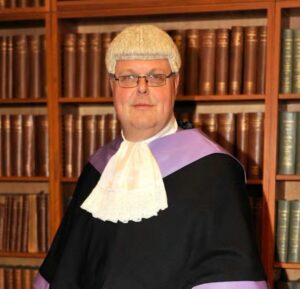 On the 27th August 2026 the Crown Prosecution Service announced… Read more: Judges Behaving Badly and His Honour Judge Simon Oliver
 - Jo Morris Barrister
 Jo Morris is a practising criminal barrister of Drystone Chambers… Read more: Jo Morris Barrister
 - Good Law Project
 The Good Law Project is a UK campaigning organisation that… Read more: Good Law Project
 - Police Federation of England and Wales (PFEW)
 The Police Federation of England and Wales (PFEW) is the… Read more: Police Federation of England and Wales (PFEW)
 - What is the Criminal Justice System (CJS) Common Platform ?
 The Criminal Justice System Common Platform (also known as HMCTS… Read more: What is the Criminal Justice System (CJS) Common Platform ?
 - Strategic Lawsuit Against Public Participation (SLAPPs)
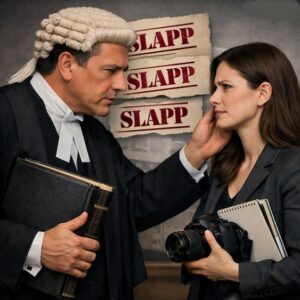 Strategic Lawsuits Against Public Participation, or SLAPPs, are legal actions… Read more: Strategic Lawsuit Against Public Participation (SLAPPs)
 - His Honour Judge Tony Baumgartner – Recorder of Westminster
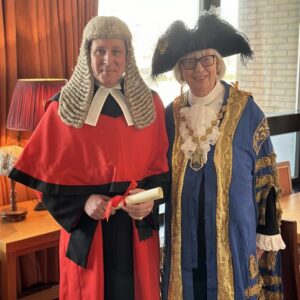 Judge Tony Alan Walter Baumgartner, known as His Honour Judge… Read more: His Honour Judge Tony Baumgartner – Recorder of Westminster
 - New Protocol for Legal Professionals to Raise Informal Concerns About Judges Behaviour
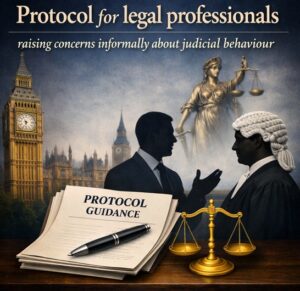 On the 8th July 2026, the Courts and Tribunals Judiciary… Read more: New Protocol for Legal Professionals to Raise Informal Concerns About Judges Behaviour
 - The Policing Performance System
 In April 2026, His Majesty’s Inspectorate of Constabulary and Fire… Read more: The Policing Performance System
Most Popular ↓
You should always seek formal legal advice from a qualified and reputable lawyer (solicitor or barrister).
There are a number of links to Free and Paid For Legal Resources and Legal Organisations on the Free Legal Advice , Legal Aid and Pro Bono pages.