Categories
Criminal Justice Judiciary Legal Analysis Legal Professionals

Is the UK Criminal Justice System Broken ?


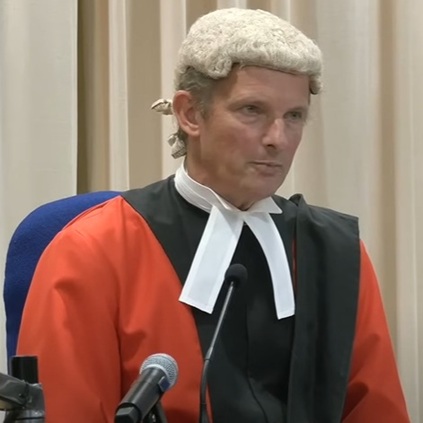
The UK’s criminal justice system is facing significant delays, with some trials being postponed until as late as 2028. A Sky News investigation at Leicester Crown Court revealed a criminal justice system described as chaotic and ineffective, characterised by:

  • Delayed Trials: Victims and defendants are experiencing waits of up to 460 days, with some cases stretched into future years due to a lack of resources like courtrooms, judges, and barristers.
  • Systemic Issues: The backlog in the crown courts is growing weekly. This delay is attributed to insufficient courtrooms, with around 15% to 20% remaining unused daily due to staffing shortages, alongside an increase in charges by the police and early releases from prisons due to overcrowding.
  • Professional Frustration: Barristers are moving away from criminal law to other, less chaotic areas of legal practice. This exodus is partly due to the system’s inefficiencies along with court staff shortages and increasing case volumes compounding the crisis.
  • Public and Legal Outcry: There’s a strong sentiment among legal professionals and the public that justice is being denied due to these delays. The system is criticized for not functioning effectively, with the Criminal Bar Association chair, Mary Prior KC, highlighting the broken nature of the current setup.
  • Infrastructure Problems: The physical state of court buildings is deteriorating, and even basic facilities like computer systems for tracking cases are unreliable, exacerbating the delays.

The judge then takes the unusual step of addressing the crisis to us in open court.

“I have cases day in, day out that I am having put over. It can be years, if you lose a date in 2025 it is 2026.

“All these cases you have to decide who gets priority… fraud cases are being put on the back burner. In my position I have cases put over for months, even years.”

As a rule, judges don’t do interviews, so this is as close as we’ll get to hearing what he thinks.

He is clearly exasperated and remarkably candid: “I don’t know where things are going to go but they aren’t going to get any better,” he says.

Inside the UK’s ‘wild west’ court system where people may have to wait until 2028 for justice to take place – Sky News
‘Justice delayed is justice denied’: UK’s broken legal system

Read the full Sky News article Inside the UK’s ‘wild west’ court system where people may have to wait until 2028 for justice to take place.

“If you think about it, if we don’t have a functioning criminal justice system, we are in a position where you have people roaming the streets who are committing serious offences and there’s no retribution for that.

People aren’t getting justice quick enough and if they’re not… what’s the point in any of it? People will start to give up.”

Barrister Annabel Lenton – Sky News

This situation in the UK’s criminal justice system underscores an urgent need for investment and reform to ensure timely and effective justice.

Check out our related articles on The Courts of England and Wales, Rule of Law, Innocent until Proven GuiltyOpen Justice, R v Sussex Justices, Criminal Cases Review Commission, Lady Chief Justice and the highly questionable Sussex Family Justice Board.


The Ministry of Injustice is not the Ministry of Justice nor is it affiliated in any way with the justice system, legal profession, police or any other law enforcement agencies.


Latest Articles


Most Popular


You should always seek formal legal advice from a qualified and reputable lawyer (solicitor or barrister).

There are a number of links to Free and Paid For Legal Resources and Legal Organisations on the Free Legal Advice , Legal Aid and Pro Bono pages.
Categories
Government Judiciary Legal Professionals

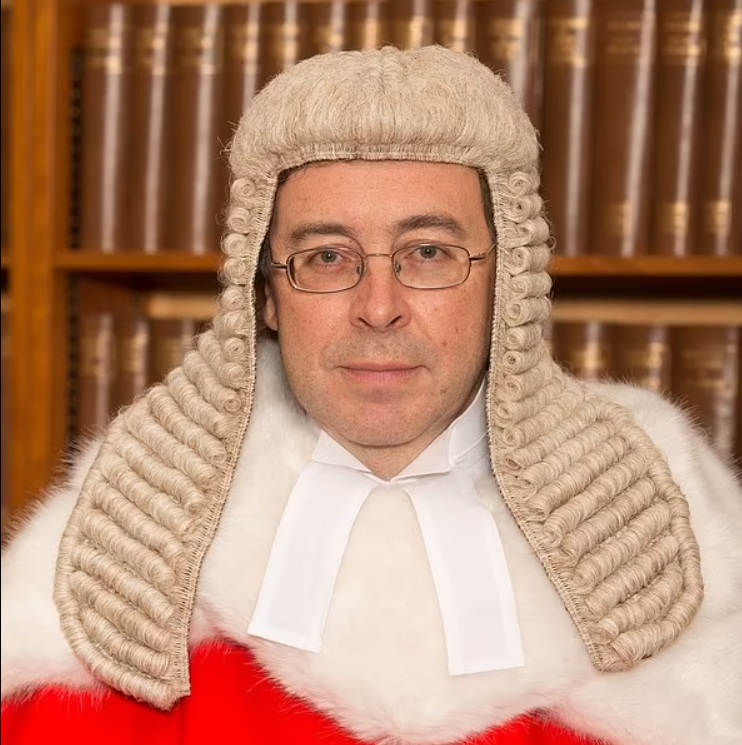
Solicitor General

The Solicitor General is the second law officer of the Crown in the United Kingdom, after the Attorney General. The role of the Solicitor General is to assist the Attorney General in their legal duties and responsibilities, and to act as their deputy in their absence.

The Solicitor General is also responsible for representing the government in court, and for providing legal advice to government departments and agencies. In addition, the Solicitor General works closely with the Attorney General on a range of legal issues, including the development of legal policy and the administration of justice.

Andy Slaughter was appointed Solicitor General on the 21st July 2026. He was elected as the MP for Hammersmith and Chiswick in May 2005.

Andy Slaughter (full name: Andrew Francis Slaughter, born 29th September 1960) is a British Labour politician and barrister.

The Solicitor General is appointed by the monarch on the advice of the Prime Minister, and is usually a member of the government. The Solicitor General is also a Member of Parliament and can participate in parliamentary debates and proceedings.

Previous Solicitor General

  1. The Rt Hon Ellie Reeves MP 2025 to 2026
  2. Lucy Rigby KC MP 2024 to 2025
  3. Sarah Sackman KC MP 2024 to 2024
  4. Robert Courts KC 2023 to 2024
  5. The Rt Hon Michael Tomlinson KC 2022 to 2023
  6. Edward Timpson CBE KC 2022 to 2022
  7. The Rt Hon Alex Chalk KC 2021 to 2022
  8. The Rt Hon Michael Ellis KC 2021 to 2021
  9. The Rt Hon Lucy Frazer KC 2021 to 2021
  10. The Rt Hon Michael Ellis KC 2019 to 2021
  11. The Rt Hon Lucy Frazer KC 2019 to 2019
  12. The Rt Hon Robert Buckland KC 2014 to 2019
  13. The Rt Hon Sir Oliver Heald KC 2012 to 2014
  14. Sir Edward Garnier KC 2010 to 2012

Solicitor General Salary

The Solicitor General is entitled to a salary of £62,368 but claims £57,962 according to Salaries of members of His Majesty’s Government: April 2022

This is addition to the basic annual salary for an MP from 1 April 2025 which is £93,904 according to Pay and expenses for MPs.

Check out our related articles on Attorney General, Director of Public Prosecutions (DPP), Lady Chief Justice, Lord Chancellor, Justice Secretary, Rule of Law, Open Justice, Law, Is the Law Black and White ?, Government Legal Department, Crown Prosecution Service (CPS), Abuse of Process, What Does Lady Justice Symbolise ?, McKenzie Friend, Can a Judge Direct a Jury to Find a Defendant Not Guilty ?,Law Society, Law Commission, McKenzie Friend Right of Audience, Solicitors, Solicitors Regulation Authority, Barristers, Bar Council of England and Wales, Bar Standards Board, R v Sussex Justices, Police Impartiality and the highly questionable Sussex Family Justice Board.


The Ministry of Injustice is not the Ministry of Justice nor is it affiliated in any way with the justice system, legal profession, police or any other law enforcement agencies.


Latest Articles


Most Popular


You should always seek formal legal advice from a qualified and reputable lawyer (solicitor or barrister).

There are a number of links to Free and Paid For Legal Resources and Legal Organisations on the Free Legal Advice , Legal Aid and Pro Bono pages.

Categories
Judiciary Law Legal Analysis

What is is Sub Judice ?

Sub judice is a Latin term meaning “under judgment.” In legal contexts, it refers to a case or matter that is currently under judicial consideration and has not yet been decided. Here are some key points:

  • Legal Principle: It’s a principle in many legal systems that matters under court consideration should not be publicly commented on or discussed in a way that could prejudice the judicial proceedings.
  • Purpose: The purpose is to prevent any influence on the judicial process, ensuring fairness and impartiality in legal outcomes. This includes avoiding prejudicial publicity or influencing potential jurors, witnesses, or even the judge or judges involved.
  • Restrictions:
    • In some jurisdictions, there might be strict rules prohibiting publication or discussion of certain details of the case while it is sub judice.
    • This can apply to media, individuals, and sometimes even legislative bodies discussing the case in detail.
  • Application:
    • In common law countries like the UK, it’s often cited in contempt of court laws where discussing a case publicly might be seen as contempt if it could influence the case’s outcome.
    • The rule helps maintain the integrity of the judicial process by ensuring decisions are based purely on evidence and law, not on public opinion or external commentary.
    • This principle underscores the separation between judicial proceedings and public or political influence, aiming for an unbiased legal process.

The sub judice rule prevents MPs or Lords from referring to a current or impending court case. Although the House is entitled under parliamentary privilege to discuss any subject, sub judice applies to avoid the House from debating a subject and possibly influencing the legal outcome of a case. 

4.68 The privilege of freedom of speech in Parliament places a corresponding duty on members to use the freedom responsibly. This is the basis of the sub judice rule. Under the rule both Houses abstain from discussing the merits of disputes about to be tried and decided in the courts of law.

4.69 The Joint Committee on Parliamentary Privilege recommended that the two Houses should adopt a resolution on sub judice set out in the committee’s report.[155] The House of Lords did this on 11 May 2000. The resolution is as follows:

“That, subject to the discretion of the Lord Speaker,[156] and to the right of the House to legislate on any matter or to discuss any delegated legislation, the House in all its proceedings (including proceedings of committees of the House) shall apply the following rules on matters sub judice:

(1) Cases in which proceedings are active in United Kingdom courts shall not be referred to in any motion, debate or question.

(a) (i) Criminal proceedings are active when a charge has been made or a summons to appear has been issued, or, in Scotland, a warrant to cite has been granted.
(ii) Criminal proceedings cease to be active when they are concluded by a verdict and sentence or discontinuance, or, in cases dealt with by courts martial, after the conclusion of the mandatory post-trial review.

(b) (i) Civil proceedings are active when arrangements for the hearing, such as setting down a case for trial, have been made, until the proceedings are ended by judgment or discontinuance.

(ii) Any application made in or for the purposes of any civil proceedings shall be treated as a distinct proceeding.

(c) Appellate proceedings, whether criminal or civil, are active from the time when they are commenced by application for leave to appeal or by notice of appeal until ended by judgment or discontinuance.

But where a ministerial decision is in question, or in the opinion of the Lord Speaker a case concerns issues of national importance such as the economy, public order or the essential services, reference to the issues or the case may be made in motions, debates or questions.

(2) Specific matters which the House has expressly referred to any judicial body for decision and report shall not be referred to in any motion, debate or question, from the time when the Resolution of the House is passed, until the report is laid before the House.

(3) For the purposes of this Resolution—

(a) Matters before Coroners Courts or Fatal Accident Inquiries shall be treated as matters within paragraph (1)(a); and
(b) “Question” includes a supplementary question.

4.70 The House has agreed that the practice governing motions and questions relating to matters sub judice should be similar in both Houses of Parliament.[157] It is desirable that each House should be in the same position to debate a sub judice matter when the circumstances warrant it.

4.71 The rules governing sub judice do not apply to bills, Measures or delegated legislation or to proceedings on them. Nor do they apply to matters being considered by departmental inquiries and the like; but it is recognised that Parliament should not generally intervene in matters where the decision has been delegated to others by Parliament itself.

4.72 A case is deemed to be sub judice from the moment a petition for leave to appeal is presented to the House of Lords.[158]

4.73 The Lord Speaker must be given at least 24 hours’ notice of any proposal to refer to a matter which is sub judice. The exercise of the Speaker’s discretion may not be challenged in the House.[159]

Companion to the Standing Orders and guide to the Proceedings of the House of Lords

Check out our related articles on What is a Non Crime Hate Incident ?, What is a Cover Up ?, Rule of Law, Open Justice, Policing by Consent, Innocent until Proven Guilty, R v Sussex Justices and the highly questionable Sussex Family Justice Board.


The Ministry of Injustice is not the Ministry of Justice nor is it affiliated in any way with the justice system, legal profession, police or any other law enforcement agencies.


Latest Articles


Most Popular


You should always seek formal legal advice from a qualified and reputable lawyer (solicitor or barrister).

There are a number of links to Free and Paid For Legal Resources and Legal Organisations on the Free Legal Advice , Legal Aid and Pro Bono pages.

Categories
Judiciary Legal Professionals Police

What is a High Sheriff ?

The “High Sheriff” is an independent non-political Royal appointment for a single year only. There are 55 High Sheriffs serving the counties of England and Wales. The post is unpaid (except for a nominal court attendance allowance), and the general expenses of the office are borne personally by the holder.

There is a High Sheriff for each county in England and Wales, although the Shrieval Counties (“Shrieval” means anything to do with a Sheriff) no longer align with administrative areas, this creates a mix between the traditional counties and more recent local authority areas.

High Sheriffs – The Privy Council
  1. Historical Role: The office dates back to Anglo-Saxon times, originally appointed to enforce law and order in a shire (county). The ‘Shire Reeve’ was responsible to the king for the maintenance of law and order within the shire, or county, and for the collection and return of taxes due to the Crown. Of the 63 clauses in the Magna Carta of 1215, no less than 27 relate to the role of the Sheriff and from 1254 the High Sheriff supervised the election to Parliament of two Knights of the Shire. Over centuries, the role has evolved significantly.
  2. Legislation: The Sheriffs’ Declaration Act 1835 and Sheriffs Act 1887.
  3. Current Duties: Today, the High Sheriff has mostly ceremonial and social responsibilities rather than law enforcement duties:
  • To lend active support to the principal organs of the Constitution within their county – the Royal Family, the Judiciary, the Police and other law enforcement agencies, the emergency services, local authorities, and church and faith groups
  • To take an active part in supporting and promoting the voluntary sector and giving all possible encouragement to the voluntary organisations within a County, particularly those involved with crime reduction and social cohesion.
  • To ensure the welfare of visiting High Court Judges, to attend on them at Court and to offer them hospitality
  • To make a meaningful contribution to the High Sheriff’s County during the year of Office and to uphold and enhance the ancient Office of High Sheriff 
  • To support the Lord-Lieutenant on royal visits and on other occasions as appropriate
  1. Appointment: High Sheriffs are appointed annually but serve in a different year from when they are nominated due to a unique system.

It is the responsibility of each High Sheriff to provide the names of people suitable to serve in the future. These names are added to the list of Sheriffs, and every November at a ceremony in the High Court the Lord Chief Justice and three other judges formally add as many new names for each county as are needed to ensure that there are Sheriffs in nomination for each of the next three years. A Sheriff needs to own property in the county for which he or she is nominated. The following March The King, at a meeting of the Privy Council, formally selects one of the three nominated Sheriffs to serve for the next twelve months by literally pricking a hole through his or her name on the List with a bodkin.

High Sheriffs – The Privy Council
  1. Title: The title is “High Sheriff”, not “Sheriff”, which distinguishes it from historical or fictional roles like the American sheriff or the ancient English sheriff with broader law enforcement powers.
  2. Symbolism: High Sheriffs have traditional symbols like the Badge of Office and might carry a ceremonial sword, which represents their historical role in maintaining law and order.

The High Sheriffs’ Association of England and Wales was founded in 1971 to represent the interests of and give assistance to High Sheriffs in England and Wales. 

The position Of High Sheriff maintains a link to the past, preserving traditions while adapting to serve modern community needs. High Sheriffs often work to enhance community cohesion and support local law enforcement and emergency services in non-executive capacities.

Check out our articles on Policing, Police News, Policing by Consent, Two Tiered Policing, Wasting Police Time, Police and Crime Commissioner, Chief Constable Jo Shiner and the highly questionable Sussex Family Justice Board.


The Ministry of Injustice is not the Ministry of Justice nor is it affiliated in any way with the justice system, legal profession, police or any other law enforcement agencies.


Latest Articles


Most Popular


You should always seek formal legal advice from a qualified and reputable lawyer (solicitor or barrister).

There are a number of links to Free and Paid For Legal Resources and Legal Organisations on the Free Legal Advice , Legal Aid and Pro Bono pages.

Categories
Judiciary Legal Professionals

Circuit Judges

A Circuit Judge in England and Wales is a judge who presides over cases in the Crown Court and County Courts.

  1. Hierarchy: They rank below High Court Judges but above District Judges and Recorders in the judicial hierarchy.
  2. Appointments: Circuit Judges are appointed by the King on the recommendation of the Lord Chancellor, based on advice from the Judicial Appointments Commission. They need to have substantial legal experience, typically at least 10 years, before being considered for the position.
  3. Roles:
    • Crown Court: They handle criminal cases, which might include everything from minor offenses to more serious crimes like murder or rape, though the most complex cases might be reserved for High Court Judges.
    • County Court: They deal with civil cases, which can range from small claims to more significant disputes concerning contracts, personal injury, and family law (like divorce or child custody).
  4. Jurisdiction: They have jurisdiction throughout England and Wales, but they are generally assigned to one of the six circuits (North Eastern, Northern, South Eastern, Midland and Oxford, Wales and Chester, Western Circuit).
  5. Style: They are referred to as “His/Her Honour Judge [Surname]” in court and formal settings.
  6. Duties: Apart from hearing cases, they might also sit on appeal courts for decisions from lower courts or tribunals, participate in judicial training, and contribute to the administration of justice in various capacities.

Bands worn over a violet robe and a short wig.
When hearing criminal cases, circuit judges wear a red tippet (sash) over the left shoulder.
When dealing with civil business, circuit judges dress as in criminal cases, but with a lilac tippet and without a wig or bands, wing collar or collarette.
On some occasions – when dealing with certain types of High Court business, or when sitting at the Central Criminal Court (Old Bailey) in London – circuit judges wear a short wig and black silk gown over a court coat and/or waistcoat.

Court Working Dress – Circuit Judge

Check out our articles on Dodgy JudgesJudges Salaries and Fees, His Honour Judge Melbourne Inman KC, His Honour Now His Dishonour, His Honour Judge Michael Slater, His Honour Judge Martin Davis, HHJ Farquhar, Do you Have to Bow to a Judge ?, Can you Email a Judge ?, Can you Criticise a Judge ? and the highly dubious Sussex Family Justice Board.


The Ministry of Injustice is not the Ministry of Justice nor is it affiliated in any way with the justice system, legal profession, police or any other law enforcement agencies.


Latest Articles


Most Popular


You should always seek formal legal advice from a qualified and reputable lawyer (solicitor or barrister).

There are a number of links to Free and Paid For Legal Resources and Legal Organisations on the Free Legal Advice , Legal Aid and Pro Bono pages.
Categories
Judiciary Legal Professionals

District Judge

A District Judge in England and Wales is a judicial officer who presides over lower court proceedings, primarily in the Magistrates’ Courts and County Courts.

Magistrates’ Courts:

  • Criminal Cases: District Judges handle criminal cases, but their jurisdiction is generally limited to less serious offenses or cases where the accused opts for summary trial (trial without a jury). They can sentence defendants for offenses like summary offenses or either-way offenses where the defendant pleads guilty or is found guilty in a summary trial. However, they can only impose sentences up to 6 months imprisonment for a single offense (or up to 12 months in total for multiple offenses).
  • Civil Cases: Although less common, they might deal with civil proceedings in the Magistrates’ Courts, like family proceedings under the Family Law Act 1996.

County Courts:

  • Civil Jurisdiction: In the County Court, District Judges handle a variety of civil matters including small claims (up to £10,000), possession proceedings for property, and other civil disputes. They can also deal with some aspects of insolvency, family law, and housing law.

Other Duties:

  • Appeals: They might hear appeals from decisions made by magistrates or other lower judicial officers.
  • Case Management: District Judges often play a significant role in case management, helping to direct cases towards mediation or trial, making procedural rulings, and sometimes conducting pre-trial reviews or settlement hearings.

District Judges are legally qualified (they must be barristers or solicitors with at least seven years of rights of audience) and are appointed by the Judicial Appointments Commission. They are distinct from “Magistrates,” who are lay judges, meaning they are not legally trained but trained for their role.

The appointment to the position of District Judge is quite competitive, requiring significant legal experience and passing through a rigorous selection process. They play a crucial role in the administration of justice at a grassroots level, dealing with a high volume of cases that affect the daily lives of many citizens.

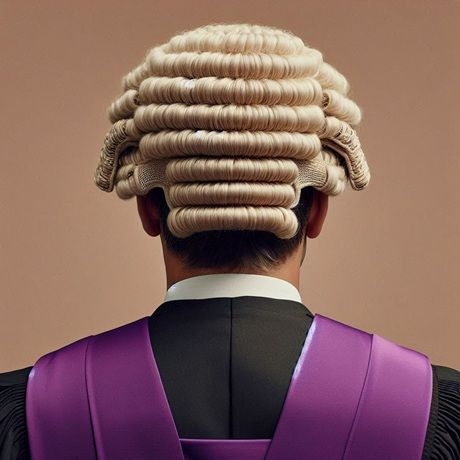
In open court district judges wear the civil robe introduced in October 2008, with blue tabs at the neck and without a wig.

Court Working Dress – District Judge

Check out our articles on Dodgy JudgesJudges Salaries and Fees, His Honour Judge Melbourne Inman KC, His Honour Now His Dishonour, His Honour Judge Michael Slater, His Honour Judge Martin Davis, HHJ Farquhar, Do you Have to Bow to a Judge ?, Can you Email a Judge ?, Can you Criticise a Judge ? and the highly dubious Sussex Family Justice Board.


The Ministry of Injustice is not the Ministry of Justice nor is it affiliated in any way with the justice system, legal profession, police or any other law enforcement agencies.


Latest Articles


Most Popular


You should always seek formal legal advice from a qualified and reputable lawyer (solicitor or barrister).

There are a number of links to Free and Paid For Legal Resources and Legal Organisations on the Free Legal Advice , Legal Aid and Pro Bono pages.

Categories
Judiciary Legal Professionals

Deputy District Judge

Deputy district judges such DDJ Nicholes are appointed by the Lord Chancellor after a fair and open competition administered by the Judicial Appointments Commission, and the statutory qualification is the same as that for appointment as a district judge – a minimum of five years’ right of audience in any part of the Supreme Court, or all proceedings in county courts or magistrates’ courts.

Deputy district judges sit on a fee-paid basis in the county courts and district registries of the High Court for between 15 and 50 days a year. In general their jurisdiction is the same as that of a district judge.

Appointments are for five years, and are automatically extended by the Lord Chancellor for further successive terms of five years – subject to the office holder’s agreement and the retirement age of 70.

In open court, Deputy District Judges wear a black coat with bands, a King’s Counsel’s or junior barrister’s gown with no wig.

Court Working Dress – Deputy District Judge

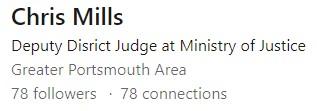
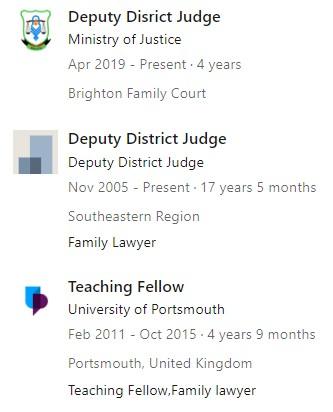
Deputy District Judge Chris Mills the only Disrict judge in the UK

Read more about DDJ Mills in our Dodgy Judges article.

Deputy District Judge Christopher Mills email address is [email protected]

Deputy District Judge Mills / DDJ Mills South East Circuit
DDJ Mills Brighton Family Court

Check out our articles on Dodgy JudgesJudges Salaries and Fees, His Honour Judge Melbourne Inman KC, His Honour Now His Dishonour, His Honour Judge Michael Slater, His Honour Judge Martin Davis, HHJ Farquhar, Do you Have to Bow to a Judge ?, Can you Email a Judge ?, Can you Criticise a Judge ? and the highly dubious Sussex Family Justice Board.


The Ministry of Injustice is not the Ministry of Justice nor is it affiliated in any way with the justice system, legal profession, police or any other law enforcement agencies.


Latest Articles


Most Popular


You should always seek formal legal advice from a qualified and reputable lawyer (solicitor or barrister).

There are a number of links to Free and Paid For Legal Resources and Legal Organisations on the Free Legal Advice , Legal Aid and Pro Bono pages.
Categories
Judiciary Legal Professionals

Her Honour Judge Angela Rafferty KC

Her Honour Judge Angela Rafferty KC handed Farhad Mohammad a three-year community order at the Old Bailey on the 23rd October 2024 after he was found guilty of two charges of funding terrorism by making money transfers to his nephew in Syria.

HHJ Rafferty also ordered him to complete 250 hours of unpaid work, to be subject to an electronically monitored curfew and complete a 30-day rehabilitation activity requirement.

The Sentencing Council publish sentencing guidelines for Funding terrorism which comes under the Terrorism Act 2000, s.15, Terrorism Act 2000, s.16, Terrorism Act 2000, s.17, Terrorism Act 2000, s.18.

There was online criticism that the sentence handed down for a terrorism offence was deemed to be too lenient :-

It is assumed Farhad Mohammad demonstrated Culpability C (Performed limited function under direction – Very little or no planning) and Harm was Category 3 (Money or property made, or was likely to make, a minor contribution to furthering terrorism).

It would appear that the sentence handed down by the honourable judge Rafferty to Farhad Mohammad for Funding Terrorism was in line with the Sentencing Council guidelines.

Terrorist groups rely on financial support and funding to be able to operate. While Mohammad’s contributions may not have been vast sums, he was well aware his nephew wanted the money to purchase a firearm and to help fund his fighting in Syria.

Commander Dom Murphy – Met Police Counter Terrorism Command

Counter Terrorism Policing need your help to stop terrorists being able to plan, prepare and carry out attacks, groom or recruit people or encourage others to carry out attacks. You may have seen or heard something that could be that vital piece of information that will help to stop a terrorist attack. Report Online, contacting the police in confidence on 0800 789 321 or in an emergency 999.

HHJ Rafferty is shown on the List of Circuit Judges published on the Courts and Tribunal Judiciary website. Her Honour Judge Rafferty is a Circuit Judge.

Her Honour Judge Angela Margaret Mary Rafferty KCLondon07-01-2019
List of Circuit Judges

Former Chair of the Criminal Bar Association HHJ Angela Rafferty KC is a specialist in grave high profile criminal cases nationwide involving the vulnerable, including young people with mental and physical disabilities, and frequently represents women accused of homicide and young people accused of serious sexual offences in this and other jurisdictions.

In conversation with HHJ Angela Rafferty KCJustice.org.uk

The Judicial Appointments Commission (JAC) selects candidates for judicial office in England and Wales, and for some tribunals with UK-wide powers. The JAC is made up of 15 Commissioners, supported by a Senior Leadership Team, Panel Members and around 90 staff.

Her Honour Judge Angela Rafferty KC was appointed to the JAC as a Judicial Commissioner on the 9th June 2024. Angela was called to the Bar in 1995, appointed a Recorder in 2009 and took silk in 2015.  Since 2019, Angela has sat as a Senior Circuit Judge in the Central Criminal Court.

Her Honour Judge Angela Rafferty KCJudicial Appointments Commission

HHJ Angela Rafferty KC was the trial judge at the Old Bailey for three people who were subsequently jailed for murdering a vulnerable woman they “treated like a slave” by starving, torturing and beating her. HHJ Rafferty sentencing remarks were published on the 1st March 2024. The video was published on the 5th March 2024.

HHJ Rafferty – Trio jailed for over 100 years for murder of woman they treated like slave

HHJ Angela Rafferty appeared on the Bar Council of England Wales YouTube Channel in 2017 for International Women’s Day.

Her Honour Judge Angela Rafferty KCBar Council of England Wales

Through their distinguished track record and their pre-eminent place in the legal world, our new visiting professors will bring the law to life along with giving our students a real time appreciation of its impact both intellectually and professionally

HHJ Angela Rafferty to join Goldsmiths’ Department of Law as a visiting Professor.

The three key values which are central to the role of judicial office holders (JOHs) in England and Wales are:
• Independence
• Impartiality
• Integrity

“Publicity is the very soul of justice. . . . It keeps the judge himself, while trying, under trial….Where there is no publicity there is no justice”

Jeremy BenthamMr Justice Cobb: ‘Justice must be seen to be done’

Image of HHJ Rafferty : Bar Council of England and Wales (Screenshot)

Check out our articles on Mr Justice Williams, Dodgy JudgesHis Honour Judge Melbourne Inman KC, His Honour Andrew Menary KC, His Honour Judge Guy Kearl, His Honour Now His Dishonour, His Honour Judge Michael Slater, His Honour Judge Martin Davis, HHJ Farquhar, HHJ Bedford, DDJ Nicholes, Judge Pinder, Do you Have to Bow to a Judge ?, Can you Email a Judge ?, Can you Criticise a Judge ? and the highly dubious Sussex Family Justice Board.


The Ministry of Injustice is not the Ministry of Justice nor is it affiliated in any way with the justice system, legal profession, police or any other law enforcement agencies.


Latest Articles


Most Popular


You should always seek formal legal advice from a qualified and reputable lawyer (solicitor or barrister).

There are a number of links to Free and Paid For Legal Resources and Legal Organisations on the Free Legal Advice , Legal Aid and Pro Bono pages.
Categories
Criminal Justice Judiciary Legal Professionals

His Honour Judge Jeremy Richardson KC

His Honour Judge Jeremy Richardson KC (The Recorder of Sheffield) sentenced Grandfather Peter Lynch, who had pleaded guilty to a charge of violent disorder, to a jail term of two years and eight months on the 22nd August 2024.

“You did not yourself attack any police officer, as far as can be detected, but what you did was encourage by your conduct others to behave violently and you were part of this mob……What a disgraceful example you are as a grandfather.”

HHJ Richardson KC

Prison Service spokeswoman said on Monday 21st October 2024 “HMP Moorland prisoner Peter Lynch died on October 19 2023.”

“As with all deaths in custody, the Prisons and Probation Ombudsman will investigate.”

There has been an outpouring of public opinion since the death of Peter Lynch including the “harsh sentence” handed down by His Honour Judge Jeremy Richardson KC and the suspected influence of British Prime Minister Sir Keir Starmer KC on the criminal justice system.

Kay Burley asked the Lord Chancellor on Sky TV : Should Peter Lynch a first time offender with a poor health record, have been jailed?

Did Keir Starmer Sign a ‘Death Sentence’ for Peter Lynch? HHJ Richardson KC ?
Judge Jeremy Richardson on X
The Recorder of Sheffield HHJ Jeremy Richardson KC
Did He Deserve Three Years In Jail – His Honour Judge Richardson KC ?

HHJ Richardson is shown on the List of Circuit Judges published on the Courts and Tribunal Judiciary website.

His Honour Judge Jeremy William Richardson KCNorth East14-05-2018
List of Circuit Judges

HHJ Richardson is shown on the Resident Judges list published on the Courts and Tribunal Judiciary website.

CircuitCourtJudgesDate of appointment
 North EastSheffield Combined Court CentreHHJ Jeremy Richardson KC14-05-18
Resident Judges

His Honour Judge Richardson is a Circuit Judge.

His Honour Judge Jeremy Richardson is a Master of the Bench at the Inner Temple. He has been a Judicial Governing Bencher since the 19th July 2007.

HHJ Richardson is also Master of the Inner Temple LGBTQ+ Society, and member of the Equality, Diversity and Inclusivity Sub-Committee.

The three key values which are central to the role of judicial office holders (JOHs) in England and Wales are:
• Independence
• Impartiality
• Integrity

Authorisation to sit as a High Court Judge

HHJ Richardson may be authorised to sit as a High Court Judge by s9(1) of the Senior Courts Act as amended by the Crime and Courts Act 2013.

According to CRIMINAL PRACTICE DIRECTIONS 2015 DIVISION XII HHJ Richardson should be addressed as “My Lord” in court.

Modes of Address B.1 – The following judges, when sitting in court, should be addressed as ‘My Lord’ or ‘My Lady’

(b) any Circuit Judge sitting as a judge of the Court of Appeal (Criminal Division) or the High Court under section 9(1) of the Senior Courts Act 1981;
(d) any Senior Circuit Judge who is an Honorary Recorder.

Description B.3 – In cause lists, forms and orders members of the judiciary should be described as follows:

(a) Circuit Judges, as ‘His [or Her] Honour Judge A’. When the judge is sitting as a judge of the High Court under section 9(1) of the Senior Courts Act 1981, the words ‘sitting as a judge of the High Court’ should be added;

“Publicity is the very soul of justice. . . . It keeps the judge himself, while trying, under trial….Where there is no publicity there is no justice”

Jeremy BenthamMr Justice Cobb: ‘Justice must be seen to be done’

Image of HHJ Richardson : Grimsby Telegraph

Check out our articles on Dodgy JudgesMr Justice Williams, His Honour Judge Melbourne Inman KC, His Honour Andrew Menary KC, His Honour Judge Guy Kearl, His Honour Now His Dishonour, His Honour Judge Michael Slater, His Honour Judge Martin Davis, HHJ Farquhar, HHJ Bedford, DDJ Nicholes, Do you Have to Bow to a Judge ?, Can you Email a Judge ?, Can you Criticise a Judge ? and the highly dubious Sussex Family Justice Board.


The Ministry of Injustice is not the Ministry of Justice nor is it affiliated in any way with the justice system, legal profession, police or any other law enforcement agencies.


Latest Articles


Most Popular


You should always seek formal legal advice from a qualified and reputable lawyer (solicitor or barrister).

There are a number of links to Free and Paid For Legal Resources and Legal Organisations on the Free Legal Advice , Legal Aid and Pro Bono pages.
Categories
Judiciary Legal Analysis Legal Professionals

Can you Email a Judge ?

The Judiciary of England and Wales use Microsoft 365 for email using the ejudiciary.net domain. This domain is connected to the Internet and accepts email via MX ejudiciary-net.mail.protection.outlook.com. This is public information.

ejudiciary.net M365
ejudiciary.netMicrosoft 365

The rule of law is a fundamental constitutional principle which underpins an open, fair and peaceful society, where citizens and businesses can prosper. Our judges and magistrates are its cornerstone.

Lady Chief Justice on the public ejudiciary.net page

I sent an email lawfully requesting information about his “occupation” to His Honour Judge Melbourne Inman KC copying the The Lady Chief Justice of England and Wales (LCJ) on the 21st October 2024.

To: [email protected]
Cc: [email protected]
Subject: HHJ Melbourne Inman KC – Media Enquiry
Importance: High

Dear Judge

cc The Right Honourable The Lady Chief Justice of England and Wales

I asked the Judiciary Press Office for comment (as below) on Friday 18th October 2024 but they have not replied.

Could you please answer the following questions :-

  1. Are you a Circuit Judge or High Court Judge ?
  2. Are you authorised to sit as a High Court Judge ?
  3. Should your occupation at  Companies House be shown as High Court Judge ?

An article was published at noon on the 18th October 2024 https://ministryofinjustice.co.uk/his-honour-judge-melbourne-inman-kc/. It has received a considerable amount of worldwide attention.

The Lady Chief Justice states as a co-signatory of the document Judicial Discipline –  Misconduct and recommending sanctions (https://www.complaints.judicialconduct.gov.uk/rulesandregulations/MisconductandRecommendingSanctions)

“As Lord Chancellor and Lady Chief Justice, we are jointly responsible for judicial discipline………The public has a right to expect that on the rare occasions when judicial office holders do not meet the high standards of conduct expected of them, action will be taken.”

I do not believe that the JCIO will accept a complaint concerning “misrepresentation” hence the cc to The Right Honourable The Lady Chief Justice to deal with and action.

Regards

Email to HHJ Inman and The Lady Chief Justice

An autoreply was received from the LCJ’s former High Court email address.

From: Archived Mail Address – Carr LJ <[email protected]>
Subject: Automatic reply: HHJ Melbourne Inman KC – Media Enquiry

Dame Sue Carr has now been appointed as the Lady Chief Justice of England and Wales, please direct any queries to [email protected]

So yes you can email a judge…however

Sending threatening or malicious messages using a public electronic communication, such as via email, may amount to an offence. Do not do it.

The relevant legislation of England and Wales includes :-

Malicious Communications Act 1988 Section 1
Communications Act 2003 Section 127
Part 10 of the Online Safety Act 2023
Protection from Harassment Act 1997
Computer Misuse Act 1990

The Crown Prosecution Service (CPS) publish legal guidance on Communications Offences.

Judicial Email Format

Judges are by their very nature public figures. Open justice is a fundamental principle at the very heart of the justice system and vital to the rule of law.

‘It is not merely of some importance but is of fundamental importance that justice should not only be done, but should manifestly and undoubtedly be seen to be done’

R v Sussex Justices –  Lord Hewart

Judicial email addresses, including High Court Judges, are widely published on the internet and easily found by a simple Google search. This article only contains publicly and readily available information.

The format for most judicial email addresses are as follows :-

Sent an Email to the Wrong Person ?

“Publicity is the very soul of justice. . . . It keeps the judge himself, while trying, under trial….Where there is no publicity there is no justice”

Jeremy BenthamMr Justice Cobb: ‘Justice must be seen to be done’

Check out our articles on Dodgy JudgesJudges Salaries and Fees, Can you Criticise a Judge, Criminal Justice Secure eMail (CJSM), Do you Have to Bow to a Judge ?, His Honour Now His Dishonour, His Honour Melbourne Inman KC, His Honour Judge Jeremy Richardson KC, His Honour Judge Michael Slater, His Honour Judge Martin Davis, HHJ Farquhar and the highly dubious Sussex Family Justice Board.


The Ministry of Injustice is not the Ministry of Justice nor is it affiliated in any way with the justice system, legal profession, police or any other law enforcement agencies.


Latest Articles


Most Popular


You should always seek formal legal advice from a qualified and reputable lawyer (solicitor or barrister).

There are a number of links to Free and Paid For Legal Resources and Legal Organisations on the Free Legal Advice , Legal Aid and Pro Bono pages.

Rule of Law - Open Justice - Policing By Consent