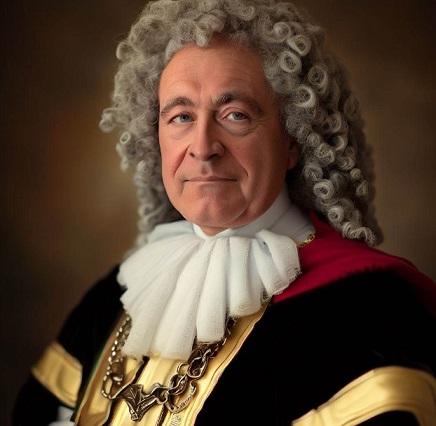
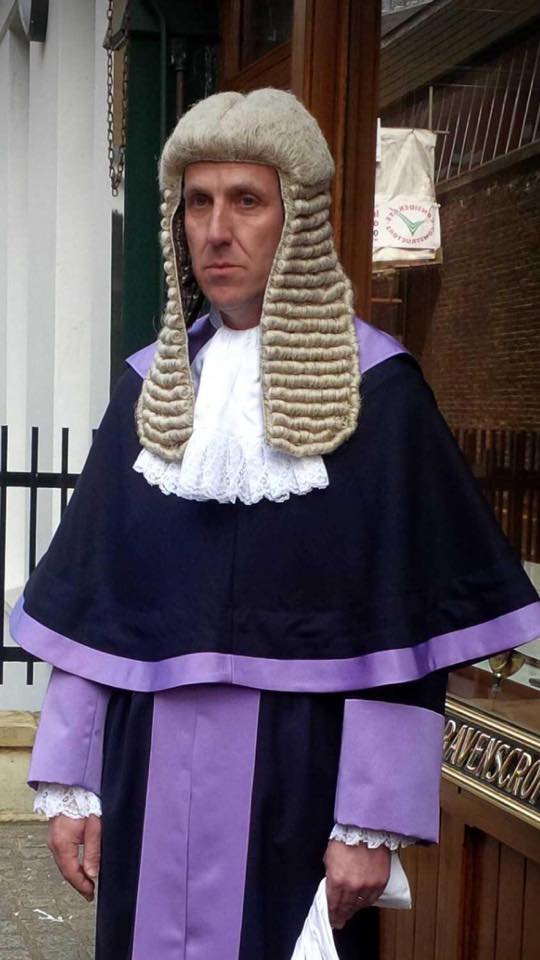
The Lord Chief Justice is the most senior judge in England and Wales, and is responsible for the administration of justice. Since the 1st October 2023 Dame Sue Carr is the first Lady Chief Justice of England and Wales.
The role of The Lord Chief Justice (LCJ) is to oversee the judiciary and ensure that the courts operate efficiently and effectively. This position is a vital one in the legal system, and the Lord Chief Justice plays a significant role in upholding the rule of law in England and Wales.
The Lord Chief Justice is also President of all the Courts of England and Wales. The Lord Chief Justice sits in both the Criminal and Civil divisions of the Court of Appeal, in the Divisional Court and also, by invitation, in the UK Supreme Court.
Under the Constitutional Reform Act 2005, the Lord Chief Justice (LCJ) has some 400 statutory (required by law) duties. The LCJ’s key responsibilities include:
- Representing the views of the judiciary of England and Wales to Parliament and Government.
- The welfare, training and guidance of the judiciary of England and Wales. The Lord Chief Justice discusses with Government the provision of resources for the judiciary, which are allotted by the Lord Chancellor.
- The deployment of judges and allocation of work in courts in England and Wales.
Lord Chief Justice Courts and Tribunals Judiciary
You may also be interested in our article on the Lady Chief Justice, Master of the Rolls and the Lord Chancellor.
History of the Lord Chief Justice
The history of the Lord Chief Justice dates back to the 12th century, when the office of the Chief Justiciar was established in England. This office was responsible for overseeing the administration of justice in the country, and was considered the most important legal office in the land.
Over time, the role of the Chief Justiciar evolved, and in 1234, the office of the Lord Chief Justice was established by King Henry III. This new position was created to provide greater independence and authority to the judiciary, and to ensure that justice was administered fairly and impartially.
The Lord Chief Justice is appointed by the King on the recommendation of the Prime Minister. The appointment is made from a list of candidates prepared by an independent panel of legal experts. The Lord Chief Justice holds the position for a fixed term of five years, after which he or she may be re-appointed for another term.
The Lord Chief Justice has a number of important responsibilities. These include presiding over the Court of Appeal, which is the second highest court in the land, and overseeing the High Court and the Crown Court. The Lord Chief Justice also plays a key role in the development of the law, and is responsible for ensuring that the judiciary is properly trained and equipped to handle the complex legal issues that arise in the modern world.
One of the key functions of the Lord Chief Justice is to ensure that justice is administered fairly and impartially. This means that the Lord Chief Justice must be independent of political influence, and must make decisions based solely on the evidence presented in court. The Lord Chief Justice is also responsible for ensuring that the court system operates efficiently and effectively, and that the rights of defendants and victims are protected.
The Lord Chief Justice is assisted in his or her duties by a team of judges, including the Lord Justice of Appeal and the High Court judges. These judges are responsible for hearing cases and making judgments in accordance with the law. The Lord Chief Justice also works closely with the Ministry of Justice and the Attorney General’s office to ensure that the legal system operates effectively and efficiently.
In addition to his or her legal duties, the Lord Chief Justice also plays an important role in promoting the legal profession and upholding the principles of justice and fairness. The Lord Chief Justice is often called upon to speak publicly on legal issues, and to represent the legal profession in national and international forums. The Lord Chief Justice is also responsible for ensuring that the legal profession maintains high ethical standards, and that lawyers and judges act with integrity and professionalism at all times.
The role of the Lord Chief Justice is a complex and demanding one, and requires a deep understanding of the law and the legal system. The Lord Chief Justice must be able to balance the demands of the legal profession with the needs of society, and must be able to make difficult decisions in the face of complex legal issues. The Lord Chief Justice must also be able to work closely with other members of the judiciary, as well as with government officials, to ensure that the legal system operates smoothly and effectively.
In recent years, the role of the Lord Chief Justice has become even more important, as the legal system has become more complex and the demands on the judiciary have increased. The Lord Chief Justice must be able to adapt to changing circumstances, and to ensure that the legal system remains effective in the face of new challenges and developments.
Former Lord Chief Justice
The former Lord Chief Justice of England and Wales is Ian Duncan Burnett, who has held the position since October 2017.
Ian Burnett was called The Lord Chief Justice of England and Wales – The Right Honourable Lord Burnett of Maldon. In Court he is addressed as My Lord.
Lord Burnett studied law at Pembroke College, Oxford and was called to the Bar in 1980 where he became a pupil and then a member of Temple Garden Chambers. He practised there until May 2008, for the last five years as Head of Chambers.
At the Bar Lord Burnett’s practice was in common law and public law. In the early part of his career he undertook a broad range of common law work including personal injury, professional negligence, landlord and tenant, crime and family law. Thereafter he focussed on public and administrative law, personal injury and health and safety law, including acting as junior counsel to the King’s Cross Fire inquiry and to the inquiry into the convictions of the Guildford Four and Maguire family. He was leading counsel to the inquiry into the Southall rail crash and into train protection systems following the Paddington train crash.
Lord Burnett was Junior Counsel for the Crown, Common Law from 1992 and was appointed as Queen’s Counsel (now King’s Counsel) in 1998.
Lord Burnett’s first judicial role came on his appointment as a Recorder in 1998, in which capacity he sat part-time in the Crown Court trying criminal cases. On his appointment to the High Court in 2008 Lord Burnett joined the Queen’s Bench Division (now King’s Bench Division) hearing civil law and public law cases in the Administrative Court as well as hearing serious criminal matters out of London and sitting in the Court of Appeal, Criminal Division.
Lord Burnett was Presiding Judge of the Western Circuit from 2011 until 2014 when he was appointed to the Court of Appeal. He was also Deputy Chairman of the Security Vetting Appeals Panel. In the Court of Appeal Lord Burnett heard the full range of civil, family and criminal appeals and continued to sit in Divisional Courts of the High Court. Lord Burnett was the judge of the Court of Appeal with responsibility for extradition cases and was also supervising Lord Justice for immigration and public law appeals. He was Vice Chairman of the independent Judicial Appointments Commission from November 2015 until March 2017. He was appointed Lord Chief Justice of England and Wales on 1 October 2017 at the age of 59.
Judiciary UK – Lord Chief Justice of England and Wales – The Right Honourable Lord Burnett of Maldon
As Lord Chief Justice, Lord Burnett was responsible for overseeing the administration of justice in England and Wales, and for ensuring that the legal system operates fairly and efficiently. He also played an important role in promoting the independence and integrity of the judiciary, and in ensuring that judges and lawyers maintain high ethical standards.
In addition to his role as Lord Chief Justice, Burnett also served as a member of the Privy Council. He is widely respected for his legal expertise and his commitment to upholding the rule of law, and is regarded as one of the most influential legal figures in the UK today.
Lord Chief Justice Vacancy January 2023
The Judicial Appointments Commission published the following on the 16th January 2023 (updated 1 February 2023)
The Lord Chancellor has asked the Judicial Appointments Commission (JAC) to convene a selection panel to recommend a candidate to fill the position of Lord Chief Justice of England and Wales.
The exercise launched on 30 January 2023, and anyone interested in making an application should contact the JAC’s Head of Senior Appointments and panel secretary, Lisa Grant, for further information on the eligibility and selection criteria and details of the documentation required to make an application. Candidates must submit a “Notice of Intent” to apply for the role by close of 6 February 2023.
Once we receive confirmation of a candidate’s “Notice of Intent” we will provide them with the relevant application forms and details of the required written submission. This part of the process will close on 6 March 2023. Interviews are expected to take place on 21 April 2023.
The role is complex, high profile and demanding, requiring a judge and leader of the highest calibre. Applications are welcome from talented individuals of all backgrounds
If you are interested in making an application and you think you have the requisite evidence to do so, please send an email to [email protected] in order to request an information pack.
All enquiries are dealt with in the strictest confidence.
A copy of the candidate information pack can be downloaded here:
A copy of the “Notice of intent to apply” form can be downloaded here:
Lord Chief Justice Vacancy Judicial Appointments Commission
Appointment and Selection Process
The appointment of the Lord Chief Justice is made by His Majesty The King on the advice of the Prime Minister and the Lord Chancellor following the recommendation of an independent selection panel chaired by Helen Pitcher OBE, Chair of the Judicial Appointments Commission . The other members were Lord Lloyd-Jones of the Supreme Court, Sue Hoyle OBE and Sarah Lee (lay and professional members of the Judicial Appointments Commission), and Lord Justice Edis (Senior Presiding Judge).
This selection exercise was run under the relevant sections of the Constitutional Reform Act 2005 as amended by the Crime and Courts Act 2013. In accordance with section 70 of the Constitutional Reform Act 2005, as amended by the Crime and Courts Act 2013, the panel determined the selection process to be followed and consulted the Lord Chancellor and the First Minister of Wales on the process followed.
In accordance with s.10(3) of the Senior Courts Act 1981 c.54, the selection exercise was open to all applicants who satisfied the judicial-appointment eligibility condition on a 7-year basis, or were judges of the Supreme Court, Court of Appeal, or High Court.
Given the challenges of reducing the outstanding caseloads across jurisdictions and the drive for modernisation across the Courts and Tribunals, candidates were expected to be able to serve for at least 4 years.
Appointment of Lord Chief Justice: 15 June 2023 gov.uk
Conclusion
The Lord Chief Justice is a vital figure in the English legal system, and plays a crucial role in upholding the principles of justice and fairness. The Lord Chief Justice is responsible for overseeing the administration of justice in England and Wales, and for ensuring that the legal system operates efficiently and effectively.
The Lord Chief Justice is also responsible for promoting the legal profession, and for ensuring that lawyers and judges maintain high ethical standards. This is an important role, as the legal profession plays a key role in upholding the rule of law and protecting the rights of individuals.
The Lord Chief Justice is an impartial figure, who must make decisions based solely on the evidence presented in court. This means that the Lord Chief Justice must be independent of political influence, and must be able to make difficult decisions in the face of complex legal issues.
One of the most important functions of the Lord Chief Justice is to oversee the development of the law. The Lord Chief Justice plays a key role in shaping the law, and in ensuring that the legal system remains relevant and effective in the face of new challenges and developments.
The Lord Chief Justice is also responsible for ensuring that the judiciary is properly trained and equipped to handle the complex legal issues that arise in the modern world. This means that the Lord Chief Justice must work closely with other members of the judiciary, as well as with government officials, to ensure that the legal system remains effective and efficient.
The Ministry of Injustice is not the Ministry of Justice nor is it affiliated in any way with the justice system, legal profession, police or any other law enforcement agencies.
“Publicity is the very soul of justice. . . . It keeps the judge himself, while trying, under trial….Where there is no publicity there is no justice”
Jeremy Bentham – Mr Justice Cobb: ‘Justice must be seen to be done’
Latest Articles ↓
Most Popular ↓
You should always seek formal legal advice from a qualified and reputable lawyer (solicitor or barrister).
There are a number of links to Free and Paid For Legal Resources and Legal Organisations on the Free Legal Advice , Legal Aid and Pro Bono pages.
 The presumption of innocence is a basic principle of the… Read more: Presumption of Innocence
 Judge Daniel Sawyer, known as His Honour Judge Daniel Sawyer,… Read more: His Honour Judge Daniel Sawyer
 Prime Minister Andy Burnham used his first United Nations General… Read more: UK National Centre for Information Defence
 On the 27th August 2026 the Crown Prosecution Service announced… Read more: Judges Behaving Badly and His Honour Judge Simon Oliver
 Jo Morris is a practising criminal barrister of Drystone Chambers… Read more: Jo Morris Barrister
 The Good Law Project is a UK campaigning organisation that… Read more: Good Law Project
 The Police Federation of England and Wales (PFEW) is the… Read more: Police Federation of England and Wales (PFEW)
 The Criminal Justice System Common Platform (also known as HMCTS… Read more: What is the Criminal Justice System (CJS) Common Platform ?
 Strategic Lawsuits Against Public Participation, or SLAPPs, are legal actions… Read more: Strategic Lawsuit Against Public Participation (SLAPPs)
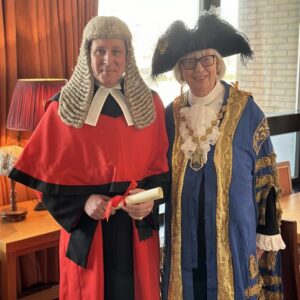 Judge Tony Alan Walter Baumgartner, known as His Honour Judge… Read more: His Honour Judge Tony Baumgartner – Recorder of Westminster
 On the 8th July 2026, the Courts and Tribunals Judiciary… Read more: New Protocol for Legal Professionals to Raise Informal Concerns About Judges Behaviour
 In April 2026, His Majesty’s Inspectorate of Constabulary and Fire… Read more: The Policing Performance System