Categories
Criminal Justice Judiciary Legal Professionals

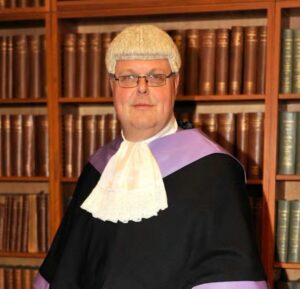
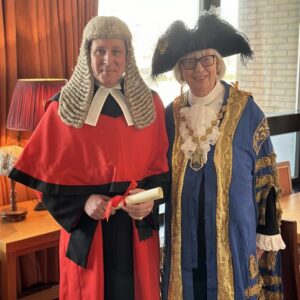
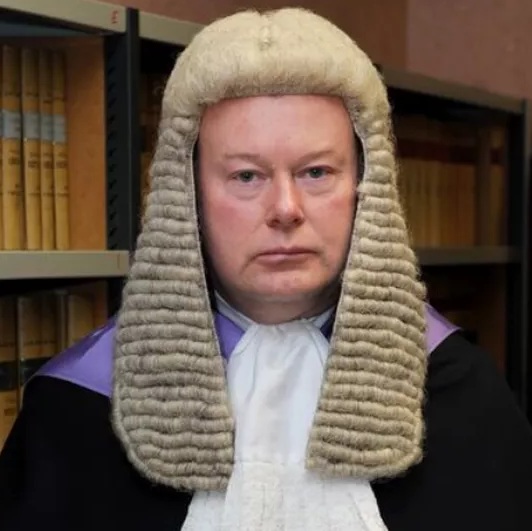
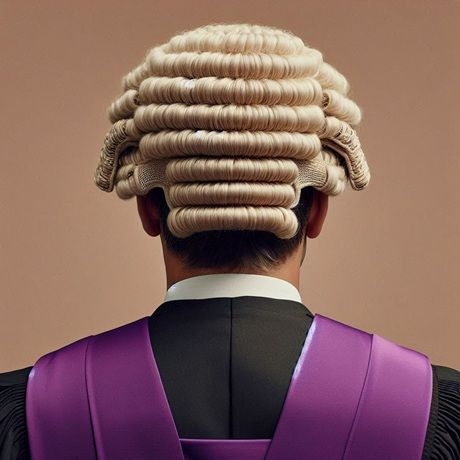
His Honour Judge Melbourne Inman KC

His Honour Judge Melbourne Inman KC (The Recorder of Birmingham) sentenced Lucy Connolly at Birmingham Crown Court to two years and seven months in prison for publishing written material that incited racial hatred. Lucy Connolly was ordered to serve 40% of her 31-month sentence in prison before being released on licence.

His Honour Judge Melbourne Donald Inman KC retires as a Senior Circuit Judge with effect from 1 July 2025 – Updated 24th July 2025

HHJ Melbourne Inman KC told Birmingham Crown Court the sentence for these offences was intended to “punish and deter”.

His Honour Judge Melbourne Inman KC – Rex v Lucy Connolly

His Honour Judge Melbourne Inman KC on X !

HHJ Inman was shown on the List of Circuit Judges published on the Courts and Tribunal Judiciary website.

His Honour Judge Inman KCMidlands13-10-2014
List of Circuit Judges

HHJ Inman was shown on the Resident Judges list published on the Courts and Tribunal Judiciary website.

CircuitCourtJudgesDate of appointment
 MidlandBirmingham Crown CourtHHJ Melbourne Inman KC13-10-14
Resident Judges

His Honour Judge Inman was a Circuit Judge.

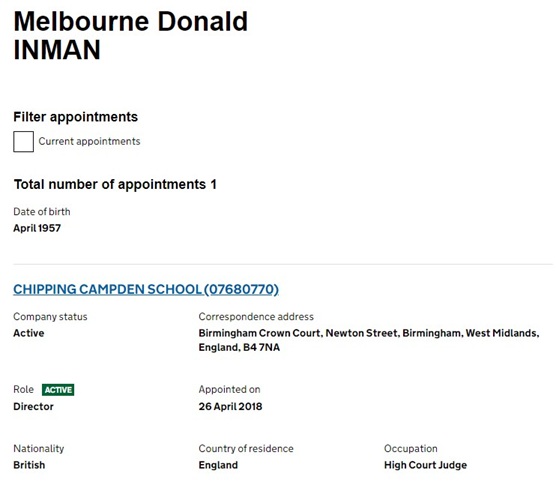
Companies House listed Melbourne Donald INMAN as a DIRECTOR of  CHIPPING CAMPDEN SCHOOL (07680770) with his occupation listed as High Court Judge.

On the Chipping Campden School Trustees page his bio states “I am a Senior Circuit Judge and have sat as a Judge for seventeen years.”

HHJ Inman – High Court Judge ? – Companies House – 18th October 2024

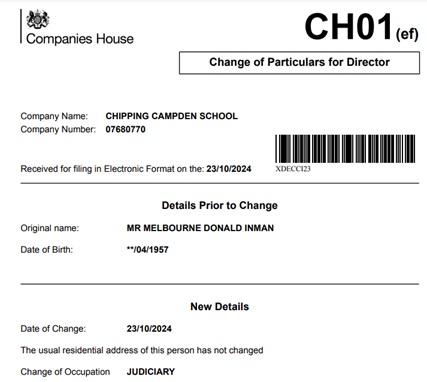
Update 23rd October 2024 – Following an email sent to HHJ Inman and the Lady Chief Justice on the 21st October 2024 asking for clarification, a CH01 Change of Particulars for Director was filed at Companies House on the 23rd October 2024. Mr Melbourne Donald Inman occupation was changed to “JUDICIARY”. Needless to say HHJ Inman and the Lady Chief Justice did not respond to my email.

HHJ Inman – Change of Occupation to Judiciary – Companies House – 23rd October 2024

(1) It is an offence for a person, without reasonable excuse, to—

(a) deliver or cause to be delivered to the registrar, for any purpose of the Companies Acts, a document that is misleading, false or deceptive in a material particular, or

(b) make to the registrar, for any purpose of the Companies Acts, a statement that is misleading, false or deceptive in a material particular.

Section 1112 of the Companies Act 2006

I did not believe that HHJ Melbourne Inman KC was a High Court Judge so his submission and entry at Companies House was false. I could not find any evidence that he was ever authorised to sit as a Deputy High Court Judge. Regardless of whether HHJ Inman was ever authorised to sit as a High Court Judge, his occupation is still a Circuit Judge (Senior).

Was HHJ Inman listing his occupation as a High Court Judge at Companies House an honest mistake or deliberate dishonesty (Fraud) ?

(1) A person is in breach of this section if he—

(a) dishonestly makes a false representation, and

(b )intends, by making the representation—

(i) to make a gain for himself or another, or

(ii) to cause loss to another or to expose another to a risk of loss.

(2) A representation is false if—

(a) it is untrue or misleading, and

(b) the person making it knows that it is, or might be, untrue or misleading

Fraud Act 2006 – Section 2 Fraud by false representation

The three key values which are central to the role of judicial office holders (JOHs) in England and Wales are:
• Independence
• Impartiality
• Integrity

If HHJ Melbourne Inman KC is not a High Court Judge then this would normally need to be referred to the Police, JCIO and Companies House to investigate. Can you Email a Judge ? No one is above the law.

The Judicial Press Office was contacted for comment but no response was received.

Authorisation to sit as a High Court Judge

HHJ Inman may have been authorised to sit as a High Court Judge by s9(1) of the Senior Courts Act as amended by the Crime and Courts Act 2013.

According to CRIMINAL PRACTICE DIRECTIONS 2015 DIVISION XII HHJ Inman should be addressed as “My Lord” in court.

Modes of Address B.1 – The following judges, when sitting in court, should be addressed as ‘My Lord’ or ‘My Lady’

(b) any Circuit Judge sitting as a judge of the Court of Appeal (Criminal Division) or the High Court under section 9(1) of the Senior Courts Act 1981;
(d) any Senior Circuit Judge who is an Honorary Recorder.

Description B.3 – In cause lists, forms and orders members of the judiciary should be described as follows:

(a) Circuit Judges, as ‘His [or Her] Honour Judge A’. When the judge is sitting as a judge of the High Court under section 9(1) of the Senior Courts Act 1981, the words ‘sitting as a judge of the High Court’ should be added;

The Judicial Appointments Commission have published a Section 9(1) Policy which lays out the selection of persons for membership of the pool of judges who are authorised to act as judges of the High Court under s9(1) of the Senior Courts Act, as amended by the Crime and Courts Act 2013.

The Judicial Appointments Commission have also published a document Section 9(1) protocol. This protocol concerns the process by which authorisations for Recorders and Circuit Judges to sit as judges of the High Court under section 9(1) of the Senior Courts Act 1981 should take place.

Section 23 of The Courts Act 1971 covers a Circuit judge or Recorder sitting as High Court Judge.

(1) If requested to do so by or on behalf of the Lord Chancellor, a Circuit judge or Recorder shall sit as a judge of the High Court for the hearing of such case or cases or at such place and for such time as may be specified by or on behalf of the Lord Chancellor.

(2) So long as a Circuit judge or Recorder sits as a judge of the High Court in pursuance of a request under this section he shall be treated, subject to subsection (3) below, for all purposes as, and accordingly may perform any of the functions of, a puisne judge of the High Court.

(3) A Circuit judge or Recorder sitting as a judge of the High Court in pursuance of a request under this section shall not be treated as a judge of the High Court for the purpose of any provision made by or under any enactment and relating to—

(a) the appointment, retirement, removal or disqualification of judges of the High Court,
(b) the tenure of office and oaths to be taken by such judges, or
(c) the remuneration, allowances or pensions of such judges.

HHJ Inman KC (The Recorder of Birmingham)29.8K Views

“Publicity is the very soul of justice. . . . It keeps the judge himself, while trying, under trial….Where there is no publicity there is no justice”

Jeremy BenthamMr Justice Cobb: ‘Justice must be seen to be done’

Check out our articles on Dodgy JudgesJudges Salaries and Fees, Mr Justice Williams, His Honour Andrew Menary KC, His Honour Judge Guy Kearl, His Honour Now His Dishonour, His Honour Judge Michael Slater, His Honour Judge Jeremy William Richardson KC, His Honour Judge Martin Davis, HHJ Farquhar, HHJ Bedford, DDJ Nicholes, Do you Have to Bow to a Judge ?, Can you Email a Judge ?, Can you Criticise a Judge ? and the highly dubious Sussex Family Justice Board.


The Ministry of Injustice is not the Ministry of Justice nor is it affiliated in any way with the justice system, legal profession, police or any other law enforcement agencies.


Latest Articles


Most Popular


You should always seek formal legal advice from a qualified and reputable lawyer (solicitor or barrister).

There are a number of links to Free and Paid For Legal Resources and Legal Organisations on the Free Legal Advice , Legal Aid and Pro Bono pages.

Categories
Judiciary

Judges Salaries and Fees

What is a salaried judge ?

Salaried judges in the UK are full-time judges who are employed by the government to preside over cases in various courts and tribunals. They are appointed by the King on the recommendation of the Lord Chancellor, following a rigorous selection process that includes an assessment of their legal knowledge, experience, and personal qualities.

The role of a salaried judge in the UK is to interpret and apply the law impartially and to make decisions in a fair and just manner. Salaried judges are responsible for a wide range of legal matters, including criminal cases, civil disputes, family law, and employment law, among others.

In carrying out their role, salaried judges are required to conduct themselves with the utmost integrity and to be impartial and independent in their decision-making. They must also be knowledgeable about the law and able to apply it in a way that is consistent with the principles of justice and fairness.

Salaried judges in the UK are appointed to various courts and tribunals, including the Magistrates’ Courts, County Courts, Crown Court, High Court, Court of Appeal, and Supreme Court. The type of cases they handle and the level of seniority they hold will depend on their experience and qualifications.

How much are salaried judges paid ?

In the United Kingdom, the salaries of judges are determined by the Senior Salaries Review Body (SSRB), an independent body that advises the government on the pay of senior public officials.

Judicial salaries and fees are published on the Judicial salaries and fees 2025 to 2026 page on the gov.uk website. The judicial salaries and fees were effective from the 1st April 2025.

The salaries of judges in the UK vary depending on their level of experience and jurisdiction. The following are the current starting salary for judges in England and Wales, as of April 2025:

The SSRB takes into account a range of factors when making recommendations on judicial pay, including changes in the cost of living, pay levels in other professions, and the need to recruit and retain high-quality judges. The SSRB also considers the pensions and benefits that are available to judges, as these are an important part of their overall compensation.

Judges in the UK are entitled to pensions through the Judicial Pensions Scheme. The scheme is based on a career-average earnings basis and provides a retirement income based on the judge’s length of service and average earnings during their career. Judges contribute between 7.35% and 14.5% of their salary to their pension, depending on their salary level.

Please also refer to the Judicial Pension Scheme for more information about pensions.

The salaries of judges in the UK are relatively high compared to other professions. However, this is balanced by the demanding nature of their work and the importance of their role in upholding the rule of law. Judges must be impartial and independent, and they must have the trust and confidence of the public in order to carry out their duties effectively.

What are fee paid judges and how much do they get paid ?

Fee-paid judges are part-time judges who are paid a fee for each day or half-day that they sit in court. They are also known as “recorder judges” or “deputy judges”.

Fee-paid judges are typically lawyers or other legal professionals who have expertise in a particular area of law and who are appointed to sit on a part-time basis in a variety of courts and tribunals.

The fees for fee-paid judges in the UK vary depending on the type of court or tribunal and the number of days worked.

As of April 2025, the daily fees for a Deputy District Judge is £648.70 or £667.30 with the London Weighting Fee as published in Judicial salaries and fees 2025 to 2026.

In addition to their fees, fee-paid judges are also entitled to claim expenses for travel, subsistence, and other reasonable costs associated with their work.

Fee-paid judges are an important part of the UK justice system and play a vital role in ensuring that the courts and tribunals have access to the expertise they need to make fair and impartial decisions.

While their fees may be lower than those of full-time judges, fee-paid judges provide an important service on a part-time basis and bring a valuable range of skills and experience to the courts and tribunals they serve.

What is a judge sitting in retirement and how much do they get paid ?

A judge sitting in retirement in the UK is a former full-time judge who has retired from their position but is still available to hear cases on a part-time basis. These judges are sometimes referred to as “retired judges” or “recalled judges”.

As of April 2024, the daily fees for a District Judge or Deputy District Judge sitting in retirement is £648.70 or £667.30 with the London Weighting Fee as published in Judicial Sitting in Retirement Fees 2025 to 2026.

The role of a judge sitting in retirement is to assist with the caseload of the court or tribunal they are appointed to and to provide additional judicial resources where needed. They may be appointed to sit in a specific court or tribunal or to act as a relief judge to cover for other judges who are unable to hear cases.

Retired judges are appointed by the Lord Chief Justice, the Senior President of Tribunals, or another relevant appointing authority. They are subject to the same standards of conduct as full-time judges and are required to adhere to the same ethical and professional standards.

The fees for retired judges vary depending on the type of court or tribunal and the number of days worked. Retired judges may be paid a daily fee, a fee per case, or a salary. They may also be entitled to claim expenses for travel, subsistence, and other reasonable costs associated with their work.

Overall, retired judges play an important role in the UK justice system by providing additional judicial resources and expertise where needed. They bring a wealth of experience and knowledge to the courts and tribunals they serve in and help to ensure that the justice system operates efficiently and effectively.

Summary

The salaries of judges in the UK are determined by the Senior Salaries Review Body (SSRB) and vary depending on their level of experience and jurisdiction. Judges are also entitled to pensions through the Judicial Pensions Scheme, which is based on a career-average earnings basis.

While the salaries of judges are relatively high, they reflect the demanding nature of their work and the importance of their role in upholding the rule of law.

Check out our articles on Rule of Law, Open Justice, Lady Chief Justice, Dodgy JudgesMr Justice Williams, His Honour Judge Melbourne Inman KC, His Honour Judge Richardson, His Honour Now His Dishonour, His Honour Judge Michael Slater, His Honour Judge Martin Davis, HHJ Farquhar, Do you Have to Bow to a Judge ?, Can you Email a Judge ?, Can you Criticise a Judge ? and the highly dubious Sussex Family Justice Board.


The Ministry of Injustice is not the Ministry of Justice nor is it affiliated in any way with the justice system, legal profession, police or any other law enforcement agencies.


Latest Articles


Most Popular


You should always seek formal legal advice from a qualified and reputable lawyer (solicitor or barrister).

There are a number of links to Free and Paid For Legal Resources and Legal Organisations on the Free Legal Advice , Legal Aid and Pro Bono pages.

Categories
Judiciary Legal Professionals

His Honour Judge Martin Davis

His Honour Judge Martin Davis was accused by a member of court staff of numerous allegations, primarily that HHJ Davis made overfamiliar and inappropriate comments while they worked together which made her uncomfortable.

The complaint was subsequently investigated by the Judicial Conduct Investigations Office who issued a disciplinary statement 5224 on the 3rd October 2024.

HHJ Michael Slater, was admitted to the Roll of Solicitors in 1994. He was appointed as a Deputy District Judge in 2010, as a Tribunal Judge in 2011, as a District Judge in 2014 and as a Recorder in 2019. The then Lord Chief Justice deployed him to the Western Circuit, based at Taunton Crown, County and Family Court with effect from 11 July 2022

A spokesperson for the Judicial Conduct Investigations Office said:

The Lady Chief Justice, with the Lord Chancellor’s agreement, has issued His Honour Judge (HHJ) Martin Davis with formal advice for misconduct.

Facts
The Guide to Judicial Conduct reminds judicial office-holders to be courteous and to respect the dignity of all. It also reminds them to treat others fairly and respectfully, be mindful of their authority, and aware of how their words and behaviour can affect others.

A complaint was made about HHJ Davis by a member of court staff. She made numerous allegations, primarily that he made overfamiliar and inappropriate comments while they worked together, which made her uncomfortable.

HHJ Davis’ representations
HHJ Davis denied the allegations. He claimed the complainant had misremembered or misrepresented his words. He explained that he takes an interest in his colleagues, with whom he enjoys conversations and has built positive relationships. However, upon reflection, he had learned to be more careful when sharing personal anecdotes and views and to always have regard to the powerful position he holds.

Investigating judge’s findings
Following an investigation carried out under the Judicial Conduct (Judicial and other office holders) Rules 2014, the investigating judge found that the majority of the allegations were not established. However, she found that HHJ Davis inappropriately and unnecessarily shared his strongly held moral beliefs with the complainant, a female member of staff who was subordinate to him, and therefore unable to object to anything said, and who did not know him. He was overfamiliar in his conversations with her, for example through his ill-judged use of humour and excessive sharing of personal anecdotes. This was intended to be friendly but made the complainant uncomfortable. He was not sufficiently mindful of his position of authority and did not consider the effect of his words and behaviour on the complainant. He therefore did not treat her with respect.

In recommending a formal warning, the investigating judge considered the fact that HHJ Davis is an experienced office-holder who should have been mindful of his position of authority. Furthermore, while he had shown insight and reflection, he had not offered an apology.

Decision
Having considered the investigating judge’s findings and the mitigation offered by HHJ Davis, the Lady Chief Justice and Lord Chancellor determined that the issue of formal advice, rather than a formal warning, was appropriate. A sanction of formal advice was more consistent with the findings made. In reaching their decision, they took into consideration that HHJ Davis did not intend to cause offence or discomfort to the complainant, and that he in fact intended to be friendly and approachable. They agreed with the investigating judge that the misconduct was at the lower end of seriousness. They also noted that the matter related to a brief period and that HHJ Davis had an unblemished record.

STATEMENT FROM THE JUDICIAL CONDUCT OFFICE JCIO 52/24

Had His Honour Judge Martin Davis been in any other profession would he have been fired ?

A list of all Circuit Judges is published on the Courts and Tribunal Judiciary website.

“Publicity is the very soul of justice. . . . It keeps the judge himself, while trying, under trial….Where there is no publicity there is no justice”

Jeremy BenthamMr Justice Cobb: ‘Justice must be seen to be done’

Check out our articles on Dodgy JudgesMr Justice Williams, His Honour Now His Dishonour, His Honour Judge Melbourne Inman KC, His Honour Andrew Menary KC, His Honour Judge Jeremy William Richardson KC, His Honour Judge Guy Kearl, His Honour Judge Michael Slater, HHJ Farquhar, HHJ Bedford, DDJ Nicholes, Do you Have to Bow to a Judge ?, Can you Email a Judge ?, Can you Criticise a Judge ? and the highly dubious Sussex Family Justice Board.


The Ministry of Injustice is not the Ministry of Justice nor is it affiliated in any way with the justice system, legal profession, police or any other law enforcement agencies.


Latest Articles


Most Popular


You should always seek formal legal advice from a qualified and reputable lawyer (solicitor or barrister).

There are a number of links to Free and Paid For Legal Resources and Legal Organisations on the Free Legal Advice , Legal Aid and Pro Bono pages.
Categories
Judiciary Legal Professionals

DDJ Catherine Nicholes

Catherine Nicholes is a barrister of England and Wales. Ms Nicholes is also a Deputy District Judge. She is known as DDJ Nicholes, Deputy District Judge Nicholes, DDJ Catherine Nicholes or DDJ Cathy Nicholes and should be addressed as “judge or madam” in court.

As a Deputy District Judge, Catherine Nicholes is paid £623.74 a day according to the Judicial Fees 2024 to 2025.

Catherine Nicholes was called by Inner Temple as a Barrister in May 1977.

Ms Catherine Margaret Elizabeth Nicholes is listed on the register of the Bar Standards Board.

I would think twice about employing Catherine Nicholes as a barrister.

If you are unfortunate enough to be allocated DDJ Nicholes in court, then I would suggest you ask her to recuse herself.

You should ask her about the “secret emails” between her and the dodgy barrister Eleanor Battie.

“You are clearly not disabled” and “if you were disabled the court would have known about it.

It is widely accepted that not all disabilities are visible. Depression and mental health issues can be considered a disability under the Equality Act 2010.

Deputy District Judge Nicholes is, in my humble opinion, dangerous, discriminatory, outdated and offensive.

This old dinosaur should be put out to pasture.

Dom Watts – Ministry of Injustice

According to Companies House, Catherine Margaret Elizabeth NICHOLES was born in 1954 and has 2 current appointments and 2 appointments that she has resigned from.

https://www.coramchambers.co.uk/wp-content/uploads/2021/11/Cathy-Nicholes.png

Catherine Nicholes is listed at the Coram Chambers London

9-11 Fulwood Place
London WC1V 6HG
United Kingdom
+44 20 7092 3700

Emergency Contact
+44 (0) 7411 970 188
[email protected]

Catherine originally practised in crime, general civil and family law. She was delighted to join a chambers which pioneered and specialised in care proceedings long before that area became popular at the Bar. Her practice in care proceedings was originally very much in representing the parents, wider family, or the child both with and without a guardian. She continues to specialise in such work and has particular expertise in representing clients who have personality difficulties, mental health issues or are accused of very serious abuse.

Catherine Nicholes – Coram Chambers

DDJ Nicholes email address is [email protected]

Ms Nicholes, I am told, is not keen on the public having her judicial email address, but its publication is not illegal. Many judges including High Court Judges freely publish their email address on the Internet. For example :-

This page is not sponsored by Catherine Nicholes, a barrister at Coram Chambers, nor is it an endorsement of Catherine Nicholes. It contains personal opinions protected by common law and Article 10 of the Human Rights Act 1998 along with publicly available information.

Fair dealing for criticism, review or quotation is allowed for any type of copyright work. All sources acknowledged.

“Publicity is the very soul of justice. . . . It keeps the judge himself, while trying, under trial….Where there is no publicity there is no justice”

Jeremy BenthamMr Justice Cobb: ‘Justice must be seen to be done’

Check out our articles on Dodgy JudgesJudges Salaries and Fees, Mr Justice Williams, His Honour Judge Melbourne Inman KC, His Honour Andrew Menary KC, His Honour Judge Jeremy Richardson KC, His Honour Now His Dishonour, His Honour Judge Michael Slater, His Honour Judge Martin Davis, HHJ Farquhar, Judge Pinder, Can you Email a Judge ?, Can you Criticise a Judge ?, Do you Have to Bow to a Judge ?, Royal Sussex County Hospital and the highly dubious Sussex Family Justice Board.


The Ministry of Injustice is not the Ministry of Justice nor is it affiliated in any way with the justice system, legal profession, police or any other law enforcement agencies.


Latest Articles


Most Popular


You should always seek formal legal advice from a qualified and reputable lawyer (solicitor or barrister).

There are a number of links to Free and Paid For Legal Resources and Legal Organisations on the Free Legal Advice , Legal Aid and Pro Bono pages.
Categories
Judiciary Legal Analysis

Become a Judge !

The Judicial Careers Portal provides all judges and legal practitioners a platform and comprehensive resources to explore future judicial roles. You can find upcoming vacancies and events along with support material and training that includes judicial shadowing and mentoring and seminars by using the portal.

The role of the Judicial Diversity Committee is to support the Lady Chief Justice in encouraging greater personal and professional diversity within the judiciary. The Committee has decided to develop a portal for judges and members of all legal professions who may be interested in judicial careers.

Lady Justice Whipple – Judge of the Court of Appeal of England and Wales

Further information about the judiciary can be found on the Judiciary UK Site.

DDJ Nicholes
Become a judge like DDJ Nicholes or HHJ Farquhar !

Judicial Appointments Commission

The Judicial Appointments Commission selects candidates for judicial office in England and Wales, and for some tribunals with UK-wide powers. It is our statutory duty to select people on merit, who are of good character. We believe the judiciary should reflect the society it serves, and we aim to attract diverse applicants from a wide field. We work closely with a range of organisations to promote vacancies to all those who are eligible.

JAC Vacancies

Magistrates

Magistrates are recruited by local advisory committees. Recruitment is based on the needs of the courts in each area. The need to recruit new magistrates is generally reviewed on an annual basis. Applicants are expected to be living or working in, or reasonably close to, the area in which they wish to serve. If you are interested in becoming a magistrate, please click on the link.

Magistrate Vacancies

Videos from the Judiciary

Other Useful Links

Latest Judicial Appointments

  • The King has appointed Richard Kelly to be a Circuit Judge on the advice of the Lord Chancellor, the Right Honourable Alex Chalk KC MP and the former Lord Chief Justice of England and Wales, the Right Honourable The Lord Burnett of Maldon.  The former Lord Chief Justice deployed him to the South Eastern Circuit, […]
  • The King has appointed Gareth Humphreys to be a Circuit Judge on the advice of the Lord Chancellor, the Right Honourable Alex Chalk KC MP and the former Lord Chief Justice of England and Wales, the Right Honourable The Lord Burnett of Maldon.  The former Lord Chief Justice deployed him to the Wales Circuit, based […]
  • The King has appointed Alexia Power to be a Circuit Judge on the advice of the Lord Chancellor, the Right Honourable Alex Chalk KC MP and the former Lord Chief Justice of England and Wales, the Right Honourable The Lord Burnett of Maldon.  The former Lord Chief Justice deployed her to the South Eastern Circuit, […]
  • District Judge Ian Michael Avent retires from the District Bench with effect from 1 November 2023. Background information District Judge Avent was admitted as a Solicitor in 1984. He was appointed a Deputy District Judge in 1998 and a District Judge in 2003. He was a Civil Course Tutor at the Judicial College from 2010 […]
  • Regional Employment Judge Lorna Anne Findlay retires with effect from 1 November 2023. Background information Regional Employment Judge Findlay was called to the Bar (Middle Temple) in 1987. She was appointed a part-time Chairman of the Employment Tribunals in 2002, a salaried Employment Judge in 2010 and served as a Diversity and Community Relations Judge […]

Check out the articles on Dodgy JudgesHis Honour Now His Dishonour, His Honour Judge Michael Slater, His Honour Judge Martin Davis, HHJ Farquhar, HHJ Bedford, DDJ Nicholes and the highly dubious Sussex Family Justice Board.


The Ministry of Injustice is not the Ministry of Justice nor is it affiliated in any way with the justice system, legal profession, police or any other law enforcement agencies.


Latest Articles


Most Popular


You should always seek formal legal advice from a qualified and reputable lawyer (solicitor or barrister).

There are a number of links to Free and Paid For Legal Resources and Legal Organisations on the Free Legal Advice , Legal Aid and Pro Bono pages.

Categories
Judiciary Legal Professionals

Judicial Conduct Investigations Office (JCIO)

The Judicial Conduct Investigations Office (JCIO) are an independent office which supports the Lord Chancellor and Lady Chief Justice in considering complaints about the personal conduct of judicial office holders.

It was established in 2006, following the Constitutional Reform Act 2005, which reformed the way in which judges are appointed, disciplined and removed from office.

Make sure to read our article about the highly questionable Sussex Family Justice Board (SFJB) and its board members such as His Honour Judge Farquhar.

JCIO Annual Report 2024-2025

‘The commissioner’s decision is that the JCIO is not a statutory body. He finds that the JCIO is part of the MoJ which is a public authority for the purposes of FOIA. By failing to confirm whether it held the requested information within 20 working days, the MoJ has breached sections 1(1)(a) and 10(1) of FOIA.’

Judicial Conduct Investigations Office must comply with FoI requests

Rules and Regulations

How to Complain

The Judicial Conduct Investigations Office can only deal with complaints about the personal conduct of judicial office holders. This means that they cannot accept complaints about a judge’s decision or the way a judge has managed a case.

The JCIO Making A Complaint website contains all the details along with the link to the JCIO portal.

Office for Judicial Complaints (OJC) – 2004

Before the establishment of the JCIO, the responsibility for investigating complaints against judges rested with the Office for Judicial Complaints (OJC), which was established in 2004. The OJC was a part of the Ministry of Justice and had the power to investigate complaints made against judges in England and Wales.

However, the OJC was widely criticized for being insufficiently independent and for lacking transparency. In response to these criticisms, the government established the JCIO in 2006 as an independent body to investigate complaints against judges.

Judicial Complaints Investigation Bureau (JCIB) -1991

Before the Office for Judicial Complaints (OJC) was established in 2004, the responsibility for investigating complaints against judges in England and Wales rested with the Judicial Complaints Investigation Bureau (JCIB), which was created in 1991.

The JCIB was a division of the Lord Chancellor’s Department (which later became the Ministry of Justice), and it was responsible for investigating complaints about the personal conduct of judges. However, the JCIB was criticized for being insufficiently independent and for lacking transparency, particularly following a high-profile case in 1993 involving a judge who was found to have used racist language.

JCIO Powers

The JCIO is responsible for investigating complaints about the personal conduct of judges, as well as their professional conduct. It has the power to investigate complaints made by members of the public, legal professionals, and other judges.

The JCIO’s investigations are carried out by a team of investigators who are independent of the judiciary.

Overall, the establishment of the JCIO was seen as an important step in ensuring the independence and integrity of the judiciary in England and Wales.

Disciplinary Statements

You can check if a a judge has had any disciplinary action against them as Disciplinary statements are published on the JCIO website and are sorted by year.

The JCIO publication policy states that a statement will normally be published when a disciplinary sanction has been issued to a judicial office-holder for misconduct.

The Lady Chief Justice and Lord Chancellor may decide jointly to:

  • issue a statement in any case;
  • decline to issue a statement in any case;
  • delete a statement prior to the expiration of the relevant publication period.

Publication Periods

Statements published before 22 August 2022

Statements about cases which resulted in a sanction below removal from office will be deleted after one year. Statements about cases which resulted in removal from office will be deleted after five years.

Statements published from 22 August 2022

The following publication periods apply to statements published from 22 August 2022. Following the outcome of the 2020-22 review of the disciplinary system, statements now contain more detail. The JCIO privacy notice has been updated to reflect this change.

Sanction ImposedPublication Period
Formal AdviceTwo Years
Formal WarningFour Years
ReprimandSix Years
Removal from Office (except for failure to meet minimum sitting requirements)Indefinite
Removal from Office for failure to meet minimum sitting requirementsFive years

Requesting a Copy of a Deleted Statement

A copy of any statement which has been deleted following expiration of its publication period can be requested by emailing: [email protected]

Requesters must state the name of the office-holder. It will also help to locate statements if requesters give as much information as possible about the nature of the conduct for which the office-holder received a disciplinary sanction, and the year in which they believe the statement was published.

JCIO aims to reply to all requests for deleted statements within 10 working days.

JCIO Publication Policy

JCIO Disciplinary Statements 2026/2027

JCIO Disciplinary Statements 2025/2026

JCIO Disciplinary Statements 2024/2025

Sanctions for misconduct by judicial office-holders are set out in the Constitutional Reform Act 2005. They are, in order of severity: formal advice, formal warning, reprimand and removal from office.

Check out our articles on Dodgy JudgesJudges Salaries and Fees, Can you Criticise a Judge, Can you Email a Judge ?, Do you Have to Bow to a Judge ?, His Honour Now His Dishonour, His Honour Melbourne Inman KC, His Honour Judge Jeremy Richardson KC, His Honour Judge Michael Slater, His Honour Judge Martin Davis, HHJ Farquhar and the highly dubious Sussex Family Justice Board.


The Ministry of Injustice is not the Ministry of Justice nor is it affiliated in any way with the justice system, legal profession, police or any other law enforcement agencies.


Latest Articles


Most Popular


You should always seek formal legal advice from a qualified and reputable lawyer (solicitor or barrister).

There are a number of links to Free and Paid For Legal Resources and Legal Organisations on the Free Legal Advice , Legal Aid and Pro Bono pages.
Categories
Government Judiciary Law Legal Professionals

Lord Chancellor

Alex Norris was appointed Lord Chancellor and Secretary of State for Justice on the 20th July 2026. He was previously Minister of State at the Home Office between 6th September 2025 and July 20th 2026.

He was previously Parliamentary Under-Secretary of State at the Ministry of Housing, Communities and Local Government between 9th July 2024 and 6th September 2025.

Alex has been the MP for Nottingham North and Kimberley (and its predecessor Nottingham North) since June 2017.

What is the role of the Lord Chancellor ?

The Lord Chancellor is one of the most ancient offices of state, dating back many centuries.

The Lord Chancellor, formally the lord high chancellor of Great Britain, is the highest-ranking traditional minister among the Great Officers of State in Scotland and England in the United Kingdom, nominally outranking even the prime minister.

The Lord Chancellor is responsible for the administration of the courts, prison system, legal aid, and probation services in England and Wales

The Lord Chancellor is appointed by the Monarch on the advice of the Prime Minister and is a senior member of the Cabinet. They head the Ministry of Justice as the Secretary of State for Justice.

You should read the Constitutional Reform Act 2005 which explains the transfer of some powers from the Lord Chancellor to the Lord Chief Justice.

Oath of the Lord Chancellor

The Lord Chancellor takes a sincere and solemn Oath from Part 2 Section 17 of the Constitutional Reform Act 2005

“I,     , do swear that in the office of Lord High Chancellor of Great Britain I will respect the rule of law, defend the independence of the judiciary and discharge my duty to ensure the provision of resources for the efficient and effective support of the courts for which I am responsible. So help me God.”

Oath of the Lord Chancellor Part 2 Section 17 Constitutional Reform Act 2005

Previous Lord Chancellor and Secretary of State for Justice

  1. The Rt Hon David Lammy MP 2025 to 2026
  2. The Rt Hon Shabana Mahmood MP 2024 to 2025
  3. The Rt Hon Alex Chalk KC 2023 to 2024
  4. The Rt Hon Dominic Raab MP 2022 to 2023
  5. The Rt Hon Brandon Lewis CBE MP 2022 to 2022
  6. The Rt Hon Dominic Raab MP 2021 to 2022
  7. The Rt Hon Robert Buckland KC MP 2019 to 2021
  8. The Rt Hon David Gauke 2018 to 2019
  9. The Rt Hon David Lidington CBE 2017 to 2018
  10. The Rt Hon Elizabeth Truss MP 2016 to 2017
  11. The Rt Hon Michael Gove MP 2015 to 2016
  12. The Rt Hon Chris Grayling MP 2012 to 2015
  13. The Rt Hon Kenneth Clarke KC 2010 to 2012

Photo Credit : David Lammy

Check out the related articles on the Government Legal Department (GLD), Attorney General, Solicitor General, Lady Chief Justice, Justice Secretary, Rule of Law, Open Justice, Law, Is the Law Black and White ?, Government Legal Department, Crown Prosecution Service (CPS), Abuse of Process, What Does Lady Justice Symbolise ?, McKenzie Friend, Can a Judge Direct a Jury to Find a Defendant Not Guilty ?, Law Society, Law Commission, McKenzie Friend Right of Audience, Solicitors, Solicitors Regulation Authority, Barristers, Bar Council of England and Wales, Bar Standards Board, R v Sussex Justices, Police Impartiality and the highly questionable Sussex Family Justice Board.


The Ministry of Injustice is not the Ministry of Justice nor is it affiliated in any way with the justice system, legal profession, police or any other law enforcement agencies.


Latest Articles


Most Popular


You should always seek formal legal advice from a qualified and reputable lawyer (solicitor or barrister).

There are a number of links to Free and Paid For Legal Resources and Legal Organisations on the Free Legal Advice , Legal Aid and Pro Bono pages.

Categories
Government Judiciary Legal Professionals

Attorney General

The Attorney General is a senior legal officer in the United Kingdom who is responsible for representing the Crown and the government in legal matters.

Role of the Attorney General

The Attorney General is appointed by the monarch on the advice of the Prime Minister, and is usually a member of the government.

The role of the Attorney General is multifaceted and includes the following main responsibilities:

  • Overall responsibility for the work of the Attorney General’s Office and superintended Departments (the Government Legal Department, the Crown Prosecution Service, the Serious Fraud Office and HM Crown Prosecution Service Inspectorate)
  • Specific statutory duty to superintend the discharge of duties by the Director of Public Prosecutions (who heads the Crown Prosecution Service) and the Director of the Serious Fraud Office
  • Non-statutory general oversight of the Services Prosecuting Authority and government prosecuting departments
  • Government’s principal legal adviser dealing with (amongst others) questions of international law, human rights, devolution and COVID-19 issues
  • Public interest functions, for example, reference of unduly lenient sentences to the Court of Appeal, bringing proceedings for contempt of court and intervention in certain proceedings to protect charities
  • Questions of law arising on Bills and with issues of legal policy
  • Legal aspects of all major international and domestic litigation involving the Government, (including matters related to future relations with the EU)

The Attorney General also holds the separate office of Advocate General for Northern Ireland. The Advocate General for Scotland has specific responsibility for Scottish law matters.

Ministerial Role – Attorney General

The current Attorney General of the United Kingdom is The Rt Hon Ellie Reeves KC MP who was appointed on the 20th July 2026.

Attorney General Office

The Attorney General’s Office (AGO) provides legal advice and support to the Attorney General and the Solicitor General (the Law Officers) who give legal advice to government. The AGO helps the Law Officers perform other duties in the public interest, such as looking at sentences which may be too low.

AGO is a ministerial department, supported by 4 agencies and public bodies.

History of the Attorney General

The role of the Attorney General in the United Kingdom can be traced back to the medieval period, when the King’s legal advisor was known as the “King’s Serjeant”. Over time, this role evolved into that of the Attorney General, who was responsible for representing the Crown in legal matters and advising the government on legal issues.

The first recorded holder of the title of Attorney General was William de Boneville, who was appointed by King Edward I in 1278. However, it was not until the 16th century that the role of the Attorney General became more clearly defined and institutionalized.

During the reign of Queen Elizabeth I in the late 16th century, the Attorney General became an important figure in the administration of justice and the government. The Attorney General was responsible for prosecuting criminal cases, advising the monarch and the government on legal matters, and representing the Crown in court.

In the 19th and 20th centuries, the role of the Attorney General continued to evolve, with a growing focus on providing legal advice to the government and upholding the rule of law. Today, the Attorney General remains an important legal officer in the United Kingdom, with a wide range of responsibilities and duties related to representing the Crown and the government in legal matters.

Attorney General Salary

The Attorney General is entitled to a salary of £100,819 but claims £94,450 according to Salaries of members of His Majesty’s Government: April 2022

This is addition to the basic annual salary for an MP from 1 April 2022 which is £84,144 according to Pay and expenses for MPs.

Ask the Attorney General’s Office to Review a Crown Court Sentence

Ask for a Crown Court sentence to be reviewed. Anyone can ask for a sentence to be reviewed – you do not have to be involved in the case. The Attorney General’s Office can review very low sentences given by the Crown Court in England and Wales if they’re asked to.

Check out our related articles on the Solicitor General, Director of Public Prosecutions (DPP), Lady Chief Justice, Lord Chancellor, Justice Secretary, Rule of Law, Open Justice, Law, Is the Law Black and White ?, Government Legal Department, Crown Prosecution Service (CPS), Abuse of Process, What Does Lady Justice Symbolise ?, McKenzie Friend, Can a Judge Direct a Jury to Find a Defendant Not Guilty ?,Law Society, Law Commission, McKenzie Friend Right of Audience, Solicitors, Solicitors Regulation Authority, Barristers, Bar Council of England and Wales, Bar Standards Board, R v Sussex Justices, Police Impartiality and the highly questionable Sussex Family Justice Board.


The Ministry of Injustice is not the Ministry of Justice nor is it affiliated in any way with the justice system, legal profession, police or any other law enforcement agencies.


Latest Articles


Most Popular


You should always seek formal legal advice from a qualified and reputable lawyer (solicitor or barrister).

There are a number of links to Free and Paid For Legal Resources and Legal Organisations on the Free Legal Advice , Legal Aid and Pro Bono pages.

Categories
Judiciary

What is an Immigration Tribunal Judge ?

An Immigration Tribunal Judge plays a crucial role in the UK legal system, specifically within the First-tier Tribunal (Immigration and Asylum). Let’s delve into their responsibilities, qualifications, and the process of handling appeals.

Role and Responsibilities

The First-tier Tribunal (Immigration and Asylum) is administered by HM Courts & Tribunals Service. Its primary functions include:

  1. Appeals Against Decisions: Immigration Tribunal Judges hear appeals related to decisions made by the Home Office. These decisions pertain to:
    • Permission to Stay in the UK
    • Deportation from the UK
    • Entry Clearance to the UK
  2. Immigration Detention Bail: The tribunal also handles applications for immigration bail from individuals held by the Home Office on immigration matters.

The Judge’s Role

  • Independence: The judge remains independent of both parties involved in the appeal.
  • No Wig or Gown: Unlike other court settings, the judge does not wear a wig or gown.
  • Listening and Decision-Making: The judge listens to evidence presented by all parties before making a decision. Deliberation time is often necessary.

First-tier Tribunal Judges

A list of all First Tier Tribunal judges is published on the Courts and Tribunals Judiciary website.

Qualifications to be an Immigration Tribunal Judge

To become an Immigration Tribunal Judge, you’ll need to meet specific qualifications and gain relevant experience. Here are the key points:

  1. Legally-Qualified Appointments:
    • Most legally-qualified judges have either:
      • Five or Seven Years of Post-Qualification Experience: This experience is typically gained after obtaining legal qualifications as a solicitor or barrister.
      • Eligibility for Non-Traditional Legal Backgrounds: The Tribunals, Courts and Enforcement Act (2007) expanded eligibility to include professionals from The Chartered Institute of Legal Executives (CILE)Institute of Trade Mark Attorneys (ITMA), and Chartered Institute of Patent Attorneys (CIPA)Non-traditional legal backgrounds (e.g., legal academics) are also considered.
  2. Non-Legal Appointments:
  3. Basic Requirements:

Remember that appointments to tribunals are mainly through the Judicial Appointments Commission, which considers both statutory requirements and the qualities needed for a good judge.

Diversity amongst Immigration Tribunal Judge

As of April 2021, Immigration Tribunal Judges in the UK exhibit varying levels of diversity. Here are the key points:

  1. Gender:
  2. Ethnicity:

While progress has been made, efforts continue to enhance diversity within the judiciary.

Immigration Judge imprisoned for Fraud

Barrister/Immigration tribunal judge jailed for legal aid scam
Part-time immigration tribunal judge and barrister Rasib Ghaffar was convicted of conspiracy to commit a £1.8m legal aid fraud and was sentenced to three years imprisonment.
Law Society Gazette 25th June 2024

In summary, an Immigration Tribunal Judge ensures fairness, impartiality, and adherence to legal principles in immigration-related cases. Their decisions significantly impact individuals’ lives, making their role both challenging and essential.

For more information, you can visit the First-tier Tribunal (Immigration and Asylum) website.

You may also be interested in Upper Tribunal Judge Sarah Pinder, Dodgy Judges and Legal News.


The Ministry of Injustice is not the Ministry of Justice nor is it affiliated in any way with the justice system, legal profession, police or any other law enforcement agencies.


Latest Articles


Most Popular


You should always seek formal legal advice from a qualified and reputable lawyer (solicitor or barrister).

There are a number of links to Free and Paid For Legal Resources and Legal Organisations on the Free Legal Advice , Legal Aid and Pro Bono pages.

Categories
Judiciary Legal Professionals

Chief Magistrate

The title Chief Magistrate holds historical and contemporary significance in various legal and governmental systems across the world.

The Senior District Judge (Chief Magistrate) of England and Wales, as they are known, has a leadership responsibility for the 300-or-so District Judges (Magistrates’ Court) (DJMCs), and Deputy DJMCs across England and Wales.

The Chief Magistrate has no authority over lay magistrates, or over the several hundreds of district judges who sit in the county courts of England and Wales.

The current Chief Magistrate of England and Wales is Senior District Judge Paul Goldspring.

The current Deputy Chief Magistrate of England and Wales is Senior Deputy District Judge Tanweer Ikram CBE.

The position of Chief Magistrate, often laden with authority and responsibility, embodies the essence of governance, justice, and leadership within a jurisdiction.

The Chief Magistrate is responsible for:

  • hearing many of the most sensitive or complex cases in the magistrates’ courts and in particular extradition and special jurisdiction cases.
  • supporting and guiding district judge (magistrates’ court) colleagues.
  • liaising with the senior judiciary and Presiding Judges on matters relating to magistrates’ courts and district judges (magistrates’ courts).

The Chief Magistrate’s Office is also responsible for arranging sittings of Deputy DJMCs across England and Wales, and managing the hearings of disciplinary adjudications in prisons. Where a disciplinary offence by a prisoner merits additional days of imprisonment, full-time district judges are deployed to prisons to hear the cases. Requests come from prisons throughout the country – a list of cases is then built up, and when a sufficient number of cases has been generated, a judge attends the prison to hear them.

Chief Magistrate Courts and Tribunal Judiciary

Deputy Chief Magistrate of England and Wales Controvesy

Three women convicted of terror offence for ‘celebrating’ Hamas attack on Israel by displaying images of paragliders at pro-Palestinian march were spared jail as the Deputy Chief Magistrate of England and Wales, Senior Deputy District Judge Tanweer Ikram CBE says he ‘decided not to punish’ them after ’emotions ran very high’.

For this offence, Section 13(1) of the Terrorism Act 2000 allows for :-

(a)imprisonment for a term not exceeding six months,
(b)a fine not exceeding level 5 on the standard scale, or
(c)both.

Why did the Deputy Chief Magistrate “let them off” so lightly ?

On the 11th June 2024 Deputy Senior District Judge Tanweer Ikram CBE was issued with a formal warning for misconduct by the JCIO.

The Deputy Chief Magistrate of England and Wales inadvertent ‘liking’ of a post had resulted in a perception of bias. The Lord Chancellor and the Lady Chief Justice were not satisfied that a sanction of formal advice was sufficient in this case as he had caused “significant reputational damage to the judiciary”.

A row has broken out after a judge who decided to let three women wearing parachute images at a pro-Palestine march walk free admitted to liking a social media post branding Israel a ‘terrorist’.

Tanweer Ikram is facing calls to be investigated for a conflict of interest after he liked a LinkedIn post calling for a ‘free Palestine ‘ by a barrister who had previously promoted conspiracy theories claiming that Israel allowed the October 7 attack.

The senior district judge admitted to liking the post ‘by mistake’ three weeks ago, but was told by the Judicial Office that the matter would not be investigated further.

Daily Mail – Senior Deputy District Judge Tanweer Ikram

History of the Chief Magistrate

From ancient times to modern democracies, the chief magistrate has played a pivotal role in upholding the rule of law, ensuring the administration of justice, and maintaining social order.

Historically, the term “magistrate” finds its roots in ancient Rome, where magistrates held considerable power in the Roman Republic.

They were responsible for the administration of justice, overseeing public ceremonies, and enforcing laws. The chief magistrate, known as the “consul,” was the highest-ranking official elected to lead the republic for a term of one year. Their authority was balanced by the Senate and other governmental bodies, reflecting a system of checks and balances.

When the first Chief Magistrate began sitting at Bow Street in 1735, the title wasn’t confusing at all – at the time, magistrates in London were paid judicial office-holders, and magistrates’ courts in London were presided over by Metropolitan Stipendiary Magistrates.  All magistrates – paid and unpaid – are Justices of the Peace. Nowadays the word magistrate is more commonly used for the unpaid judicial office holders, also commonly known as JPs.

Early holders of the post also had responsibility for the Bow Street Runners, until they were replaced by the Metropolitan Police in the 19th century.

Chief Magistrate’s Office

The Chief Magistrate’s Office provides administrative support both to the Chief Magistrate and to district judges sitting at all the magistrates’ courts in England and Wales.

The Chief Magistrate’s Office is based at:

181 Marylebone Road
London
NW1 5BR

DX 120551, Marylebone 9

Email addresses:

Chief Magistrates’ Office enquiries mailbox: [email protected]

Judicial Deployment mailbox: [email protected]

Independent Adjudication mailbox : [email protected]

Chief Magistrate’s Office
ContactPosition
Paul GoldspringSenior District Judge (Chief Magistrate)
Tanweer Ikram CBEDeputy Senior District Judge (Deputy Chief Magistrate)
Stephen SmithPA and Business Support to the Senior District (Chief Magistrate) and Deputy Senior District (Chief Magistrate)
Claire-Louise ManningLegal Adviser and Researcher for the Chief Magistrate
Rahat SiddiqiDelivery Manager
Khalilur RahmanAdmin officer – Deployment Section
Jabir AhmedAdmin officer – Deployment Section
Karen JenningsTeam Leader – Prison Section
Karolina ZukauskaiteAdmin officer – Prison Section
Gold Fax 01264 887 396
Contacts at the Chief Magistrates Office

Check out our related articles on Judiciary, Complain About a Magistrate, Dodgy Magistrates, Rule of Law, Open Justice, Is the Law Black and White ?, Abuse of Process, What Does Lady Justice Symbolise ?, McKenzie Friend, Law Society, Law Commission, McKenzie Friend Right of Audience, Solicitors, Solicitors Regulation Authority, Barristers, Bar Council of England and Wales, Bar Standards Board, R v Sussex Justices, Police Impartiality and the highly questionable Sussex Family Justice Board.


The Ministry of Injustice is not the Ministry of Justice nor is it affiliated in any way with the justice system, legal profession, police or any other law enforcement agencies.


Latest Articles


Most Popular


You should always seek formal legal advice from a qualified and reputable lawyer (solicitor or barrister).

There are a number of links to Free and Paid For Legal Resources and Legal Organisations on the Free Legal Advice , Legal Aid and Pro Bono pages.

Rule of Law - Open Justice - Policing By Consent