Categories
Judiciary Legal Analysis

Can you Criticise a Judge ?

In short, the answer is yes anyone can criticise a judge or court.

The judiciary and courts are quite rightly not immune to public criticism and comment. The rule of law applies to everyone and no one should be above the law.

Scandalising the judiciary, also known as scandalising the court or scandalising judges, was historically considered a form of contempt of court in the common law of England and Wales.

It involved any publication or speech that would undermine public confidence in the judiciary or its officers, such as judges and magistrates.

However, the Crime and Courts Act 2013 abolished the offence of scandalising the judiciary under the common law of England and Wales.

Section 33 of the Act specifically states

“Scandalising the judiciary (also referred to as scandalising the court or scandalising judges) is abolished as a form of contempt of court under the common law of England and Wales.”

Crime and Courts Act 2013 Section 33

The decision to abolish the offence was controversial, with supporters of the change arguing that it was necessary to ensure that freedom of expression was protected and that the judiciary were not immune to criticism.

While the offence of scandalising the judiciary no longer exists under the common law of England and Wales, other forms of contempt of court still apply.

These include disobedience to court orders, interference with court proceedings, and publication of material that could prejudice ongoing legal proceedings.

In conclusion, scandalising the judiciary was once considered a form of contempt of court in England and Wales, but this offence was abolished by the Crime and Courts Act 2013.

It should however be noted that libel and slander are both forms of defamation, which involve making a false statement about someone that damages their reputation.

In the United Kingdom, the laws around libel and slander are governed by the Defamation Act 2013, which replaced the previous common law rules on defamation.

Formal complaints about judges can be made at the Judicial Conduct Investigations Office (JCIO).

The JCIO are an independent office which supports the Lord Chancellor and Lady Chief Justice in considering complaints about the personal conduct of judicial office holders.

The JCIO cannot accept complaints about a judge’s decision or the way a judge has managed a case.

The Law Commission published a consultation paper (no207) in 2012 entitled Contempt of Court : Scandalising the Court

Check out our articles on Rule of Law, Open Justice, Judges Salaries and Fees, Dodgy JudgesWhat is Law, Is the Law Black and White ?, Abuse of Process, What Does Lady Justice Symbolise ? Mr Justice Williams, His Honour Judge Richardson, His Honour Now His Dishonour, His Honour Judge Michael Slater, His Honour Judge Martin Davis, HHJ Farquhar, Do you Have to Bow to a Judge ?, Can you Email a Judge ?, Can you Criticise a Judge ? and the highly dubious Sussex Family Justice Board.


The Ministry of Injustice is not the Ministry of Justice nor is it affiliated in any way with the justice system, legal profession, police or any other law enforcement agencies.


Latest Articles


Most Popular


You should always seek formal legal advice from a qualified and reputable lawyer (solicitor or barrister).

There are a number of links to Free and Paid For Legal Resources and Legal Organisations on the Free Legal Advice , Legal Aid and Pro Bono pages.
Categories
Judiciary

Lady Chief Justice

The Lady Chief Justice is the most senior judge in England and Wales, and is responsible for the administration of justice. The salary of the Lady Chief Justice is £312,510.

Dame Sue Carr was sworn in as the first Lady Chief Justice of England and Wales on the 1st October 2023.

Check out our articles on HHJ Inman KC and the email to the Lady Chief Justice.

His Majesty The King has been pleased to approve the appointment of Dame Sue Carr as the Lady Chief Justice of England and Wales from 1 October 2023. This appointment follows the retirement of The Rt Hon. the Lord Burnett of Maldon on 30 September 2023.

Dame Sue Carr was called to the Bar in 1987. As a barrister she specialised in general commercial law and took silk in 2003. She became Chair of the Professional Negligence Bar Association in 2007, Chair of the Bar Standards Board Conduct Committee in 2008, and was appointed as the Complaints Commissioner to the International Criminal Court in the Hague in 2011.

Her judicial career began in 2009 in crime, when she became a Recorder. She was appointed to the High Court, Queen’s Bench Division in 2013, and became a nominated Judge of the Commercial Court and the Technology and Construction Court in 2014. In the same year she became a member of the Investigatory Powers Tribunal until 2016. She became a Presider of the Midland Circuit in 2016 until 2020, when she was appointed as a Lady Justice of Appeal. In the same year she was also appointed as the senior Judicial Commissioner and Vice Chair of the Judicial Appointments Commission, a position she held until January 2023.

Dame Sue Carr was educated at Wycombe Abbey School and read law at Trinity College Cambridge.

Appointment of Lord Chief Justice: 15 June 2023 gov.uk

The role of Lady Chief Justice (LCJ) is to oversee the judiciary and ensure that the courts operate efficiently and effectively. This position is a vital one in the legal system, and the Lady Chief Justice plays a significant role in upholding the rule of law in England and Wales.

The Lady Chief Justice is also President of all the Courts of England and Wales. The Lady Chief Justice sits in both the Criminal and Civil divisions of the Court of Appeal, in the Divisional Court and also, by invitation, in the UK Supreme Court.

Under the Constitutional Reform Act 2005, the Lady Chief Justice (LCJ) has some 400 statutory (required by law) duties. The LCJ’s key responsibilities include:

  • Representing the views of the judiciary of England and Wales to Parliament and Government.
  • The welfare, training and guidance of the judiciary of England and Wales. The Lord Chief Justice discusses with Government the provision of resources for the judiciary, which are allotted by the Lord Chancellor.
  • The deployment of judges and allocation of work in courts in England and Wales.
Lady Chief Justice Courts and Tribunals Judiciary

You may also be interested in our article on the Lord Chief Justice, Master of the Rolls and the Lord Chancellor.

History of the Lord/Lady Chief Justice

The history of the Lord Chief Justice dates back to the 12th century, when the office of the Chief Justiciar was established in England. This office was responsible for overseeing the administration of justice in the country, and was considered the most important legal office in the land.

Over time, the role of the Chief Justiciar evolved, and in 1234, the office of the Lord Chief Justice was established by King Henry III. This new position was created to provide greater independence and authority to the judiciary, and to ensure that justice was administered fairly and impartially.

The Lord Chief Justice is appointed by the King on the recommendation of the Prime Minister. The appointment is made from a list of candidates prepared by an independent panel of legal experts. The Lord Chief Justice holds the position for a fixed term of five years, after which he or she may be re-appointed for another term.

The Lord Chief Justice has a number of important responsibilities. These include presiding over the Court of Appeal, which is the second highest court in the land, and overseeing the High Court and the Crown Court. The Lord Chief Justice also plays a key role in the development of the law, and is responsible for ensuring that the judiciary is properly trained and equipped to handle the complex legal issues that arise in the modern world.

One of the key functions of the Lord Chief Justice is to ensure that justice is administered fairly and impartially. This means that the Lord Chief Justice must be independent of political influence, and must make decisions based solely on the evidence presented in court. The Lord Chief Justice is also responsible for ensuring that the court system operates efficiently and effectively, and that the rights of defendants and victims are protected.

The Lord Chief Justice is assisted in his or her duties by a team of judges, including the Lord Justice of Appeal and the High Court judges. These judges are responsible for hearing cases and making judgments in accordance with the law. The Lord Chief Justice also works closely with the Ministry of Justice and the Attorney General’s office to ensure that the legal system operates effectively and efficiently.

In addition to his or her legal duties, the Lord Chief Justice also plays an important role in promoting the legal profession and upholding the principles of justice and fairness. The Lord Chief Justice is often called upon to speak publicly on legal issues, and to represent the legal profession in national and international forums. The Lord Chief Justice is also responsible for ensuring that the legal profession maintains high ethical standards, and that lawyers and judges act with integrity and professionalism at all times.

The role of the Lord Chief Justice is a complex and demanding one, and requires a deep understanding of the law and the legal system. The Lord Chief Justice must be able to balance the demands of the legal profession with the needs of society, and must be able to make difficult decisions in the face of complex legal issues. The Lord Chief Justice must also be able to work closely with other members of the judiciary, as well as with government officials, to ensure that the legal system operates smoothly and effectively.

In recent years, the role of the Lord Chief Justice has become even more important, as the legal system has become more complex and the demands on the judiciary have increased. The Lord Chief Justice must be able to adapt to changing circumstances, and to ensure that the legal system remains effective in the face of new challenges and developments.

As Lady Chief Justice, Dame Carr is responsible for overseeing the administration of justice in England and Wales, and for ensuring that the legal system operates fairly and efficiently. She also plays an important role in promoting the independence and integrity of the judiciary, and in ensuring that judges and lawyers maintain high ethical standards.

In addition to his role as Lady Chief Justice, Carr also serves as a member of the Privy Council. She is widely respected for his legal expertise and her commitment to upholding the rule of law, and is regarded as one of the most influential legal figures in the UK today.

Appointment and Selection Process

The appointment of the Lord/Lady Chief Justice is made by His Majesty The King on the advice of the Prime Minister and the Lord Chancellor following the recommendation of an independent selection panel chaired by Helen Pitcher OBE, Chair of the Judicial Appointments Commission . The other members were Lord Lloyd-Jones of the Supreme Court,  Sue Hoyle OBE and Sarah Lee (lay and professional members of the Judicial Appointments Commission), and Lord Justice Edis (Senior Presiding Judge).

This selection exercise was run under the relevant sections of the Constitutional Reform Act 2005 as amended by the Crime and Courts Act 2013. In accordance with section 70 of the Constitutional Reform Act 2005, as amended by the Crime and Courts Act 2013, the panel determined the selection process to be followed and consulted the Lord Chancellor and the First Minister of Wales on the process followed.

In accordance with s.10(3) of the Senior Courts Act 1981 c.54, the selection exercise was open to all applicants who satisfied the judicial-appointment eligibility condition on a 7-year basis, or were judges of the Supreme Court, Court of Appeal, or High Court.

Given the challenges of reducing the outstanding caseloads across jurisdictions and the drive for modernisation across the Courts and Tribunals, candidates were expected to be able to serve for at least 4 years.

Appointment of Lord Chief Justice: 15 June 2023 gov.uk

The Lady Chief Justice is a vital figure in the English legal system, and plays a crucial role in upholding the principles of justice and fairness. The Lady Chief Justice is responsible for overseeing the administration of justice in England and Wales, and for ensuring that the legal system operates efficiently and effectively.

The Lady Chief Justice is also responsible for promoting the legal profession, and for ensuring that lawyers and judges maintain high ethical standards. This is an important role, as the legal profession plays a key role in upholding the rule of law and protecting the rights of individuals.

The Lady Chief Justice is an impartial figure, who must make decisions based solely on the evidence presented in court. This means that the Lady Chief Justice must be independent of political influence, and must be able to make difficult decisions in the face of complex legal issues.

One of the most important functions of the Lady Chief Justice is to oversee the development of the law. The Lady Chief Justice plays a key role in shaping the law, and in ensuring that the legal system remains relevant and effective in the face of new challenges and developments.

The Lady Chief Justice is also responsible for ensuring that the judiciary is properly trained and equipped to handle the complex legal issues that arise in the modern world. This means that the Lady Chief Justice must work closely with other members of the judiciary, as well as with government officials, to ensure that the legal system remains effective and efficient.

Check out the related articles on the Government Legal Department (GLD), Attorney General, Solicitor General, Lord Chancellor, Justice Secretary, Rule of Law, Open Justice, Law, Is the Law Black and White ?, Government Legal Department, Crown Prosecution Service (CPS), Abuse of Process, What Does Lady Justice Symbolise ?, McKenzie Friend, Can a Judge Direct a Jury to Find a Defendant Not Guilty ?,Law Society, Law Commission, McKenzie Friend Right of Audience, Solicitors, Solicitors Regulation Authority, Barristers, Bar Council of England and Wales, Bar Standards Board, R v Sussex Justices, Police Impartiality and the highly questionable Sussex Family Justice Board.


The Ministry of Injustice is not the Ministry of Justice nor is it affiliated in any way with the justice system, legal profession, police or any other law enforcement agencies.


Latest Articles


Most Popular


You should always seek formal legal advice from a qualified and reputable lawyer (solicitor or barrister).

There are a number of links to Free and Paid For Legal Resources and Legal Organisations on the Free Legal Advice , Legal Aid and Pro Bono pages.
Categories
Judiciary

Judicial Appointments and Conduct Ombudsman (JACO)

The Judicial Appointments and Conduct Ombudsman (JACO) is a UK government organisation that provides an independent review of complaints about the conduct of judicial office holders and the judicial appointments process.

JACO works with the Ministry of Justice and can look into complaints about how investigating bodies have handled allegations of misconduct by judicial office holders, as well as complaints about the judicial appointments process1.

Here’s what JACO does:-

Judicial Conduct Complaints

If someone is not satisfied with how a complaint about a judge, magistrate, tribunal member, or coroner was handled, they can apply to JACO. The complaint must have already been considered by the Judicial Conduct Investigations Office, tribunal president, or magistrates’ advisory committee.

For judicial conduct investigations process complaints, the JACO are responsible for:

  • considering complaints about the judicial conduct investigations process
  • asking the Judicial Conduct Investigations Office, a tribunal president, or magistrates’ advisory committee to re-investigate a complaint where appropriate
  • recommending changes to procedure in order to prevent the same issue from happening again
  • proposing that compensation be paid if we believe that a complainant has suffered because of maladministration

JACO Judicial Conduct Complaint Form

Complete the JACO judicial conduct complaint form to ask the Judicial Appointments and Conduct Ombudsman to look into the handling of a complaint about judicial conduct.

Judicial Appointment Complaints

JACO also looks at how complaints about the judicial appointments process are handled.

For judicial appointment complaints, the JACO are responsible for:

JACO Judicial Appointment Complaint Form

Complete the JACO judicial appointment complaint form to ask the Judicial Appointments and Conduct Ombudsman to look into the handling of a complaint about judicial appointment.

Judicial Appointments and Conduct Ombudsman

The current Judicial Appointments and Conduct Ombudsman is Douglas Marshall. If you need to contact JACO, their email address is [email protected]

Office of the Judicial Appointments and Conduct Ombudsman
Postal Point 1.55
1st Floor, the Tower
102 petty France
London
SW1H 9AJ
United Kingdom

JACO Important Information

It’s important to note that JACO cannot help with a court or tribunal case, investigate a judicial office holder, or say whether their actions amount to misconduct. They also cannot reopen a court or tribunal case, review a judge’s decision, reprimand the office holder, remove them from office, or force anyone to pay compensation. However, they can recommend an apology, compensation for any loss suffered, or changes to the judicial complaint process.

JACO Decisions

The ombudsman’s decision is final and cannot be appealed against. For more detailed information, you can visit the official JACO website.

Check out our articles on HHJ FarquharHHJ Bedford and the highly questionable Sussex Family Justice Board.


The Ministry of Injustice is not the Ministry of Justice nor is it affiliated in any way with the justice system, legal profession, police or any other law enforcement agencies.


Latest Articles


Most Popular


You should always seek formal legal advice from a qualified and reputable lawyer (solicitor or barrister).

There are a number of links to Free and Paid For Legal Resources and Legal Organisations on the Free Legal Advice , Legal Aid and Pro Bono pages.
Categories
Judiciary

Senior President of Tribunals

The Senior President of Tribunals is the independent and statutory leader of the tribunal judiciary. The office of the Senior President of Tribunals is independent of both the Executive and the Chief Justices, and was established under the Tribunals Courts and Enforcement Act 2007.

The new Senior President of Tribunals, Sir James Dingemans, was sworn in, by the Lady Chief Justice, at a ceremony in the Royal Courts of Justice on the 2nd October 2025.

Just as the Lady Chief Justice heads the judiciary in England and Wales, the Senior President heads the tribunals judiciary, although his remit extends to Scotland and Northern Ireland depending on the jurisdiction concerned (Immigration and Asylum as well as Tax are UK-wide).

The Senior President of Tribunals provides leadership for around 5,000 office-holders., all those within the First-tier and Upper Tribunals and the Employment Tribunals. This includes all the Chamber Presidents and their Tribunal Judges and members, as well as those within Employment Tribunals in England and Wales and their Scottish counterpart, and the Employment Appeal Tribunal.

The Senior President has a number of statutory responsibilities. These include representing the views of tribunals judiciary to the Lord Chancellor, parliament and ministers.

Check out our related articles on Judiciary, Rule of Law, Open Justice, Is the Law Black and White ?, Abuse of Process, What Does Lady Justice Symbolise ?, McKenzie Friend, Law Society, Law Commission, McKenzie Friend Right of Audience, Solicitors, Solicitors Regulation Authority, Barristers, Bar Council of England and Wales, Bar Standards Board, R v Sussex Justices, Police Impartiality and the highly questionable Sussex Family Justice Board.


The Ministry of Injustice is not the Ministry of Justice nor is it affiliated in any way with the justice system, legal profession, police or any other law enforcement agencies.


Latest Articles


Most Popular


You should always seek formal legal advice from a qualified and reputable lawyer (solicitor or barrister).

There are a number of links to Free and Paid For Legal Resources and Legal Organisations on the Free Legal Advice , Legal Aid and Pro Bono pages.
Categories
Judiciary Legal Professionals

His Honour Judge Michael Slater

His Honour Judge Michael Slater, fell asleep during a trial and was subsequently investigated by the Judicial Conduct Investigations Office who issued a disciplinary statement on the 29th August 2023.

HHJ Michael Slater, a barrister, was appointed to be a circuit judge in November 2016 and deployed to the north eastern circuit, based at Sheffield Combined Court.

STATEMENT FROM THE JUDICIAL CONDUCT
INVESTIGATIONS OFFICE

His Honour Judge Michael Slater

A spokesperson for the Judicial Conduct Investigations Office said:

The Lord Chief Justice, with the Lord Chancellor’s agreement, has issued His Honour Judge Michael Slater with formal advice for misconduct after he was found to have fallen asleep in court during a hearing.

The Guide to Judicial Conduct reminds judges that they are expected to display diligence and care in the discharge of their duties. Judges are expected to ensure that their conduct maintains and enhances public confidence in the judiciary.

Following an investigation carried out under the Judicial Conduct (Judicial and other office holders) Rules 2014, a nominated judge found that HHJ Slater’s behaviour amounted to misconduct and recommended that he should be issued with formal advice.

In making their recommendation, the nominated judge took into account that HHJ Slater had accepted the allegation and apologised, that he was under a great deal of pressure dealing with an unremitting workload, and that his actions had not derailed the trial. They also took into account that HHJ Slater addressed the matter with parties in court and offered them a retrial, though neither party chose to take this up.

Having considered the facts of the case, the Lord Chief Justice and Lord Chancellor agreed with the nominated judge that HHJ Slater’s actions amounted to judicial misconduct and that the appropriate disciplinary sanction is formal advice.

STATEMENT FROM THE JUDICIAL CONDUCT INVESTIGATIONS OFFICE  His Honour Judge Michael Slater
His Honour Judge SlaterNorth East15-11-2016
His Honour Judge Slater Appointment date

According to a Law Gazette article Judge with ‘unremitting workload’ fell asleep during trial published on the 30th August 2023, HHJ Slater fell asleep during a trial. No details were given by the JCIO of what the case was about, when it was heard or for how long the judge fell asleep.

A list of all Circuit Judges is published on the Courts and Tribunal Judiciary website.

“Publicity is the very soul of justice. . . . It keeps the judge himself, while trying, under trial….Where there is no publicity there is no justice”

Jeremy BenthamMr Justice Cobb: ‘Justice must be seen to be done’

Check out our articles on Dodgy JudgesHis Honour Now His Dishonour, His Honour Judge Martin Davis, HHJ FarquharHHJ Bedford, DDJ Nicholes, Do you Have to Bow to a Judge ?, Can you Email a Judge ?, Can you Criticise a Judge ? and the highly dubious Sussex Family Justice Board.


The Ministry of Injustice is not the Ministry of Justice nor is it affiliated in any way with the justice system, legal profession, police or any other law enforcement agencies.


Latest Articles


Most Popular


You should always seek formal legal advice from a qualified and reputable lawyer (solicitor or barrister).

There are a number of links to Free and Paid For Legal Resources and Legal Organisations on the Free Legal Advice , Legal Aid and Pro Bono pages.
Categories
Judiciary

Lord Chief Justice

The Lord Chief Justice is the most senior judge in England and Wales, and is responsible for the administration of justice. Since the 1st October 2023 Dame Sue Carr is the first Lady Chief Justice of England and Wales.

The role of The Lord Chief Justice (LCJ) is to oversee the judiciary and ensure that the courts operate efficiently and effectively. This position is a vital one in the legal system, and the Lord Chief Justice plays a significant role in upholding the rule of law in England and Wales.

The Lord Chief Justice is also President of all the Courts of England and Wales. The Lord Chief Justice sits in both the Criminal and Civil divisions of the Court of Appeal, in the Divisional Court and also, by invitation, in the UK Supreme Court.

Under the Constitutional Reform Act 2005, the Lord Chief Justice (LCJ) has some 400 statutory (required by law) duties. The LCJ’s key responsibilities include:

  • Representing the views of the judiciary of England and Wales to Parliament and Government.
  • The welfare, training and guidance of the judiciary of England and Wales. The Lord Chief Justice discusses with Government the provision of resources for the judiciary, which are allotted by the Lord Chancellor.
  • The deployment of judges and allocation of work in courts in England and Wales.
Lord Chief Justice Courts and Tribunals Judiciary

You may also be interested in our article on the Lady Chief Justice, Master of the Rolls and the Lord Chancellor.

History of the Lord Chief Justice

The history of the Lord Chief Justice dates back to the 12th century, when the office of the Chief Justiciar was established in England. This office was responsible for overseeing the administration of justice in the country, and was considered the most important legal office in the land.

Over time, the role of the Chief Justiciar evolved, and in 1234, the office of the Lord Chief Justice was established by King Henry III. This new position was created to provide greater independence and authority to the judiciary, and to ensure that justice was administered fairly and impartially.

The Lord Chief Justice is appointed by the King on the recommendation of the Prime Minister. The appointment is made from a list of candidates prepared by an independent panel of legal experts. The Lord Chief Justice holds the position for a fixed term of five years, after which he or she may be re-appointed for another term.

The Lord Chief Justice has a number of important responsibilities. These include presiding over the Court of Appeal, which is the second highest court in the land, and overseeing the High Court and the Crown Court. The Lord Chief Justice also plays a key role in the development of the law, and is responsible for ensuring that the judiciary is properly trained and equipped to handle the complex legal issues that arise in the modern world.

One of the key functions of the Lord Chief Justice is to ensure that justice is administered fairly and impartially. This means that the Lord Chief Justice must be independent of political influence, and must make decisions based solely on the evidence presented in court. The Lord Chief Justice is also responsible for ensuring that the court system operates efficiently and effectively, and that the rights of defendants and victims are protected.

The Lord Chief Justice is assisted in his or her duties by a team of judges, including the Lord Justice of Appeal and the High Court judges. These judges are responsible for hearing cases and making judgments in accordance with the law. The Lord Chief Justice also works closely with the Ministry of Justice and the Attorney General’s office to ensure that the legal system operates effectively and efficiently.

In addition to his or her legal duties, the Lord Chief Justice also plays an important role in promoting the legal profession and upholding the principles of justice and fairness. The Lord Chief Justice is often called upon to speak publicly on legal issues, and to represent the legal profession in national and international forums. The Lord Chief Justice is also responsible for ensuring that the legal profession maintains high ethical standards, and that lawyers and judges act with integrity and professionalism at all times.

The role of the Lord Chief Justice is a complex and demanding one, and requires a deep understanding of the law and the legal system. The Lord Chief Justice must be able to balance the demands of the legal profession with the needs of society, and must be able to make difficult decisions in the face of complex legal issues. The Lord Chief Justice must also be able to work closely with other members of the judiciary, as well as with government officials, to ensure that the legal system operates smoothly and effectively.

In recent years, the role of the Lord Chief Justice has become even more important, as the legal system has become more complex and the demands on the judiciary have increased. The Lord Chief Justice must be able to adapt to changing circumstances, and to ensure that the legal system remains effective in the face of new challenges and developments.

Former Lord Chief Justice

The former Lord Chief Justice of England and Wales is Ian Duncan Burnett, who has held the position since October 2017.

Ian Burnett was called The Lord Chief Justice of England and Wales – The Right Honourable Lord Burnett of Maldon. In Court he is addressed as My Lord.

Lord Burnett studied law at Pembroke College, Oxford and was called to the Bar in 1980 where he became a pupil and then a member of Temple Garden Chambers. He practised there until May 2008, for the last five years as Head of Chambers.

At the Bar Lord Burnett’s practice was in common law and public law. In the early part of his career he undertook a broad range of common law work including personal injury, professional negligence, landlord and tenant, crime and family law. Thereafter he focussed on public and administrative law, personal injury and health and safety law, including acting as junior counsel to the King’s Cross Fire inquiry and to the inquiry into the convictions of the Guildford Four and Maguire family. He was leading counsel to the inquiry into the Southall rail crash and into train protection systems following the Paddington train crash.

Lord Burnett was Junior Counsel for the Crown, Common Law from 1992 and was appointed as Queen’s Counsel (now King’s Counsel) in 1998.

Lord Burnett’s first judicial role came on his appointment as a Recorder in 1998, in which capacity he sat part-time in the Crown Court trying criminal cases. On his appointment to the High Court in 2008 Lord Burnett joined the Queen’s Bench Division (now King’s Bench Division) hearing civil law and public law cases in the Administrative Court as well as hearing serious criminal matters out of London and sitting in the Court of Appeal, Criminal Division.

Lord Burnett was Presiding Judge of the Western Circuit from 2011 until 2014 when he was appointed to the Court of Appeal. He was also Deputy Chairman of the Security Vetting Appeals Panel. In the Court of Appeal Lord Burnett heard the full range of civil, family and criminal appeals and continued to sit in Divisional Courts of the High Court. Lord Burnett was the judge of the Court of Appeal with responsibility for extradition cases and was also supervising Lord Justice for immigration and public law appeals. He was Vice Chairman of the independent Judicial Appointments Commission from November 2015 until March 2017. He was appointed Lord Chief Justice of England and Wales on 1 October 2017 at the age of 59.

Judiciary UK – Lord Chief Justice of England and Wales – The Right Honourable Lord Burnett of Maldon

As Lord Chief Justice, Lord Burnett was responsible for overseeing the administration of justice in England and Wales, and for ensuring that the legal system operates fairly and efficiently. He also played an important role in promoting the independence and integrity of the judiciary, and in ensuring that judges and lawyers maintain high ethical standards.

In addition to his role as Lord Chief Justice, Burnett also served as a member of the Privy Council. He is widely respected for his legal expertise and his commitment to upholding the rule of law, and is regarded as one of the most influential legal figures in the UK today.

Lord Chief Justice Vacancy January 2023

The Judicial Appointments Commission published the following on the 16th January 2023 (updated 1 February 2023)

The Lord Chancellor has asked the Judicial Appointments Commission (JAC) to convene a selection panel to recommend a candidate to fill the position of Lord Chief Justice of England and Wales.

The exercise launched on 30 January 2023, and anyone interested in making an application should contact the JAC’s Head of Senior Appointments and panel secretary, Lisa Grant, for further information on the eligibility and selection criteria and details of the documentation required to make an application. Candidates must submit a “Notice of Intent” to apply for the role by close of 6 February 2023.

Once we receive confirmation of a candidate’s “Notice of Intent” we will provide them with the relevant application forms and details of the required written submission.  This part of the process will close on 6 March 2023. Interviews are expected to take place on 21 April 2023.

The role is complex, high profile and demanding, requiring a judge and leader of the highest calibre.  Applications are welcome from talented individuals of all backgrounds

If you are interested in making an application and you think you have the requisite evidence to do so, please send an email to [email protected] in order to request an information pack.

All enquiries are dealt with in the strictest confidence.

A copy of the candidate information pack can be downloaded here:
A copy of the “Notice of intent to apply” form can be downloaded here:

Lord Chief Justice Vacancy Judicial Appointments Commission

Appointment and Selection Process

The appointment of the Lord Chief Justice is made by His Majesty The King on the advice of the Prime Minister and the Lord Chancellor following the recommendation of an independent selection panel chaired by Helen Pitcher OBE, Chair of the Judicial Appointments Commission . The other members were Lord Lloyd-Jones of the Supreme Court,  Sue Hoyle OBE and Sarah Lee (lay and professional members of the Judicial Appointments Commission), and Lord Justice Edis (Senior Presiding Judge).

This selection exercise was run under the relevant sections of the Constitutional Reform Act 2005 as amended by the Crime and Courts Act 2013. In accordance with section 70 of the Constitutional Reform Act 2005, as amended by the Crime and Courts Act 2013, the panel determined the selection process to be followed and consulted the Lord Chancellor and the First Minister of Wales on the process followed.

In accordance with s.10(3) of the Senior Courts Act 1981 c.54, the selection exercise was open to all applicants who satisfied the judicial-appointment eligibility condition on a 7-year basis, or were judges of the Supreme Court, Court of Appeal, or High Court.

Given the challenges of reducing the outstanding caseloads across jurisdictions and the drive for modernisation across the Courts and Tribunals, candidates were expected to be able to serve for at least 4 years.

Appointment of Lord Chief Justice: 15 June 2023 gov.uk

Conclusion

The Lord Chief Justice is a vital figure in the English legal system, and plays a crucial role in upholding the principles of justice and fairness. The Lord Chief Justice is responsible for overseeing the administration of justice in England and Wales, and for ensuring that the legal system operates efficiently and effectively.

The Lord Chief Justice is also responsible for promoting the legal profession, and for ensuring that lawyers and judges maintain high ethical standards. This is an important role, as the legal profession plays a key role in upholding the rule of law and protecting the rights of individuals.

The Lord Chief Justice is an impartial figure, who must make decisions based solely on the evidence presented in court. This means that the Lord Chief Justice must be independent of political influence, and must be able to make difficult decisions in the face of complex legal issues.

One of the most important functions of the Lord Chief Justice is to oversee the development of the law. The Lord Chief Justice plays a key role in shaping the law, and in ensuring that the legal system remains relevant and effective in the face of new challenges and developments.

The Lord Chief Justice is also responsible for ensuring that the judiciary is properly trained and equipped to handle the complex legal issues that arise in the modern world. This means that the Lord Chief Justice must work closely with other members of the judiciary, as well as with government officials, to ensure that the legal system remains effective and efficient.


The Ministry of Injustice is not the Ministry of Justice nor is it affiliated in any way with the justice system, legal profession, police or any other law enforcement agencies.


Latest Articles


Most Popular


You should always seek formal legal advice from a qualified and reputable lawyer (solicitor or barrister).

There are a number of links to Free and Paid For Legal Resources and Legal Organisations on the Free Legal Advice , Legal Aid and Pro Bono pages.

Categories
Judiciary Legal Professionals

His Honour Now His Dishonour

Andrew Easteal formerly known as His Honour Andrew Easteal has been removed from office by the Judicial Conduct Investigations Office (JCIO) for misconduct after he ‘deliberately’ deleted data which was of police interest. 

The Lord Chancellor, with the Lord Chief Justice’s agreement, has removed His Honour Judge Andrew Easteal from office for misconduct.

Judicial office-holders are expected to strive to ensure that their conduct, both in and out of court, maintains and enhances the confidence of the public, the legal profession, and litigants, in their personal impartiality and that of the judiciary. They are also expected to put the obligations of judicial office above personal interests.

Following an investigation carried out under the Judicial Conduct (Judicial and other office holders) Rules 2014 by a senior judge appointed by the Lord Chief Justice, Judge Easteal was found to have deliberately deleted data in the knowledge that it was of interest to police officers carrying out a criminal investigation. The judge denied that his intention was to frustrate the criminal investigation.

Having considered the mitigation offered by Judge Easteal, the Lord Chief Justice and Lord Chancellor agreed with the investigating judge’s finding that this was misconduct of the utmost seriousness, for which the judge should be removed from office.

STATEMENT FROM THE JUDICIAL CONDUCT INVESTIGATIONS OFFICE

Despite being removed from Office, Andrew Easteal is still on the List of Circuit Judges on the Judiciary website. This is several hours after the announcement.

Clearly not all judges are as honourable as they seem !

“Publicity is the very soul of justice. . . . It keeps the judge himself, while trying, under trial….Where there is no publicity there is no justice”

Jeremy BenthamMr Justice Cobb: ‘Justice must be seen to be done’

Check out our articles on Mr Justice Williams, His Honour Judge Melbourne Inman KC, His Honour Judge Jeremy Richardson KC, His Honour Judge Guy Kearl, HHJ Farquhar, HHJ Bedford, Dodgy Judges, Can you Criticise a Judge ?, Do you Have to Bow to a Judge ?, Can you Email a Judge ?, Can you Criticise a Judge ? and the highly questionable Sussex Family Justice Board.


The Ministry of Injustice is not the Ministry of Justice nor is it affiliated in any way with the justice system, legal profession, police or any other law enforcement agencies.


Latest Articles


Most Popular


You should always seek formal legal advice from a qualified and reputable lawyer (solicitor or barrister).

There are a number of links to Free and Paid For Legal Resources and Legal Organisations on the Free Legal Advice , Legal Aid and Pro Bono pages.
Categories
Judiciary

Master of the Rolls

The Keeper or Master of the Rolls and Records of the Chancery of England, also known as the Master of the Rolls, is the President of the Civil Division of the Court of Appeal of England and Wales.

The Master of the Rolls is a senior judge and is second in seniority in England and Wales only to the Lady Chief Justice who is currently Sue Lascelles Carr, Baroness Carr of Walton-on-the-Hill, DBE, PC.

The Master of the Rolls is consulted on matters such as the civil justice system and rights of audience.

As President of the Court of Appeal’s Civil Division they are the Head of Civil Justice and are responsible for the deployment and organisation of the work of judges in the civil division. They also hear the most complex cases across the full range of civil, family and tribunal matters.

The current Master of the Rolls is Sir Geoffrey Vos.

Address (in Correspondence)….
The Right Honourable
The Master of the Rolls

Dear….Master of the Rolls

In court….My Lord

What do I call a judge? Courts and Tribunals Judiciary

You may also be interested in our article on the Lady Chief Justice and Lord Chancellor.

History of the Master of the Rolls

The Master of the Rolls has a long and fascinating history that dates back to the 13th century. Originally, the position was responsible for keeping the “rools” or records of the Court of Chancery, which was a court of equity that dealt with disputes not covered by common law. As the legal system evolved, the Master of the Rolls became a senior judge in their own right, with responsibilities that extended beyond the Chancery.

During the reign of King Henry VIII, the Master of the Rolls was appointed to the Privy Council, a group of advisers to the monarch. In the 19th century, the position of Master of the Rolls became one of the most prestigious legal positions in the country. In 1833, the Master of the Rolls was made a member of the House of Lords and was granted the right to sit and vote in that chamber.

The Rolls Court was to last 50 years as a court of first instance; it was abolished by the Judicature Act of 1881.  The Master of the Rolls ceased to be a judge of the High Court and became a judge of the Court of Appeal.

A list of previous Masters of the Rolls is maintained at Wikipedia.

Appointment

The Heads of Division are appointed by the King on the recommendation of a selection panel convened by the Judicial Appointments Commission (JAC).

The selection panel comprises the Lady Chief Justice as Chair, a nominee of the Lord Chief Justice, the Chair of the JAC, a lay member of the JAC and a nominee of the JAC Chair agreed with the Lord Chief Justice.

The panel reports to the Lord Chancellor, who can then accept the selection, reject it, or require the panel to reconsider. If practical the panel must consult the current holder of the office for which a selection is being made.

By law, candidates for the post must be qualified for appointment as a Lord Justice of Appeal or to be a judge of the Court of Appeal.

In practice, Heads of Division are generally appointed from among the Lords of Appeal in Ordinary (the Law Lords) or Lord or Lady Justices of Appeal.

Master of the Rolls – Courts and Tribunals Judiciary

Current Master of the Rolls

Sir Geoffrey Vos was appointed as Master of the Rolls on 11th January 2021, succeeding Sir Terence Etherton. He brings a wealth of experience to the position, having had a distinguished legal career spanning several decades.

Sir Geoffrey Vos was born on 22nd August 1955 and was educated at Cambridge University, where he studied law. After graduating, he worked as a solicitor for several years before being called to the Bar in 1985. He was made a Queen’s Counsel in 1999.

Sir Geoffrey Vos has held a number of prominent legal positions, including serving as a judge in the Chancery Division and as the Deputy Head of Civil Justice. Before his appointment as Master of the Rolls, he served as Chancellor of the High Court from 2016 to 2021, overseeing the work of the Chancery Division of the High Court.

Sir Geoffrey Vos is highly respected in the legal community and is known for his expertise in commercial and chancery law. He has also been involved in a number of professional and charitable activities, serving as a trustee of several charities and on the Council of the British Institute of International and Comparative Law. He has also been a member of the Lord Chancellor’s Advisory Committee on Private International Law.

The Salary of the Master of the Rolls from from 1st April 2025 to 31st March 2026 is £290,213

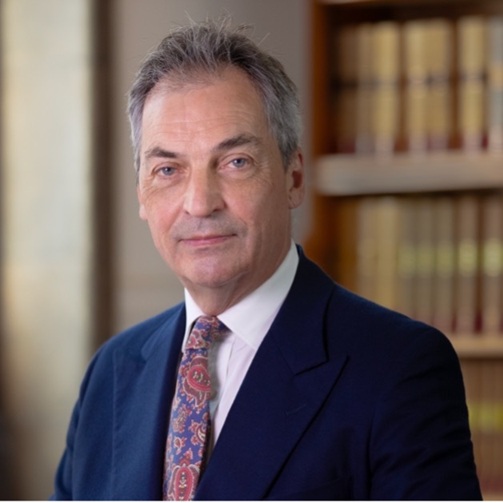
Image of Sir Geoffrey Vos from the Courts and Tribunal Judiciary website.

The Master of the Rolls is a highly esteemed position in the UK legal system, responsible for managing the administrative and procedural matters of the Court of Appeal of England and Wales, as well as serving as President of the Civil Division.

Sir Geoffrey Vos is the current holder of the position and brings a wealth of experience to the role, having had a distinguished legal career spanning several decades. His expertise in commercial and chancery law, combined with his leadership skills, make him well-suited to the position of Master of the Rolls and President of the Civil Division.

Check out the related articles on the Attorney General, Solicitor General, Lady Chief Justice, Lord Chancellor, Chancellor of the High Court,Justice Secretary, Rule of Law, Open Justice, Law, Is the Law Black and White ?, Government Legal Department, Crown Prosecution Service (CPS), Government Legal Department (GLD), Abuse of Process, What Does Lady Justice Symbolise ?, McKenzie Friend, Can a Judge Direct a Jury to Find a Defendant Not Guilty ?,Law Society, Law Commission, McKenzie Friend Right of Audience, Solicitors, Solicitors Regulation Authority, Barristers, Bar Council of England and Wales, Bar Standards Board, R v Sussex Justices, Police Impartiality and the highly questionable Sussex Family Justice Board.


The Ministry of Injustice is not the Ministry of Justice nor is it affiliated in any way with the justice system, legal profession, police or any other law enforcement agencies.


Latest Articles


Most Popular


You should always seek formal legal advice from a qualified and reputable lawyer (solicitor or barrister).

There are a number of links to Free and Paid For Legal Resources and Legal Organisations on the Free Legal Advice , Legal Aid and Pro Bono pages.
Categories
Judiciary Legal Professionals

HHJ Stuart Farquhar

HHJ Farquhar was appointed as a Deputy District Judge in 1999, as a District Judge in 2005 and as a Recorder in 2009.

Stuart Alastair Farquhar was appointed a circuit judge, assigned to the South Eastern Circuit, based at Brighton County Court, with effect from October 9th 2013. Judge Farquhar who was 51 at the time, was called to the Bar (I) in 1985. Judge Farquhar was born on the 4th June 1962.

Stuart Alastair Farquhar is called His Honour Judge Farquhar or abbreviated to HHJ Farquhar. In Court he is addressed as Your Honour.

HHJ Farquhar is the Lead Financial Remedies Court (FRC) Judge for Kent, Surrey and Sussex. From KFC to the top of the roost in Sussex !

“I have no family connection to lawyers; father was an engineer and mother looked after me and my two brothers. Attended state schools.

1980-1983 Manchester University

1983-1984 Worked at solicitors during the day and KFC at night & weekends to pay for Bar

School
1984-1985 Bar School

1985-2005 Barrister in Nottingham (after pupillage in London where I was not offered tenancy)
Started doing all types of work but after about five years began to specialise in Family work and then just in money cases on divorce

2005-2013 District Judge in Cambridgeshire – Family and Civil jurisdiction

2013-present Circuit Judge in Brighton – Family Court and Court of Protection

Interests:

Supporting AFC Wimbledon, walking the dog in the rain (other weather conditions are accepted), preferably near pubs with good real ale.

Married: my wife works as an advisor for a Carers Support Organisation.
Two children, neither following a legal career (having seen the impact upon me!)”

University of Brighton Law Careers Question Time 2018

Sussex Family Justice Board Membership

HHJ Stuart Farquhar was listed (up to 18th April 2023) as a board member of the highly questionable Sussex Family Justice Website (SFJB), along with a number of Senior Sussex Judges.

HHJ Farquhar was previously listed as a SFJB member in a SFJB document SFJB-List-of-Members.docx dated September 2018. HHJ Farquhar appears to have been a SFJB board member for at least 5 years !

“The judge is not a member of the board as to be so would be incompatible with the independent position of the judiciary.”

Judiciary and the local justice system

A Google Search on the 3rd April 2023 returned the following which clearly shows HHJ Farquhar as a board member :-

Google Search 3rd April 2023

A Bing Search on the 3rd April 2023 returned the following which clearly shows HHJ Farquhar as a board member :-

Bing Search 3rd April 2023

The Sussex Family Justice Board website showed :-

Sussex Family Justice Board Members 3rd April 2023
Sussex Family Justice Board Judicial Board Members 3rd April 2023

The Sussex Family Justice Board website, according to their public RSS Feed, was updated on the 18th April 2023 at 20:37.

Sussex Family Justice Board (SFJB) RSS Feed XML <lastBuildDate>Tue, 18 Apr 2023 20:37:32 +0000</lastBuildDate>

HHJ Farquhar, HHJ Lusty and DJ Pollard have mysteriously been removed as board members. Is this a cynical attempt at a cover up ? Who removed them and why ?

Sussex Family Justice Board Judicial Board Members as of 22nd April 2023
SFJB-List-of-Members.docx dated September 2018
  • HHJ Farquhar has denied he is a member of the SFJB and that he was ever invited to join.
  • HHJ Farquhar claims he did not know that he was listed on the SFJB website as a board member.
  • HHJ Farquhar stated that he had covered for His Honour Judge Robin Bedford at several SFJB events. He also confirmed that HHJ Bedford, The Designated and Most Senior Family Judge in Sussex, was definitely a member of the board.
  • HHJ Farquhar said that the SFJB had no income and was surprised to learn that they had a treasurer listed as a board member. He accepted that the SFJB must therefore have income and expenditure which should be publicly accounted for.

This is fraud or at the very least highly misleading behaviour by the SFJB by listing a Senior Judge as a board member without their knowledge or approval.

I can only assume this was done to give the SFJB some sense of importance and credibility but only serves to make their activities even more suspicious.

Financial Remedies Court Lead Judge

In the 4th July 2022 Revision of the FINANCIAL REMEDIES COURT (FRC) – OVERALL STRUCTURE OF THE FINANCIAL REMEDIES COURT AND THE ROLE AND FUNCTION OF THE LEAD JUDGE, HHJ Farquhar is listed as the Lead Financial Remedies Court (FRC) Judge for Kent, Surrey and Sussex.

Farquhar Commitee

“HHJ Stuart Farquhar (Lead Judge of the Kent, Surrey & Sussex Financial Remedies Court (FRC)) was asked by The Honourable Mr Justice Mostyn earlier in 2021 to convene and lead a committee (consisting of a geographically diverse collection of judges at all levels of the judiciary and practitioners).

The committee was to consider in depth and report on the role of remote courts in the post-pandemic environment (Part 1) and the procedures of the Financial Remedies Court (Part 2).

The carefully considered and substantial final reports of the Farquhar Committee (Parts 1 and 2) are now being published so that they may inform decisions on moving matters forward in both these areas.

Report of the Farquhar Committee Part 1

The Financial Remedies Court – The Way Forward
A Paper to consider the future use of Remote Hearings in the FRC (PDF)

Report of the Farquhar Committee Part 2

The Financial Remedies Court – The Way Forward
A Paper to consider changes to the Practices and Procedures in the Financial Remedies Court (PDF)

Reports of the Farquhar Committee on the Financial Remedies Courts – Parts 1 and 2

Transparency Implementation Group Chair

On the the 11th February 2022 The President of the Family Division (PFD) announce that the Financial Remedy Court Transparency Group, will become the fifth sub group of the Transparency Implementation Group (TIG). This group will be chaired by HHJ Stuart Farquhar and will report to the main TIG.

Please refer to the Announcement for the Family Transparency Implementation Group (TIG)

On the 2nd June 2022 an article entitled Transparency in the FRC – The workings of the TIG Sub-Group written by HHJ Farquhar was published on the Transparency Project website.

Company Appointments

HHJ Stuart Farquhar was a Director of KESTEVEN AND GRANTHAM GIRLS’ SCHOOL ACADEMY TRUST (08133675), listing his occupation as District Judge, but resigned on the 9th October 2013 for unknown reasons.

HHJ Farquhar Contact Details

HHJ Stuart Farquhar judicial email address is [email protected] and he is based at the following Court :-

Brighton County Court Family Centre
1-2 Edward Street,
Brighton
BN2 0JD

Tel: 01273 674421
Email: [email protected]

HHJ Farquhar on the Internet

The Ministry of Injustice is delighted to be the No 1 Search result on Google for HHJ Farquhar (6th April 2023)

“Scandalising the judiciary (also referred to as scandalising the court or scandalising judges) is abolished as a form of contempt of court under the common law of England and Wales.”

Crime and Courts Act 2013 Section 33Can you criticise a judge ?

HHJ Farquhar Published Judgments

There are a number of HHJ Farquhar judgments available to view online !

His Honour Judge Farquhar admonished solicitor Paul Gardner for branding obsessed LiP a ‘sociopath’. Mary-Jane Grace v Ian Douglas Grace Neutral Citation Number[2025] EWFC 37 (B)

Judge Farquhar Notable Cases

A woman has been ordered to pay half of her ex-husband’s £160,000 gender reassignment surgery bill after a judge ruled the operation was a “need”, not a “whim”.

The 60-year-old woman had argued it was unfair for her to contribute £80,000 towards the cost of the surgery, saying her former spouse’s decision to transition was the reason their marriage ended.

But Judge Stuart Farquhar, sitting at Brighton Family Court, said it was “reasonable” for the couple to split the cost “out of joint resources”.

Judge Farquhar rules woman must pay half of ex-husband’s £160,000 gender surgery bill – The Standard

Is trans surgery really as essential as cancer treatment – Judge Farquhar ?

It’s worth spelling out what this means: a UK court (HHJ Farquhar) considers it reasonable to expect a mother of two children to pay £80,000 towards the cost of her ex-husband obtaining a fake vagina.

Unherd.com – Joan Smith on Judge Farquhar Case

Judge (Farquhar) tells divorcee to pay her ex-husband half the £160,000 cost of his trans surgery in millionaire couple’s court battle

Judge Stuart Farquhar said that while ‘this has been a hugely difficult and emotionally draining experience’ for the trans woman, the husband had ‘shown no understanding whatsoever that her decision to transition to a woman has had an impact on anyone else, and particularly’ his ex-wife.

Daily Mail

Divorcee forced (by Judge Farquhar)to pay half of ex-husband’s trans surgery in legal first

In his ruling the judge noted that the husband had provided medical evidence of gender dysphoria which had caused “significant anxiety, depression and distress” and for which “the vaginoplasty surgery was considered the next appropriate step”

The Telegraph

This article contains personal opinions protected by common law and Article 10 of the Human Rights Act 1998 along with publicly available information.

Image shown is an amateur artists impression by the author and for illustration only. It is not His Honour Judge Stuart Farquhar (HHJ Farquhar)

“Publicity is the very soul of justice. . . . It keeps the judge himself, while trying, under trial….Where there is no publicity there is no justice”

Jeremy BenthamMr Justice Cobb: ‘Justice must be seen to be done’

Check out our articles on Dodgy JudgesJudges Salaries and Fees, Mr Justice Williams, His Honour Judge Melbourne Inman KC, His Honour Andrew Menary KC, His Honour Now His Dishonour, His Honour Judge Michael Slater, His Honour Judge Martin Davis, HHJ Farquhar, HHJ Bedford, DDJ Nicholes, Do you Have to Bow to a Judge ?, Can you Email a Judge ?, Can you Criticise a Judge ? and the highly dubious Sussex Family Justice Board.


The Ministry of Injustice is not the Ministry of Justice nor is it affiliated in any way with the justice system, legal profession, police or any other law enforcement agencies.


Latest Articles


Most Popular


You should always seek formal legal advice from a qualified and reputable lawyer (solicitor or barrister).

There are a number of links to Free and Paid For Legal Resources and Legal Organisations on the Free Legal Advice , Legal Aid and Pro Bono pages.

Categories
Judiciary Legal Professionals

HHJ Robin Bedford

HHJ Bedford was appointed as a Deputy District Judge on the North Eastern Circuit in May 2002, a District Judge in 2007 and a Circuit Judge on the 10th April 2013.

“HM the Queen has appointed Robin Steven Bedford, to be a District Judge on the advice of the Lord Chancellor, Lord Falconer. The Lord Chief Justice, Lord Phillips of Worth Matravers, has assigned him to the North Eastern Circuit, based in North and West Yorkshire with effect from Monday 19 February 2007. Mr Bedford, 43, was admitted as a solicitor in October 1988.”

Appointment of a district judge – Robin Steven Bedford

Robin Stephen Bedford is called His Honour Judge Bedford or abbreviated to HHJ Bedford. In Court he is addressed as Your Honour.

HHJ Bedford is the Designated Family Judge for Sussex and was originally appointed on the 1st July 2017.

On the 5th August 2025, The Lady Chief Justice of England and Wales, the Right Honourable The Baroness Carr Of Walton-On-The-Hill has appointed His Honour Judge Bedford to be a Senior Circuit Judge, Designated Family Judge, based at Brighton Family Centre.

Sussex Family Justice Board Membership

HHJ Robin Bedford was listed as board member of the highly questionable Sussex Family Justice Website (SFJB), along with a number of Senior Sussex Judges.

“The judge is not a member of the board as to be so would be incompatible with the independent position of the judiciary.”

Judiciary and the local justice system

A google search returns the following which clearly shows HHJ Bedford as a board member :-

A Bing search returns the following which clearly shows HHJ Bedford as a board member :-

“His Honour Judge Bedford. Designated Family Judge for Sussex. 21 December 2020.

Dear all,. It’s some months since I inflicted one of my bulletins upon you.”

Sussex Family Justice Board 21st December 2020

HHJ Farquhar stated that he had covered for His Honour Judge Robin Bedford at several SFJB events. He also confirmed that HHJ Bedford, The Designated and Most Senior Family Judge in Sussex, was definitely a member of the Sussex Family Justice Board.

It’s refreshing to see an Honour “Stitched Up” by another Honour after an Honour attempted to “Stich” me up !

Is there no such a thing as “Honour” amongst thieves ?

Check out our articles on Dodgy JudgesHis Honour Judge Melbourne Inman KC, His Honour Judge Jeremy Richardson KC, His Honour Now His Dishonour, His Honour Judge Michael Slater, His Honour Judge Martin Davis, HHJ Farquhar, DDJ Nicholes ,Can you Email a Judge ?, Can you Criticise a Judge ?, Do you Have to Bow to a Judge ? and the highly dubious Sussex Family Justice Board.

HHJ Bedford Contact Details

HHJ Robin Bedford judicial email address is [email protected] and he is based at the following Court :-

Brighton County Court Family Centre
1-2 Edward Street,
Brighton
BN2 0JD

Tel: 01273 674421
Email: [email protected]

HHJ Bedford on the Internet

“Two years ago today this lowlife scumbag made an order knowing it would lead to a fathers death through ill health. Dishonour Judged Bedford will be exposed as the murderer he is. We will never forgive or forget. Still no apology to those involved either from this despicable oxygen thief.”

UK Corrupt Family Courts Name and Shame

“Another mother has come forward about this Monster who calls himself a judge, Bedford.

Again he was swinging on his chair gnawing on a pen while staring around a room in a world of his own.

He put costs before a child’s family being kept together. The family needed either a mother and baby unit to prove they can parent or a home. He ignored this and went with adoption.

How this twisted moron sleeps at night we have no clue. Probably doesn’t and why he’s daydreaming all day!

Wake up Bedford and start helping these families instead of breaking them you twisted individual.”

UK Corrupt Family Courts Name and Shame

His Honour Judge Robin Bedford led the walk this year as posted by Herrington Solicitors.

“Meet ‘Dishonour’ Judge Robin Bedford. (Wonder if there’s something about the name Robin)
He can normally be found masquerading as a Judge at Hastings Court.
He is usually swinging on his chair while daydreaming staring at the ceiling and chewing a Bic Pen. All this while making sure he ignores vital evidence in a case.
This guy is not fit to be a judge and is someone who should never be allowed to preside over the lives of children. In short he is a danger.
The first time we came across this individual he was defending a violent father while the mother suffered the stress of being bullied and having him breach court orders. He ignored the fact that this father had no interest in his own son and the son making sexual allegations against the father. Instead he palmed the case off with a supervised contact order on the daughter and a care order with placement with the mother leaving The Local Authority to sort out the sorry mess of the case.
In the second case we come across him he signed an order of adoption on a second hearing due to a young mum having mental health problems. Knowing the mother didn’t understand the process was of no interest to him. This mother has since proved she can function and should be given a chance with her son.
The third case is the most terrible. Despite warnings and being shown evidence of why he shouldn’t he sent a 2 year old to go and live with her father who was mentally ill and physically disabled. He agreed he would take personal responsibility if anything went wrong. To date he has never apologised. The child was happily attached living with mother, well cared for meeting all her milestones and had minimal attachment to the father. In four months the child regressed in development and was abused as well as neglected. The father then died alone with the child in a flat which the mother warned would happen! The child now back in the mothers care is thriving and ahead of what’s expected of a child. There’s no local authority involvement and in their own words no role for them, they also agree this judge took a dangerous risk and it backfired to the detriment of the child.
This man should never preside over another child case. Any further screw ups by this twisted individual please inbox us!”

UK Corrupt Family Courts Name and Shame

“Scandalising the judiciary (also referred to as scandalising the court or scandalising judges) is abolished as a form of contempt of court under the common law of England and Wales.”

Crime and Courts Act 2013 Section 33Can you criticise a judge ?

Images of HHJ Bedford

The images shown on this page are from the Facebook Group UK Corrupt Family Courts Name and Shame . These images are believed to be of His Honour Judge Robin Bedford (HHJ Bedford).

Permission to use these images was sought from UK Corrupt Family Courts Name and Shame but no response was forthcoming.

I use these images under the Copyright exception of fair dealing, education and in the spirit of public interest.

This article contains personal opinions protected by common law and Article 10 of the Human Rights Act 1998 along with publicly available information.

“Publicity is the very soul of justice. . . . It keeps the judge himself, while trying, under trial….Where there is no publicity there is no justice”

Jeremy BenthamMr Justice Cobb: ‘Justice must be seen to be done’

Check out our articles on Dodgy JudgesMr Justice Williams, His Honour Judge Melbourne Inman KC, His Honour Andrew Menary KC, His Honour Now His Dishonour, His Honour Judge Michael Slater, His Honour Judge Martin Davis, HHJ Farquhar, HHJ Bedford, DDJ Nicholes, Do you Have to Bow to a Judge ?, Can you Email a Judge ?, Can you Criticise a Judge ? and the highly dubious Sussex Family Justice Board.


The Ministry of Injustice is not the Ministry of Justice nor is it affiliated in any way with the justice system, legal profession, police or any other law enforcement agencies.


Latest Articles


Most Popular


You should always seek formal legal advice from a qualified and reputable lawyer (solicitor or barrister).

There are a number of links to Free and Paid For Legal Resources and Legal Organisations on the Free Legal Advice , Legal Aid and Pro Bono pages.
Rule of Law - Open Justice - Policing By Consent