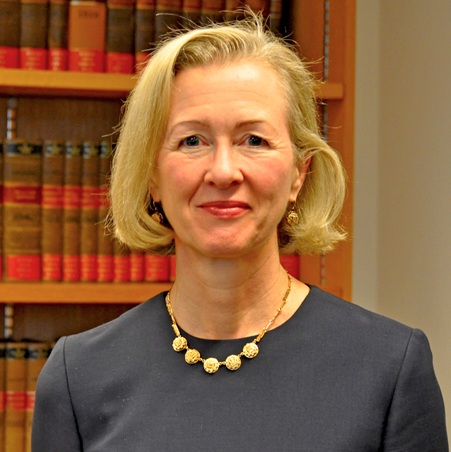
The role of Minister of State for Courts and Legal Services is a key position within the Ministry of Justice (MoJ), focusing on the operational and policy aspects of the UK’s justice system.
As of January 2026, this post is held by Sarah Sackman KC MP, who brings a wealth of legal expertise to the role.
Appointment and Background
Sarah Sackman KC MP was appointed Minister of State in the Ministry of Justice on the 2nd December 2024. Prior to this, she served as Solicitor General for England and Wales from July 2024 until her promotion.
Elected as the Member of Parliament for Finchley and Golders Green in the July 2024 general election, Sackman has a distinguished legal career. Called to the Bar in 2008, she practised as a barrister at Francis Taylor Building and later at Matrix Chambers, specialising in public law, election law, planning, environment and rating law.
Her appointment as King’s Counsel (KC) reflects her standing in the legal profession.The previous holder of the role was The Rt Hon Heidi Alexander MP, who served briefly in 2024.
Sarah Sackman is married to Daniel Benjamin Squires KC, who represented double killer Fuad Awale.
David Lammy, the Justice Secretary, agreed to pay £7,500 in compensation and foot a £234,000 legal bill for Awale after a judge ruled that his treatment in jail breached his human rights.
Key Responsibilities
The Minister of State for Courts and Legal Services oversees a broad portfolio critical to the functioning of the justice system. These include:
- Criminal courts policy
- Legal Aid and administration of the Legal Aid Agency
- Civil Justice
- Legal Support and Dispute Resolution
- Legal Services
- Administration of His Majesty’s Courts and Tribunals Service
- Magistrates Policy
- Open Justice
- Tribunals Policy (including fees)
- Irregular Migration
- Judicial Review
- Leading the MoJ’s mission to “Kickstart economic growth”
This role plays a vital part in ensuring access to justice, efficiency in the courts, and reforms to legal aid and tribunals.
Recent Developments and Priorities
Since taking office, Sarah Sackman has been associated with several initiatives aimed at improving access to justice and modernising the legal system. Notable announcements linked to the role include:
- Multi-million-pound investments in legal aid to support victims and enhance access to justice.
- Measures to increase protection for victims of violence, such as scrapping certain fees.
- Reforms to enable claimants to challenge powerful organisations in court more effectively.
- Recognition of cryptocurrency as personal property, positioning the UK as a leader in this emerging area.
- Investments in court infrastructure, such as new Crown Courtrooms, and promotion of UK legal services internationally.
These efforts supposedly align with the government’s broader goals of delivering “swift and fair” justice, boosting economic growth through a robust legal sector, and ensuring transparency and fairness in the courts.
Daily analysis of Crown Court usage – On the 7th January 2026, 75 out of the 516 Crown courtrooms in England & Wales are not sitting. A staggering 15% of them.
The position underscores the importance of a well-functioning justice system in upholding the rule of law and supporting economic stability.
With her background as a practising barrister and recent experience as Solicitor General, Sarah Sackman is well-placed to drive forward reforms in this challenging but essential area of public policy.
Photo Credit : Sarah Sackman KC MP
Check out our articles on the Justice Secretary, Lady Chief Justice, Lord Chancellor, Attorney General, Solicitor General, Government Legal Department, Rule of Law, R v Sussex Justices and the highly questionable Sussex Family Justice Board.
The Ministry of Injustice is not the Ministry of Justice nor is it affiliated in any way with the justice system, legal profession, police or any other law enforcement agencies.
“Publicity is the very soul of justice. . . . It keeps the judge himself, while trying, under trial….Where there is no publicity there is no justice”
Jeremy Bentham – Mr Justice Cobb: ‘Justice must be seen to be done’
Latest Articles ↓
- Presumption of Innocence
 The presumption of innocence is a basic principle of the… Read more: Presumption of Innocence
 - His Honour Judge Daniel Sawyer
 Judge Daniel Sawyer, known as His Honour Judge Daniel Sawyer,… Read more: His Honour Judge Daniel Sawyer
 - UK National Centre for Information Defence
 Prime Minister Andy Burnham used his first United Nations General… Read more: UK National Centre for Information Defence
 - Judges Behaving Badly and His Honour Judge Simon Oliver
 On the 27th August 2026 the Crown Prosecution Service announced… Read more: Judges Behaving Badly and His Honour Judge Simon Oliver
 - Jo Morris Barrister
 Jo Morris is a practising criminal barrister of Drystone Chambers… Read more: Jo Morris Barrister
 - Good Law Project
 The Good Law Project is a UK campaigning organisation that… Read more: Good Law Project
 - Police Federation of England and Wales (PFEW)
 The Police Federation of England and Wales (PFEW) is the… Read more: Police Federation of England and Wales (PFEW)
 - What is the Criminal Justice System (CJS) Common Platform ?
 The Criminal Justice System Common Platform (also known as HMCTS… Read more: What is the Criminal Justice System (CJS) Common Platform ?
 - Strategic Lawsuit Against Public Participation (SLAPPs)
 Strategic Lawsuits Against Public Participation, or SLAPPs, are legal actions… Read more: Strategic Lawsuit Against Public Participation (SLAPPs)
 - His Honour Judge Tony Baumgartner – Recorder of Westminster
 Judge Tony Alan Walter Baumgartner, known as His Honour Judge… Read more: His Honour Judge Tony Baumgartner – Recorder of Westminster
 - New Protocol for Legal Professionals to Raise Informal Concerns About Judges Behaviour
 On the 8th July 2026, the Courts and Tribunals Judiciary… Read more: New Protocol for Legal Professionals to Raise Informal Concerns About Judges Behaviour
 - The Policing Performance System
 In April 2026, His Majesty’s Inspectorate of Constabulary and Fire… Read more: The Policing Performance System
Most Popular ↓
You should always seek formal legal advice from a qualified and reputable lawyer (solicitor or barrister).
There are a number of links to Free and Paid For Legal Resources and Legal Organisations on the Free Legal Advice , Legal Aid and Pro Bono pages.