Categories
Legal Professionals

Professional Ethics Exam for Barristers

The journey to becoming a barrister in England and Wales involves rigorous training, with professional ethics forming a cornerstone of the profession.

In England and Wales, barristers are regulated professionals bound by strict ethical standards outlined in version 4.8 of the Bar Standards Board (BSB) Handbook.

As part of reforms to Bar training introduced by the Bar Standards Board (BSB), the assessment of professional ethics has been divided between the vocational component and the pupillage or work-based learning stage.

This ensures that aspiring barristers develop a robust understanding of ethical principles at different points in their training.

During the vocational component, Authorised Education and Training Organisations provide tuition and assessment in professional ethics to a foundation level as part of the Bar Training course.

For more details on this stage, see the Vocational Component.

In contrast, the pupillage stage focuses on assessing specified learning outcomes at the standard expected of barristers on their first day of practice, as outlined in the Professional Statement.

Following a transition period, passing the Professional Ethics assessment during pupillage is now mandatory for all pupils, unless they have been granted a specific exemption by the BSB.

Graduates of the Bar Professional Training Course (BPTC) who commenced pupillage before 1st May 2024 remain exempt from this requirement.

Transferring qualified lawyers undertaking pupillage or work-based learning may also need to complete the assessment, with the default assumption being that they must sit the exam unless an exemption is authorised. For exemption queries, individuals should contact the BSB’s Authorisations team.

Format of the Assessment

The Professional Ethics assessment is an open-book examination centrally set and marked by the BSB. It consists of twelve short-answer questions, each equally weighted, and requires responses in narrative prose. These questions present scenarios drawn from professional practice, where candidates must identify ethical issues, apply relevant principles, critically analyse the situation, and propose appropriate resolutions. No specialist knowledge of particular areas of law is needed, as the ethical principles are applicable across various fields, such as criminal or civil practice.

Candidates are expected to draw on the provisions of the BSB Handbook, associated guidance, and other syllabus materials to provide comprehensive analyses supported by sound reasoning. The exam lasts three hours, during which candidates manage their own time allocation.

The only permitted material is the BSB Handbook, accessible electronically during the test. At test centres, it is available online but not downloadable, with search functionality limited to the Handbook’s own tool and no keyboard shortcuts for copying and pasting.

For remote online invigilation, a downloadable PDF version is provided, allowing full search capabilities and keyboard shortcuts.

A side-by-side view of the exam and Handbook is possible on screens with a minimum resolution of 1920×1080 pixels, which all test centre screens support. Paper copies of the Handbook can be requested as a reasonable adjustment. There is no prescribed programme of study prior to the exam, but a practice assessment is available for developmental purposes, along with a downloadable syllabus.

Practice assessments can be accessed via the Surpass platform, where candidates can attempt them unlimited times. Responses are not saved or marked automatically, but can be copied for self-evaluation against provided mark schemes. It is recommended to trial the practice exam to familiarise oneself with the computer-based format, regardless of whether the actual exam is taken at a centre or remotely.

Key Documents and Resources

Several essential documents are available to support candidates in understanding and preparing for the assessment.

The Exam Requirements outline the rules, replacing previous versions and linking to the Exams Misconduct Policy. The 2026 Syllabus and its version with tracked changes provide detailed learning outcomes.

An Approach Paper from April 2020 explains the new assessment methodology, while the Ethics Assessment Guidance further details the expected outcomes. Exam-specific resources include Candidate Instructions and mark schemes for practice papers: Paper 1 Mark Scheme and Paper 2 Mark Scheme.

For transparency, the Professional Ethics Chair’s Report Part 1 and Part 2 for July 2025 offer insights into the exam process. Additional policies cover Adjustments and Other Arrangements, Extenuating Circumstances, Feedback and Candidate Review Regulations.

The Bar Qualification Manual details pupil supervisor duties, and Pupil Supervisor Training Outcomes are also available. For historical context, see Sample Questions and Mark Scheme from the previous BPTC, the New Mark Scheme and further Assessment Guidance.

Exam Sittings and Dates

The Professional Ethics assessment is offered three times annually, typically in early January, late April, and late July.

For 2026, the January sitting includes deadlines for adjustments applications on 17th November 2025, exam booking from 25th November to 9th December 2025, the exam on Tuesday 13th January at 10am, and results by the end of Thursday 12th March 2026.

April 2026 features booking from 3rd March to 17th March, the exam on 28th April at 10am, with results to be confirmed.

The July sitting is on 28th July at 10am, with booking and results dates also to be confirmed.

There is no requirement to take the exam during the first six months of pupillage (the non-practising period), but candidates must have completed at least three months of pupillage beforehand to benefit from discussions with supervisors and colleagues on real-life ethical scenarios.

TQLs with reduced pupillage periods are exempt from this three-month rule. The exam is delivered online, with options for remote proctoring or attending a test centre in the UK (and potentially overseas).

Fees and Costs

The first and second attempts at the Professional Ethics assessment are covered by the practising certificate fee, incurring no additional cost to the candidate. However, any subsequent resits cost £832.

It is advisable to include agreements on who bears the cost of resits, whether chambers, the employer or the pupil, in the written pupillage agreement. Funding for further attempts is at the discretion of chambers or employers.

Preparation and Support

No mandatory preparatory course is required, and the BSB does not develop or endorse any specific materials from third parties. Candidates are encouraged to familiarise themselves with the syllabus and guidance documents. Recommended resources include the ICCA Pupillage Ethics Materials, available for £150 (or £75 for ICCA alumni) with 12 months’ access and training from the Northern Circuit.

Pupil supervisors play a key role in providing a suitable training programme to meet the competences in the Professional Statement. They should support pupils in engaging actively with exam preparation, including guidance on registration, booking, adjustments, and results. Supervisors do not need to be ethics experts in specific practice areas, as the issues are general.

Pupillage plans can be adjusted if needed, and supervisors should refer to the Bar Qualification Manual for their responsibilities.

If significant time has passed since completing Bar training, candidates should re-familiarise themselves with relevant ethical areas. Taking the assessment closer to authorisation to practise is considered good practice.

There is no mandated time off for study, as preparation materials are designed for self-study, but arrangements should be discussed with the pupil.

Passing the Assessment and Results

The assessment is competency-based, with candidates needing to demonstrate the skills and knowledge expected in the Professional Statement.

To pass, a candidate typically requires at least eight satisfactory answers out of twelve, with borderline cases reviewed holistically. Receiving three or more ‘Unacceptable’ ratings on sub-parts results in a ‘Not Competent’ outcome, and blank answers count as ‘Unacceptable’. There is no fixed pass rate; success depends on meeting the required standard.

For comparison, the previous BPTC ethics exam had a pass rate of around 70%, but the pupillage assessment is open-book with more time allocated, and candidates have already passed vocational training and been selected for pupillage.

Passing is essential for sign-off from pupillage; failure by the end may require an extension, with funding decisions made by chambers or employers as per the pupillage agreement. Results are uploaded to the MyBar portal.

Read the reviews of Junior Sussex Barrister Gavin Howe and Legal 500 Junior Barrister Eleanor Battie.

Check out our related articles on Rule of Law, Open Justice, What is Law, Is the Law Black and White ?, Branches of Law, Bullying, Harassment and Discrimination at the Bar, Blackbelt Barrister, The Secret Barrister, Barristers, Direct Access Barrister, Barristers Behaving Badly, Inns of Court, Council of the Inns of Court, Bar Standards Board, Bar Tribunal and Adjudication Services, Bar Council, Innocent until Proven Guilty and the highly questionable Sussex Family Justice Board.


The Ministry of Injustice is not the Ministry of Justice nor is it affiliated in any way with the justice system, legal profession, police or any other law enforcement agencies.


Latest Articles


Most Popular


You should always seek formal legal advice from a qualified and reputable lawyer (solicitor or barrister).

There are a number of links to Free and Paid For Legal Resources and Legal Organisations on the Free Legal Advice , Legal Aid and Pro Bono pages.


Categories
Criminal Justice Government Law Legal Analysis Legal Professionals

Crown Prosecution Service (CPS) Complaints and Feedback

The Crown Prosecution Service (CPS) plays a vital role in the UK’s criminal justice system, ensuring offenders are brought to justice while supporting victims and witnesses.

However, like any public organisation, the CPS may occasionally fall short of expectations. This article explores the CPS’s guidance on providing feedback or making a complaint based on their official policy.

HM Crown Prosecution Service Inspectorate (HMCPSI) has a statutory duty to inspect the operation of the Crown Prosecution Service (CPS) and the Serious Fraud Office (SFO).

Charlies Prosecution Service (CPS)
Coming Soon at https://cpsgov.uk – Charlie’s Prosecution Service

The CPS’s Commitment to High Standards

The CPS is dedicated to upholding principles of independence, fairness, honesty, openness, respect, and professional excellence. Their complaints handling is guided by standards such as the CPS Complaints Handling Standard, the Code of Practice for Victims of Crime, and the Principles of Good Complaints Handling from the Parliamentary and Health Service Ombudsman (PHSO).

All complaints are managed confidentially by trained Complaints Coordinators, ensuring fair and sensitive treatment without discrimination based on gender, sexual orientation, race, ethnicity, disability, religion, or belief. Defendants’ complaints are treated equally to those from victims or witnesses.

External oversight is provided by the Independent Assessor of Complaints (IAC), who scrutinises the process to maintain high service levels.

For more on the IAC’s role, visit the CPS website.

What the CPS Complaints and Feedback Policy Covers

Feedback includes positive or negative comments on CPS policies, procedures, services, or performance. Anyone can provide it at any time, with no restrictions. Examples might include praising a new policy or expressing dissatisfaction with a case outcome reported in the media.

Feedback is acknowledged, recorded, and analysed to improve services and promote best practices.

Complaints are expressions of dissatisfaction from those directly involved in a CPS service. They can be:

  • Legal: Related to decisions, such as charging choices.
  • Service: Concerning conduct, like not allowing a victim to read their personal statement in court.
  • Mixed: Combining both elements.

Professional disagreements (e.g., between police and prosecutors) are excluded.

Exclusions from the Policy

Certain matters fall outside the policy:

  • Victims’ Right to Review (VRR): For decisions not to charge or to end proceedings. This stems from the 2011 Killick case and is handled separately. Dissatisfaction with VRR outcomes cannot become a formal complaint. Learn more about VRR on the CPS VRR page.
  • Defence Applications or Appeals: Not for dropping cases or overturning convictions; seek independent legal advice.
  • Ongoing Proceedings: Responses may be limited to avoid prejudice.
  • Civil Claims: Complaints pause if civil action is initiated.
  • Abusive or Persistent Complaints: May be declined.
  • Other Organisations: Direct complaints about police, courts, or judiciary to them (contacts below).
  • Recruitment or Employment: Handled under separate policies.

CPS Complaints Procedure

Complaints can be made by the affected individual or a nominated representative (with written consent).

The process has three stages for service/mixed complaints, but legal complaints end at Stage Two.

Early Resolution

Contact your local CPS office first for informal resolution within three working days, possibly via explanation or apology.

Stage One: Local Review

Submit formally to the originating CPS office. A relevant manager investigates and responds within 20 working days (or notifies of delays).

Stage Two: Senior Review

If unsatisfied, escalate to the Deputy Chief Crown Prosecutor or equivalent within one month. Response within 20 working days.For legal complaints, this concludes the process.

Stage Three: Independent Review

For service complaints, refer to the IAC within one month of Stage Two. The IAC, independent of CPS, reviews service quality and procedure adherence, responding within 40 working days.

Contact: Independent Assessor of Complaints, 102 Petty France, London SW1H 9EA; Email: [email protected] (mailto:[email protected]); Phone: 020 3357 0893 (10am-4pm, Monday-Friday).

If involving Victims’ Code breaches, victims can escalate to the PHSO via an MP after IAC review.

PHSO details: Parliamentary and Health Service Ombudsman.

How to Provide Feedback to the CPS

There is no time limit, and feedback can be submitted via:

  • Online: Use the CPS Feedback Form.
  • Email: Download the form and email to your local CPS Area (addresses on the CPS Areas page).
  • Post: Send written feedback or the form to local CPS addresses.
  • Telephone: Call local CPS offices (numbers on the website).

All feedback helps refine services for the public.

Handling and Outcomes

Complaints are handled confidentially and fairly. You’ll be informed if upheld (wholly/partly) or not. If justified, expect an apology, corrective action and prevention measures.

In rare cases of severe distress or loss due to maladministration, a consolatory payment may be offered.

Check out our related articles on the Crown Prosecution Service (CPS), Director of Public Prosecutions (DPP), HM Crown Prosecution Service Inspectorate (HMCPSI), Rule of Law, Open Justice, Victims’ Right to Review (VRR), Is the Law Black and White ?, Abuse of Process, What Does Lady Justice Symbolise ?, McKenzie Friend, Can a Judge Direct a Jury to Find a Defendant Not Guilty ?,Law Society, Law Commission, McKenzie Friend Right of Audience, Solicitors, Solicitors Regulation Authority, Barristers, Bar Council of England and Wales, Bar Standards Board, Contra Mundum, R v Sussex Justices, Police Impartiality and the highly questionable Sussex Family Justice Board.


The Ministry of Injustice is not the Ministry of Justice nor is it affiliated in any way with the justice system, legal profession, police or any other law enforcement agencies.


Latest Articles


Most Popular


You should always seek formal legal advice from a qualified and reputable lawyer (solicitor or barrister).

There are a number of links to Free and Paid For Legal Resources and Legal Organisations on the Free Legal Advice , Legal Aid and Pro Bono pages.
Categories
Criminal Justice Government Judiciary Legal Professionals

Minister of State for Courts and Legal Services

The role of Minister of State for Courts and Legal Services is a key position within the Ministry of Justice (MoJ), focusing on the operational and policy aspects of the UK’s justice system.

As of January 2026, this post is held by Sarah Sackman KC MP, who brings a wealth of legal expertise to the role.

Sarah Sackman KC MP on Government Plans to scrap Jury trials for crimes with sentences of less than three years

Appointment and Background

Sarah Sackman KC MP was appointed Minister of State in the Ministry of Justice on the 2nd December 2024. Prior to this, she served as Solicitor General for England and Wales from July 2024 until her promotion.

Elected as the Member of Parliament for Finchley and Golders Green in the July 2024 general election, Sackman has a distinguished legal career. Called to the Bar in 2008, she practised as a barrister at Francis Taylor Building and later at Matrix Chambers, specialising in public law, election law, planning, environment and rating law.

Her appointment as King’s Counsel (KC) reflects her standing in the legal profession.The previous holder of the role was The Rt Hon Heidi Alexander MP, who served briefly in 2024.

Sarah Sackman is married to Daniel Benjamin Squires KC, who represented double killer Fuad Awale.

David Lammy, the Justice Secretary, agreed to pay £7,500 in compensation and foot a £234,000 legal bill for Awale after a judge ruled that his treatment in jail breached his human rights.

Key Responsibilities

The Minister of State for Courts and Legal Services oversees a broad portfolio critical to the functioning of the justice system. These include:

  • Criminal courts policy
  • Legal Aid and administration of the Legal Aid Agency
  • Civil Justice
  • Legal Support and Dispute Resolution
  • Legal Services
  • Administration of His Majesty’s Courts and Tribunals Service
  • Magistrates Policy
  • Open Justice
  • Tribunals Policy (including fees)
  • Irregular Migration
  • Judicial Review
  • Leading the MoJ’s mission to “Kickstart economic growth”

This role plays a vital part in ensuring access to justice, efficiency in the courts, and reforms to legal aid and tribunals.

Recent Developments and Priorities

Since taking office, Sarah Sackman has been associated with several initiatives aimed at improving access to justice and modernising the legal system. Notable announcements linked to the role include:

  • Multi-million-pound investments in legal aid to support victims and enhance access to justice.
  • Measures to increase protection for victims of violence, such as scrapping certain fees.
  • Reforms to enable claimants to challenge powerful organisations in court more effectively.
  • Recognition of cryptocurrency as personal property, positioning the UK as a leader in this emerging area.
  • Investments in court infrastructure, such as new Crown Courtrooms, and promotion of UK legal services internationally.

These efforts supposedly align with the government’s broader goals of delivering “swift and fair” justice, boosting economic growth through a robust legal sector, and ensuring transparency and fairness in the courts.

Daily analysis of Crown Court usage – On the 7th January 2026, 75 out of the 516 Crown courtrooms in England & Wales are not sitting. A staggering 15% of them.

The position underscores the importance of a well-functioning justice system in upholding the rule of law and supporting economic stability.

With her background as a practising barrister and recent experience as Solicitor General, Sarah Sackman is well-placed to drive forward reforms in this challenging but essential area of public policy.

Photo Credit : Sarah Sackman KC MP

Check out our articles on the Justice Secretary, Lady Chief Justice, Lord Chancellor, Attorney General, Solicitor General, Government Legal Department, Rule of Law, R v Sussex Justices and the highly questionable Sussex Family Justice Board.


The Ministry of Injustice is not the Ministry of Justice nor is it affiliated in any way with the justice system, legal profession, police or any other law enforcement agencies.


Latest Articles


Most Popular


You should always seek formal legal advice from a qualified and reputable lawyer (solicitor or barrister).

There are a number of links to Free and Paid For Legal Resources and Legal Organisations on the Free Legal Advice , Legal Aid and Pro Bono pages.

Categories
Criminal Justice Judiciary Legal Professionals

His Honour Judge Fuller KC

Jonathan Paul Fuller, known as His Honour Judge Jonathan Paul Fuller KC was born on the 27th February 1954.

His Honour Judge Jonathan Fuller KC was appointed as a Circuit Judge on the 3rd October 2014 and sits primarily on the South West Circuit at Bournemouth Crown Court.

As a Circuit Judge, Judge Fuller is authorised to hear serious criminal cases in the Crown Court, as well as certain civil and family matters.

Name:Jonathan Paul Fuller KC
Position:Self Employed Barrister
Year of Call:1977
Chambers:187 Chambers
Contact Chambers:Greater London
Profile:www.187fleetstreet.com
Practising Status:Bar Standards Board
Criminal Cases:Defending:
RW (2014-02-14)

B (2013-12-18)

SE (2012-12-14)


Prosecuting:
Donna Louise Chalk (2013-06-26)

Ryan Ian Woodmansey (2013-06-26)

Andrew William Christopher Dwyer-Skeats (2013-06-26)

Lee Matthew Nicholls (2013-06-26)
Jonathan Paul Fuller KC on Lawpages

HHJ Fuller is shown on the List of Circuit Judges published on the Courts and Tribunal Judiciary website.

His Honour Judge Fuller KCSouth West03-10-2014
List of Circuit Judges

Legal Controversy

Luke Yarwood who posted two anti-immigration tweets on X was handed a 18-month jail sentence by Judge Fuller at Bournemouth Crown Court on the 17th December 2025.

Head for the hotels housing them and burn them to the ground

I think it’s time for the British to gang together, hit the streets and start the slaughter.

Violence and murder is the only way now. Start off burning every migrant hotel then head off to MPs’ houses and Parliament, we need to take over by FORCE.

Luke Yarwood

The posts were only viewed 33 times.

His barrister argued the posts had 33 views between them and were the ‘impotent rantings of a socially isolated man’ that had no ‘real-world’ consequences.

But Judge Jonathan Fuller said Yarwood’s ‘odious’ tweets were designed to stir up racial hatred and incite violence, and jailed him.

Twitter user is jailed by Judge Fuller for 18 months for two anti-immigration tweets made after Christmas market car attack that were viewed just 33 times – Daily Mail

His case has been compared with Lucy Connolly, who pleaded guilty inciting racial hatred after sending the X post on the day of the Southport attacks. She was sentenced by Judge Melbourne Inman.

This is not a court of politics but law. You are entitled to express your views, but freedom of speech is not an absolute right, it’s a qualified one. 

What the law prohibits is the stirring up of racial hatred.

The continuing safety and stability of our communities are undermined by actions such as yours.

The tweets speak for themselves, they are odious in the extreme. There could be few clearer examples of words specifically designed to stir up racial hatred and incite violence.

They are serious offences that could have had serious consequences and can only be marked by a sentence of immediate imprisonment.

His Honour Judge Fuller KC
Nick Dickson about Judge Fuller on X

Authorisation to sit as a High Court Judge

HHJ Fuller KC may be authorised to sit as a High Court Judge by s9(1) of the Senior Courts Act as amended by the Crime and Courts Act 2013.

According to CRIMINAL PRACTICE DIRECTIONS 2015 DIVISION XII His Honour Judge Fuller should be addressed as “My Lord” in court.

Modes of Address B.1 – The following judges, when sitting in court, should be addressed as ‘My Lord’ or ‘My Lady’

(b) any Circuit Judge sitting as a judge of the Court of Appeal (Criminal Division) or the High Court under section 9(1) of the Senior Courts Act 1981;
(d) any Senior Circuit Judge who is an Honorary Recorder.

Description B.3 – In cause lists, forms and orders members of the judiciary should be described as follows:

(a) Circuit Judges, as ‘His [or Her] Honour Judge A’. When the judge is sitting as a judge of the High Court under section 9(1) of the Senior Courts Act 1981, the words ‘sitting as a judge of the High Court’ should be added;

The three key values which are central to the role of judicial office holders (JOHs) in England and Wales are:
• Independence
• Impartiality
• Integrity

“Publicity is the very soul of justice. . . . It keeps the judge himself, while trying, under trial….Where there is no publicity there is no justice”

Jeremy BenthamMr Justice Cobb: ‘Justice must be seen to be done’

Image of HHJ Fuller : Grok

The High Court Judge that never was – His Honour Judge Melbourne Inman KC

Check out our articles on Rule of Law, Open Justice, Judges Salaries and Fees, Dodgy JudgesMr Justice Williams, His Honour Now His Dishonour, His Honour Judge Stuart Farquhar, Do you Have to Bow to a Judge ?, Can you Email a Judge ?, Can you Criticise a Judge ? and the highly dubious Sussex Family Justice Board.


The Ministry of Injustice is not the Ministry of Justice nor is it affiliated in any way with the justice system, legal profession, police or any other law enforcement agencies.


Latest Articles


Most Popular


You should always seek formal legal advice from a qualified and reputable lawyer (solicitor or barrister).

There are a number of links to Free and Paid For Legal Resources and Legal Organisations on the Free Legal Advice , Legal Aid and Pro Bono pages.

Categories
Civil Justice Criminal Justice Family Law Law Legal Analysis Legal Professionals

Art of Law

Art of Law is a Youtube channel run by Alan Robertshaw who is an experienced barrister of England and Wales.

This channel provides you with free legal guidance and explains different aspects of law, legal principles, and, procedures for media and art law. Legal advice can be very expensive and you will usually have no knowledge when you encounter a legal problem.

Art of Law

Alan Robertshaw was Called to the Bar in October 1997 (Middle Temple). He has Full Rights of Audience and his areas of practice are Defamation, Intellectual property, Other and Other common law.

Alan is authorised by the Bar Standards Board to accept direct public access work and to conduct litigation.

Alan was formerly at 1 Dr Johnson’s Buildings and then Goldsmith Chambers where he still remains a door tenant.

Art of Law should should not be confused with The BlackBelt Barrister or the Secret Barrister.

Art of Law is not a replacement for formal legal advice but it is highly informative and may help you to understand more about the law.

Highly Recommended ★★★★★

Latest Art of Law YouTube Videos

Read the reviews of Junior Sussex Barrister Gavin Howe and Legal 500 Junior Barrister Eleanor Battie.

Check out our related articles on Rule of Law, Open Justice, What is Law, Is the Law Black and White ?, Branches of Law, Bullying, Harassment and Discrimination at the Bar, The Secret Barrister, Barristers, Direct Access Barrister, Barristers Behaving Badly, Inns of Court, Council of the Inns of Court, Bar Standards Board, Bar Tribunal and Adjudication Services, Bar Council, Innocent until Proven Guilty and the highly questionable Sussex Family Justice Board.


The Ministry of Injustice is not the Ministry of Justice nor is it affiliated in any way with the justice system, legal profession, police or any other law enforcement agencies.


Latest Articles


Most Popular


You should always seek formal legal advice from a qualified and reputable lawyer (solicitor or barrister).

There are a number of links to Free and Paid For Legal Resources and Legal Organisations on the Free Legal Advice , Legal Aid and Pro Bono pages.

Categories
Criminal Justice Judiciary Law Legal Analysis Legal Professionals

What is the Parole Board ?

The Parole Board for England and Wales is an independent executive non-departmental public body sponsored by the Ministry of Justice.

Established in its modern form by the Criminal Justice Act 1967, it is responsible for deciding whether prisoners serving certain types of sentences in England and Wales are safe to be released into the community under licence and, if already released, whether they should be recalled to prison.

It does not cover Scotland or Northern Ireland, which have separate arrangements.

Legal Framework

The Parole Board’s primary powers derive from:

It deals with three main categories of prisoner:

  • Life sentence prisoners (mandatory, discretionary and automatic life sentences, and imprisonment/detention for public protection (IPP))
  • Prisoners serving extended determinate sentences (EDS)
  • Certain determinate sentence prisoners who are assessed as dangerous and subject to Parole Board release (e.g. extended sentences under older legislation or those moved to parole release by executive decision)

For most standard determinate sentence prisoners, release is automatic at the halfway or two-thirds point and the Parole Board has no role.

Role and Functions

The Board’s core functions are:

  • To conduct risk assessments and decide whether prisoners can be safely released on licence before the end of their sentence
  • To set licence conditions
  • To decide whether released prisoners who have breached their licence should be recalled to custody
  • To advise the Secretary of State on transfer of life sentence and IPP prisoners to open conditions
  • To consider applications for early release on compassionate grounds in exceptional circumstances (rare)

All decisions must prioritise the protection of the public while giving the prisoner a fair hearing.

Composition and Membership

The Parole Board consists of over 300 members, appointed by the Secretary of State for Justice. Members include:

  • Judicial members (serving or retired judges)
  • Psychiatrist members
  • Psychologist members
  • Probation officer members
  • Independent members (from a wide range of professional and lay backgrounds)

Members sit part-time and are supported by a permanent secretariat based in London.

Cecilia French was appointed Chief Executive of the Parole Board in October 2024 and The Chair Alexandra Marks CBE was appointed in 2025.

Members serve fixed terms typically of five years.

Types of Parole Hearing

  • Oral hearings: held when the case is complex or contested. Conducted either in prison or, increasingly, by video link. The prisoner, victim (if participating via the Victim Contact Scheme), and witnesses give evidence. A panel (usually three members) questions all parties.
  • Paper hearings: for less complex recall cases or some determinate sentence reviews, decided “on the papers” without a live hearing.

Since 2022, most oral hearings for serious offenders have been open to the public or victims upon application, following a rule change intended to increase transparency.

The Release Test

For indeterminate sentence prisoners (life, IPP, etc.), the statutory release test is: “whether it is no longer necessary for the protection of the public that the prisoner should be confined.”

For determinate extended sentence prisoners and certain others, the test is whether the Board is satisfied that “it is no longer necessary on the grounds that [the prisoner] would not present a significant risk to members of the public of serious harm occasioned by the commission of further specified offences.”

The burden of proof lies on the prisoner to show they are safe for release.

Reconsideration Mechanism

Since 2019, prisoners (or the Secretary of State) may apply for a decision refusing release to be reconsidered if there has been an error of law or fact, or if new information could have changed the outcome. This replaced the previous judicial review route for most cases.

Key Reforms (2022–2025)

  • The Root and Branch Review (2022): led to greater ministerial oversight of release decisions for the most serious offenders.
  • Victims and Prisoners Act 2024: introduced a “public protection” top-down decision-making approach, a power for the Secretary of State to veto release of certain high-profile prisoners, and greater victim involvement.
  • Increased transparency: summary reasons for release decisions are now published online for top-tier cases.

Criticism and Controversy

The Parole Board has faced significant criticism over the years:

  • The 2018 John Worboys case (initial decision to release the “black cab rapist”) led to the then-Chair’s resignation and prompted major rule changes.
  • Ongoing concerns about the continued detention of prisoners on abolished IPP sentences (over 2,800 still in custody as of 2025, many years past tariff).
  • Delays in hearings, partly due to prison overcrowding and staff shortages.

Current Statistics (as at Dec 2025)

  • Approximately 12,000–14,000 parole reviews conducted annually
  • Around 3,000 oral hearings per year
  • Release rate for indeterminate sentence prisoners hovers between 25–35 % at first review, rising with subsequent reviews
  • Over 99 % of those released on parole do not commit a serious further serious offence during their licence period

Check out the related articles on the Attorney General, Solicitor General, Lady Chief Justice, Lord Chancellor, Chancellor of the High Court,Justice Secretary, Rule of Law, Open Justice, Law, Is the Law Black and White ?, Government Legal Department, Crown Prosecution Service (CPS), Government Legal Department (GLD), Abuse of Process, What Does Lady Justice Symbolise ?, McKenzie Friend, Can a Judge Direct a Jury to Find a Defendant Not Guilty ?,Law Society, Law Commission, McKenzie Friend Right of Audience, Solicitors, Solicitors Regulation Authority, Barristers, Bar Council of England and Wales, Bar Standards Board, R v Sussex Justices, Police Impartiality and the highly questionable Sussex Family Justice Board.


The Ministry of Injustice is not the Ministry of Justice nor is it affiliated in any way with the justice system, legal profession, police or any other law enforcement agencies.


Latest Articles


Most Popular


You should always seek formal legal advice from a qualified and reputable lawyer (solicitor or barrister).

There are a number of links to Free and Paid For Legal Resources and Legal Organisations on the Free Legal Advice , Legal Aid and Pro Bono pages.
Categories
Criminal Justice Judiciary Legal Professionals

Joshua Radcliffe Barrister

Joshua Radcliffe is a barrister practising from New Walk Chambers in Leicester and also Equity Chambers in Birmingham. Joshua is a graduate of the University of Birmingham and a former investment professional.

Barrister Josh Radcliffe represented one of the teenage defendants in a high-profile rape case heard at Warwick Crown Court. The case involved two asylum-seeking minors who had pleaded guilty to the rape of a 15-year-old girl in a Warwickshire park.

Josh Radcliffe has appeared before the Court of Appeal in respect of appeals against both sentence and conviction, as well as representing the successful appellant in the leading case on social media hearsay (Bracher v Crown Prosecution Service [2023] EWHC 3500 (Admin).

Josh Radcliffe, as a barrister, specialises primarily in criminal law, with particular experience in:

  • Defence work across the full range of criminal offences
  • Public Access instructions (accepting direct instructions from members of the public in suitable cases)
  • Advisory work and representation in regulatory matters and inquests

Josh Radcliffe is authorised to conduct litigation in Public Access cases and regularly appears in the Crown Court, Magistrates’ Court and Youth Court.

Joshua Radcliffe is a member of the The Criminal Appeal Lawyers Association.

Barrister Details – Mr Joshua Radcliffe
Date of Call :
Inn of Court : Lincoln’s Inn
Areas of practice : Chancery contentious ,  Chancery non-contentious ,  Crime ,  Family – children ,  Family – other

Barrister Joshua Radcliffe – New Walk Chambers

Controversy Defending Two Afghan Rapists

Two teenage Afghan migrants were filmed by their victim as they “forcefully” walked her through a dark park before raping her. The harrowing footage was thankfully recorded by the 15-year-old victim.

Jan Jahanzeb and Israr Niazal, both aged 17, were sentenced to youth detention terms of 10 years and eight months and nine years and 10 months respectively.

Barristers for Jan Jahanzeb and Israr Niazal, Robert Holt and Joshua Radcliffe, had unsuccessfully tried to stop their names being made public, saying it could lead to “widespread public disorder”.

Barrister Joshua Radcliffe said “I have no doubt that if the general public were exposed to that, we would have disorder on our hands.”. He also suggested Israr Niazal may still be able to “make a life for himself in this country” when he is released.

At Warwick Crown Court, Her Honour Judge Sylviade de Bertodano, lifted reporting restrictions banning the media from naming the pair as it was in the public interest for them to be named.

In England and Wales, barristers are regulated professionals bound by strict ethical standards outlined in version 4.8 of the Bar Standards Board (BSB) Handbook.

Read the reviews of Junior Sussex Barrister Gavin Howe and Legal 500 Junior Barrister Eleanor Battie.

Check out our related articles on Rule of Law, Open Justice, What is Law, Is the Law Black and White ?, Branches of Law, Bullying, Harassment and Discrimination at the Bar, Blackbelt Barrister, The Secret Barrister, Barristers, Direct Access Barrister, Barristers Behaving Badly, Inns of Court, Council of the Inns of Court, Bar Standards Board, Bar Tribunal and Adjudication Services, Bar Council, Innocent until Proven Guilty and the highly questionable Sussex Family Justice Board.


The Ministry of Injustice is not the Ministry of Justice nor is it affiliated in any way with the justice system, legal profession, police or any other law enforcement agencies.


Latest Articles


Most Popular


You should always seek formal legal advice from a qualified and reputable lawyer (solicitor or barrister).

There are a number of links to Free and Paid For Legal Resources and Legal Organisations on the Free Legal Advice , Legal Aid and Pro Bono pages.
Categories
Criminal Justice Judiciary Legal Professionals

Robert Holt Barrister

Robert John Holt is a barrister specialising in criminal defence, based at Citadel Chambers in Birmingham, England. He joined the Bar relatively recently, transitioning from a long career as a solicitor and has quickly established himself in the field of criminal law.

Barrister Robert Holt represented one of the teenage defendants in a high-profile rape case heard at Warwick Crown Court. The case involved two asylum-seeking minors who had pleaded guilty to the rape of a 15-year-old girl in a Warwickshire park.

From Solicitor to Barrister

Admitted as a solicitor in 1998, Robert Holt built an extensive career in criminal defence. He gained higher rights of audience in the Crown Courts in 2006, allowing him to advocate in higher courts while still qualified as a solicitor. Over the years, he rose to become a partner in Stevens Solicitors, one of the UK’s largest criminal defence firms, handling cases across Magistrates’ Courts, Crown Courts, and appeals.

Prior roles included positions at firms such as Atticus Solicitors Limited and Stevens Solicitors. His experience as a solicitor-advocate provided a strong foundation in defence work, focusing on representing clients in serious criminal matters.

In November 2024, Holt made the transition to the Bar, joining Citadel Chambers which is a set known for its expertise in criminal law. This move brought his wide-ranging defence experience to the barristerial side, where he continues to appear in Magistrates’ Courts, Crown Courts and the Court of Appeal.

Barrister Details – Mr Robert John Holt
Date of Call : Oct 2024
Inn of Court : Gray’s Inn
Areas of practice : Crime

Barrister John Halt – Citadel Chambers

Controversy Defending Two Afghan Rapists

Two teenage Afghan migrants were filmed by their victim as they “forcefully” walked her through a dark park before raping her. The harrowing footage was thankfully recorded by the 15-year-old victim.

Jan Jahanzeb and Israr Niazal, both aged 17, were sentenced to youth detention terms of 10 years and eight months and nine years and 10 months respectively.

Barristers for Jan Jahanzeb and Israr Niazal, Robert Holt and Joshua Radcliffe, had unsuccessfully tried to stop their names being made public, saying it could lead to “widespread public disorder”.

Barrister Robert Holt, representing Jan Jahanzeb, asked Her Honour Judge Sylviade de Bertodano to ban the media from saying the pair were Afghan asylum seekers.

At Warwick Crown Court, Her Honour Judge Sylviade de Bertodano, lifted reporting restrictions banning the media from naming the pair as it was in the public interest for them to be named.

In England and Wales, barristers are regulated professionals bound by strict ethical standards outlined in version 4.8 of the Bar Standards Board (BSB) Handbook.

Read the reviews of Junior Sussex Barrister Gavin Howe and Legal 500 Junior Barrister Eleanor Battie.

Check out our related articles on Rule of Law, Open Justice, What is Law, Is the Law Black and White ?, Branches of Law, Bullying, Harassment and Discrimination at the Bar, Blackbelt Barrister, The Secret Barrister, Barristers, Direct Access Barrister, Barristers Behaving Badly, Inns of Court, Council of the Inns of Court, Bar Standards Board, Bar Tribunal and Adjudication Services, Bar Council, Innocent until Proven Guilty and the highly questionable Sussex Family Justice Board.


The Ministry of Injustice is not the Ministry of Justice nor is it affiliated in any way with the justice system, legal profession, police or any other law enforcement agencies.


Latest Articles


Most Popular


You should always seek formal legal advice from a qualified and reputable lawyer (solicitor or barrister).

There are a number of links to Free and Paid For Legal Resources and Legal Organisations on the Free Legal Advice , Legal Aid and Pro Bono pages.
Categories
Criminal Justice Law Legal Analysis Legal Professionals

What is a Jury ?

In the criminal justice system of England and Wales, the jury is one of the oldest and most distinctive features of the common law tradition. Twelve ordinary people, randomly selected, sit in judgment of their peers and decide whether a defendant is guilty or not guilty.

This system places enormous trust in the collective common sense of lay people rather than leaving the decision solely to professional judges.

History and Origins

The jury system in its modern form traces its roots to the 12th century.

The Assize of Clarendon in 1166, issued by Henry II, required groups of 12 lawful men in each hundred and 4 in each township) to present (report or accuse) people they believed had committed serious crimes.

These 12 men were not yet deciding guilt or innocence in a trial, they were acting as accusers or witnesses, reporting suspected criminals to the King’s itinerant judges.

By the 14th and 15th centuries, juries had evolved from being witnesses themselves into impartial triers of fact who listened to evidence presented in court.

The principle of trial by jury was firmly enshrined in English law through Magna Carta (1215), particularly clause 39, which stated that no free man should be imprisoned or deprived of property “except by the lawful judgement of his peers or by the law of the land”. Over centuries, the role shifted from local notables to ordinary citizens, and the jury became a cornerstone of democratic justice.

Who Can Serve on a Jury ?

In England and Wales, almost everyone aged 18–75 who is on the electoral register is liable for jury service. You are automatically disqualified if:

  • You have been sentenced to imprisonment for life, or for five years or more
  • You have served a prison sentence (or suspended sentence) of any length in the last 10 years
  • You are currently on bail in criminal proceedings

Certain people can be excused or deferred, including full-time serving members of the armed forces, medical professionals, and MPs.

Since 2004, judges, lawyers, and police officers are no longer automatically exempt and may serve.

Jury service normally lasts two weeks, though serious cases (e.g., murder or major fraud) can last many months.

How Jurors Are Selected ?

Potential jurors are chosen at random from the electoral roll by a computer at the Jury Central Summoning Bureau. If summoned, you must attend unless you have a valid reason to be excused or deferred.

Once at court, and once a judge indicates that a trial is ready to start, those who have been summoned are once again randomly selected by a computer system to form a panel to go into court.

From this panel usually 12 are then selected at random, in court, by the court clerk to form a jury on each trial. Those not selected will return to the waiting area to be available for selection for the next panel.

The Role of the Jury

In Crown Court trials the jury has two main functions:

  1. Deciding guilt: After hearing all the evidence and the judge’s directions on the law, the jury retires to consider its verdict. The verdict should normally be unanimous, but after at least two hours (longer in complex cases) the judge may accept a majority verdict of 11–1 or 10–2.
  2. Occasionally deciding other issues: In some defamation cases (now rare) or coroner’s inquests, juries may still be used.

Jurors must decide the case solely on the evidence heard in court. They are not allowed to conduct their own research, talk about the case outside the jury room, or look up information online. Contempt of court charges and even imprisonment can follow if they do so.Judge vs Jury

The division of responsibility is clear:

  • The judge decides questions of law (admissibility of evidence, legal directions, sentencing if guilty).
  • The jury decides questions of fact (what happened, whether witnesses are credible, and ultimately guilt or innocence).

This separation is seen as a vital safeguard against state power: a professional judge controls the law, but ordinary citizens decide whether the state has proved its case.Advantages and CriticismsAdvantages often cited:

  • Democratic participation in justice
  • Protection against overreach by the state or biased judges
  • Collective wisdom of twelve diverse minds
  • Verdicts seen as legitimate because they come from peers

Criticisms include:

  • Jurors may not fully understand complex evidence (e.g., in long fraud trials)
  • Risk of perverse verdicts or prejudice
  • Burden on jurors (loss of earnings, childcare issues, trauma from horrific evidence)
  • Occasional high-profile cases of jury misconduct (e.g., using social media)

Jury Trials

Jury trial remains compulsory for serious crimes tried in the Crown Court (murder, rape, robbery, etc.). Magistrates’ courts and youth courts do not use juries. In civil cases, jury trial is now extremely rare, limited mainly to defamation, false imprisonment, and malicious prosecution claims and even then a judge may order trial without jury.

Jury trials to be scrapped ?

On the 2nd December 2025, the government announced the most significant restriction on jury trials in centuries. For the first time, defendants charged with offences carrying a maximum sentence of less than three years will no longer have the automatic right to be tried by a jury in the Crown Court.

“The right to trial by jury is an important factor in the delicate balance between the power of the state and the freedom of the individual. The further it is restricted, the greater the imbalance. Despite the inevitable increase in costs, the Haldane Society urges that there be a right of trial by jury in all criminal cases.”

Sir Keir Starmer writing for the Socialist Lawyer magazine 1992

The change, recommended by retired Court of Appeal judge Sir Brian Leveson in the report Independent Review of the Criminal Courts: Part 1, is intended to tackle a backlog that has reached almost 78,000 cases and is projected to hit 100,000 within a few years.

“Dispensing with juries will damage our democracy”

David Lammy MP (Labour, then Shadow Secretary of State for Justice)
writing in the Telegraph in June 2020

Under the new rules, jury trials will be reserved for the most serious indictable offences such as murder, rape, robbery, serious violence, people trafficking, and major drug crimes involving drugs or firearms.

Mid-level offences previously tried in the Crown Court, including many thefts, lower-level assaults and some sexual offences, will now be heard either by a single judge or by expanded panels of magistrates who will gain new powers to impose sentences of up to 18 months (or two years in reserve).

The reforms also remove the defendant’s historic right to “elect” jury trial in “either-way” cases, a choice often used to cause delay.

Complex fraud and financial trials, long criticised for bewildering juries, will move to judge-only hearings. The government says the measures will clear cases up to five times faster in some instances and prevent the criminal justice system from “total collapse”.

Critics, including the Bar Council, Criminal Bar Association, opposition parties, and civil-rights groups, have condemned the changes as an attack on a cornerstone of British justice dating back to Magna Carta. They argue that juries provide essential protection against state power and are often seen as fairer, especially by ethnic-minority defendants, than magistrates or professional judges sitting alone.

Supporters insist the right to jury trial is being preserved where it matters most, while allowing swifter justice for less serious matters and for victims who currently wait years for resolution.

Is the UK Criminal Justice System Broken ?

Legislation to enact the reforms is expected in preparation, and the full Leveson follow-up report on court efficiency is due shortly.

Conclusion

The jury system in England and Wales, though not perfect, is regarded by many as a fundamental constitutional safeguard and a powerful expression of the idea that ordinary people should play a direct role in the administration of justice. Will Jury trials be scrapped ?

Check out our related articles on What is a Hung Jury ?, Rule of Law, Open Justice, Is the Law Black and White ?, What Does Lady Justice Symbolise ?, Law Society, Law Commission, Solicitors, Solicitors Regulation Authority, Barristers, Bar Council of England and Wales, Bar Standards Board, Contra Mundum, R v Sussex Justices, Police Impartiality and the highly questionable Sussex Family Justice Board.


The Ministry of Injustice is not the Ministry of Justice nor is it affiliated in any way with the justice system, legal profession, police or any other law enforcement agencies.


Latest Articles


Most Popular


You should always seek formal legal advice from a qualified and reputable lawyer (solicitor or barrister).

There are a number of links to Free and Paid For Legal Resources and Legal Organisations on the Free Legal Advice , Legal Aid and Pro Bono pages.
Categories
Civil Justice Judiciary Law Legal Professionals

Deputy Head of Civil Justice

The Deputy Head of Civil Justice is a senior judicial leadership post responsible for the strategic direction, reform and day-to-day administration of civil justice in England and Wales.

The role works closely with the Head of Civil Justice (currently Sir Geoffrey Vos, who holds that position ex officio as Master of the Rolls and President of the Court of Appeal Civil Division).

Current Holder

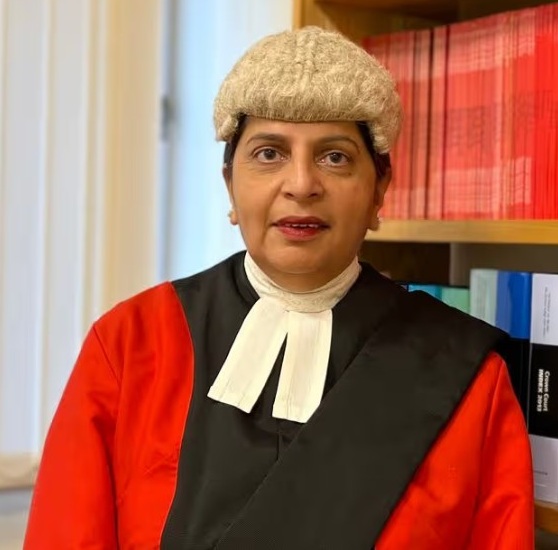
The Lady Chief Justice, following consultation with the Lord Chancellor duly appointed Mrs Justice Cockerill as the new Deputy Head of Civil Justice. Her appointment took effect from the 1st November 2025 for a term of three years.

Lady Justice Cockerill was called to the Bar (Lincoln’s Inn) in 1990 and took silk in 2011. She specialised in commercial law from 1990 to 2017.

She was appointed a Deputy High Court Judge in 2016, and a High Court Judge in the-then Queen’s Bench Division in 2017. From 2020 to 2022, she served as the Judge in Charge of the Commercial Court.

Lady Justice Sara Cockerill was sworn in as a Lady Justice of the Court of Appeal in October 2025.

The Salary of the Deputy Head of Civil Justice from from 1st April 2025 to 31st March 2026 is £266,556

Statutory Basis and Appointment Process

The office of Deputy Head of Civil Justice was established by the Courts Act 2003 (section 62), which amended the Senior Courts Act 1981 to create structured leadership roles for civil justice. The key provisions are as follows:

  • The Lord Chief Justice appoints the Deputy Head of Civil Justice, following consultation with the Lord Chancellor (now the Secretary of State for Justice).
  • Eligible appointees are typically a puisne judge of the High Court or a Lord/Lady Justice of Appeal.
  • The appointment is for a fixed term (usually three years) and on terms agreed at the time of appointment.
  • It is not tied automatically to any other judicial office, such as the Vice-Presidency of the King’s Bench Division.

This contrasts with the Head of Civil Justice, which is held automatically by the Master of the Rolls as President of the Court of Appeal (Civil Division).

Principal Responsibilities

The Deputy Head of Civil Justice has a broad and influential remit, including:

  • Providing judicial leadership for civil justice policy and reform across the County Court, High Court, and specialist lists.
  • Co-chairing (with the Head of Civil Justice) the Civil Justice Council.
  • Leading judicial input into the Civil Procedure Rule Committee (CPRC) in practice, though the Master of the Rolls remains the statutory chair.
  • Overseeing major HMCTS reform projects, including the Damages Claims Portal, Online Civil Money Claims, and broader court digitisation.
  • Acting as the primary judicial liaison with government and HMCTS on civil justice operational matters.
  • Contributing to judicial deployment and welfare in the civil jurisdiction.

Former Deputy Head of Civil Justice

Image of Lady Justice CockerillHM Courts and Tribunals Judiciary

Check out the related articles on the Attorney General, Solicitor General, Lady Chief Justice, Lord Chancellor, Chancellor of the High Court,Justice Secretary, Rule of Law, Open Justice, Law, Is the Law Black and White ?, Government Legal Department, Crown Prosecution Service (CPS), Government Legal Department (GLD), Abuse of Process, What Does Lady Justice Symbolise ?, McKenzie Friend, Can a Judge Direct a Jury to Find a Defendant Not Guilty ?,Law Society, Law Commission, McKenzie Friend Right of Audience, Solicitors, Solicitors Regulation Authority, Barristers, Bar Council of England and Wales, Bar Standards Board, R v Sussex Justices, Police Impartiality and the highly questionable Sussex Family Justice Board.


The Ministry of Injustice is not the Ministry of Justice nor is it affiliated in any way with the justice system, legal profession, police or any other law enforcement agencies.


Latest Articles


Most Popular


You should always seek formal legal advice from a qualified and reputable lawyer (solicitor or barrister).

There are a number of links to Free and Paid For Legal Resources and Legal Organisations on the Free Legal Advice , Legal Aid and Pro Bono pages.
Rule of Law - Open Justice - Policing By Consent