Categories
Free Speech Legal Analysis

The Free Speech Union

The Free Speech Union (FSU) is a prominent advocate for freedom of expression in the UK, founded in 2020 by journalist Toby Young. He is a current member of the House of Lords and known as Lord Young of Acton.

It aims to protect individuals from censorship or retribution for expressing lawful opinions, especially in settings like workplaces and universities where cancel culture is seen as a growing concern.

Article 10 of the Human Rights Act 1998 gives the right to freedom of expression. “This right shall include freedom to hold opinions and to receive and impart information and ideas without interference by public authority and regardless of frontiers.”

As of early 2025, the FSU boasts over 25,000 members, reflecting significant growth from previous years, and operates with a non-partisan, member-funded model.

As a member, you gain access to an array of resources and support, ensuring you can speak your mind without fear of being cancelled. Our experienced team provides guidance, support, and if necessary, discretionary legal support to defend your right to free speech. We will stand by our members, however unorthodox their views provided they’re not unlawful.

Join the Free Speech Union

The FSU has silver and gold membership with monthly or annual payments options.

Background and Mission of The Free Speech Union

The FSU emerged in response to growing concerns about the erosion of free expression in democratic societies, particularly amid rising instances of cancel culture and ideological conformity. It describes itself as a non-partisan, not-for-profit, member-funded organisation dedicated to defending the right to express lawful opinions without fear of censorship or retribution.

Its mission, as articulated on its official website, is to protect free speech as the “bedrock of all other freedoms,” especially in contexts like workplaces, universities, and public forums where dissent is increasingly penalised.

This mission is rooted in the belief that free speech enables the exchange of ideas, challenges orthodoxies, and fosters the pursuit of truth. Without it, the FSU argues, societies risk sliding into authoritarianism, where intellectual freedom is curtailed, and dissent is silenced.

Membership and Growth

As of January 23, 2025, the FSU announced on X that its membership had surpassed 25,000, marking a significant milestone. This represents more than a 100% increase from the 3rd January 2024, when membership stood at 12,151 reflecting rapid growth driven by heightened concerns over free speech restrictions.

Membership benefits include access to legal advice, representation, and advocacy for those facing repercussions for their speech, with an annual fee providing peace of mind for individuals worried about potential censorship.

Core Activities and Support

The FSU’s core function is providing practical support to its members, which includes legal referrals, crowdfunding for court costs, and public campaigns to raise awareness of free speech violations.

It has assisted over 2,000 people facing issues like job loss, academic sanctions, or social media backlash for expressing controversial but lawful opinions. Examples include supporting teachers sanctioned for questioning ideological teachings and workers penalised for political posts outside work.

Beyond individual cases, the FSU engages in broader advocacy, lobbying policymakers to strengthen legal protections for free expression.

It has been vocal in critiquing legislation like the UK’s Online Safety Act, arguing it could inadvertently restrict lawful speech under the guise of combating misinformation or harm.

Its newsletter and podcast further amplify its message, fostering a community dedicated to free thought and expression.

Criticisms and Counterarguments

The FSU’s approach has not been without controversy. Criticsargue that it sometimes defends individuals whose views are divisive or offensive, potentially amplifying harmful rhetoric.

They contend that the organisation’s focus on “free speech absolutism” overlooks the need to balance free expression with protections against hate speech or harassment.

The FSU counters that it does not endorse the views of those it defends, only their right to express them within the law. It emphasises that open debate, even on contentious issues, is essential for societal progress, arguing that suppressing speech risks driving harmful ideas underground where they fester unchallenged.

This stance reflects a broader philosophical debate about the limits of free expression, with the FSU positioning itself as a defender of intellectual resilience against cancel culture.

International Presence and Impact

The FSU’s influence extends beyond the UK, with a growing international presence including branches in New Zealand, Australia, Canada, South Africa, Switzerland, and efforts to establish new unions in other countries.

This global network, coordinated under the Free Speech Union International formed in early 2025, aims to defend free speech in international bodies like the UN and foster a culture of free expression worldwide.

Conclusion

The Free Speech Union stands as a vital advocate for free expression, with over 25,000 members and a robust suite of activities aimed at countering censorship and supporting individuals.

While it faces criticism for potentially amplifying divisive views, its emphasis on open debate and legal protections reflects a commitment to fostering a culture of intellectual resilience.

As debates over free speech continue to evolve, the FSU’s work remains relevant, ensuring diverse voices can be heard.

Check out our related articles on Policing by Consent, Thought Police, Rule of Law, Open Justice, Is the Law Black and White ?, What Does Lady Justice Symbolise ?, Can a Judge Direct a Jury to Find a Defendant Not Guilty ?, Law Society, Law Commission, Solicitors, Solicitors Regulation Authority, Barristers, Bar Council of England and Wales, Bar Standards Board, Contra Mundum, R v Sussex Justices, Police Impartiality and the highly questionable Sussex Family Justice Board.


The Ministry of Injustice is not the Ministry of Justice nor is it affiliated in any way with the justice system, legal profession, police or any other law enforcement agencies.


Latest Articles


Most Popular


You should always seek formal legal advice from a qualified and reputable lawyer (solicitor or barrister).

There are a number of links to Free and Paid For Legal Resources and Legal Organisations on the Free Legal Advice , Legal Aid and Pro Bono pages.

Categories
Law Legal Analysis Police

Are the Police for Hire ?

A chief officer of police may, at the request of any individual or entity, provide special police services at specific premises or within any locality in the force’s jurisdiction, subject to charges set by the police authority on a scale determined by that authority. So yes the Police are available for hire !

Police forces have historically recovered costs for “special police services”. These services include policing events like football matches, concerts, or private functions where organisers request additional police presence beyond standard public duties.

Drawing on key documents from UK Parliament, National Police Chiefs’ Council (NPCC) and HM Revenue & Customs (HMRC), this article explores the legal framework, implications, and controversies surrounding charging for police services.

Legislative Framework: The Foundation of Charging

The legal basis for charging for police services is rooted in Section 25 of the Police Act 1996 which allows police authorities to provide “special police services” at the request of any person, subject to payment. These services encompass additional policing beyond core public duties, such as securing commercial events like football matches, concerts, or private functions.

Section 26 of the Police Act 1996 applies similar requirements to the provision of police services overseas.

The 2008-09 UK Parliament report by the Home Affairs Committee details how this provision enables forces to recover costs for deploying officers, vehicles, and equipment.

Section 25, however, is not prescriptive about which events should incur charges or how fees should be calculated, leading to significant variation across forces. The Parliament report highlights cases where event organisers faced unexpected costs due to inconsistent application.

To address this, Section 15 of the Police Reform and Social Responsibility Act 2011 later clarified the role of Police and Crime Commissioners (PCCs) in overseeing charging policies, ensuring greater accountability.

NPCC Guidelines: Standardising the Approach

The NPCC’s National Policing Guidelines on Charging for Police Services aim to standardise practices across England and Wales. The guidelines categorise chargeable services into three types: special police services (e.g., policing commercial events like music festivals), mutual aid (where one force assists another), and additional services (e.g., training or consultancy for external organisations).

Charges are based on the full economic cost, including officer salaries, overtime, vehicles, and administrative overheads.

For example, policing a large-scale event like Glastonbury Festival could cost organisers tens of thousands of pounds, calculated by officer hours and resources deployed.

The guidelines emphasise transparency, requiring forces to publish charging rates and consult with event organisers in advance. They also allow exemptions for non-commercial events, such as charitable fundraisers, if they serve the public interest.

However, the discretion granted to individual forces can lead to inconsistencies. A small community group organising a charity run might face charges for road closures in one force area but not another, raising concerns about fairness.

Special Police Services Costs

As an example, in the Fees and Charges for the Supply of Goods & Services 2025 document published by Sussex Police, on page 14 they publish the costs for special police services.

  SurreySussex
Uniform and CID 2025 Rates Hourly RatesDaily RatesHourly RatesDaily Rates
  ££££
  Chief SuperintendentNORMAL165.911,202.85164.911,195.58
BANK HOLIDAYN/AN/AN/AN/A
BH < 8 days’ noticeN/AN/AN/AN/A
  SuperintendentNORMAL144.541,047.93143.541,040.66
BANK HOLIDAYN/AN/AN/AN/A
BH < 8 days’ noticeN/AN/AN/AN/A
  Chief InspectorNORMAL117.12849.08116.11841.81
BANK HOLIDAYN/AN/AN/AN/A
BH < 8 days’ noticeN/AN/AN/AN/A
  InspectorNORMAL110.47800.94109.47793.67
BANK HOLIDAYN/AN/AN/AN/A
BH < 8 days’ noticeN/AN/AN/AN/A
  SergeantNORMAL114.34828.99113.34821.72
BANK HOLIDAY139.541,011.65138.541,004.38
BH < 8 days’ notice181.841,318.36180.841,311.09
  ConstableNORMAL91.10660.4590.09653.18
BANK HOLIDAY111.33807.15110.33799.88
BH < 8 days’ notice143.721,041.93142.711,034.66
Charging of special policing services provided at commercial events

Please refer to the Fees and Charges for the Supply of Goods & Services 2025 for all fees and charges for special police services.

Sussex Police also publish an Income Generation and Charging Policy.

This policy is required to ensure there is a consistent and transparent method for calculating the appropriate fees for the use of police services and/or goods that are provided by Sussex Police to outside agencies so that the ‘users’ of the service have a clear understanding of how the charges have been calculated.

Income Generation and Charging Policy (490/2024) – Sussex Police

The amount of money Brighton and Hove Albion paid to Sussex Police for special police services from 2015 to 2024 was obtained via a Freedom of Information request by Richard Lemmer.

Further to a FOI request about the provision of Metropolitan Police officers under private hire arrangements such as those specified under S.25 of the Police Act 1996, The Met Police Published the response Private hire or provision of officers under special services provisions of Police Act 1996

Football clubs are currently only legally obliged to pay for the policing on their “footprint”, usually inside the stadium and surrounding car parks; the provision of “consequential policing” outside a football match, for example at a railway station or in the city centre, is currently the responsibility of the police and is provided at their discretion and at a cost to them.

The Cost of Policing Football Matches – Home Affairs Committee

HMRC and VAT

HMRC’s VATGPB5270 guidance clarifies the tax implications of charging for police services. Core policing duties, such as responding to emergencies or maintaining public order, are classified as non-business activities and exempt from VAT, reflecting their status as statutory obligations.

In contrast, special police services provided to commercial entities, such as policing a corporate event, are considered business activities and subject to VAT.

This ensures forces recover costs without generating profit. For example, a private company hiring police for a product launch would pay the full cost plus VAT, while a community event might qualify for an exemption if deemed non-commercial.

This distinction aligns with HMRC’s broader aim to balance fiscal responsibility with the principle that core policing remains a public good.

However, the complexity of determining which services are VAT-liable could create administrative burdens for forces, particularly when dealing with mixed-purpose events.

Implications and Controversies

The “police for hire” model, grounded in the Police Act 1996 and refined by the NPCC guidelines, reflects a pragmatic response to financial pressures. Yet, it raises profound questions about the nature of policing in a resource-constrained era.

Charging for police services has practical benefits but also significant drawbacks. Charging allows forces to prioritise public safety while recouping costs from those who directly benefit, such as commercial event organisers.

However, critics argue that this practice risks creating a two-tier policing system, where wealthier organisations or individuals can afford enhanced protection, while smaller groups struggle.

This raises ethical concerns about whether access to police services is being commodified, undermining the principle of policing by consent established by Sir Robert Peel. Moreover, inconsistent application of charges across forces can erode public trust.

The NPCC guidelines aim to mitigate this, but their reliance on local discretion leaves room for variation.

Check out our articles on Policing by Consent, Police Impartiality, Police Public Confidence and Engagement, Police Professional Standards Department, IOPC, Crime Reporting, What is a Police and Crime Commissioner ?, Policing, Police News, Two Tiered Policing, Thought Police, Police Digital Service, Knowledge Hub – Police Digital Service, What is the National Police Coordination Centre (NPoCC) ?, Wasting Police Time, Police Community Support Officers (PCSO), Met Police, Sussex Police, Chief Constable Jo Shiner, R v Sussex Justices and the highly questionable Sussex Family Justice Board.


The Ministry of Injustice is not the Ministry of Justice nor is it affiliated in any way with the justice system, legal profession, police or any other law enforcement agencies.


Latest Articles


Most Popular


You should always seek formal legal advice from a qualified and reputable lawyer (solicitor or barrister).

There are a number of links to Free and Paid For Legal Resources and Legal Organisations on the Free Legal Advice , Legal Aid and Pro Bono pages.
Categories
Police

What is the National Police Coordination Centre (NPoCC) ?

The National Police Coordination Centre (NPoCC) is a UK national unit that supports police forces across the United Kingdom, Crown Dependencies, and British Overseas Territories by coordinating the deployment of police officers and staff during large-scale events, operations, and national crises, such as civil emergencies, major protests, or significant public events.

It ensures effective mobilisation of specialist resources and mutual aid across forces, maintains national capacity assessments for over 200 specialist skills, and provides strategic intelligence and briefing support, particularly for protest-related threats.

NPoCC also represents UK policing at government-level meetings, including the Civil Contingencies Committee (COBR), and supports operations like disaster victim identification and international policing efforts.

The unit is composed of officers and staff seconded from UK police forces, organised into two teams: Operations and Strategic Intelligence and Briefing (SIB). Assistant Chief Constable Mark Williams serves as the Strategic Lead and National Mobilisation Coordinator as of January 2025.

Location

NPoCC is based at 50 Broadway, London, SW1H 0BL. The National Police Chiefs’ Council (NPCC) shares the same building as the National Police Coordination Centre (NPoCC).

The office was officially opened in April 2024 by The Duke of Gloucester. The Duke of Gloucester was welcomed by NPCC Chair Chief Constable Gavin Stephens, and Assistant Chief Constable Mark Williams of the National Police Coordination Centre (NPoCC). Also in attendance was the Rt Hon Chris Philp MP, who was the Minister for Crime, Policing and Fire.

It relocated to this site following a lease agreement approved in 2023, after previously being housed at 10 Victoria Street, London, under a temporary extension of occupancy. The relocation was funded by NPoCC and the National Police Chiefs’ Council (NPCC), with no liability to the Mayor’s Office for Policing and Crime (MOPAC).

Relevant Legislation

NPoCC operates under the following legal frameworks:

  • Section 22A of the Police Act 1996: This legislation underpins the NPoCC’s operations through a collaboration agreement signed by Chief Constables, Police and Crime Commissioners (PCCs), and non-Home Office force equivalents. It facilitates the funding and coordination of NPoCC by contributions from all UK police forces and enables the NPCC, which NPoCC reports to, to function as a national coordination body.
  • Public Contracts Regulations 2015 (revoked on 24 February 2025 by the Procurement Act 2023): For contracts exceeding £213,477, NPoCC’s procurement activities, such as those related to its relocation and fit-out costs, must comply with these regulations. The 2023 relocation to 50 Broadway adhered to these rules, using existing Metropolitan Police Service (MPS) frameworks for construction and design services.
  • Police Reform and Social Responsibility Act 2011: This act defines the roles of Police and Crime Commissioners, who, along with MOPAC and the Common Council of the City of London, are part of the policing bodies contributing to NPoCC’s governance and funding.

Budget and Funding

The National Police Coordination Centre (NPoCC) does not have a publicly disclosed specific budget figure for 2025 in available records.

Its funding is derived from contributions by all UK police forces under a Section 22A Police Act 1996 collaboration agreement, managed through the National Police Chiefs’ Council (NPCC). The exact amount allocated to NPoCC is not itemised separately in public documents, as it forms part of broader NPCC and police funding streams.

For context, the overall police funding settlement for England and Wales in 2025-26 is up to £19.6 billion, an increase of £1.1 billion from 2024-25, with £17.5 billion allocated to Police and Crime Commissioners (PCCs) and including £1 billion for national policing priorities, which encompasses NPoCC’s operations.

However, the specific portion for NPoCC is not detailed, as its budget is embedded within these contributions and NPCC operational costs. Additional costs, such as the 2023 relocation to 50 Broadway, London, were covered by NPoCC and NPCC without liability to the Mayor’s Office for Policing and Crime (MOPAC), indicating shared funding mechanisms.

Without precise figures, the NPoCC’s budget is likely a small fraction of the national priorities funding, tailored to support its coordination, intelligence, and mobilisation activities across UK forces.

Check out our articles on Policing by Consent, Police Impartiality, Are the Police for Hire ?, Police Surveillance, Police Public Confidence and Engagement, Police Professional Standards Department, Are the Police for Hire ?, IOPC, Crime Reporting, What is a Police and Crime Commissioner ?, Policing, Police News, Two Tiered Policing, Thought Police, Police Digital Service, Knowledge Hub – Police Digital Service, Wasting Police Time, Police Community Support Officers (PCSO), Met Police, Sussex Police, Chief Constable Jo Shiner, R v Sussex Justices and the highly questionable Sussex Family Justice Board.


The Ministry of Injustice is not the Ministry of Justice nor is it affiliated in any way with the justice system, legal profession, police or any other law enforcement agencies.


Latest Articles


Most Popular


You should always seek formal legal advice from a qualified and reputable lawyer (solicitor or barrister).

There are a number of links to Free and Paid For Legal Resources and Legal Organisations on the Free Legal Advice , Legal Aid and Pro Bono pages.

Categories
Law Legal Analysis Police

Sussex Police and Brighton Pride 2025

Brighton Pride, officially Brighton & Hove Pride, is often cited as the UK’s largest and most popular Pride festival, drawing significant crowds and generating substantial economic impact.

Sources indicate it attracts over 300,000 attendees, with some estimates as high as 500,000 over the Pride weekend, contributing around £30.5 million to the city’s economy. The event features a major parade, a festival in Preston Park, and various parties, making it a cornerstone of Brighton’s cultural calendar.

Pride On The Park supported by Hayu is the official Brighton & Hove Pride fundraiser for our local LGBTQIA+ community groups. A glittering and truly inclusive community celebration that delivers an unforgettable day of Pride, it is unique community fundraising event that has enjoyed amazing performances from international stars including Britney Spears, Kylie Minogue, Dua Lipa, Ray,  Nile Rogers & Chic, Clean Bandit, Pet Shop Boys, Grace Jones, Years and Years, Sister Sledge, Carly Rae Jepsen, Fatboy Slim, Paloma Faith, The Human League,  Ella Elre, Jessie J amongst others.

The UK’s Biggest LGBTQ Pride Festival – Brighton Pride

Brighton Pride this year is being held between the 2nd and 3rd August 2025. Mariah Carey is the headline act for Brighton & Hove Pride 2025, performing at Pride On The Park on Saturday 2nd August. The Sugababes will headline on Sunday 3rd August.

Should the NHS take part in Pride (LGBTQIA+) Events ?

Police and Impartiality at Pride

Mr Justice Linden in Smith v Chief Constable of Northumbria Police [2025] EWHC 1805 (Admin) ruled that Northumbria Police breached their duty of impartiality by allowing uniformed officers to actively participate in the Newcastle Pride in the City 2024 event, displaying symbols like the Progress Pride flag.

The court found that such participation gave the impression of endorsing a contested ideological position—specifically, gender ideology—potentially undermining public trust in the police’s ability to act impartially, particularly in disputes involving gender-critical individuals and transgender rights supporters.

Sussex Police and Brighton Pride 2025

Sussex Police Media Team were contacted on the 31st July 2025. The Sussex Police’s responses are in bold :-

  1. Has the Chief Constable/Sussex Police decided if they will allow uniformed  officers to actively take part in Brighton Pride on the 2nd – 3rd AUGUST 2025 ?

A decision was taken in June that Sussex Police would not take part in the parade in 2025.

  1. Will the Sussex Police Pride Car and other Sussex Police vehicles have the PRIDE and other symbols removed ? 

We have a police vehicle which has LGBTQ+ inclusion livery. This is a response vehicle used all year round within the Brighton division. We cannot say at this point whether it will be operational at the weekend.

  1. Has any guidance been issued to officers in relation to PRIDE Brighton 2025 and other events ? For example,  Sussex police officers can only attend Brighton Pride 2025 events on a voluntary basis and not in uniform unless policing the event.

Sussex Police is not taking part in the parade this year.

Check out our articles on Sussex Police, Policing by Consent, Police Impartiality, Police Public Confidence and Engagement, Police Professional Standards Department, IOPC, Crime Reporting, What is a Police and Crime Commissioner ?, Policing, Police News, Two Tiered Policing, Are the Police for Hire ?, Thought Police, Police Digital Service, Knowledge Hub – Police Digital Service, Wasting Police Time, Police Community Support Officers (PCSO), Met Police, Chief Constable Jo Shiner, R v Sussex Justices and the highly questionable Sussex Family Justice Board.


The Ministry of Injustice is not the Ministry of Justice nor is it affiliated in any way with the justice system, legal profession, police or any other law enforcement agencies.


Latest Articles


Most Popular


You should always seek formal legal advice from a qualified and reputable lawyer (solicitor or barrister).

There are a number of links to Free and Paid For Legal Resources and Legal Organisations on the Free Legal Advice , Legal Aid and Pro Bono pages.

Categories
Legal Analysis

Should the NHS take part in Pride (LGBTQIA+) Events ?

The judgment by Mr Justice Linden in Smith v Chief Constable of Northumbria Police [2025] EWHC 1805 (Admin) ruled that Northumbria Police breached their duty of impartiality by allowing uniformed officers to actively participate in the Newcastle Pride in the City 2024 event, displaying symbols like the Progress Pride flag.

The court found that such participation gave the impression of endorsing a contested ideological position specifically, gender ideology, potentially undermining public trust in the police’s ability to act impartially, particularly in disputes involving gender-critical individuals and transgender rights supporters.

This ruling has implications for other public bodies, like the NHS, which are also expected to maintain impartiality in their public-facing activities. The judgment suggests that public institutions should avoid actions that could be perceived as aligning with one side of a polarising debate, even under the guise of inclusivity.

For the NHS, this could mean reconsidering participation in Pride (LGBTQIA+) events if it involves official branding, uniformed staff, or symbols like the Progress Pride flag, which the court noted is associated with trans activism and may exclude those with gender-critical views.

However, the ruling does not outright ban participation in Pride events. It emphasises that public bodies must ensure their actions do not create a perception of bias. The NHS could still engage with Pride in a neutral capacity, such as providing health services or safety support, as long as it avoids endorsing specific ideological positions. For example, staffing informational stalls without Pride insignia or ensuring staff participate in a personal capacity (not in uniform or with official branding) could align with the impartiality requirement.

There are broader considerations. Some argue that Pride has become politicised, particularly with slogans and symbols tied to contested issues like transgender rights, which could complicate NHS involvement. Others contend that supporting Pride is about promoting inclusivity for marginalised groups, like the LGBT+ community, and withdrawing could harm community trust, especially among those who feel underserved by healthcare systems.

The judgment, however, prioritises impartiality over these community engagement goals, suggesting that public bodies must tread carefully to avoid legal challenges.

The NHS may wish to reassess its approach to Pride participation, ensuring any involvement is strictly neutral, avoids ideological symbols, and prioritises its core mission of equitable healthcare delivery. It’s worth noting that the ruling’s scope is specific to the police, and no direct legal precedent applies to the NHS yet, but the principle of impartiality likely extends to other public bodies.

The NHS might also consider public consultation or clear guidelines to balance inclusivity with neutrality, especially given the ruling’s broader implications for public institutions.

Ultimately, the decision depends on how the NHS interprets its impartiality obligations and whether it can engage with Pride in a way that doesn’t signal taking sides in ideological debates.

Check out our related articles on Can a Woman Have a Penis ?, Rule of Law, Open Justice, Is the Law Black and White ?, What Does Lady Justice Symbolise ?, Can a Judge Direct a Jury to Find a Defendant Not Guilty ?, Law Society, Law Commission, Solicitors, Solicitors Regulation Authority, Barristers, Bar Council of England and Wales, Bar Standards Board, Contra Mundum, R v Sussex Justices, Police Impartiality and the highly questionable Sussex Family Justice Board.


The Ministry of Injustice is not the Ministry of Justice nor is it affiliated in any way with the justice system, legal profession, police or any other law enforcement agencies.


Latest Articles


Most Popular


You should always seek formal legal advice from a qualified and reputable lawyer (solicitor or barrister).

There are a number of links to Free and Paid For Legal Resources and Legal Organisations on the Free Legal Advice , Legal Aid and Pro Bono pages.
Categories
Law Legal Analysis

What is a Hung Jury ?

A hung jury refers to a situation in a criminal trial where the jury cannot reach a unanimous or majority verdict as required by law, resulting in a failure to deliver a conclusive decision on the defendant’s guilt or innocence.

Explanation of a Hung Jury

In England and Wales, juries in criminal trials typically consist of 12 jurors, though this number can reduce to as few as 9 due to illness or other exceptional circumstances.

For a verdict to be reached, the jury must either deliver a unanimous verdict (all jurors agree) or, after a minimum period of deliberation (usually at least two hours and ten minutes, as specified by the court), a majority verdict.

A majority verdict requires at least 10 jurors to agree (e.g., 10-2 or 11-1) when 12 jurors remain, or 9-1 if only 10 jurors remain, as outlined in the Juries Act 1974. A hung jury occurs when the jurors, even after extended deliberation, cannot achieve the required level of agreement. This deadlock means the jury is discharged by the judge without delivering a verdict, and the trial does not result in a conviction or acquittal.

Implications of a Hung Jury

When a jury is hung, the court typically discharges the jurors, and the case is referred back to the prosecution, usually the Crown Prosecution Service (CPS). The CPS then decides whether to pursue a retrial, based on factors such as the strength of the evidence, the seriousness of the offense, and the public interest.

According to CPS guidelines, a retrial is often sought if the prosecution believes a conviction is still likely and it serves the interests of justice CPS Retrial Guidance.

In some cases, if the evidence is weak or a retrial is deemed unlikely to succeed, the prosecution may choose not to proceed further, effectively halting the case. Alternatively, if a retrial is ordered, a new jury is empanelled, and the trial process begins anew, with the same or adjusted evidence presented.

Frequency and Causes of a Hung Jury

Hung juries are relatively rare in England and Wales due to the allowance of majority verdicts, which reduces the likelihood of deadlock compared to jurisdictions requiring unanimous verdicts.

Hung juries occur in a small percentage of cases, though exact figures vary year to year. Common reasons for a hung jury include conflicting evidence, complex legal issues, or differing juror perspectives on the case.

Legal Framework and Procedure

The process for handling juries, including hung juries, is governed by the Juries Act 1974 and supplemented by guidance in the Crown Court Compendium.

The Crown Court Compendium is a resource published by the Judicial College for judges presiding over criminal trials. The Compendium includes directions on jury management, such as how to handle deadlocked juries and when to give a “majority direction” or a “Watson direction” (based on R v Watson [1988] QB 650), which encourages jurors to reach a verdict without coercion.

Judges may provide additional directions to encourage jurors to reach a verdict, such as a “majority direction” after sufficient deliberation time, but they must avoid pressuring jurors unduly.

If a hung jury is declared, the judge discharges the jury, and the case is reviewed for further action. The Courts and Tribunals Service manages the procedural aspects of scheduling retrials or other proceedings.

In addition to the Juries Act 1974, which is the primary legislation governing jury composition, deliberations, and majority verdicts in England and Wales, other relevant legislation and legal frameworks may apply to the context of hung juries or related jury processes.

  • Criminal Justice Act 2003
    • This act introduced reforms to the criminal justice system, including provisions affecting jury trials. While it primarily focuses on evidence admissibility and sentencing, it also contains provisions that can influence retrials following a hung jury, such as rules on double jeopardy (Part 10, Sections 75–97). In rare cases, a hung jury in a serious offense may lead to a retrial under relaxed double jeopardy rules for certain offenses if new and compelling evidence emerges.
    • Relevance to Hung Juries: If a hung jury occurs and a retrial is pursued, the Criminal Justice Act 2003 may govern aspects of the retrial process, particularly for serious crimes.
  • Criminal Procedure Rules 2020
    • The Criminal Procedure Rules, issued by the Ministry of Justice, provide detailed procedural guidance for criminal trials, including jury management and the handling of hung juries. Part 25 of the Rules outlines procedures for trial conduct, including jury deliberations and what happens when a jury cannot reach a verdict.
    • Relevance to Hung Juries: These rules ensure that the court follows consistent procedures when discharging a hung jury and scheduling a retrial.
  • Contempt of Court Act 1981
    • This act regulates juror conduct and protects the integrity of jury deliberations. It prohibits jurors from disclosing details of their deliberations, which is relevant to hung juries as it ensures confidentiality even when a jury fails to reach a verdict. Breaches of this act (e.g., jurors researching cases online) can contribute to a hung jury or lead to a mistrial.
    • Relevance to Hung Juries: Misconduct by jurors, such as improper research or external influence, can result in a hung jury or jury discharge, governed by this legislation.
  • Criminal Justice and Public Order Act 1994
    • This act includes provisions related to jury tampering and juror intimidation (Sections 51–52), which can lead to a hung jury if jurors feel unable to deliberate freely. If tampering is suspected, the court may discharge the jury, effectively resulting in a hung jury scenario.
    • Relevance to Hung Juries: Ensures that external pressures do not improperly influence jury decisions, which could otherwise lead to a deadlock.

Impact on Defendants and Victims

A hung jury can be emotionally and financially taxing for all parties involved. Defendants may face prolonged uncertainty, while victims and witnesses may need to prepare for a retrial, potentially reliving traumatic experiences. The CPS considers these factors when deciding whether to pursue a retrial, balancing justice with practicality.

Conclusion

A hung jury in England and Wales represents a rare but significant outcome in criminal trials, reflecting the challenges of achieving consensus in complex cases.

Governed by clear legal frameworks like the Juries Act 1974 and CPS guidelines, the system ensures that hung juries are handled methodically, with retrials or case discontinuations decided in the interest of justice. For further information on jury processes or retrials, refer to the following resources:

Check out our related articles on What is a Jury ?, Rule of Law, Open Justice, Is the Law Black and White ?, What Does Lady Justice Symbolise ?, Can a Judge Direct a Jury to Find a Defendant Not Guilty ?,Law Society, Law Commission, Solicitors, Solicitors Regulation Authority, Barristers, Bar Council of England and Wales, Bar Standards Board, Contra Mundum, R v Sussex Justices, Police Impartiality and the highly questionable Sussex Family Justice Board.


The Ministry of Injustice is not the Ministry of Justice nor is it affiliated in any way with the justice system, legal profession, police or any other law enforcement agencies.


Latest Articles


Most Popular


You should always seek formal legal advice from a qualified and reputable lawyer (solicitor or barrister).

There are a number of links to Free and Paid For Legal Resources and Legal Organisations on the Free Legal Advice , Legal Aid and Pro Bono pages.

Categories
Law Legal Analysis Legal Professionals

Can a Judge Direct a Jury to Find a Defendant Not Guilty ?

In England and Wales, a judge in a crown court trial can decide on their own or direct a jury to find a defendant not guilty in specific circumstances, primarily when there is insufficient evidence to support a conviction. This is known as a directed acquittal.

Legal Basis and Crown Court Procedure

Pre-Trial Dismissal

Under Section 6 of the Criminal Justice Act 1987 (for serious or complex fraud cases) or Schedule 3 of the Crime and Disorder Act 1998 (for other indictable offenses), the judge reviews written evidence and submissions without a hearing and may dismiss the charges, resulting in an acquittal.

The judge acts alone, without a jury, and the acquittal is formally recorded, barring further prosecution for the same offense (subject to the double jeopardy rule).

During Trial

A judge can direct an acquittal under Section 17 of the Criminal Justice Act 1967 if, after the prosecution presents its case, the judge finds “no case to answer” because the evidence is so weak that no reasonable jury could convict. This often follows a defense submission at the close of the prosecution’s case.

  • The judge assesses whether the evidence is sufficient for a jury to properly convict. If it’s deemed insufficient (e.g., lacks key elements of the offense or is unreliable), the judge can direct the jury to return a not guilty verdict.
  • This is often seen in cases where the prosecution fails to establish a prima facie case or the evidence is legally inadmissible or too weak.
Abuse of Process

A judge may also dismiss a case if continuing it would be an abuse of process (e.g., due to unfairness or procedural irregularities), leading to a stay or acquittal.

Key Case Law

The test for a directed acquittal is based on R v Galbraith [1981] 1 WLR 1039, which sets out that a case should be stopped if:

  1. There is no evidence that the defendant committed the offense, or
  2. The prosecution’s evidence is so tenuous or inconsistent that a conviction would be unsafe.

Judge’s Role

The judge cannot direct a not guilty verdict simply because they personally believe the defendant is innocent. The decision must be based on the legal sufficiency of the evidence. If there’s enough evidence for a jury to consider, the case proceeds, and the jury decides the verdict.

Limitations

A judge cannot direct a jury to find a defendant guilty, as this would infringe on the jury’s role as the arbiter of facts (R v Wang [2005] UKHL 9).

  • Directed acquittals are rare and typically occur in clear-cut cases of evidential deficiency.

In summary, a judge in England and Wales can direct a jury to find a defendant not guilty if the prosecution’s case is legally insufficient, but this is a procedural safeguard rather than a subjective judgment on guilt or innocence.

What about a Magistrate ?

In England and Wales, a magistrate (or magistrates, as they often sit in panels of 3 in magistrates’ courts), or district judge does not direct a jury in the same way a judge does in a Crown Court, as magistrates’ courts do not have juries.

Instead, magistrates act as both the trier of law and fact in summary trials (less serious offenses). However, the concept of a directed acquittal or dismissing a case due to insufficient evidence still applies in magistrates’ courts, adapted to their context. Here’s a concise explanation:

Magistrates’ Role in Dismissing a Case

Magistrates or District Judge can dismiss a case if they find there is no case to answer, similar to a directed acquittal in a Crown Court. This happens when the prosecution’s evidence, at the close of their case, is insufficient for a conviction.

  • The defense may make a submission of no case to answer, arguing that the prosecution has failed to present enough evidence to prove the offense. The magistrates or District Judge then assess whether the evidence is sufficient to proceed.

Magistrate Legal Test

The same principles from R v Galbraith [1981] 1 WLR 1039 apply:

  1. If there is no evidence that the defendant committed the offense, the case must be dismissed.
  2. If the evidence is so weak, inconsistent, or unreliable that a conviction would be unsafe, the magistrates or district judge can stop the case.

Magistrates Court Procedure

In a magistrates’ court, if the prosecution’s case is deemed insufficient after their evidence is presented, the magistrates can dismiss the case without requiring the defense to present their case.

  • This is effectively equivalent to a judge directing a not guilty verdict in a Crown Court, but since magistrates or district judge are the decision-makers, they simply dismiss the case or acquit the defendant directly.

Key Differences from Crown Court

There is no jury in magistrates’ court cases, so magistrates do not “direct” a jury. They decide the outcome themselves.

  • Magistrates’ courts handle less serious offenses, so the threshold for dismissing a case may be applied more frequently due to simpler evidential issues.
  • Cases in a magistrates court are heard by either three magistrates or a district judge. 

Magistrate and District Judge Limitations

Like Crown Court judges, magistrates cannot dismiss a case based on their personal belief in the defendant’s innocence. The decision must be based on the legal insufficiency of the prosecution’s evidence.

  • If the evidence is sufficient to proceed, magistrates will hear the defense’s case and make a final decision on guilt or innocence.

In summary, a magistrate or district judge in England and Wales can effectively “direct” a not guilty outcome by dismissing a case or acquitting a defendant if the prosecution’s evidence is insufficient, following the same legal principles as in a directed acquittal in a Crown Court.

Check out our related articles on What is a Jury ?, What is a Hung Jury ?, Rule of Law, Open Justice, Is the Law Black and White ?, What Does Lady Justice Symbolise ?, Law Society, Law Commission, Solicitors, Solicitors Regulation Authority, Barristers, Bar Council of England and Wales, Bar Standards Board, Contra Mundum, R v Sussex Justices, Police Impartiality and the highly questionable Sussex Family Justice Board.


The Ministry of Injustice is not the Ministry of Justice nor is it affiliated in any way with the justice system, legal profession, police or any other law enforcement agencies.


Latest Articles


Most Popular


You should always seek formal legal advice from a qualified and reputable lawyer (solicitor or barrister).

There are a number of links to Free and Paid For Legal Resources and Legal Organisations on the Free Legal Advice , Legal Aid and Pro Bono pages.

Categories
Judiciary

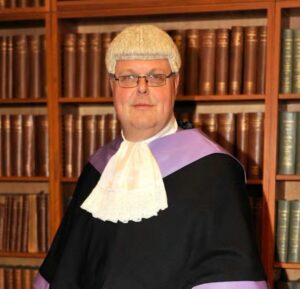
His Honour Judge Neil Flewitt KC

His Honour Judge Neil Flewitt KC is a Circuit Judge. He is a senior judge based at Liverpool Crown Court.

In July 2025, Judge Flewitt oversaw the trial of two brothers, Mohammed Fahir Amaaz and Muhammed Amaad, accused of assaulting police officers at Manchester Airport.

On Friday 25th July 2025, the jury were sent home for the weekend. Judge Flewitt told members of the jury to put the case out of their minds until they return.

Verdicts were reached on Wednesday 30th July 2025 and were as follows:-

Count 1: Mohammed Fahir Amaaz is charged with assault by beating Abdulkareem Hamzah Abbas Ismaeil. Verdict: GUILTY

Count 2: Mohammed Fahir Amaaz and Muhammed Amaad are are charged with assaulting PC Zachary Marsden occasioning actual bodily harm. Verdicts: Mohammed Fahir Amaaz: NO VERDICT REACHED. Muhammed Amaad: NO VERDICT REACHED

Count 3: Mohammed Fahir Amaaz is charged with assaulting PC Lydia Ward occasioning her actual body harm. Verdict: GUILTY

Count 4: Mohammed Fahir Amaaz is charged with assaulting an emergency worker PC Ellie Cook by beating her. Verdict: GUILTY

Man convicted of assaulting two female police officers and a member of the public – Greater Manchester Police Statement

The retrial for the Manchester Airport brothers Mohammed Fahir Amaaz and Muhammad Amaad started on Monday 13th April 2026 at Liverpool Crown Court before His Honour Judge Neil Flewitt KC

On the 20th May 2026, the retrial jury was discharged after it failed to reach verdicts over allegations that the two brothers assaulted police officer PC Zachary Marsden at Manchester Airport. The case was adjourned until 29 May to give the Crown Prosecution Service time to decide whether it wanted to seek a third trial.

On the 29th May 2026, the Crown Prosecution Service said it would not be ordering a further hearing for Muhammad Amaad, 26, and Mohammed Fahir Amaaz, 21, after two previous juries failed to reach verdicts at Liverpool Crown Court.

An attempt to persuade Judge Neil Flewitt to ‘recuse‘ himself from the retrial on grounds which included alleged ‘intimidation’ of female barristers also failed.

He ruled that his own interventions during the first trial had been ‘reasonable’ and ‘balanced’ and refused to step aside for the retrial.

Revealed – How lawyers for the brothers filmed brawling with police at Manchester Airport tried to derail case against them – Daily Mail

His Honour Judge Flewitt KC Bio

Neil Flewitt was born in 1960 and called to the Bar (Middle Temple) in 1981. He quickly established himself as a skilled barrister, specialising in criminal law.

His expertise and advocacy led to his appointment as Queen’s Counsel (QC, now King’s Counsel or KC) in 2003, a prestigious designation recognising his excellence in the legal profession.

Before his judicial appointment, Judge Flewitt served as an Assistant Recorder (1999) and Recorder (2000), roles that allowed him to gain experience presiding over cases in the Crown Court.

In 2015, on the advice of the Lord Chancellor and the Lord Chief Justice, Her Majesty The Queen appointed Flewitt as a Circuit Judge, assigning him to the Northern Circuit, based at Liverpool Crown Court. Since then, he has been known as His Honour Judge Neil Flewitt KC, reflecting his status as a senior judge.

HHJ Flewitt is shown on the List of Circuit Judges published on the Courts and Tribunal Judiciary website.

His Honour Judge Flewitt KCNorth West09-06-2015
List of Circuit Judges

HHJ Flewitt Other Notable Cases

In 2024, Judge Flewitt presided over cases related to the violent disorder in Southport, Merseyside, following the tragic stabbing of three young girls. One significant case involved Luke Moran, who was sentenced to three years for smashing a police vehicle’s window with a chunk of concrete during the riots.

HHJ Flewitt KC described the incident as one of the worst cases of disorder he had seen, emphasising the harm caused to the community and the police.

In another case tied to the same unrest, Andrew McIntyre was sentenced to seven years for posting racially motivated content on social media that incited violence.

Judge Flewitt condemned McIntyre’s actions, stating they were “motivated by racial hatred” and had encouraged others to commit violent offenses.

An escaped prisoner who was found with a nail bomb, two imitation firearms and a knife was planning to blow up a bank after watching a Netflix documentary.

He was jailed for 15 years at Liverpool Crown Court on Thursday and given an extended licence period of five years after Judge Neil Flewitt KC ruled he was a dangerous offender the public required protection from.

Judge Flewitt – Sky News

A mother thanked the Judge Neil Flewitt KC who jailed her two sons for burgling a library that was set on fire and looted during riots in Liverpool – before warning others to stay at home

A relative of the teenager accused of murdering schoolboy Rhys
Jones has refused to answer questions in court. He was asked several questions by Neil Flewitt QC, prosecuting, but said he was “too scared” to answer. The judge held him in contempt of court and told him to report back to court on Monday with legal representation.”

BBC News, 28 October 2008

The judiciary, including Judge Flewitt, are quite rightly not immune to public criticism and comment. The rule of law applies to everyone and no one is above the law.

Criticising judges, was historically considered a form of contempt of court in England and Wales.

“Scandalising the judiciary (also referred to as scandalising the court or scandalising judges) is abolished as a form of contempt of court under the common law of England and Wales.”

Crime and Courts Act 2013 Section 33

You may want to check out the articles on Dodgy Judges and His Honour Judge Melbourne Inman KC (The Former Recorder of Birmingham).

HHJ Flewitt Controversy

Judge Flewitt’s decisions have not been without controversy, particularly in high-profile cases that have attracted public scrutiny. Posts on social media following the Manchester Airport assault trial criticised HHJ Flewitt for allegedly describing the defendants as being of “good character” due to their lack of prior convictions, with some users accusing him of bias.

However, others defended his approach, noting that it is standard judicial practice to inform juries of a defendant’s lack of prior convictions, and praised His Honour Judge Flewitt as an “excellent judge” doing his duty. These polarised views highlight the challenges judges face in balancing legal impartiality with public sentiment.

The three key values which are central to the role of judicial office holders (JOHs) in England and Wales are:
• Independence
• Impartiality
• Integrity

“Publicity is the very soul of justice. . . . It keeps the judge himself, while trying, under trial….Where there is no publicity there is no justice”

Jeremy BenthamMr Justice Cobb: ‘Justice must be seen to be done’

Image of HHJ Flewitt : Patrick Christys Appreciation Group – Helping To Put The Great Back

Check out our articles on Dodgy JudgesJudges Salaries and Fees, Mr Justice Williams, His Honour Judge Melbourne Inman KC, His Honour Judge Richardson, His Honour Now His Dishonour, His Honour Judge Michael Slater, His Honour Judge Martin Davis, HHJ Farquhar, Do you Have to Bow to a Judge ?, Can you Email a Judge ?, Can you Criticise a Judge ? and the highly dubious Sussex Family Justice Board.


The Ministry of Injustice is not the Ministry of Justice nor is it affiliated in any way with the justice system, legal profession, police or any other law enforcement agencies.


Latest Articles


Most Popular


You should always seek formal legal advice from a qualified and reputable lawyer (solicitor or barrister).

There are a number of links to Free and Paid For Legal Resources and Legal Organisations on the Free Legal Advice , Legal Aid and Pro Bono pages.

Categories
Police

Sussex Police – Crime Investigation Requires Improvement

The Police Effectiveness, Efficiency, and Legitimacy (PEEL) assessment for Sussex Police, conducted by His Majesty’s Inspectorate of Constabulary and Fire & Rescue Services (HMICFRS) for 2023-2025, evaluated the force’s performance across various policing functions.

The report highlights both strengths and areas for improvement, grading Sussex Police on key areas such as preventing crime, protecting vulnerable people, leadership, and resource management. Below is a summary of the key findings and recommendations.

Sussex Police PEEL Assessment – 2023–2025 24th July 2025

HMICFRS has graded Sussex Police’s performance across nine areas. They found the force was ‘good’ in one area, ‘adequate’ in seven areas and ‘required improvement’ in one area.

Read the Sussex Police Report Online or Download below.

The chief of Sussex Police (Jo Shiner KPM) said she is ‘proud of the positive changes’ that have been highlighted in the latest inspection report – but the force has been told it still needs to improve the quality of its crime investigations.

Sussex Police is mostly ‘adequate’ but force told it needs to improve the quality of its crime investigations – Sussex World

Key Findings

  1. Preventing and Deterring Crime
    • Sussex Police demonstrates a reasonable performance in preventing crime but requires improvement in its approach to tackling anti-social behavior (ASB). The force has effective processes for identifying crime trends and allocating resources but struggles with consistent community engagement to prevent ASB.
    • The report notes that the force’s neighborhood policing teams are stretched, impacting their ability to proactively address local issues.
  2. Protecting Vulnerable People
    • The force performs adequately in safeguarding vulnerable individuals, including victims of domestic abuse and children at risk. However, response times to incidents involving vulnerability are inconsistent, and there are delays in risk assessments for some cases.
    • Sussex Police has improved its response to missing persons but needs better training for staff to identify hidden vulnerabilities effectively.
  3. Investigating Crime
    • Sussex Police shows mixed performance in crime investigation. While serious crimes like homicide and sexual offenses are generally well-handled, lower-level crimes, such as theft, often lack thorough investigation due to resource constraints.
    • The force has made progress in reducing backlogs of digital forensic examinations, but further investment is needed to maintain this improvement.
    • Overall Sussex Police Investigating Crime Requires improvement
  4. Responding to the Public
    • The force’s call-handling performance is a concern, with longer-than-average wait times for non-emergency calls. Emergency (999) response times are within acceptable standards, but the force struggles to meet demand during peak periods.
    • Sussex Police has introduced initiatives to improve call management, but these are yet to yield consistent results.
  5. Leadership and Workforce
    • Leadership within Sussex Police is rated as good, with clear efforts to promote a positive culture and support staff well-being. The force has robust processes for professional development and diversity training.
    • However, workforce morale is affected by high workloads, particularly in response policing teams, and there is a need for better succession planning to address staffing gaps.
  6. Efficiency and Resource Management
    • Sussex Police is graded as requiring improvement in efficiency. While the force has made strides in financial planning, it faces challenges in optimising resources due to increasing demand and limited budgets.
    • The report praises the force’s collaboration with other agencies, such as local councils, but notes that partnerships could be better leveraged to address complex issues like ASB and youth crime.
  7. Public Trust and Legitimacy
    • The force performs well in maintaining public trust, with strong community outreach programs and transparent complaint-handling processes. However, stop-and-search practices require improvement to ensure fairness and proportionality, particularly for minority groups.
    • Sussex Police has made efforts to address disproportionality in policing but needs to enhance data analysis to monitor outcomes effectively.

Areas for Improvement

HMICFRS identified several areas where Sussex Police must improve:

  • Anti-Social Behavior: Develop a more proactive strategy to tackle ASB, including better engagement with communities and partnerships.
  • Call Handling: Invest in technology and training to reduce non-emergency call wait times and improve demand management.
  • Investigation Quality: Ensure consistent standards for investigating lower-level crimes and reduce delays in digital forensics.
  • Stop-and-Search: Enhance oversight and training to ensure stop-and-search is conducted fairly and proportionately.
  • Workforce Support: Address workload pressures and improve succession planning to maintain operational resilience.

Positive Highlights

  • Sussex Police excels in leadership development and fostering a positive workplace culture.
  • The force’s collaboration with other agencies, such as in tackling serious organised crime, is a strength.
  • Improvements in handling missing persons cases and reducing digital forensic backlogs show progress in critical areas.

Other Sussex Police Articles

Chief Constable Jo Shiner Sussex Police
Sussex Police
National Stalking Awareness Week – Sussex Police
Sussex Police, the King and High Sheriff

Conclusion

The 2023-2025 PEEL assessment paints a mixed picture of Sussex Police’s performance. While the force demonstrates strengths in leadership, community trust, and tackling serious crime, it faces challenges in resource allocation, call handling, and addressing anti-social behaviour.

HMICFRS recommends that Sussex Police prioritise improvements in these areas to enhance overall effectiveness and public service.

Check out our articles on Sussex Police, Policing by Consent, Police Impartiality, Are the Police for Hire ?, Police Public Confidence and Engagement, Police Professional Standards Department, IOPC, Crime Reporting, What is a Police and Crime Commissioner ?, Policing, Police News, Two Tiered Policing, Thought Police, Police Digital Service, Knowledge Hub – Police Digital Service, Wasting Police Time, Police Community Support Officers (PCSO), Met Police, Chief Constable Jo Shiner, R v Sussex Justices and the highly questionable Sussex Family Justice Board.


The Ministry of Injustice is not the Ministry of Justice nor is it affiliated in any way with the justice system, legal profession, police or any other law enforcement agencies.


Latest Articles


Most Popular


You should always seek formal legal advice from a qualified and reputable lawyer (solicitor or barrister).

There are a number of links to Free and Paid For Legal Resources and Legal Organisations on the Free Legal Advice , Legal Aid and Pro Bono pages.

Categories
Law Legal Analysis

Is the Law Black and White ?

The binary phrase “black and white” suggests clarity, simplicity, and unambiguous boundaries. When applied to the law, it implies a system where rules are clear-cut, leaving no room for interpretation or debate.

However, the legal system is far from this binary ideal. While the law strives for certainty, its application often reveals a complex interplay of statutes, judicial discretion, and societal context, creating shades of grey that challenge the notion of absolute clarity.

At its core, the legal system of England and Wales is built on a foundation of statutes and common law.

Statutes, passed by Parliament, are designed to provide clear rules. For example, the Theft Act 1968 explicitly defines theft as the dishonest appropriation of property belonging to another with the intention to permanently deprive. On paper, this appears black and white: either an act meets these criteria, or it does not. Similarly, road traffic laws, such as the requirement to stop at a red light under the Road Traffic Act 1988, seem unequivocal. These laws aim to create predictability, ensuring citizens understand what is permissible.

Yet, the application of these laws reveals their complexity. Statutory interpretation often introduces ambiguity. Judges, tasked with applying laws to real-world cases, rely on principles like the literal rule, golden rule, or mischief rule to interpret statutes.

In R v Allen (1872) LR 1 CCR 367, the courts grappled with the meaning of “marriage” in the context of bigamy laws, showing how even seemingly clear terms can spark debate.

The Human Rights Act 1998 further complicates matters by requiring laws to align with European Convention rights, sometimes leading to reinterpretations that blur statutory clarity. This suggests the law is not a monolith but a living framework, shaped by judicial reasoning and societal values.

Common law, developed through judicial precedents, adds further nuance. Unlike statutes, common law evolves through case law, where judges interpret and adapt principles to new circumstances.

For example, in Donoghue v Stevenson (1932), the House of Lords established the modern law of negligence, introducing the “neighbour principle.” This precedent has since been refined across countless cases, demonstrating how the law adapts to changing societal norms. However, this flexibility can lead to uncertainty, as outcomes depend on judicial discretion and the specific facts of a case.

Discretion is another factor that undermines the black-and-white narrative. Judges, magistrates, and even police officers exercise discretion in interpreting and enforcing the law. Sentencing guidelines, for instance, provide ranges rather than fixed penalties, allowing judges to consider mitigating or aggravating factors.

In R v Dudley and Stephens (1884), a case involving shipwrecked sailors who resorted to cannibalism, the court weighed moral and legal questions, highlighting how context can complicate clear legal rules. Similarly, prosecutors decide whether to pursue charges based on public interest, adding another layer of subjectivity.

The influence of societal context further erodes the idea of a binary legal system. Laws reflect the values of their time, and as society evolves, so does the law. The legalisation of same-sex marriage under the Marriage (Same Sex Couples) Act 2013 illustrates how legal frameworks shift to align with changing norms. Public opinion, political pressures, and cultural shifts all influence how laws are drafted, interpreted, and enforced, introducing fluidity that defies rigid categorisation.

Moreover, the adversarial nature of the legal system in England and Wales ensures that opposing interpretations of the law are tested in court.

Barristers argue over the meaning of words, the intent of legislation, or the applicability of precedents, revealing the law’s inherent malleability. Even seemingly clear laws, like those governing murder, can lead to complex debates over defenses like provocation or diminished responsibility.

Statutory Interpretation Principles

In England and Wales, judges use statutory interpretation principles to clarify the meaning of legislation when applying it to cases. These principles, namely the literal rule, golden rule, and mischief rule, guide courts in resolving ambiguities in statutes. Below is an explanation of each:

  • Literal Rule:
    • Definition: The literal rule requires judges to apply the plain, ordinary, and literal meaning of the words in a statute, regardless of the outcome.
    • Purpose: Ensures judicial impartiality by sticking closely to the text as written by Parliament, respecting legislative intent.
    • Example: In Whiteley v Chappell (1868), the defendant was charged with impersonating a voter under a statute that prohibited impersonating “any person entitled to vote.” The defendant impersonated a deceased voter. The court applied the literal rule, finding that a deceased person is not “entitled to vote,” so the defendant was not guilty.
    • Criticism: This rule can lead to absurd or unjust outcomes if the literal meaning fails to account for practical realities or legislative intent.
  • Golden Rule:
    • Definition: The golden rule modifies the literal rule by allowing judges to depart from the literal meaning of words to avoid an absurd or unreasonable result, while still adhering closely to the text.
    • Purpose: Balances fidelity to statutory wording with preventing outcomes that defy common sense or the statute’s purpose.
    • Example: In Adler v George (1964), the defendant was charged under the Official Secrets Act 1920 for obstructing a guard “in the vicinity of” a prohibited place. The defendant argued he was inside, not “in the vicinity.” The court applied the golden rule, interpreting “in the vicinity” to include being within the place itself, avoiding an absurd loophole.
    • Types: The narrow approach adjusts the meaning to avoid absurdity; the broader approach (less common) considers the statute’s overall purpose.
  • Mischief Rule:
    • Definition: The mischief rule focuses on the problem or “mischief” the statute was intended to remedy. Judges interpret the statute to achieve its purpose, even if this means departing from the literal wording.
    • Purpose: Prioritises the legislative intent behind the law, ensuring it addresses the issue Parliament aimed to fix.
    • Example: In Smith v Hughes (1960), prostitutes soliciting from balconies were charged under a law prohibiting solicitation “in a street.” The court applied the mischief rule, finding that the law aimed to prevent public nuisance from solicitation, so the location (balcony or street) was irrelevant, and the defendants were guilty.
    • Framework (from Heydon’s Case (1584)): Courts consider (1) the common law before the statute, (2) the mischief the law failed to address, (3) the remedy Parliament intended, and (4) how to apply that remedy.

These rules are not mutually exclusive and are often used in conjunction, alongside other tools like the purposive approach (emphasising the statute’s broader purpose, especially in EU-related cases) or external aids (e.g., Hansard, law commission reports).

The choice of rule depends on the case and the need to balance clarity, fairness, and legislative intent. The literal rule prioritises textual fidelity, the golden rule avoids absurdity, and the mischief rule emphasises purpose, collectively ensuring the law adapts to real-world complexities while respecting parliamentary sovereignty.

Conclusion

While the law in England and Wales aspires to clarity, it is far from black and white. Statutes provide a framework, but judicial interpretation, common law evolution, discretion, and societal context introduce shades of grey. This complexity ensures the law remains adaptable but also underscores its inherent uncertainty. Rather than a rigid code, the law is a dynamic system, balancing predictability with the flexibility to address the nuances of human behaviour.

Check out our related articles on Rule of Law, Open Justice, What is Law, Branches of Law, Abuse of Process, What Does Lady Justice Symbolise ?, McKenzie Friend, Can a Judge Direct a Jury to Find a Defendant Not Guilty ?, Law Society, Law Commission, McKenzie Friend Right of Audience, Solicitors, Solicitors Regulation Authority, Barristers, Bar Council of England and Wales, Bar Standards Board, Contra Mundum, R v Sussex Justices, Police Impartiality and the highly questionable Sussex Family Justice Board.


The Ministry of Injustice is not the Ministry of Justice nor is it affiliated in any way with the justice system, legal profession, police or any other law enforcement agencies.


Latest Articles


Most Popular


You should always seek formal legal advice from a qualified and reputable lawyer (solicitor or barrister).

There are a number of links to Free and Paid For Legal Resources and Legal Organisations on the Free Legal Advice , Legal Aid and Pro Bono pages.

Rule of Law - Open Justice - Policing By Consent