Categories
Government Judiciary Legal Professionals

Secretary of State for Justice

David Lammy was appointed Secretary of State for Justice, Lord Chancellor and Deputy Prime Minister on the 5th September 2025.

He was previously Secretary of State for Foreign, Commonwealth and Development Affairs between 5 July 2024 and 5 September 2025. David was first elected as Labour MP for Tottenham at the age of 27 in June 2000.

As the Secretary of State for Justice, The Rt Hon David Lammy MP, heads the Ministry of Justice.

David studied law at the School of Oriental and African Studies (SOAS) Law School and Harvard Law School. He was admitted to the Bar of England and Wales in 1994.

The Rt Hon David Lammy MP – Legal Experience

You may also be interested in our article on the Lord Chancellor, Lady Chief Justice, Master of the Rolls and the Constitutional Reform Act 2005 which explains the transfer of some powers from the Lord Chancellor to the Lord Chief Justice.

What is the role of the Secretary of State for Justice ?

According to the gov.uk webpage for the Secretary of State for Justice, it lists the ministerial roles as follows :-

Responsibilities

  1. Oversight of all portfolios and Ministry of Justice strategy
  2. Oversight of departmental COVID-19 response supported by other ministers according to portfolio
  3. Oversight of international business and future relations with the EU
  4. MoJ support for the Union
  5. Resourcing of the department
  6. Functions of the Lord Chancellor
  7. Judicial policy including pay, pensions and diversity (these and other operational decisions affecting the judiciary are reserved to the Lord Chancellor)
  8. Corporate services

Previous Lord Chancellor and Secretary of State for Justice

  1. The Rt Hon Shabana Mahmood MP 2024 to 2025
  2. The Rt Hon Alex Chalk KC 2023 to 2024
  3. The Rt Hon Dominic Raab MP 2022 to 2023
  4. The Rt Hon Brandon Lewis CBE MP 2022 to 2022
  5. The Rt Hon Dominic Raab MP 2021 to 2022
  6. The Rt Hon Robert Buckland KC MP 2019 to 2021
  7. The Rt Hon David Gauke 2018 to 2019
  8. The Rt Hon David Lidington CBE 2017 to 2018
  9. The Rt Hon Elizabeth Truss MP 2016 to 2017
  10. The Rt Hon Michael Gove MP 2015 to 2016
  11. The Rt Hon Chris Grayling MP 2012 to 2015
  12. The Rt Hon Kenneth Clarke KC 2010 to 2012

David Lammy the Lord Chancellor and Justice Secretary, has made several critical statements about US President Donald Trump in the past, particularly when he was a backbench MP.

In 2018, Lammy wrote in a TIME magazine article that Trump was a “woman-hating, neo-Nazi-sympathising sociopath” and a “profound threat to the international order.” He also called Trump a “tyrant in a toupee” and vowed to protest against the UK government’s “capitulation” to Trump during his visit to the UK.

In 2017, Lammy tweeted that Trump was a “racist KKK and Nazi sympathiser” and pledged to protest on the streets if Trump visited the UK.

In 2019, responding to Trump’s claim that he had been treated badly as president, Lammy tweeted, “4 US Presidents have been assassinated snowflake,” a comment criticized for its tone.

The Rt Hon David Lammy MP on US President Donald Trump

Photo Credit : David Lammy

Check out our articles on Lady Chief Justice, Lord Chancellor, Attorney General, Solicitor General, Government Legal Department, Rule of Law, R v Sussex Justices, and the highly questionable Sussex Family Justice Board.


The Ministry of Injustice is not the Ministry of Justice nor is it affiliated in any way with the justice system, legal profession, police or any other law enforcement agencies.


Latest Articles


Most Popular


You should always seek formal legal advice from a qualified and reputable lawyer (solicitor or barrister).

There are a number of links to Free and Paid For Legal Resources and Legal Organisations on the Free Legal Advice , Legal Aid and Pro Bono pages.

Categories
Judiciary Legal Analysis

Do Retired Judges Keep Their Title ?

In the United Kingdom, judicial titles such as “His Honour,” “Her Honour,” or “Lord/Lady Justice” carry significant prestige, reflecting the authority and responsibility of judges during their tenure.

But what happens to these titles after retirement? Do retired judges, from circuit judges to High Court judges and beyond retain their honorifics?

This article explores the conventions, relevant legislation, and practical examples surrounding the use of judicial titles post-retirement across various judicial roles in the UK by drawing on guidance from the Incorporated Council of Law Reporting (ICLR) article What Do I Call the Judge and the HM Courts and Tribunals Judiciary article What do I call a judge?.

Judicial Titles During Active Service

Judicial titles in the UK vary by court level. Circuit judges, appointed under the Courts Act 1971, are addressed as “Your Honour” in court and styled “His Honour Judge [Surname]” or “Her Honour Judge [Surname]” (with KC added if applicable).

High Court judges, also under the Courts Act 1971, are addressed as “My Lord” or “My Lady” and styled “The Honourable Mr/Mrs Justice [Surname].” Court of Appeal judges, often referred to as Lords or Ladies Justices, carry the title “Lord/Lady Justice [Surname].” Supreme Court Justices are styled “Lord/Lady [Surname]” and addressed as “My Lord/Lady.”

Judges such as Deputy District Judges and Tribunal Judges are referred to as “Judge”.

Magistrates are referred to as “Your Worship, or Sir or Madam”

The ICLR and Judiciary guidance confirm these conventions for active judges, with correspondence typically beginning “Dear Judge” or “Dear Sir/Madam” depending on the role.

Post-Retirement Title Usage

Upon retirement, judges cease to hold their judicial office, raising questions about title retention. The answer varies by judicial level and context, formal legal settings, professional correspondence or social interactions.

Formal Legal Contexts

Legally, judicial titles are tied to the office held. The Courts Act 1971 and Senior Courts Act 1981 establish judicial roles but do not address post-retirement titles.

The Public Service Pensions and Judicial Offices Act 2022 allows retired judges, including circuit, High Court, and Court of Appeal judges, to be recalled for “sitting in retirement” roles, such as deputy circuit or High Court judges.

When serving in these capacities, they are addressed with their former titles in court (e.g., “Your Honour” for circuit judges, “My Lord/Lady” for High Court judges). Outside such roles, retired judges do not officially retain their titles in formal legal proceedings. Using titles like “His Honour” or “Mr Justice” in court documents for non-serving retired judges may be inappropriate.

Professional and Social Contexts

In practice, retired judges are often addressed with their former titles as a courtesy.

The ICLR guidance notes that retired circuit judges may be styled “His Honour [Full Name]” in correspondence, with letters beginning “Dear Judge.” Similarly, retired High Court judges may be addressed as “Sir [First Name]” or “Dame [First Name]” if knighted or appointed DBE, or simply “Mr/Mrs Justice [Surname] (Retired).” Retired Court of Appeal or Supreme Court judges often retain “Lord/Lady [Surname]” due to peerages, which are lifelong.

The Judiciary’s guidance does not prohibit these practices, suggesting flexibility in non-judicial settings. For example, a retired judge speaking at a legal event might be introduced with their former title, such as “Her Honour Judge [Surname] (Retired)” or “Lord Justice [Surname] (Retired).”

Practical Examples

Consider His Honour Judge Melbourne Inman KC, a retired circuit judge often referenced with his title in professional contexts, suggesting its use post-retirement as a courtesy.

Retired High Court judges, like Sir John Mummery, are frequently styled “Sir John” or “Mr Justice Mummery (Retired)” in legal publications. Lord Dyson, a former Supreme Court Justice, retains his title due to his peerage, as seen in public appearances.

Retired judges serving as arbitrators or mediators, common roles post-retirement are often introduced with their former titles in professional settings.

Conventions and Nuances

Title retention is largely customary. In legal and professional circles, using “His Honour,” “Mr Justice,” or “Lord/Lady” for retired judges is common, particularly in correspondence or when referencing their judicial contributions.

Peerages, like those for Supreme Court or Court of Appeal judges, are retained for life, ensuring continued use of “Lord/Lady.”

The Judicial Pensions and Retirement Act 1993, which governs judicial pensions, does not address titles but reinforces the retirement age of 75, after which judges may serve in limited capacities.

Conclusion

Retired UK judges do not officially retain their titles in formal legal contexts unless recalled to judicial roles under the Public Service Pensions and Judicial Offices Act 2022.

However, conventions outlined by the ICLR and Judiciary allow titles like “His Honour,” “Mr Justice,” or “Lord/Lady” to be used as a courtesy in professional and social settings. This practice reflects respect for their service, with variations by judicial level and context. For formal situations, clarity on a judge’s status is essential to ensure accuracy.

Check out our articles on Judges Salaries and Fees, Dodgy JudgesLady Chief Justice, Mr Justice Williams, His Honour Judge Melbourne Inman KC, His Honour Judge Richardson, His Honour Now His Dishonour, His Honour Judge Michael Slater, His Honour Judge Martin Davis, HHJ Farquhar, Do you Have to Bow to a Judge ?, Can you Email a Judge ?, Can you Criticise a Judge ? and the highly dubious Sussex Family Justice Board.


The Ministry of Injustice is not the Ministry of Justice nor is it affiliated in any way with the justice system, legal profession, police or any other law enforcement agencies.


Latest Articles


Most Popular


You should always seek formal legal advice from a qualified and reputable lawyer (solicitor or barrister).

There are a number of links to Free and Paid For Legal Resources and Legal Organisations on the Free Legal Advice , Legal Aid and Pro Bono pages.

Categories
Free Speech Law Legal Analysis

Domain Squatting and Cyber Security ?

Domain squatting, commonly referred to as cybersquatting, is the act of registering, trafficking or using an internet domain name with the intent to profit from the goodwill associated with a trademark, brand, or name belonging to another entity.

In the UK, where businesses, organisations, government departments and individuals increasingly depend on their online presence, domain squatting poses significant legal, ethical, and commercial challenges. It can undermine brand integrity, confuses consumers, and threatens the trustworthiness of the digital marketplace.

Addressing this issue requires a robust combination of legal frameworks, industry mechanisms, and proactive strategies, including guidance from authoritative sources such as the National Cyber Security Centre (NCSC).

The National Cyber Security Centre, a part of GCHQ, helps businesses, the public sector and individuals protect the online services and devices that we all depend on.

National Cyber Security Centre

How Domain Squatting Works

The mechanics of domain squatting are deceptively simple yet highly damaging. Squatters target well-known brands, public figures, or trending terms, registering domain names that closely resemble or incorporate these names. For example, a squatter might secure “brandnameuk.com” or a misspelled variant like “bradnname.com” before the legitimate owner can claim it.

Their objectives typically include selling the domain to the rightful owner at an exorbitant price, redirecting traffic to competing websites, or hosting misleading content to generate advertising revenue.

A related tactic, typosquatting, exploits common typing errors to divert users from their intended destinations, further eroding trust in online navigation. These practices not only harm brand owners but also create confusion and potential financial loss for consumers who may encounter fraudulent or misleading websites.

Legal and Industry Mechanisms in the UK

In the UK, domain squatting is addressed through a combination of legal and industry mechanisms designed to protect brand owners.

For .uk domains, the Nominet Dispute Resolution Service (DRS) offers a specialized, efficient process tailored to the .uk namespace. The DRS allows brand owners to resolve disputes by proving abusive registration or bad-faith use, making it a cornerstone of domain protection in the UK. Beyond these mechanisms, UK law provides additional recourse.

The Trade Marks Act 1994 enables trademark holders to pursue legal action against domains that infringe on their registered marks. The tort of “passing off” can also apply when a squatter’s actions mislead consumers into believing the domain is associated with the legitimate brand, causing reputational or financial harm. High-profile cases, such as those involving major brands like Marks & Spencer or Premier League football clubs, illustrate the courts’ commitment to protecting brand owners from cybersquatting.

The Uniform Domain Name Dispute Resolution Policy (UDRP), established by the Internet Corporation for Assigned Names and Numbers (ICANN), provides a global framework for trademark owners to challenge bad-faith domain registrations. To succeed under the UDRP, complainants must demonstrate that the domain is identical or confusingly similar to their trademark, that the registrant has no legitimate interest in the domain, and that it was registered or used in bad faith.

Government Guidance on Defensive Domain Registration

The Ministry of Justice (MoJ) security guidance on Defensive domain registrations emphasises defensive domain registration as a proactive strategy to combat cybersquatting. This approach involves registering multiple domain variations, including common misspellings, alternative extensions (e.g., .co.uk, .uk), and related terms, to prevent squatters from acquiring them.

The guidance advises securing domains early in the branding process, particularly for organisations with valuable intellectual property or high public visibility. It also recommends ongoing monitoring of domain registrations to detect suspicious activity, enabling swift action through Nominet’s DRS or legal channels. This proactive stance is critical for businesses seeking to safeguard their online presence and avoid costly disputes.

Some domain registrars have methods to detect malicious registrations of overtly government-associated domains through the use of misspellings and so on.

Unless there are strong justifications as to why misspellings must be covered, organisations should only defensively register .uk and .co.uk top-level domain variants and visual manipulations.

For example, the removal of one dot from justice.gov.uk leads to justicegov.uk which could be a registerable domain and one that looks a lot like justice.gov.uk during a casual inspection.

Defensive domain registrations – Ministry of Justice Security Guidance

The National Cyber Security Centre (NCSC) publishes Protecting your public domain name – NCSC.GOV.UK and many other articles on cyber security.

Ethical and Practical Implications

The ethical debate surrounding domain squatting is complex. Squatters often argue they are engaging in legitimate entrepreneurial activity by securing available digital assets in an open market.

However, their actions frequently exploit brand goodwill, mislead consumers, and undermine trust in the online ecosystem. Small businesses, in particular, are vulnerable, as they may lack the resources to pursue expensive legal battles or pay exorbitant fees to reclaim domains.

The financial and reputational damage caused by squatters can be significant, particularly when consumers encounter fraudulent websites or lose trust in a brand’s online presence.

Proactive Prevention and Solutions

Preventing domain squatting requires a multifaceted approach. Defensive domain registration, as recommended by cyber security professionals, is a critical first step. Businesses should also leverage monitoring services to track new registrations that may infringe on their brand.

Nominet’s DRS and other registry tools facilitate rapid detection and resolution of disputes, while legal action can reclaim hijacked domains when necessary.

However, prevention remains the most effective strategy. Public awareness, robust enforcement by Nominet, and adherence to government guidance play vital roles in mitigating the risks of cybersquatting.

Cyber Security Failure of MI5 and SIS (MI6) ?

For reasons unknown, MI5 – The Security Service (mi5.gov.uk) didn’t register the domain mi5gov.uk. CI5/MOI registered it to protect MI5 from domain squatting and other cyber attacks.

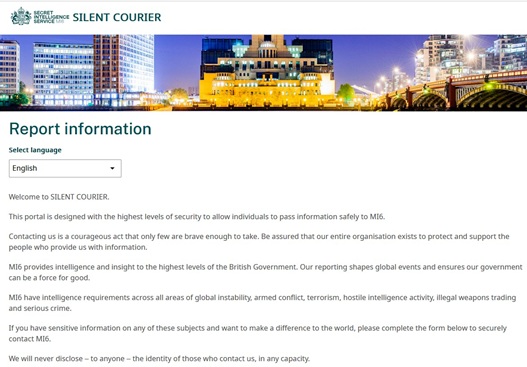
For reasons unknown, MI6 (sis.gov.uk) didn’t register the domain sisgov.uk. CI5 / MOI registered it to protect MI6 from domain squatting and other cyber attacks.

The mi5gov.uk domain registration did not trigger the expected domain suspension whereas the sisgov.uk domain registration did.

Thank you for registering the domain name sisgov.uk. We are writing to let you know that this domain has been temporarily deactivated and what you can do to reactivate it. You should be able to find all the information you need below but if you need any help, please contact our Customer Support team on 0330 236 9477.

The domain sisgov.uk has triggered a score that requires us to verify some additional information. This domain is still registered in your name – simply follow the steps below to reactivate it.

To reactivate your domain, we need the following details:

• Tell us what this domain will be used for.
• You will need to verify your identity, we use Mitek an identity verification service to complete this. This will involve taking a live picture, similar to a passport photo, via your device and uploading your identification documents for photo ID and proof of address.

Nominet Customer Support– 9:17am

Nominet publishes Terms And Conditions of Domain Name Registration. Specifically 6.1.5 states that you will not use the domain name for any unlawful purpose.

Hi,

Thank you for your email and completing the Mitek verification.

I can confirm the domain name is now active.

Thank you again.

Kind regards,

Nominet UK
Registry Compliance Advisor

Nominet Registry Compliance Advisor – 10:39am

As with all the MOI domains, these domains will continue to be used for a lawful purpose.

Check out our related articles on Domain Names and Freedom of Expression, Free Speech Union, Rule of Law, Open Justice, Is the Law Black and White ?, What Does Lady Justice Symbolise ?, Can a Judge Direct a Jury to Find a Defendant Not Guilty ?, Law Society, Law Commission, Solicitors, Solicitors Regulation Authority, Barristers, Bar Council of England and Wales, Bar Standards Board, Contra Mundum, R v Sussex Justices, Police Impartiality and the highly questionable Sussex Family Justice Board.


The Ministry of Injustice is not the Ministry of Justice nor is it affiliated in any way with the justice system, legal profession, police or any other law enforcement agencies.


Latest Articles


Most Popular


You should always seek formal legal advice from a qualified and reputable lawyer (solicitor or barrister).

There are a number of links to Free and Paid For Legal Resources and Legal Organisations on the Free Legal Advice , Legal Aid and Pro Bono pages.

Categories
Criminal Justice Law Legal Analysis Police

Police Surveillance

The case of R v Sutherland & Others [2002] EW Misc 1 (EWCC) stands as a seminal case that highlights the critical importance of transparency in criminal investigations and the protection of defendants’ rights to a fair trial under Article 6 of the Human Rights Act 1998.

This high-profile murder trial collapsed due to improper police conduct, leaving a lasting impact on the application of the Criminal Procedure and Investigations Act 1996 (CPIA) and the Regulation of Investigatory Powers Act 2000 (RIPA).

The case serves as a stark reminder of the boundaries of lawful surveillance and the necessity of proper disclosure in criminal proceedings.

Background of the Case

The case involved Robert Sutherland and four co-defendants, charged with murder and conspiracy to murder following a fatal incident in the Midlands.

The prosecution’s case hinged on evidence obtained through covert surveillance, including audio recordings made at Grantham and Sleaford police stations.

However, it was revealed that the police had secretly recorded privileged conversations between the defendants and their legal advisors, violating the defendants’ right to confidential legal consultation.

This misconduct led to an application to stay the proceedings on the grounds of abuse of process, arguing that the surveillance had fatally undermined the trial’s fairness.

The High Court judge agreed, ruling that the police had “made a mockery of the police caution” and “undermined the statutory right of a defendant to confer with a solicitor in private.” As a result, the case was dismissed, and all defendants were acquitted.

Impact on Disclosure Obligations

R v Sutherland & Others [2002] significantly clarified disclosure obligations under the CPIA 1996. The Act requires the prosecution to disclose all material that might undermine their case or assist the defence.

The case established that even non-incriminating surveillance evidence, such as recordings yielding no useful evidence, must be disclosed. The court emphasised that the existence of surveillance itself is material, as it may support defence arguments questioning the investigation’s thoroughness or integrity.

For example, extensive surveillance producing no incriminating results could strengthen a claim of innocence. This ruling has shaped how prosecution teams manage evidence, stressing meticulous record-keeping and transparency to ensure fairness.

Implications for Surveillance Practices

The case also exposed serious issues with police surveillance under RIPA 2000, which governs covert investigative techniques.

The unauthorised recording of privileged communications breached RIPA’s requirements for lawful, proportionate, and authorised surveillance.

The court’s strong condemnation highlighted the risks of overreach in surveillance operations and their potential to derail prosecutions.

This aspect of the case has led to increased scrutiny of police practices and reinforced the importance of independent oversight, such as by Surveillance Commissioners, to ensure compliance with RIPA.

Directed Surveillance Authority under the Regulation of Investigatory Powers Act 2000

The Regulation of Investigatory Powers Act 2000 (RIPA) provides the legal framework for authorising directed surveillance in the UK, which involves covert monitoring of individuals’ activities in non-intrusive settings, such as public places, to gather intelligence for investigations.

Directed Surveillance Authority (DSA) under RIPA requires that such operations be necessary, proportionate, and approved by a designated senior officer within a public authority, such as the police or intelligence services.

The DSA ensures compliance with strict criteria to prevent abuse, safeguarding individuals’ privacy while enabling lawful investigations. Oversight by the Investigatory Powers Commissioner’s Office (IPCO) ensures adherence to RIPA’s guidelines, with failures to comply, as seen in cases like R v Sutherland & Others [2002], potentially leading to evidence being deemed inadmissible and undermining prosecutions.

As per the requirements of R v SUTHERLAND, if the task has a RIPA / DSA authorisation, NPAS will require a full copy of the DSA authorisation detailing exactly what is (and isn’t) authorised and the means by which it can be obtained, details of the authorising officer, date authorised and the review / expiry dates before that tasking can be actioned.

National Police Air Service – NPAS – OPERATIONS CENTRE FORM – REQUEST FOR PRE-PLANNED AIR SUPPORT

Broader Consequences and Legacy

The collapse of the trial raised concerns about public confidence in the criminal justice system. The acquittal, while legally justified, left the victim’s family feeling “completely let down,” underscoring the human cost of investigative failures.

The case has been widely cited in discussions about the ethical limits of covert operations and the need for robust training for law enforcement.

The Signature Brand have integrated the case into training on disclosure and covert tactics, highlighting its practical implications. For defence lawyers, it provides a powerful tool to challenge prosecution cases by scrutinising disclosure completeness, particularly in surveillance-heavy cases.

Conclusion

R v Sutherland & Others [2002] remains a cornerstone of UK case law, reinforcing the principles of fairness, transparency, and accountability in criminal proceedings.

Its legacy continues to influence how surveillance evidence and disclosure are handled, ensuring defendants’ rights are protected while upholding judicial integrity. The case serves as a cautionary tale that procedural missteps, even if well-intentioned, can have profound consequences, highlighting the delicate balance between effective policing and adherence to the rule of law.

Check out our articles on Policing by Consent, Are the Police for Hire ?, Police Impartiality, Police Professional Standards, Independent Office for Police Conduct (IOPC),Police Public Confidence and Engagement, Crime Reporting, What is a Police and Crime Commissioner ?, Sussex Police, Policing, Police News, Two Tiered Policing, Thought Police, Wasting Police Time, Police Community Support Officers (PCSO), Met Police, Free Speech Union, Chief Constable Jo Shiner, R v Sussex Justices and the highly questionable Sussex Family Justice Board.


The Ministry of Injustice is not the Ministry of Justice nor is it affiliated in any way with the justice system, legal profession, police or any other law enforcement agencies.


Latest Articles


Most Popular


You should always seek formal legal advice from a qualified and reputable lawyer (solicitor or barrister).

There are a number of links to Free and Paid For Legal Resources and Legal Organisations on the Free Legal Advice , Legal Aid and Pro Bono pages.
Categories
Criminal Justice Law Legal Analysis

What is an Abuse of Process in Criminal Law ?

In criminal law an abuse of process occurs when the criminal justice system is misused in a way that undermines fairness, justice or the integrity of legal proceedings.

It involves actions that exploit the judicial process for improper purposes, such as harassing a defendant, causing unjust delays, or pursuing a case without legitimate grounds.

The concept is enshrined in the court’s inherent jurisdiction to protect its processes, as guided by the Criminal Procedure Rules 2020(CrimPR) and established case law.

Defining Abuse of Process

An abuse of process arises when the prosecution’s conduct or case circumstances render a fair trial impossible or unjust.

CPR Rule 3.28, part of the case management framework, empowers courts to give directions to ensure proceedings are conducted efficiently and fairly, which includes identifying and addressing potential abuses of process.

This rule supports the overriding objective in CPR 1.1 to deal with cases justly, ensuring fairness, efficiency, and compliance with the European Convention on Human Rights and Human Rights Act 1998, particularly Article 6 (right to a fair trial). Examples of abuse of process include:

  1. Improper Motives: Prosecuting to harass or intimidate rather than seek justice.
  2. Unreasonable Delay: Excessive delays that prejudice the defendant’s defence, such as faded memories or lost evidence.
  3. Non-Disclosure: Failing to disclose exculpatory evidence, breaching the Criminal Procedure and Investigations Act 1996.
  4. Entrapment: Inducing a defendant to commit a crime they would not otherwise have committed.
  5. Bad Faith Prosecutions: Pursuing a case without sufficient evidence or for ulterior motives, like political pressure.

Legal Framework

The Criminal Procedure Rules 2020 (CrimPR) are a comprehensive set of rules governing the practice and procedure of criminal courts in England and Wales. They provide a framework to ensure criminal cases are managed justly, efficiently, and fairly, as mandated by the Courts Act 2003, which empowers the Criminal Procedure Rule Committee to make these rules.

CrimPR 1.1, the overriding objective, requires courts to manage cases to avoid unfairness, inefficiency, or prejudice. Unlike specific statutory provisions in other contexts, criminal abuse of process relies on judicial discretion and precedent.

1.1.—(1) The overriding objective of this procedural code is that criminal cases be dealt with justly.

(2) Dealing with a criminal case justly includes―

(a) acquitting the innocent and convicting the guilty;

(b) treating all participants with politeness and respect;

(c) dealing with the prosecution and the defence fairly;

(d) recognising the rights of a defendant, particularly those under Article 6 of the European Convention on Human Rights;

(e) respecting the interests of witnesses, victims and jurors and keeping them informed of the progress of the case;

(f) dealing with the case efficiently and expeditiously;

(g) ensuring that appropriate information is available to the court when bail and sentence are considered; and

(h) dealing with the case in ways that take into account―

(i) the gravity of the offence alleged,

(ii) the complexity of what is in issue,

(iii) the severity of the consequences for the defendant and others affected, and

(iv) the needs of other cases.

The Criminal Procedure Rules 2020 – 1.1 The Overriding Objective

CrimPR 1.2 outlines the duty of all participants in a criminal case to actively assist the court in achieving the overriding objective.

1.2.—(1) Each participant, in the conduct of each case, must―

(a) prepare and conduct the case in accordance with the overriding objective;

(b) comply with these Rules, practice directions and directions made by the court; and

(c) at once inform the court and all parties of any significant failure (whether or not that participant is responsible for that failure) to take any procedural step required by these Rules, any practice direction or any direction of the court. A failure is significant if it might hinder the court in furthering the overriding objective.

(2) Anyone involved in any way with a criminal case is a participant in its conduct for the purposes of this rule.

The Criminal Procedure Rules 2020 – 1.2 The duty of the participants in a criminal case

CrimPR 3.28 allows courts to give directions for the effective management of criminal cases, which includes addressing abuses of process. While the rule itself focuses on case progression, it enables judges to scrutinise proceedings for potential misuse, ensuring they align with the overriding objective of fairness.

3.28.—(1) This rule applies where a defendant wants the Crown Court to stay the case on the grounds that the proceedings are an abuse of the court, or otherwise unfair.

(2) Such a defendant must—

(a) apply in writing—

(i) as soon as practicable after becoming aware of the grounds for doing so,

(ii) at a pre-trial hearing, unless the grounds for the application do not arise until trial, and

(iii) in any event, before the defendant pleads guilty or the jury (if there is one) retires to consider its verdict at trial;

(b) serve the application on—

(i) the court officer, and

(ii) each other party; and

(c) in the application—

(i) explain the grounds on which it is made,

(ii) include, attach or identify all supporting material,

(iii) specify relevant events, dates and propositions of law, and

(iv) identify any witness the applicant wants to call to give evidence in person.

(3) A party who wants to make representations in response to the application must serve the representations on—

(a) the court officer; and

(b) each other party,

not more than 10 business days after service of the application.

The Criminal Procedure Rules 2020 – 3.28 Application to stay case for abuse of process

The landmark case R v Horseferry Road Magistrates’ Court, ex parte Bennett [1994] 1 AC 42 established that courts can stay or dismiss proceedings deemed abusive. Rule 3.28 supports this by providing a mechanism for courts to intervene when proceedings risk unfairness or oppression.

Unlike specific statutory provisions in other contexts, criminal abuse of process relies on judicial discretion, with Rule 3.28 facilitating proactive case management to prevent or remedy abuses. Courts assess whether continuing a case would undermine public confidence or violate defendants’ rights.

Judicial Response

Courts have broad powers to address abuse of process, including:

  • Staying Proceedings: Halting a case if a fair trial is impossible or unjust, as supported by CrimPR Rule 3.28 directions.
  • Dismissing Charges: Dropping charges due to prosecutorial misconduct.
  • Excluding Evidence: Suppressing improperly obtained evidence under Section 78 of the Police and Criminal Evidence Act 1984.

For instance, in R v Beckford [1996] 1 Cr App R 94, non-disclosure of evidence was deemed an abuse, prompting judicial intervention. Similarly, R v Maxwell [2010] UKSC 48 clarified that remedies depend on the abuse’s severity and impact on fairness.

Importance of Preventing Abuse of Process

Preventing abuse of process, as facilitated by CrimPR Rule 3.28, is vital to maintaining public trust in the criminal justice system. It protects defendants from oppressive treatment, ensures efficient use of court resources, and upholds the integrity of proceedings.

Check out our related articles on Rule of Law, Open Justice, Is the Law Black and White ?, What Does Lady Justice Symbolise ?, Wasted Cost Orders, McKenzie Friend, Can a Judge Direct a Jury to Find a Defendant Not Guilty ?, Law Society, Law Commission, McKenzie Friend Right of Audience, Solicitors, Solicitors Regulation Authority, Barristers, Bar Council of England and Wales, Bar Standards Board, Contra Mundum, R v Sussex Justices, Police Impartiality and the highly questionable Sussex Family Justice Board.


The Ministry of Injustice is not the Ministry of Justice nor is it affiliated in any way with the justice system, legal profession, police or any other law enforcement agencies.


Latest Articles


Most Popular


You should always seek formal legal advice from a qualified and reputable lawyer (solicitor or barrister).

There are a number of links to Free and Paid For Legal Resources and Legal Organisations on the Free Legal Advice , Legal Aid and Pro Bono pages.

Categories
Criminal Justice Law Legal Analysis

McKenzie Friends and Right of Audience in a Magistrates or Crown Court

A McKenzie Friend can provide moral support, take notes, help organise case papers, and offer quiet advice on the conduct of the case. They do not have an automatic right to act as an advocate, conduct litigation, or address the court.

Can a McKenzie Friend Help You in Court? Everything* You Need to Know!Alan Robertshaw Barrister

Right of Audience

In criminal proceedings, McKenzie Friends generally do not have a right of audience. This means they cannot speak on behalf of the litigant, make oral submissions or examine witnesses unless the court explicitly grants permission.

The court may grant a right of audience in exceptional circumstances, but this is rare. The decision is at the discretion of the presiding magistrate or judge, guided by the interests of justice.

Examples of exceptional circumstances may include:

  • The litigant has health issues preventing them from effectively addressing the court.
  • The litigant lacks the ability to articulate their case (e.g., due to language barriers or intellectual limitations).
  • The complexity of the case requires assistance to ensure a fair hearing.

Criminal vs Family and Civil Procedure

Unlike civil and family proceedings, where guidance like the Practice Guidance: McKenzie Friends (Civil and Family Courts) (2010) applies, criminal proceedings are not explicitly covered by this guidance.

Courts in criminal cases are more cautious about granting rights of audience due to the serious nature of criminal proceedings, which involve public interest and potential penalties like imprisonment.

The Legal Services Act 2007 (sections 12–19 and Schedule 3) makes it a criminal offense for an unqualified person to exercise rights of audience or conduct litigation unless authorised by the court on a case-by-case basis.

Court’s Discretion and Restrictions

A litigant must request permission for a McKenzie Friend to have a right of audience at the start of the hearing. The court will consider factors such as:

  • The litigant’s ability to represent themselves.
  • The complexity of the legal issues.
  • Whether the McKenzie Friend’s involvement would impede the administration of justice.

The court may refuse or revoke permission if the McKenzie Friend disrupts proceedings, acts improperly, or breaches confidentiality.

The court may also require the McKenzie Friend to provide their name, contact details, and a statement confirming they understand their role and duties, including confidentiality.

Court Denying a McKenzie Friend the Right of Audience

A judge is expected to provide reasons when denying a McKenzie friend the right of audience (permission to speak on behalf of a litigant in person).

This aligns with principles of fairness and transparency under Legal Services Act 2007 (c. 29), specifically under sections 208, 210, 211, Schedule 21 paragraph 84(d), and Schedule 23, which gives courts discretion to grant such rights only for “good reason,” typically in exceptional circumstances.

The Practice Guidance on McKenzie Friends (Civil and Family Courts) [2010] 1 WLR 1881 emphasises that decisions should be justified to ensure litigants understand the basis for refusal, allowing for potential appeals by the litigant (not the McKenzie friend).

Practical Considerations

In magistrates’ courts, where proceedings are often faster-paced and less formal than in higher courts, magistrates may be more reluctant to allow a McKenzie Friend to speak, as the litigant is normally expected to represent themselves.

If a McKenzie Friend is granted a right of audience, their role is still limited to specific tasks (e.g., addressing a point of law or cross-examining a witness) rather than acting as a full advocate throughout the hearing.

Fee-charging McKenzie Friends are viewed with caution, and courts may scrutinise their involvement to ensure they are not acting as unqualified legal representatives.

Relevant Guidance and Rules

While the Practice Guidance: McKenzie Friends (Civil and Family Courts) (2010) does not apply to criminal cases, it provides a framework that courts may refer to analogously.

The Criminal Procedure Rules 2010 do not specifically address McKenzie Friends but emphasise the court’s overriding objective to deal with cases justly, which includes ensuring a fair hearing for unrepresented defendants.

Article 6 of the European Convention on Human Rights (incorporated into UK law via the Human Rights Act 1998) supports the right to a fair trial, which may bolster a litigant’s request for assistance from a McKenzie Friend.

Case Law and Precedents

McKenzie v McKenzie [1970] 3 WLR 472 CA: Established the principle that litigants in person have a right to reasonable assistance.

Clarkson v Gilbert [2000] 2 FLR 839: Clarified that the court has unfettered discretion to grant a right of audience, and such decisions should not be limited to “exceptional” circumstances but depend on the case’s specifics.

Re N (A Child) (McKenzie Friend: Rights of Audience) [2008] EWHC 2042 (Fam): Emphasised that granting a right of audience should serve the interests of justice and that courts should consider the practical realities of limited legal aid availability.

Limitations and Risks of McKenzie Friends

McKenzie Friends are not regulated like solicitors or barristers, so there is no guarantee of their competence or accountability. Courts may exclude a McKenzie Friend if they undermine the efficient administration of justice (e.g., by providing improper advice or disrupting proceedings).

Litigants using a McKenzie Friend cannot recover costs for their services from the opposing party, even if successful, as costs are limited to those of a litigant in person.

Explanation of Clarkson v Gilbert

Clarkson v Gilbert [2000] 2 FLR 839 is a significant Court of Appeal case in England and Wales that clarified the principles governing the granting of a right of audience to a non-lawyer, such as a McKenzie Friend or a close relative, under section 27(2)(c) of the Courts and Legal Services Act 1990.

The case is particularly relevant to litigants in person who seek assistance from unqualified individuals to represent them in court proceedings, including in criminal, civil, or family matters.

Factual and Procedural Background

Parties and Context: The claimant, Petruska Clarkson, a psychotherapist, initiated legal proceedings against multiple defendants (also psychotherapists) alleging conspiracy, inducement to breach contract, and libel. These claims arose after her suspension from the Gestalt Psychotherapy Training Institute.

McKenzie Friend: Clarkson’s husband, Vincent Keter, who had a law degree and had completed Bar finals but was not yet called to the Bar, sought to represent her in court. He applied for a right of audience to act as her advocate in the litigation, including at trial and interlocutory hearings.

Initial Order: On 14 May 1999, Morland J granted Keter an ex parte order (without notice to the defendants) allowing him rights of audience under section 27(2)(c) of the Courts and Legal Services Act 1990, citing Clarkson’s ill health (an angina attack and depression) and her lack of financial means to hire legal representation.

Challenge: The defendants applied to set aside Morland J’s order, arguing insufficient evidence (e.g., outdated medical reports) and Keter’s questionable conduct, including misrepresenting himself as an advocate. On 16 December 1999, Eady J set aside the order, prompting Clarkson’s appeal to the Court of Appeal.

Appeal: The Court of Appeal, presided over by Lord Woolf CJ, alongside Waller LJ and Clarke LJ, heard the appeal on 14 June 2000. The key issue was whether Keter, as a close relative and non-lawyer, should be granted a right of audience to represent Clarkson.

Legal Issues

The court addressed the following legal questions:

  • Whether a close relative, such as a spouse, should be granted a right of audience under section 27(2)(c) of the Courts and Legal Services Act 1990.
  • Whether “exceptional circumstances” are required to grant such rights to an unqualified person, particularly a family member.
  • The appropriate exercise of judicial discretion in such cases, balancing the interests of justice with the proper administration of the courts.
  • Court’s Reasoning and Decision: The Court of Appeal allowed Clarkson’s appeal, restoring Morland J’s order granting Keter rights of audience.
  • Judicial Discretion Under Section 27(2)(c): Section 27(2)(c) of the Courts and Legal Services Act 1990 allows courts to grant a right of audience to a person not otherwise entitled, in relation to specific proceedings, at the court’s discretion.
  • The court emphasised that this discretion is unfettered but must be exercised in light of the statutory objective in section 17(1) (to develop legal services while maintaining the proper administration of justice) and section 17(3) (general principles governing professional advocates).
  • Distinction Between Professional and Family Advocates: The court distinguished between unqualified individuals offering advocacy services generally (e.g., professional McKenzie Friends) and close relatives assisting a family member.

    For professional McKenzie Friends, the court typically requires exceptional circumstances to grant a right of audience, as established in D v S (Rights of Audience) [1997] 1 FLR 724. This is because such individuals may lack professional regulation and accountability. For close relatives, such as a spouse, the test is less stringent.

    The court held that the question is whether there is good reason to grant the right of audience, based on the specific circumstances of the case, rather than requiring exceptional circumstances.
  • Factors Justifying a Right of Audience: Lord Woolf CJ noted that the overriding objective is to ensure justice is done. With legal aid less readily available, litigants in person may need assistance to present their case effectively.

    Relevant factors include the litigant’s health (e.g., Clarkson’s angina and depression) and financial means (e.g., inability to afford legal representation after unsuccessful attempts to secure conditional fee arrangements or pro bono assistance).

    In this case, the court found that Clarkson’s health issues and lack of means justified allowing Keter to act as her advocate, as there was a risk she would be deprived of a fair hearing otherwise.
  • Critique of the Lower Court: The court held that Eady J erred by applying the “exceptional circumstances” test from D v S to a case involving a close relative.

    Clarke LJ clarified that the discretion under section 27(2)(c) is not fettered by a requirement for exceptional circumstances in such cases. Instead, the court must consider whether it is just to permit the advocate, based on the case’s facts.
  • Practical Considerations: The court acknowledged that litigants in person have a right to conduct their own litigation but may need assistance due to practical difficulties. A McKenzie Friend’s role (e.g., giving advice or taking notes) does not automatically extend to advocacy unless the court grants permission.

    The court noted concerns about Keter’s conduct (e.g., describing himself as an advocate) but found these insufficient to deny the right of audience, given the need to ensure justice for Clarkson.

    The court emphasised that the litigant should generally apply in person for such permission at the start of the hearing, allowing the court to assess the need directly.
  • Statutory Framework: The court highlighted the tension between allowing a close relative to act as an advocate and the statutory duties under section 27(2A) of the Courts and Legal Services Act 1990, which require advocates to act with independence and comply with professional conduct rules. A family member may struggle to maintain such independence, but this did not preclude granting the right in this case.
  • Holding and Implications: The Court of Appeal allowed the appeal, restoring Keter’s right of audience to represent Clarkson in the litigation.

    The court found that her ill health and lack of means constituted good reason for granting the right, and the decision was necessary to ensure justice.
    Implications: The case clarified that the test for granting a right of audience to a close relative is whether there is good reason, not necessarily exceptional circumstances, distinguishing such cases from those involving professional McKenzie Friends.

    It recognised the practical reality of reduced legal aid availability, increasing the need for assistance for litigants in person.

    The decision reinforced the court’s discretion to balance the interests of justice with the need to maintain proper administration, particularly in cases where the litigant’s ability to represent themselves is impaired.

    The case remains a key authority in determining when McKenzie Friends or relatives may be granted rights of audience, especially in civil and family proceedings, and its principles are often applied analogously in criminal proceedings (though courts are more cautious in criminal cases due to their seriousness).

Conclusion

While Clarkson v Gilbert was a civil case, its principles are relevant to magistrates’ and crown courts in criminal proceedings:

Check out our related articles on Magistrate, Chief Magistrate, Dodgy Magistrates, Rule of Law, Open Justice, Is the Law Black and White ?, What Does Lady Justice Symbolise ?, McKenzie Friend, Can a Judge Direct a Jury to Find a Defendant Not Guilty ?,Law Society, Law Commission, Solicitors, Solicitors Regulation Authority, Barristers, Bar Council of England and Wales, Bar Standards Board, Contra Mundum, R v Sussex Justices, Police Impartiality and the highly questionable Sussex Family Justice Board.


The Ministry of Injustice is not the Ministry of Justice nor is it affiliated in any way with the justice system, legal profession, police or any other law enforcement agencies.


Latest Articles


Most Popular


You should always seek formal legal advice from a qualified and reputable lawyer (solicitor or barrister).

There are a number of links to Free and Paid For Legal Resources and Legal Organisations on the Free Legal Advice , Legal Aid and Pro Bono pages.

Categories
Civil Justice Criminal Justice Judiciary Legal Professionals

Watch UK Court Proceedings Online

The latest cases in the Crown Court and Court of Appeal are available on the Sky News Courts YouTube channel. These videos are an opportunity to see justice in action.

Section 41 of the Criminal Justice Act 1925 (CJA 1925) makes it an offence to take any photograph, make or attempt to make any portrait or sketch of a justice or a witness in, or a party to, any proceedings before the court, either in the courtroom or its precincts.

The Crimes and Courts Act 2013 allows the ban to be disapplied in certain circumstances by secondary legislation. For instance, the Court of Appeal and Competition Appeal Tribunal can broadcast proceedings. The Crown court can broadcast sentencing remarks. The Supreme Court is excluded from the two bans because cases heard by the UK’s highest court, which was established in 2009, would have previously been heard in the House of Lords where broadcasting was allowed.

See Photography in Court for more information.

High Profile Cases Videos

Lady Chief Justice gives judgment in the Court of Appeal – Shamima Begum
High Court Judge Mr Justice Goss imposed life sentences with whole-life orders – Lucy Letby

Latest Court Proceedings Videos

Please be advised that videos may contain graphic descriptions of serious crimes, including murder and sexual offences.

Check out our related articles on Rule of Law, Open Justice, Is the Law Black and White ?, Abuse of Process, What Does Lady Justice Symbolise ?, McKenzie Friend, Can a Judge Direct a Jury to Find a Defendant Not Guilty ?, Law Society, Law Commission, McKenzie Friend Right of Audience, Solicitors, Solicitors Regulation Authority, Barristers, Bar Council of England and Wales, Bar Standards Board, Contra Mundum, R v Sussex Justices, Police Impartiality and the highly questionable Sussex Family Justice Board.


The Ministry of Injustice is not the Ministry of Justice nor is it affiliated in any way with the justice system, legal profession, police or any other law enforcement agencies.


Latest Articles


Most Popular


You should always seek formal legal advice from a qualified and reputable lawyer (solicitor or barrister).

There are a number of links to Free and Paid For Legal Resources and Legal Organisations on the Free Legal Advice , Legal Aid and Pro Bono pages.
Categories
Judiciary

Recorder Annabel Darlow KC

Annabel Charlotte Darlow KC, born on the 19th March 1970, is a highly respected figure in the British legal system, known for her exceptional advocacy, strategic brilliance, and extensive expertise in complex criminal and civil cases.

As a King’s Counsel (KC) since 2015 and a Recorder of the Crown Court since 2009, Darlow has built an illustrious career marked by high-profile cases, judicial appointments, and recognition as a leading silk in crime by both The Legal 500 and Chambers & Partners.

In court, Ms Annabel Darlow KC – The Honorary Recorder of Redbridge, should be addressed as “Your Honour.”

Annabel Darlow is apparently Security Cleared at the highest level.

Controversy

On the 5th August 2025, Annabel Darlow KC, sitting as a Recorder at Isleworth Crown Court, delivered sentence in a case involving racially aggravated harassment and threats to kill aboard a Virgin Atlantic flight from London Heathrow to Lahore. The defendant, Salman Iftikhar, a 37-year-old recruitment executive, was sentenced to just 15 months in prison for his actions.

On the 12th August 2025, The Rt Hon Chris Philp MP, as Shadow Home Secretary, referred Salman Iftikhar’s case to Attorney General Lord Hermer for review under the Unduly Lenient Sentence scheme, following Iftikhar’s 15-month sentence for racially aggravated harassment and threats to kill on a Virgin Atlantic flight. He claims this is evidence of a two tier justice system.

Chris Philp Letter to Attorney General Lord Hermer Unduly Lenient Sentence Recorder Annabel Darlow KC

Legal Career

Annabel Darlow was called to the Bar (Middle Temple) in 1993 and quickly established herself as a formidable barrister at 6 King’s Bench Walk (6KBW) College Hill, one of the UK’s leading chambers.

Her practice spans a wide range of legal disciplines, with particular emphasis on homicide, terrorism, fraud, corporate advisory, confiscation and asset forfeiture, public and administrative law, and extradition. Her ability to navigate complex legal issues with precision and her reputation as a “forensic pugilist with brains” have earned her widespread acclaim.

Since taking silk in 2015, Darlow has been consistently recognised as a Leading Silk in Crime. The Legal 500 has praised her “understated advocacy style” as “very effective with judges and jurors alike,” while Chambers & Partners has lauded her as “a phenomenal cross-examiner” and “a very strong advocate” who “stands up to judges with confidence and clarity.” Her tactical ability, meticulous preparation, and spellbinding courtroom presence have made her a sought-after barrister for both prosecution and defense in high-stakes cases.

Annabel Darlow was appointed a Deputy High Court Judge in the King’s Bench Division under section 9(1) of the Senior Courts Act 1981 on the 1st April 2022.

Annabel Darlow’s CV is available to download at 6KBW.

Notable Cases

Recorder Annabel Darlow’s caseload reflects her versatility and depth of expertise. She has acted in numerous high-profile cases, many of which have set legal precedents or attracted significant public attention. Below are some highlights of her recent work:

  • Murder and Violent Crime: Darlow has successfully prosecuted and defended in murder, manslaughter, and attempted murder trials. Notable cases include R v Broughton and others ([2020] EWCA Crim 1093), an appellate case involving a death from a drug overdose at a music festival, and R v TN and others, where she prosecuted nine defendants charged with murder in a revenge attack linked to a county lines drug gang. Her expertise in contested medical and psychiatric evidence has been particularly noted in cases involving issues like diminished responsibility and self-defense.
  • Terrorism: Darlow has a long history of handling terrorism-related cases, covering groups such as the Provisional IRA, Al Qaeda, ISIS, and right-wing extremists. She prosecuted R v BZ, an Islamic extremist who plotted to behead a British soldier, and R v SW and others, involving right-wing extremists constructing a 3D-printed firearm for terrorist purposes. Her landmark case R v Kahar and others ([2016] EWCA Crim 568) helped establish sentencing guidelines for terrorism trials.
  • Fraud and Corporate Advisory: Darlow has been involved in major fraud cases, including the Serious Fraud Office’s (SFO) prosecution of Barclays Bank and its senior executives for fraud related to the 2008 financial crisis, described as a “blockbuster” trial. She also handled R v Kallakis and Williams, one of Britain’s largest mortgage fraud cases, and advised corporations like News International and Hewlett Packard/Autonomy in sensitive investigations.
  • Judicial Review and Human Rights: Darlow regularly acts in judicial review proceedings, including cases involving bail refusals and claims that the criminal courts charge breached defendants’ human rights. Her work in this area demonstrates her commitment to ensuring fairness in the legal process.

Companies House Appointments

Annabel Charlotte Darlow is listed as a Director of 2 Active Companies and 1 Dissolved Company.

6KBW NOMINEE LIMITED (07872677)
6KBW NOMINEE 2 LIMITED (07872709)
6 KING’S BENCH WALK LIMITED (07787605)

The three key values which are central to the role of judicial office holders (JOHs) in England and Wales are:
• Independence
• Impartiality
• Integrity

“Publicity is the very soul of justice. . . . It keeps the judge himself, while trying, under trial….Where there is no publicity there is no justice”

Jeremy BenthamMr Justice Cobb: ‘Justice must be seen to be done’

Image of Recorder Annabel Darlow KC : 6KBW Copyright: Brian Lloyd Duckett 2017

Check out our articles on Rule of Law, Open Justice, Judges Salaries and Fees, Dodgy JudgesMr Justice Williams, His Honour Judge Melbourne Inman KC, His Honour Judge Richardson, His Honour Now His Dishonour, His Honour Judge Michael Slater, His Honour Judge Martin Davis, HHJ Farquhar, Do you Have to Bow to a Judge ?, Can you Email a Judge ?, Can you Criticise a Judge ? and the highly dubious Sussex Family Justice Board.


The Ministry of Injustice is not the Ministry of Justice nor is it affiliated in any way with the justice system, legal profession, police or any other law enforcement agencies.


Latest Articles


Most Popular


You should always seek formal legal advice from a qualified and reputable lawyer (solicitor or barrister).

There are a number of links to Free and Paid For Legal Resources and Legal Organisations on the Free Legal Advice , Legal Aid and Pro Bono pages.
Categories
Judiciary

Her Honour Judge Rosa Dean

Her Honour Judge Rosa Mary Dean is a Senior Circuit Judge and the Resident Judge at Snaresbrook Crown Court in England.

HHJ Dean was appointed as a Senior Circuit Judge and Resident Judge at Snaresbrook Crown Court, effective 19th September 2022, by the Lord Chief Justice of England and Wales at the time, the Right Honourable The Lord Burnett of Maldon.

Her Honour Judge Rosa Dean is also the Honorary Recorder of Redbridge, a ceremonial role that recognises her position as the senior judge at Snaresbrook Crown Court. 

HHJ Dean is the presiding judge in the case of Ricky Jones, a suspended Labour councillor charged with encouraging violent disorder.

Ricky Jones, aged 57, was charged by the CPS in connection to a speech he made on the 7th August 2024, in Walthamstow, where he allegedly made inflammatory remarks

“They are disgusting Nazi fascists. We need to cut all their throats and get rid of them all.”

On the 15th August 2025 the Labour councillor Ricky Jones who called for far-right protesters’ throats to be cut at an anti-racism rally was found not guilty of encouraging violent disorder.

Are Ricky Jones Comments Legal Now ?
HH Judge Rosa Dean Introduces Live Link Room

HHJ Dean Legal Bio

Her Honour Judge Dean was called to the Bar (Gray’s Inn) in 1994 and began her judicial career as a Deputy District Judge (Magistrates’ Court) in 2006, followed by appointments as a Recorder in 2009 and a Circuit Judge in 2011. She served as Resident Judge at Harrow Crown Court from 2017 before her appointment to Snaresbrook Crown Court in September 2022.

HHJ Dean is shown on the List of Circuit Judges published on the Courts and Tribunal Judiciary website.

Her Honour Judge Rosa Mary Dean London18-10-2011
List of Circuit Judges

Her Honour Judge Rosa Dean is shown on the Resident Judges list published on the Courts and Tribunal Judiciary website.

HHJ Dean attended Brighton & Hove High School from the age of 8 to 16 (1977 to 1985)

Her Honour Judge Rosa Dean is a Master of the Bench (commonly referred to as a Bencher) at Gray’s Inn. She was elected as a Master of the Bench at the Trinity 2015 Election.

As a senior member of the Inn, this role reflects her significant contributions to the legal profession and the governance of Gray’s Inn, which is one of the four Inns of Court in London.

Authorisation to sit as a High Court Judge

HHJ Dean may be authorised to sit as a High Court Judge by s9(1) of the Senior Courts Act as amended by the Crime and Courts Act 2013.

According to CRIMINAL PRACTICE DIRECTIONS 2015 DIVISION XII Her Honour Judge Dean should be addressed as “My Lady” in court.

Modes of Address B.1 – The following judges, when sitting in court, should be addressed as ‘My Lord’ or ‘My Lady’

(b) any Circuit Judge sitting as a judge of the Court of Appeal (Criminal Division) or the High Court under section 9(1) of the Senior Courts Act 1981;
(d) any Senior Circuit Judge who is an Honorary Recorder.

Description B.3 – In cause lists, forms and orders members of the judiciary should be described as follows:

(a) Circuit Judges, as ‘His [or Her] Honour Judge A’. When the judge is sitting as a judge of the High Court under section 9(1) of the Senior Courts Act 1981, the words ‘sitting as a judge of the High Court’ should be added;

Diversity and Community Relations Judge (DCRJ)

Her Honour Judge Dean is listed as a Diversity and Community Relations Judge (DCRJ), a role that involves promoting diversity and community engagement in the judicial system.

HHJ Dean covers the area around Snaresbrook Crown Court. She has also supported diversity efforts, such as assisting with visits from Diversity and Community Relations Magistrates at Harrow Crown Court. Additionally, her participation in events like the London Law Collective, where she delivered a keynote speech, highlights her role in inspiring diversity in the legal profession.

Diversity and Community Relations Judges across England and Wales undertake a huge amount of community engagement in a voluntary capacity. They also seek to encourage legal professionals from under-represented groups to consider a judicial career.

Diversity and Community Relations Judges – Courts and Tribunals Judiciary

The three key values which are central to the role of judicial office holders (JOHs) in England and Wales are:
• Independence
• Impartiality
• Integrity

“Publicity is the very soul of justice. . . . It keeps the judge himself, while trying, under trial….Where there is no publicity there is no justice”

Jeremy BenthamMr Justice Cobb: ‘Justice must be seen to be done’

Image of HHJ Dean : You & Co

Check out our articles on Rule of Law, Open Justice, Judges Salaries and Fees, Dodgy JudgesMr Justice Williams, His Honour Judge Melbourne Inman KC, His Honour Judge Richardson, His Honour Now His Dishonour, His Honour Judge Michael Slater, His Honour Judge Martin Davis, HHJ Farquhar, Do you Have to Bow to a Judge ?, Can you Email a Judge ?, Can you Criticise a Judge ? and the highly dubious Sussex Family Justice Board.


The Ministry of Injustice is not the Ministry of Justice nor is it affiliated in any way with the justice system, legal profession, police or any other law enforcement agencies.


Latest Articles


Most Popular


You should always seek formal legal advice from a qualified and reputable lawyer (solicitor or barrister).

There are a number of links to Free and Paid For Legal Resources and Legal Organisations on the Free Legal Advice , Legal Aid and Pro Bono pages.
Categories
Family Law Judiciary Law Legal Analysis Legal Professionals

HM Courts and Tribunals Service (HMCTS) Dishonest Coverup ?

A serious IT glitch in the HM Courts & Tribunals Service (HMCTS) system in England and Wales has sparked allegations of a cover-up, raising concerns about the integrity of judicial rulings.

The software – known variously as Judicial Case Manager, MyHMCTS or CCD – is used to manage evidence and track cases before the courts. It is used by judges, lawyers, case workers and members of the public.

Courts service HMCTS ‘covered up’ IT bug that caused evidence to go missing – BBC

A leaked internal report revealed that a software flaw, present for several years before its discovery in 2023, caused critical evidence to go missing, be overwritten, or appear lost in civil, family, and tribunal courts.

This issue, which potentially affected thousands of cases, has led to accusations that HMCTS failed to act promptly or transparently, leaving judges to make rulings based on incomplete evidence. The scandal has drawn sharp criticism from legal experts and raised fears of widespread miscarriages of justice, particularly in sensitive family court cases involving child protection.

A briefing prepared for the chief executive of HMCTS (Nick Goodwin)- dated March 2024 – reveals the risk to proceedings was initially categorised as “high” with the possibility of court outcomes being adversely affected assessed as “very likely”, resulting in “severe reputational impact to HMCTS“.

Courts service HMCTS ‘covered up’ IT bug that caused evidence to go missing – BBC

Specific details about the development team or external contractors involved in the the case-management software, referred to as Judicial Case Manager, MyHMCTS, or Common Components Division (CCD)are not publicly disclosed or available.

Sources

HMCTS Bug and Coverup

The IT bug, embedded in software introduced in 2018, was not addressed until 2023, despite internal awareness of data loss issues. Sources within HMCTS, as reported by the BBC, claim that HMCTS did not inform judges or lawyers about the fault, even after it was identified.

One alarming instance highlighted in the report involved over 4,000 documents vanishing from hundreds of public family law cases, including those related to child protection.

The failure to disclose the issue has fuelled allegations of a deliberate cover-up, with one HMCTS source stating, “There is a culture of cover-ups. They’re not worried about risk to the public, they’re worried about people finding out about the risk to the public.”

The internal report, obtained by the BBC, revealed that HMCTS did not conduct a comprehensive investigation into the extent of the data corruption or its impact on case outcomes.

Of the 609 cases identified with potential issues, only 109 were selected for further review, with just one deemed to have a “potentially significant impact.”

Critics, including Sir James Munby, former President of the Family Division, have called the incident “shocking” and “a scandal,” arguing that the lack of a thorough investigation undermines trust in the judicial system. Munby emphasised that the absence of a formal legal review of affected cases makes it impossible to confidently assert that no miscarriages of justice occurred.

The software’s flawed design has also come under scrutiny. Sources described it as “not designed properly or robustly,” with a history of data loss that was inadequately addressed. This has led to broader concerns about the reliability of digital systems in critical public services.

The irony of HMCTS’s claim that its internal investigation found “no evidence” of affected case outcomes was not lost on commentators, with some, like a user on Singletrack World Magazine, noting the darkly humorous implication of an evidence-losing system finding no evidence of harm.

HMCTS has since stated that the IT bug was fixed in 2023, though specific details about the timeline of the fix or the measures taken to prevent future issues remain sparse. HMCTS maintains that its internal investigation found no significant impact on case outcomes, but this claim has been met with scepticism due to the limited scope of the review.

Miscarriage of Justice ? – Art of Law

Conclusion

The fallout from this scandal has broader implications for public trust in the UK’s judicial system. Social media platforms have seen users express dismay, with one stating, “There seems to be a chronic lack of accountability in the UK state at the moment. And if you can’t trust the courts, where do you even start?” The incident has also reignited discussions about the risks of over-reliance on digital infrastructure in critical sectors, particularly when systems are not rigorously tested or maintained.

Families and individuals affected by the data loss may face significant challenges in seeking justice. Researching Reform, a legal advocacy group, noted that many families had previously complained about missing evidence in their cases, suggesting that the IT bug may have contributed to wrongful rulings. As calls grow for a formal inquiry, the HMCTS scandal serves as a stark reminder of the need for transparency, accountability, and robust technological systems in the administration of justice.

The High Court Judge that never was – His Honour Judge Melbourne Inman KC !

Check out our related articles on Rule of Law, Open Justice, Is the Law Black and White ?, What Does Lady Justice Symbolise ?, Can a Judge Direct a Jury to Find a Defendant Not Guilty ?, Law Society, Law Commission, Solicitors, Solicitors Regulation Authority, Barristers, Bar Council of England and Wales, Bar Standards Board, Contra Mundum, R v Sussex Justices, Police Impartiality and the highly questionable Sussex Family Justice Board.


The Ministry of Injustice is not the Ministry of Justice nor is it affiliated in any way with the justice system, legal profession, police or any other law enforcement agencies.


Latest Articles


Most Popular


You should always seek formal legal advice from a qualified and reputable lawyer (solicitor or barrister).

There are a number of links to Free and Paid For Legal Resources and Legal Organisations on the Free Legal Advice , Legal Aid and Pro Bono pages.

Rule of Law - Open Justice - Policing By Consent