Categories
Legal Analysis Legal Professionals

What is the Legal Ombudsman ?

The Legal Ombudsman is an independent service that handles complaints about legal services provided in England and Wales.

In order for the Legal Ombudsman to investigate your complaint, the service provider you used must be regulated. Examples of service providers they can look into are :-

The Legal Services Act 2007 and the Legal Ombudsman Scheme Rules set out very clear rules about the complaints they can and cannot accept.

  • Purpose: It investigates complaints about solicitors, legal executives, licensed conveyancers, and other regulated legal service providers. They aim to ensure that consumers receive fair treatment when using legal services.
  • Operation: The Legal Ombudsman was established under the Legal Services Act 2007. It took over from previous complaint handling bodies, aiming to provide a more unified and consumer-friendly approach to legal complaints.
  • Complaints Process:
    • Consumers must first complain directly to their legal service provider. If not satisfied with the response or if there’s no response within 8 weeks, they can then approach the Legal Ombudsman.
    • There are time limits for bringing a complaint; typically, it should be within six years from the date of the act or omission or three years from when you should have known there was cause for complaint, whichever is later.
    • The Legal Ombudsman Complaints Process is detailed in full on the Legal Ombudsman website.
  • Investigation and Resolution:
    • The ombudsman service investigates complaints, looking at the service quality rather than the legal advice’s correctness unless the advice is deemed unreasonable by common standards.
    • They can negotiate outcomes or make decisions that might include compensation, an apology, or changes in how the legal service is provided.
  • Limitations:
    • While they can look into service-related issues, for matters of legal advice negligence or where court action might be more appropriate, they might redirect complainants to other avenues like the courts, the Solicitors Regulation Authority or Bar Standards Board for potential misconduct.
  • Current Chief Ombudsman: As of February 2026, Phil Cain holds this position.
  • Public Sentiment and Observation: There’s a mix of discussion around legal officers and ombudsmen, but none specifically criticize or discuss the operational effectiveness of the Legal Ombudsman directly. However, general sentiment regarding legal oversight in the UK sometimes touches on independence and effectiveness of legal officers, which might indirectly reflect public expectations or criticisms of the ombudsman’s role in broader legal governance.

The Legal Ombudsman plays a crucial role in maintaining trust in the legal profession by offering a free, accessible pathway for resolving disputes, focusing on fairness, transparency, and consumer protection within legal services.

Check out our related articles on Law Society, Law Commission, Solicitors, Solicitors Regulation Authority, Barristers, Bar Council of England and Wales, Bar Standards Board, Rule of Law, Open Justice and the highly questionable Sussex Family Justice Board.


The Ministry of Injustice is not the Ministry of Justice nor is it affiliated in any way with the justice system, legal profession, police or any other law enforcement agencies.


Latest Articles


Most Popular


You should always seek formal legal advice from a qualified and reputable lawyer (solicitor or barrister).

There are a number of links to Free and Paid For Legal Resources and Legal Organisations on the Free Legal Advice , Legal Aid and Pro Bono pages.

Categories
Judiciary Legal Analysis

Become a Judge !

The Judicial Careers Portal provides all judges and legal practitioners a platform and comprehensive resources to explore future judicial roles. You can find upcoming vacancies and events along with support material and training that includes judicial shadowing and mentoring and seminars by using the portal.

The role of the Judicial Diversity Committee is to support the Lady Chief Justice in encouraging greater personal and professional diversity within the judiciary. The Committee has decided to develop a portal for judges and members of all legal professions who may be interested in judicial careers.

Lady Justice Whipple – Judge of the Court of Appeal of England and Wales

Further information about the judiciary can be found on the Judiciary UK Site.

DDJ Nicholes
Become a judge like DDJ Nicholes or HHJ Farquhar !

Judicial Appointments Commission

The Judicial Appointments Commission selects candidates for judicial office in England and Wales, and for some tribunals with UK-wide powers. It is our statutory duty to select people on merit, who are of good character. We believe the judiciary should reflect the society it serves, and we aim to attract diverse applicants from a wide field. We work closely with a range of organisations to promote vacancies to all those who are eligible.

JAC Vacancies

Magistrates

Magistrates are recruited by local advisory committees. Recruitment is based on the needs of the courts in each area. The need to recruit new magistrates is generally reviewed on an annual basis. Applicants are expected to be living or working in, or reasonably close to, the area in which they wish to serve. If you are interested in becoming a magistrate, please click on the link.

Magistrate Vacancies

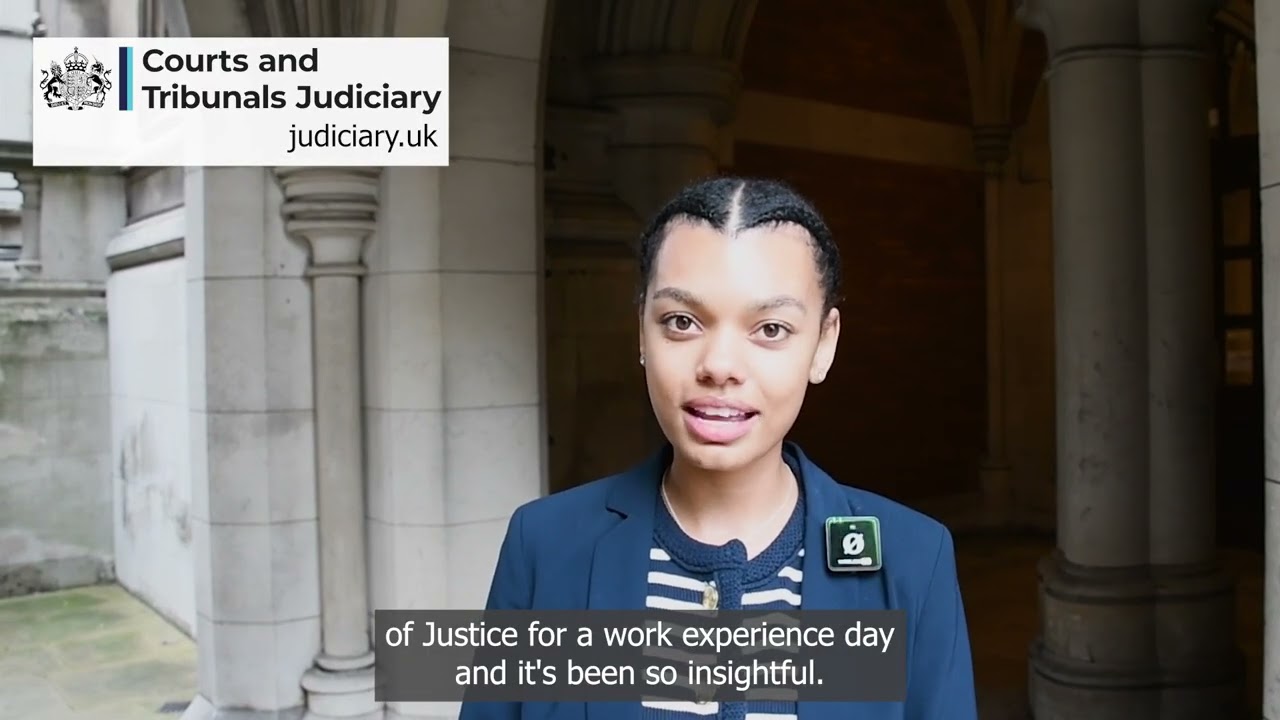
Videos from the Judiciary

Other Useful Links

Latest Judicial Appointments

  • The King has appointed Richard Kelly to be a Circuit Judge on the advice of the Lord Chancellor, the Right Honourable Alex Chalk KC MP and the former Lord Chief Justice of England and Wales, the Right Honourable The Lord Burnett of Maldon.  The former Lord Chief Justice deployed him to the South Eastern Circuit, […]
  • The King has appointed Gareth Humphreys to be a Circuit Judge on the advice of the Lord Chancellor, the Right Honourable Alex Chalk KC MP and the former Lord Chief Justice of England and Wales, the Right Honourable The Lord Burnett of Maldon.  The former Lord Chief Justice deployed him to the Wales Circuit, based […]
  • The King has appointed Alexia Power to be a Circuit Judge on the advice of the Lord Chancellor, the Right Honourable Alex Chalk KC MP and the former Lord Chief Justice of England and Wales, the Right Honourable The Lord Burnett of Maldon.  The former Lord Chief Justice deployed her to the South Eastern Circuit, […]
  • District Judge Ian Michael Avent retires from the District Bench with effect from 1 November 2023. Background information District Judge Avent was admitted as a Solicitor in 1984. He was appointed a Deputy District Judge in 1998 and a District Judge in 2003. He was a Civil Course Tutor at the Judicial College from 2010 […]
  • Regional Employment Judge Lorna Anne Findlay retires with effect from 1 November 2023. Background information Regional Employment Judge Findlay was called to the Bar (Middle Temple) in 1987. She was appointed a part-time Chairman of the Employment Tribunals in 2002, a salaried Employment Judge in 2010 and served as a Diversity and Community Relations Judge […]

Check out the articles on Dodgy JudgesHis Honour Now His Dishonour, His Honour Judge Michael Slater, His Honour Judge Martin Davis, HHJ Farquhar, HHJ Bedford, DDJ Nicholes and the highly dubious Sussex Family Justice Board.


The Ministry of Injustice is not the Ministry of Justice nor is it affiliated in any way with the justice system, legal profession, police or any other law enforcement agencies.


Latest Articles


Most Popular


You should always seek formal legal advice from a qualified and reputable lawyer (solicitor or barrister).

There are a number of links to Free and Paid For Legal Resources and Legal Organisations on the Free Legal Advice , Legal Aid and Pro Bono pages.

Categories
Legal Analysis

What is Case Law ?

Case law in England and Wales, therefore, not only provides a body of law but also a dynamic process through which legal principles are debated, refined, and applied in practice, reflecting both legal tradition and societal change.

In England and Wales, case law refers to the body of legal precedents established by the decisions of higher courts, such as the Court of Appeal and the Supreme Court. Case law is based on the principle of stare decisis, which means that lower courts are bound to follow the decisions of higher courts on similar legal issues.

When a higher court makes a ruling on a case, that ruling becomes a legal precedent that can be relied upon by lower courts in future cases. This means that judges in lower courts are obligated to follow the principles established in previous cases, unless they can distinguish the facts of their case from those of the earlier cases, or unless the earlier case was overruled by a higher court.

Case law is an important part of the legal system, as it helps to ensure consistency and predictability in legal decision-making. By following established precedents, judges can apply the law in a fair and consistent manner, and parties to a case can have a better understanding of the likely outcome.

In addition to the precedents established by higher courts, there is also a body of case law established by lower courts and tribunals. While these decisions do not have the same level of authority as those of higher courts, they can still be persuasive and may be relied upon in future cases.

Breakdown of Significance and Function

  1. Common Law System: England and Wales operate under a common law system, where case law is fundamentally important. Unlike civil law systems, which rely primarily on codified statutes, common law systems develop legal principles through decisions made by judges.
  2. Precedent (Stare Decisis): This is the principle of stare decisis, which means “to stand by decisions”. In this system, the decisions of higher courts bind lower courts, and thus, once a legal principle is established in a case, it should generally be followed in subsequent cases involving similar facts or legal issues.
  3. Hierarchy of Courts: The structure of the judiciary in England and Wales impacts how precedent operates:
    • Supreme Court (formerly the House of Lords Judicial Committee): Decisions here set binding precedents for all courts.
    • Court of Appeal: Its decisions bind all lower courts but can be overturned by the Supreme Court.
    • High Court: Decisions bind courts below it but can be influenced by the Court of Appeal and Supreme Court rulings.
    • Lower Courts: Must follow the precedents set by higher courts.
  4. Development of Law: Case law allows for the evolution of law over time. Judges interpret legislation, fill in gaps where statutes are silent, and adapt law to new situations or changes in society’s values.
  5. Reporting and Access: Significant decisions are reported, often in official law reports or legal databases, allowing legal professionals to access and cite them. The availability of detailed legal judgments helps in understanding the reasoning behind legal principles.
  6. Equity: Alongside common law, the legal system in England and Wales includes equity, which developed through case law to provide remedies where common law was inadequate. Courts of Equity (like the Chancery Division) provide judgments based on fairness, which also contributes to case law.
  7. Limitations: While precedent provides consistency, there are mechanisms for overturning or distinguishing precedents when they are perceived as outdated or unsuitable, ensuring flexibility in the law.
  8. Influence: English case law has significantly influenced legal systems globally, especially in countries that were once part of the British Empire, where principles of English case law are often embedded in their judicial systems.

Case Law Online

You can view and download judgments and tribunal decisions from 2001 at the National Archive.

Using the British and Irish Legal Information Institute (BAILII), based at the Institute of Advanced Legal Studies, you can find British and Irish case law & legislation, European Union case law, Law Commission reports, and other law-related British and Irish material.

Overall, case law plays a critical role in the development and interpretation of the law. It helps to ensure consistency and predictability in legal decision-making, and provides guidance and direction for judges and legal professionals.

Check out our related articles on Law Society, Solicitors, Barristers, Solicitors Regulation Authority, Barristers, Bar Council of England and Wales, Bar Standards Board, Rule of Law, Open Justice and the highly questionable Sussex Family Justice Board.


The Ministry of Injustice is not the Ministry of Justice nor is it affiliated in any way with the justice system, legal profession, police or any other law enforcement agencies.


Latest Articles


Most Popular


You should always seek formal legal advice from a qualified and reputable lawyer (solicitor or barrister).

There are a number of links to Free and Paid For Legal Resources and Legal Organisations on the Free Legal Advice , Legal Aid and Pro Bono pages.

Categories
Law Legal Analysis

Legal Deposit Libraries

The British Library and the other legal deposit libraries are entitled to copy UK published material from the internet for archiving under legal deposit.

If you publish anything in the UK and Ireland, you need to give one copy to the British Library. This system, called legal deposit, has existed in English law since 1662. It was updated in 2013 to include electronic publications.

British Library – Legal Deposit

Legal deposit libraries in the United Kingdom are also known as “copyright libraries” or “legal deposit institutions” Here are the six legal deposit libraries:

  1. The British Library – Located in London, it is the national library of the United Kingdom and one of the largest libraries in the world.
  2. Bodleian Library – Part of the University of Oxford, it is one of the oldest libraries in Europe.
  3. Cambridge University Library – The central library of the University of Cambridge, known for its extensive collections.
  4. National Library of Scotland – Located in Edinburgh, it serves as Scotland’s legal deposit library.
  5. National Library of Wales (Llyfrgell Genedlaethol Cymru) – Situated in Aberystwyth, it holds the national collection of Welsh and Welsh-related materials.
  6. Trinity College Library, Dublin – Although located in Ireland, it was included in the legal deposit system when Ireland was part of the United Kingdom. This arrangement continues post-independence for works published in the UK.

These libraries are protected by law to ensure that there is a complete collection of the UK’s published output preserved for posterity.

The Legal Deposit Libraries Act 2003 extended the legal deposit requirement to include non-print works, such as websites, blogs, and other digital and multimedia publications ensuring that modern forms of publication are also archived.

Archiving of UK websites is governed by legal deposit law:

The legal deposit libraries use web crawling software wherever possible, especially when collecting for the UK Web Archive. Web crawling is an automated process used to collect content and metadata that is available without access restriction on the open web. Crawled websites and material are preserved in the legal deposit libraries’ web archive. We may also use manual or other methods of downloading content and metadata when necessary.

Legal deposit and web archiving – British Library

The UK Web Archive is a collection of archived UK websites created by the Legal Deposit libraries in the UK as part of their commitment to preserve web resources permanently for future researchers. 

The UK Government Web Archive captures, preserves and make accessible UK central government information published on the web. The Web Archive includes videos, tweets, images and websites dating from 1996 to the present day.

There are a number of other internet archives including The Wayback Machine which is a digital archive of the global World Wide Web and other information on the Internet. It was created by the Internet Archive, a non-profit organization based in San Francisco.

“What goes on the internet, stays on the internet forever !”

Check out our related articles on Rule of Law, Open Justice, What is Law, Is the Law Black and White ?, Abuse of Process, What Does Lady Justice Symbolise ?, McKenzie Friend, Can a Judge Direct a Jury to Find a Defendant Not Guilty ?, Law Society, Law Commission, McKenzie Friend Right of Audience, Solicitors, Solicitors Regulation Authority, Barristers, Bar Council of England and Wales, Bar Standards Board, Contra Mundum, R v Sussex Justices, Police Impartiality and the highly questionable Sussex Family Justice Board.


The Ministry of Injustice is not the Ministry of Justice nor is it affiliated in any way with the justice system, legal profession, police or any other law enforcement agencies.


Latest Articles


Most Popular


You should always seek formal legal advice from a qualified and reputable lawyer (solicitor or barrister).

There are a number of links to Free and Paid For Legal Resources and Legal Organisations on the Free Legal Advice , Legal Aid and Pro Bono pages.

Categories
Law Legal Analysis

E-Scooters and the Law

Owning an Electric Scooter (e-scooter) in the UK is legal, but riding one on public roads or pavements remains illegal unless it’s part of a government-approved rental scheme. These rental schemes are operational in various cities under trial conditions, allowing users to rent and ride e-scooters legally on certain roads and cycle lanes but not on pavements.

Study reveals ‘alarming number’ of e-scooter riders and cyclists ignoring law in London

E-Scooter Law

It is against the law to use a privately owned Electric Scooter (e-scooter) on public land. If you use an e-scooter illegally :-

  • you could face a fine
  • you could get penalty points on your licence
  • the e-scooter could be impounded

E-scooters are classed as motor vehicles (Powered Transporter) under Section 165 of the Road Traffic Act 1988 which means the rules that apply to motor vehicles, also apply to e-scooters including the need to have a licence, insurance and tax. Electric scooters are also classed as Personal Light Electric Vehicles (PLEVs) under UK law.

If you’re using an e-scooter in public in an antisocial manner, you can also risk the e-scooter being seized under Section 59 of the Police Reform Act 2002.

It is an offence to use e-scooters on the pavement. In Section 72 of the Highway Act 1835 it is an offence to ride on, or to lead or draw a carriage on a pavement. This rule applies almost all vehicles, with only legal exceptions for mobility scooters and wheelchairs.

If you cause serious harm to another person whilst riding an e-scooter the incident will be investigated in the same way it would if you were riding a motorcycle or driving a car. 

E-scooter Trials

The government has begun trials of e-scooters. Trials are for approved rental e-scooters only. The existing rules for private e-scooters and other powered transporters have not changed.

E-scooter trials are taking place in these areas:

  • Bournemouth and Poole
  • Buckinghamshire (Aylesbury, High Wycombe and Princes Risborough)
  • Cambridge
  • Essex (Basildon, Braintree, Chelmsford and Colchester)
  • Gloucestershire (Cheltenham and Gloucester)
  • Liverpool
  • London (participating boroughs)
  • Milton Keynes
  • Newcastle
  • North and West Northamptonshire (Northampton, Kettering, Corby, Wellingborough, Rushden and Higham Ferrers)
  • North Devon
  • Norwich
  • Oxfordshire (Oxford)
  • Salford
  • Slough
  • Solent (Isle of Wight, Portsmouth and Southampton)
  • Somerset (Taunton, Minehead and Yeovil)
  • West Midlands (Birmingham)
  • West of England Combined Authority (Bristol and Bath)

The maximum speed for an e-scooter is 15.5mph.

Trial e-scooters are limited to this speed and in some areas e-scooters may be limited to a lower maximum speed.

E-scooter trials: guidance for users

E-scooters must have motor insurance, but you do not need to arrange this as this will be provided by your e-scooter rental operator.

You may use a trial e-scooter on the road (except motorways) and in cycle lanes.

You must not use an e-scooter on the pavement.

E-scooters do not need to be registered, display registration plates or pay vehicle excise duty.

Licence Requirements

You must have the category Q entitlement on your driving licence to use an e-scooter. A full or provisional UK licence for categories AM, A or B includes entitlement for category Q. If you have one of these licences, you can use an e-scooter.

If you have a provisional licence, you do not need to show L plates when using a rental e-scooter.

If you have an overseas driving licence, you can use an e-scooter if you:

  • have a valid full licence from an EU or European Economic Area (EEA) country (so long as this does not prohibit you from driving low-speed mopeds and motorcycles)
  • have a valid full licence from another country that entitles you to drive a small vehicle (for example, cars, mopeds or motorcycles) and you entered the UK within the last 12 months

E-Scooter Guidance and Links

The Department for Transport (DOT) has published Guidance E-scooter trials.

The Driver and Vehicle Standards Agency (DVSA) and DOT have also published Guidance on Powered Transporters.

City of London Police published Advice on using e-scooters.

The Metropolitan Police has also published Advice on using e-scooters.

Halfords, who are a major retailer of e-scooters, published Are Electric Scooters Legal?.

E-Scooters and Drug Dealers

Drugs are being openly sold on the streets by drug dealers with seemingly little to no action being taken by the Police to deal with this. See our article Drug Dealing on the Street.

Drug Dealers are usually illegally riding a speed modified e-scooter or e-bike and have their face covered. An e-scooter, it would seem, are the perfect means of transport to evade arrest.

No one should be above the law. Everyone, no matter how wealthy or powerful, are subject to the Rule of Law.

Check out our articles on Policing,Police News, Policing by Consent,Two Tiered Policing,Drug Dealing on the Street,Wasting Police Time,Met Police,Sussex Police,Chief Constable Jo Shiner Sussex Police and the highly questionable Sussex Family Justice Board.


The Ministry of Injustice is not the Ministry of Justice nor is it affiliated in any way with the justice system, legal profession, police or any other law enforcement agencies.


Latest Articles


Most Popular


You should always seek formal legal advice from a qualified and reputable lawyer (solicitor or barrister).

There are a number of links to Free and Paid For Legal Resources and Legal Organisations on the Free Legal Advice , Legal Aid and Pro Bono pages.

Categories
Legal Analysis Legal Professionals

Law Commission of England and Wales

The Law Commission of England and Wales stands as a cornerstone of legal reform in the United Kingdom, tasked with the continuous review and recommendation of changes to the law to ensure it remains fair, modern, simple, and cost-effective. Established by the Law Commissions Act 1965, this independent body operates under the umbrella of the Ministry of Justice but conducts its work with autonomy, aiming to streamline and update the legal framework for the benefit of society.

The Law Commission Slogan is “Reforming the Law”

Purpose and Function

  • Law Review: The primary function of the Law Commission is to keep the law under review. This involves identifying areas where the law might be outdated, complex, or inefficient, and suggesting reforms.
  • Public Consultation: Before finalizing recommendations, the Commission engages in extensive public consultation. This democratic process ensures that stakeholders, from legal professionals to the general public, have an opportunity to influence the law’s direction.
  • Recommendations and Legislation: Following consultation, the Commission submits its recommendations to Parliament. These recommendations often lead to new legislation or amendments to existing laws, demonstrating the Commission’s significant impact on legal policy.
  • Projects: The Commission’s work spans across various legal domains including criminal law, property law, family law, among others. Each project is carefully selected based on necessity, impact, and feasibility.

From time to time we consult widely to help us draw up a new programme of law reform. The Law Commissions Act 1965 requires the Commission to submit “programmes for the examination of different branches of the law” to the Lord Chancellor for his approval before undertaking new work.

Before deciding which projects to take forward, the Law Commission takes views from judges, lawyers, Government Departments, the voluntary and business sectors, and the general public.

We also take on projects that are referred to us by Government Departments.

How We Work – The Law Commission

Structure and Governance

The Commission is led by a Chairman, currently Sir Peter Fraser, supported by four Commissioners, a Chief Executive, Non-Executive Board Members, and a team that includes legal experts, policy analysts, and research staff. This structure facilitates a multidisciplinary approach to law reform, ensuring that legal changes are both practical and theoretically sound.

  • Independence: While sponsored by the Ministry of Justice, the Commission’s independence is crucial. It operates free from political interference, allowing for impartial law reform.
  • Funding and Approval: The Law Commission’s work programs are approved by the Lord Chancellor, but day-to-day operations and project decisions remain within the Commission’s purview.

The Law Commission’s work is often behind the scenes but profoundly impacts everyday legal practices and public policy. Approximately 70% of its recommendations have been enacted or accepted by the government, showcasing its effectiveness in driving legal reform.

Public Perception and Engagement

Public engagement with the Law Commission’s initiatives, as reflected from discussions online, shows a mix of support for its efforts towards transparency and modernisation, alongside criticisms or concerns regarding specific reforms or government interactions with its recommendations. This dialogue underscores the Commission’s role not just as a reformer but also as a bridge between the public and the legal system.

Contact the Law Commission

Phone:  020 3334 0200
Email:  [email protected]
X (Twitter): @Law_Commission
Fax:  020 3334 0201
Address:  1st Floor, Tower, 52 Queen Anne’s Gate, London SW1H 9AG

The Law Commission publish the latest news on their website.

The Law Commission of England and Wales is more than just a body for legal reform; it represents the evolving nature of law in response to societal changes. By continuously reviewing and suggesting changes, it plays a vital role in ensuring that the legal system remains relevant, accessible, and just. For anyone interested in the mechanics of law-making or the evolution of legal thought, understanding the Law Commission provides insight into how laws are not just created but are continuously refined for the contemporary world.

Check out our related articles on Law Society, Solicitors, Solicitors Regulation Authority, Barristers, Bar Council of England and Wales, Bar Standards Board, Legal Ombudsman, Rule of Law, Open Justice and the highly questionable Sussex Family Justice Board.


The Ministry of Injustice is not the Ministry of Justice nor is it affiliated in any way with the justice system, legal profession, police or any other law enforcement agencies.


Latest Articles


Most Popular


You should always seek formal legal advice from a qualified and reputable lawyer (solicitor or barrister).

There are a number of links to Free and Paid For Legal Resources and Legal Organisations on the Free Legal Advice , Legal Aid and Pro Bono pages.

Categories
Legal Analysis Legal Professionals

Council of the Inns of Court (COIC)

The Council of the Inns of Court (COIC), established as a charitable organization in 2014, plays a pivotal role in the legal community of the United Kingdom by overseeing professional standards and advocacy training for barristers. Based in London, COIC operates under the aegis of four historic Inns of CourtLincoln’s Inn, Inner Temple, Middle Temple, and Gray’s Inn, each of which has its roots deeply embedded in centuries of legal tradition.

Structure and Leadership

The COIC is governed by a board comprising distinguished members from the legal field, including Anne Sharp CBE, Greg Dorey CVO, Christopher Ghika KCVO CBE, Marion Smith KC, and Brigadier Stephen Cartwright OBE. This diverse leadership reflects the Council’s commitment to a broad spectrum of legal expertise and administrative oversight. The recent appointment of Andy Russell as the new Director of COIC in August 2024 marks a new chapter in its operational direction, following the commendable tenure of his predecessor, James Wakefield.

  • The Rt. Hon. Lord Justice Green (President)
  • Janet Bignell KC, Lincoln’s Inn
  • Anne Sharp CBE, Under Treasurer of Lincoln’s Inn
  • Judge Jill Frances, Inner Temple
  • Greg Dorey CVO, Sub-Treasurer of the Inner Temple
  • Chantal-Aimee Doerries KC, Middle Temple
  • Christopher Ghika KCVO CBE, Under Treasurer of Middle Temple
  • Marion Smith KC, Gray’s Inn
  • Brigadier Stephen Cartwright OBE, Under Treasurer of Gray’s Inn
Current Board members of the Council of the Inns of Court

Operational Arms

Under the COIC’s umbrella, two significant bodies operate:

  • The Bar Tribunal and Adjudication Service (BTAS): This entity manages the disciplinary proceedings for barristers. It’s responsible for ensuring that members of the bar adhere to the highest standards of professional conduct. Recent updates to the sanctions guidelines by BTAS reflect a meticulous review of disciplinary practices, aiming for consistency and fairness in legal accountability.
  • The Inns of Court College of Advocacy (ICCA): Committed to educational excellence, ICCA provides training not just for barristers but also for future legal professionals. Its focus on advocacy skills and professional ethics positions it as a hub for legal education, with initiatives like the ICCA Bar Course, which is validated by King’s College London, underscoring its academic rigor.

Mission and Impact

COIC’s mission is rooted in promoting the rule of law through advocacy excellence. By facilitating training, setting standards, and responding to legal consultations, COIC influences the broader legal landscape beyond the immediate confines of the Inns. Its efforts ensure that advocacy remains a cornerstone of justice, with a commitment to high ethical standards.

Founded by the Inns of Court, COIC works with them in strengthening the rule of law through excellence in professional and ethical education and in maintaining the highest standards of professional conduct. In practice this means that COIC will seek to promote:

• excellence in advocacy and professional knowledge
• ethical practice and integrity
• an accessible, diverse, and inclusive profession
• a collaborative profession.

Statement of purposeCouncil of the Inns of Court

Historical Context and Cultural Significance

The Inns of Court, where COIC is deeply integrated, have historical ties not only to legal education but also to cultural and theatrical activities during the English Renaissance. This rich heritage underscores the COIC’s role not just as a regulatory body but as a custodian of legal tradition and culture.

The Council of the Inns of Court, through its structured governance, educational initiatives, and disciplinary oversight, continues to be a vital institution for the legal profession in the UK. Its operations ensure that the legal practitioners are not only well-trained but also held to a standard that upholds the integrity of the law.

As the COIC moves forward under new leadership, its role in shaping the future of advocacy and legal ethics remains as crucial as ever, maintaining the delicate balance between tradition and modernity in the legal world.

Check out our articles on Barristers, Direct Access Barristers, Inns of Court, Bar Standards Board, Bar Council, Law Society, Legal Services Board, Rule of Law, Lincoln’s Inn and the highly questionable Sussex Family Justice Board.


The Ministry of Injustice is not the Ministry of Justice nor is it affiliated in any way with the justice system, legal profession, police or any other law enforcement agencies.


Latest Articles


Most Popular


You should always seek formal legal advice from a qualified and reputable lawyer (solicitor or barrister).

There are a number of links to Free and Paid For Legal Resources and Legal Organisations on the Free Legal Advice , Legal Aid and Pro Bono pages.
Categories
Legal Analysis

What is Harassment ?

In R v O’Neill [2016] EWCA Crim 92, [2016] the Court of Appeal (Lord Justice Gross) had to determine what kinds of breach of a Family Law Act 1996 (FLA) non-molestation order might constitute an offence.

The single Ground of Appeal was that the Judge misdirected the jury as to the definition of harassing conduct.

Offence of breaching non-molestation order

(1) A person who without reasonable excuse does anything that he is prohibited from doing by a non-molestation order is guilty of an offence.

(2 )In the case of a non-molestation order made by virtue of section 45(1), a person can be guilty of an offence under this section only in respect of conduct engaged in at a time when he was aware of the existence of the order.

(3) Where a person is convicted of an offence under this section in respect of any conduct, that conduct is not punishable as a contempt of court.

(4) A person cannot be convicted of an offence under this section in respect of any conduct which has been punished as a contempt of court.

(5) A person guilty of an offence under this section is liable—

(a) on conviction on indictment, to imprisonment for a term not exceeding five years, or a fine, or both;

(b) on summary conviction, to imprisonment for a term not exceeding [the general limit in a magistrates’ court], or a fine not exceeding the statutory maximum, or both.

(6) A reference in any enactment to proceedings under this Part, or to an order under this Part, does not include a reference to proceedings for an offence under this section or to an order made in such proceedings.

Family Law Act 1996 Section 42A

When a court order is breached it is normally dealt with as contempt of court. In relation to a non-molestation orders made under the Family Law Act 1996, it is a criminal offence to breach such an order

According to the Sentencing Council guidelines Breach of a protective order (restraining and non-molestation orders), a breach of a Non Molestation Order is :-

Triable either way (Note: the maximum sentence in magistrates’ courts for breach of a restraining order imposed under section 360 of the Sentencing Code is 6 months’ custody)

Maximum: 5 years’ custody
Offence range: Fine – 4 years’ custody

Breach of a protective order (restraining and non-molestation orders) – Sentencing Council

Triable either way means a criminal offence which can be tried in either the magistrates’ court or the Crown Court. The standard of proof required in a criminal case being higher than that required by civil courts.

The Protection from Harassment Act 1997 is an act of the Parliament of the United Kingdom to make provision for protecting persons from harassment and similar conduct. You may be interested in our article on Stalking and Harassment.

On the 9th January 2015 HHJ Dodgson during the original trial (at pp. 7 8 of the Transcript of the summing-up) and R v O’Neill [2016] EWCA Crim 92, [2016] Para 8 gave the direction :-

“What does ‘harassing’ mean? Harassment means causing alarm or distress. Intimidation has its ordinary meaning. I’m not going to try and define that anymore. It’s an ordinary English word. You’re quite capable of discerning amongst you what that means.

Now, we’ve also got the word ‘pestering’ in the indictment. .I direct you that in the circumstances of this case, pestering is not something that you need concern yourself with. That is not to say that the Crown say there was no pestering. They may well say that there was, of sorts, but it does not fit within a particular legal capsule, if I can put it in that way ..It would require a course of action. ..in these circumstances, just really cross out ‘pestering’. You’re going to be considering: were these communications harassing or intimidating .?”

R v O’Neill [2016] EWCA Crim 92, [2016] Para 8

The Court of Appeal R v O’Neill [2016] EWCA Crim 92, [2016] states at Para 39 :-

Pulling the threads together:
i) We respectfully agree with and adopt the opening lines of this passage from Blackstone as providing a concise, working understanding of “harassment”; thus, to repeat:
“The definition provided by s.7 is clearly inclusive and not exhaustive ‘Harassment’ is generally understood to involve improper oppressive and unreasonable conduct that is targeted at an individual and calculated to produce the consequences described in s.7. By s.1(3) of the Act reasonable and/or lawful courses of conduct may be excluded.”
ii) Harassment, within the meaning of the Order, cannot simply be equated with “causing alarm or distress”.
iii) The danger of doing so is that not all conduct, even if unattractive, unreasonable and causing alarm or distress, will be of an order justifying the sanction of the criminal law.
iv) Here, the Judge’s direction ought to have included a reference to the jury needing to be sure that the conduct was oppressive, not merely causing alarm or distress.
v) Some such further wording, dealing with the element or ingredient of oppressive conduct, would have served to focus the jury’s mind on the distinction between criminal conduct and conduct (however unpleasant) falling short of attracting criminal liability.
vi) Accordingly, there was a misdirection in this case as to the meaning of the word “harass” in the Order.

R v O’Neill [2016] EWCA Crim 92, [2016] Para 39

The Court of Appeal R v O’Neill [2016] EWCA Crim 92, [2016] states at Para 44 :-

In the circumstances, we are driven to allow the appeal

R v O’Neill [2016] EWCA Crim 92, [2016] Para 44

In an article on the 25 Bedford Row Barrister Chambers website New Guidance on the Meaning of Harassment :-

The criminal law does not and should not criminalise all forms of unpleasant or offensive behaviour, even that which occurs in a domestic setting. Rather, it exists to police conduct so serious that the resources of the state are required to intervene, punish and prevent such behaviour. That line is now drawn quite plainly following this judgment.

New Guidance on the Meaning of Harassment – 25 Bedford Row

Jonathan Herring is a Professor of Law, Exeter College, Oxford University ([email protected]) and he wrote an article Defining Harassment.

No5 Barristers Chambers published Conviction quashed – guidance on meaning of harassment in s42A Family Law Act offence of molestation.


The Ministry of Injustice is not the Ministry of Justice nor is it affiliated in any way with the justice system, legal profession, police or any other law enforcement agencies.


Latest Articles


Most Popular


You should always seek formal legal advice from a qualified and reputable lawyer (solicitor or barrister).

There are a number of links to Free and Paid For Legal Resources and Legal Organisations on the Free Legal Advice , Legal Aid and Pro Bono pages.

Categories
Legal Analysis Legal Professionals

Bar Tribunal and Adjudication Services

The Bar Tribunal and Adjudication Services (BTAS) is an organisation responsible for managing the disciplinary process for barristers in England and Wales.

The Bar Tribunal and Adjudication Service’s role in recruiting, appointing and administering all Disciplinary panels safeguards the independence of the panels within the disciplinary process.

  • Purpose and Function: The Bar Tribunal and Adjudication Services is tasked with appointing and administering various types of hearings, including Disciplinary Tribunals for barristers accused of professional misconduct, Interim Suspension Hearings, Fitness to Practise Hearings, and hearings related to the Inns’ Conduct Committee (ICC) for student members or applicants to the Inns of Court. These hearings ensure that the professional standards of barristers are maintained and that any misconduct is appropriately addressed.

Since its creation in 1986 and as a result of a Resolution of the Judges dated 26 November 1986, the Council of the Inns of Court (“COIC”) has been the body responsible for recruiting, appointing and administering Bar disciplinary panels.  It does so in accordance with its constitution, which specifies that Disciplinary Tribunals shall be appointed in accordance with the provisions of the Disciplinary Tribunal Regulations.  On behalf of the President of the Council of the Inns of Court, the Bar Tribunal and Adjudication Service (BTAS) is responsible for appointing and administering Disciplinary Tribunals and other panels.

As a result of the Legal Services Act 2007, the Bar Standards Board has responsibility for disciplinary arrangements for barristers.  From 2010-13 an informal Memorandum of Understanding existed between COIC and the Bar Standards Board on disciplinary matters.  The Memorandum was replaced on 23 October 2013 by a formal Service Agreement between COIC and the Bar Standards Board which relates to the services that BTAS now provides in relation to disciplinary tribunals. 

How we are governed – The Bar Tribunal and Adjudication Services
  • Structure and Operation:
    • BTAS operates on behalf of the President of the Council of the Inns of Court (COIC). It handles the logistics of hearings, ensuring they are conducted fairly and efficiently.
    • Hearings can be held in public unless there’s a specific order for privacy. This openness allows for transparency, which is crucial for maintaining public trust in the legal profession.
  • Sanctions and Guidance:
    • BTAS has introduced new sanctions guidance, effective from January 1, 2022, which includes a more structured approach to sanctions, revised levels for fines and suspensions, and new categories for types of misconduct. This guidance aims to ensure consistency and proportionality in sanctions for misconduct, reflecting a broader review of disciplinary practices.
  • Public Access and Transparency:
    • Findings and sanctions from disciplinary hearings are published on the BTAS website, adhering to a publication policy. This information is available for public scrutiny, enhancing accountability within the profession. However, findings are typically removed after two years unless they involve significant sanctions like suspension or disbarment.
  • Critical Perspective:
    • While BTAS plays a crucial role in maintaining professional standards, discussions online reflect a broader societal and professional discourse on the nature of legal representation, the ethics of the profession, and the adequacy of regulatory mechanisms. This includes critiques on the structure of legal education, the economic aspects of legal practice, and the moral responsibilities of barristers.

On behalf of the President of the Council of the Inns of Court, the Bar Tribunal and Adjudication Service (BTAS) is responsible for appointing and administering:

The Bar Standards Board investigates and prosecutes breaches of the Handbook Core Duties and Rules of the Bar of England and Wales.

What we do – The Bar Tribunal and Adjudication Services

The Bar Tribunal and Adjudication Services is pivotal in upholding the disciplinary framework for barristers in England and Wales, ensuring that the profession adheres to high ethical and professional standards through a transparent and structured process of adjudication.

Check out our articles on Barristers, Direct Access Barristers, Inns of Court, Council of the Inns of Court, Bar Standards Board, Bar Council, Law Society, Law Commission, Legal Services Board, Rule of Law, Lincoln’s Inn and the highly questionable Sussex Family Justice Board.


The Ministry of Injustice is not the Ministry of Justice nor is it affiliated in any way with the justice system, legal profession, police or any other law enforcement agencies.


Latest Articles


Most Popular


You should always seek formal legal advice from a qualified and reputable lawyer (solicitor or barrister).

There are a number of links to Free and Paid For Legal Resources and Legal Organisations on the Free Legal Advice , Legal Aid and Pro Bono pages.

Categories
Legal Analysis Legal Professionals

Solicitors Disciplinary Tribunal

The Solicitors Disciplinary Tribunal (SDT) is an independent statutory body in the UK responsible for adjudicating on alleged breaches of the rules and regulations applicable to solicitors and their firms.

At the SDT, our duty is to maintain the public’s confidence in the reputation of the solicitor profession for honesty, probity, trustworthiness, independence, and integrity.

About UsSolicitors Disciplinary Tribunal (SDT)
  • Purpose and Role: The SDT’s primary role is to maintain the public’s confidence in the solicitor profession by ensuring that its members adhere to standards of honesty, probity, trustworthiness, independence, and integrity. It handles cases where there might be serious misconduct that could warrant sanctions beyond what the Solicitors Regulation Authority (SRA) can impose, like striking off a solicitor from the roll or imposing unlimited fines.
  • Powers and Procedures:
    • The Tribunal can impose various sanctions including but not limited to suspension, striking off, unlimited fines, and orders for compensation or costs.
    • It operates independently of the SRA, although the SRA refers cases to the SDT when it deems the misconduct serious enough to potentially require sanctions it cannot itself impose.
    • Procedures are governed by specific rules like the Solicitors (Disciplinary Proceedings) Rules 2019, ensuring a structured approach to handling cases.
  • Referrals and Decision Making:
    • The SRA refers cases to the SDT when there’s a realistic prospect of the Tribunal making an order, and it’s in the public interest. This might occur when the misconduct is so severe that only the SDT’s sanctions would suffice, or when there’s a need for a public hearing to address significant issues affecting public confidence in the profession.
    • The SDT itself decides whether there’s a case to answer based on the evidence presented, setting a pre-listing day if necessary.
  • Public Interest and Accountability:
    • The involvement of the SDT often reflects not just on the individual solicitor but also on the broader profession’s reputation. Its decisions are crucial for maintaining high ethical standards and public trust in legal services.
  • Critical Examination: While the SDT’s role is to uphold professional standards, discussions online highlight criticisms or concerns regarding its decisions, the fairness of its processes, or its impact on legal practice freedom. However, these discussions should be viewed as part of a broader discourse on legal ethics and accountability rather than definitive critiques of the Tribunal’s operations.

The SDT publishes judgments and recent cases on its website.

Contact the SDT

Court Reception & Offices of the Clerk to the Tribunal
2nd Floor, 45 Ludgate Hill, London, EC4M 7JU

Tel: (020) 7329 4808 / Email: [email protected]

To make a complaint regarding services provided by the SDTAL, email [email protected].

We recommend you should always seek formal legal advice if required, from a qualified and reputable lawyer (solicitor or barrister).

We have a number of links to Free Legal Resources and Legal Organisations on our Free Legal Advice , Legal Aid and Pro Bono pages.

Check out our articles on Solicitors, Mayo Wynne Baxter Solicitors, Solicitors Regulation Authority (SRA), Solicitors from Hell, Barristers, Direct Access Barristers, Bar Standards Board, Bar Council, Law Society, Legal Services Board, Legal Ombudsman, Rule of Law and the highly questionable Sussex Family Justice Board.


The Ministry of Injustice is not the Ministry of Justice nor is it affiliated in any way with the justice system, legal profession, police or any other law enforcement agencies.


Latest Articles


Most Popular


You should always seek formal legal advice from a qualified and reputable lawyer (solicitor or barrister).

There are a number of links to Free and Paid For Legal Resources and Legal Organisations on the Free Legal Advice , Legal Aid and Pro Bono pages.

Rule of Law - Open Justice - Policing By Consent