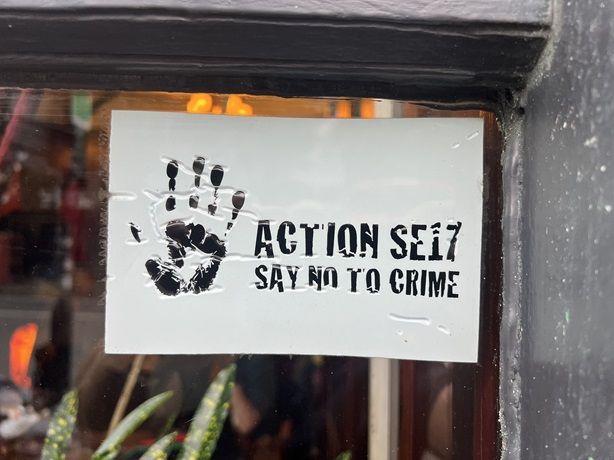
Criminal justice is the system through which society identifies, prosecutes, and punishes criminal behaviour while attempting to prevent crime and rehabilitate offenders.
In an unprecedented move to tackle the rising threat of converted firearms within the UK, a national amnesty has been initiated for specific types of blank-firing guns, commonly known as top-venting blank firers (TVBFs). The amnesty which started on the 3rd February 2025 and concludes on the 28th February, 2025, targets four Turkish-manufactured models that tests have shown can be readily converted into lethal weapons.
The National Police Chiefs’ Council (NPCC), in collaboration with the National Crime Agency (NCA), National Ballistics Intelligence Service and various police forces across the country, has launched this amnesty following alarming evidence that these guns have been implicated in criminal activities, including at least four homicides since 2023. The models in question, produced by Retay, Ekol, Ceonic, and Blow, were initially designed for non-lethal uses such as starting races or theatrical performances. However, their convertibility into functioning firearms has caught the attention of law enforcement.
The top-venting blank firers are used by criminals and can be converted into lethal firearms.
During the last two years, policing and the NCA has identified and disrupted several workshops used to convert these pistols into lethal weapons.
In the same period, large numbers of converted weapons were recovered across multiple locations, alongside thousands of rounds of blank calibre and modified ammunition.
One investigation recovered more than 400 converted weapons from a single crime group. There is a strong demand for them evidenced by the numbers imported and subsequent recovery from criminals.
Stopping the sale of these top-venting blank firers from being converted will go a significant way to help protect the public.
The primary aim of this amnesty is to remove these potentially dangerous weapons from the public domain, reducing the risk they pose when falling into the wrong hands. According to the NPCC, while gun crime in the UK remains relatively low compared to other countries, the conversion of these blank-firing guns into lethal weapons presents a significant emerging threat. Since 2021, over 800 converted TVBFs have been recovered in criminal circumstances, highlighting the urgency of this initiative.
How the Gun Amnesty Works
During the amnesty period, individuals who possess any of these four models can surrender them at local police stations without facing prosecution for the illegal possession of these now-banned firearms. This leniency is intended to encourage those who might have these guns for legitimate, non-criminal purposes to hand them over.
The guns will not only be removed from circulation but will also be analysed to see if they have been involved in previous criminal acts, thereby potentially aiding in ongoing investigations.
Public Response and Implications
The response from the public has been cautiously optimistic. Many see this amnesty as a chance to rectify unintended possession of these newly classified illegal firearms. There’s an acknowledgment among communities that while these guns might have been bought legally or even as souvenirs from trips, their potential for misuse is now too significant to ignore.
Law enforcement officials, including Assistant Chief Constable Tim Metcalfe, the NPCC Lead for the Criminal Use of Firearms, have stressed the importance of public cooperation. “This initiative is about protecting our communities by ensuring these firearms don’t end up being used for criminal intent,” Metcalfe stated. “We urge anyone with these weapons to do the responsible thing and surrender them.”
Legal Implications Post Amnesty
Post-amnesty, the possession of these TVBFs will be strictly prohibited, with severe penalties including up to 10 years in prison for those caught with one. This crackdown is part of broader efforts by UK law enforcement to control the proliferation of firearms and reduce gun-related crimes.
The amnesty also serves as a reminder of the broader issue of firearm conversion in the UK, prompting discussions on the need for tighter regulations on the import and sale of blank-firing guns and other similar devices.
The UK’s criminal justice system is facing significant delays, with some trials being postponed until as late as 2028. A Sky News investigation at Leicester Crown Court revealed a criminal justice system described as chaotic and ineffective, characterised by:
Delayed Trials: Victims and defendants are experiencing waits of up to 460 days, with some cases stretched into future years due to a lack of resources like courtrooms, judges, and barristers.
Systemic Issues: The backlog in the crown courts is growing weekly. This delay is attributed to insufficient courtrooms, with around 15% to 20% remaining unused daily due to staffing shortages, alongside an increase in charges by the police and early releases from prisons due to overcrowding.
Professional Frustration: Barristers are moving away from criminal law to other, less chaotic areas of legal practice. This exodus is partly due to the system’s inefficiencies along with court staff shortages and increasing case volumes compounding the crisis.
Public and Legal Outcry: There’s a strong sentiment among legal professionals and the public that justice is being denied due to these delays. The system is criticized for not functioning effectively, with the Criminal Bar Association chair, Mary Prior KC, highlighting the broken nature of the current setup.
Infrastructure Problems: The physical state of court buildings is deteriorating, and even basic facilities like computer systems for tracking cases are unreliable, exacerbating the delays.
The judge then takes the unusual step of addressing the crisis to us in open court.
“I have cases day in, day out that I am having put over. It can be years, if you lose a date in 2025 it is 2026.
“All these cases you have to decide who gets priority… fraud cases are being put on the back burner. In my position I have cases put over for months, even years.”
As a rule, judges don’t do interviews, so this is as close as we’ll get to hearing what he thinks.
He is clearly exasperated and remarkably candid: “I don’t know where things are going to go but they aren’t going to get any better,” he says.
“If you think about it, if we don’t have a functioning criminal justice system, we are in a position where you have people roaming the streets who are committing serious offences and there’s no retribution for that.
People aren’t getting justice quick enough and if they’re not… what’s the point in any of it? People will start to give up.”
A Non-Crime Hate Incident (NCHI) in the UK refers to any incident where an individual or group perceives that they have been subjected to hostility or prejudice based on race, religion, sexual orientation, disability, or transgender identity, even if no criminal activity has taken place. Here are key points about NCHIs:
Definition: It is defined as any non-crime incident which is perceived by the victim or any other person to be motivated by hostility or prejudice. This perception does not require evidence or justification from the victim regarding the hostility.
Purpose: NCHIs are recorded by the police to monitor community tensions, potential risks of escalation into more serious incidents or crimes, and to provide data for understanding patterns of prejudice or hostility.
Recording Criteria: Not all perceived hate incidents are recorded as NCHIs. There are specific criteria:
The incident must disturb an individual’s, group’s, or community’s quality of life or cause concern.
The incident must meet an additional threshold if personal data is to be recorded, indicating a real risk of significant harm or future criminal offence against individuals or groups with the same characteristic.
Legal Implications: While NCHIs do not result in criminal charges, they can appear in enhanced Disclosure and Barring Service (DBS) checks, which might affect employment opportunities, especially in sectors requiring such checks.
Freedom of Speech: Recent guidance and legal reviews have emphasized balancing the recording of NCHIs with the protection of free speech, ensuring that trivial, irrational, or malicious reports do not lead to the recording of personal data unless necessary. The Free Speech Union published An Orwellian Society: Non-Crime Hate Incidents and the policing of speech.
Public and Legal Scrutiny: There has been scrutiny over NCHIs, with concerns that they might infringe on free speech or be used maliciously. Changes in guidance now aim for a more proportionate approach where NCHIs are only recorded when deemed absolutely necessary and not merely based on someone being offended.
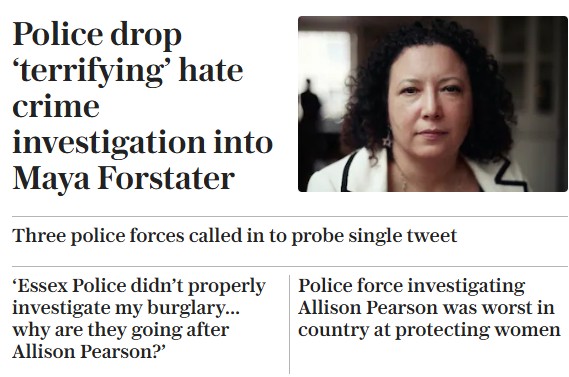
The scale of the investigation has now become clear, with officers from the Metropolitan Police, Sussex Police and Essex Police all having handled the complaint over the past year.
The Telegraph understands that the post was reported to the Metropolitan Police as a potential breach of the Malicious Communications Act in November last year. The case was then passed to Sussex Police, which marked it as a possible non-crime hate incident (NCHI) as well as a potential malicious communication.
Sussex Police passed it to Essex, where Pearson lives.
Incidents such as the Allison Pearson tweet are supposed to be part of a broader effort to address and monitor hate-related issues in society without necessarily involving criminal law and sanctions. They can still have implications for the individuals involved due to the recording of such incidents by the police.
Detention at His Majesty’s Pleasure is a term used in the United Kingdom for an indeterminate sentence where the offender is detained for an unspecified period. This kind of sentence is typically used for young offenders or those convicted of particularly serious crimes, where the length of detention is not fixed at the time of sentencing.
Detention during His Majesty’s Pleasure is a mandatory life sentence and will be imposed when a child or young person is convicted or pleads guilty to murder. Schedule 21 of the Sentencing Act 2020 states that the starting point for determining the minimum sentence where the offender is under 18 years of age is 12 years as opposed to 15 years for those over the age of 18.
Purpose: The main idea is that the offender should be detained until they are no longer considered a threat to society or until they have been rehabilitated. This could theoretically mean detention for life, or until the offender’s behaviour and development indicate that release is appropriate.
Who It Applies To: Historically, this sentence was often used for juveniles convicted of serious crimes like murder, where an adult would receive a life sentence. However, it can also apply to adults in certain contexts, particularly where mental health issues are involved. The Mental Health Act 1983 allows for the detention of individuals who have committed offenses but are also suffering from mental disorders. When someone is detained at His Majesty’s Pleasure, especially under a mental health context, it’s often because they’ve been found not guilty by reason of insanity or unfit to plead, or they’ve been convicted of an offense where a psychiatric disposal is deemed more appropriate than a penal sentence.
Legal Framework: The phrase “at His Majesty’s Pleasure” reflects the historical power of the monarch to detain subjects. In modern times, this power is exercised through the Home Office or relevant judicial or parole boards who decide when it’s safe to release the individual.
Review and Release: The detention period is subject to periodic review. Decisions regarding release are based on assessments of risk, rehabilitation progress, and changes in the offender’s maturity and mental state.
Differences from Life Sentences: Unlike a life sentence with a tariff (a minimum term to be served before parole can be considered), detention at His Majesty’s Pleasure doesn’t set a minimum term upfront, although in practice, a minimum term might be recommended by the judge.
Criticism and Reform: This type of sentencing has faced criticism for its uncertainty, which can be psychologically challenging for detainees. There have been calls for reform to provide more clarity or to set tariffs in a way similar to life sentences but tailored to the developmental needs of young offenders.
International Perspective: The concept is somewhat unique to the UK legal system, though other countries have similar provisions for indefinite detention for the purposes of rehabilitation or public protection, particularly for juvenile offenders or those with mental health issues.
“You did not yourself attack any police officer, as far as can be detected, but what you did was encourage by your conduct others to behave violently and you were part of this mob……What a disgraceful example you are as a grandfather.”
A Prison Service spokeswoman said on Monday 21st October 2024 “HMP Moorland prisoner Peter Lynch died on October 19 2023.”
“As with all deaths in custody, the Prisons and Probation Ombudsman will investigate.”
There has been an outpouring of public opinion since the death of Peter Lynch including the “harsh sentence” handed down by His Honour Judge Jeremy Richardson KC and the suspected influence of British Prime Minister Sir Keir Starmer KC on the criminal justice system.
Kay Burley asked the Lord Chancellor on Sky TV : Should Peter Lynch a first time offender with a poor health record, have been jailed?
He sentenced Peter Lynch 61, To 2 years 8 mths for non violent protest. Peter is said to have taken his life
He let a paedophile off with a suspended sentence. He let a dangerous driver who killed a cyclist off with a suspended sentence. pic.twitter.com/uZRbGcUXjh
The three key values which are central to the role of judicial office holders (JOHs) in England and Wales are: • Independence • Impartiality • Integrity
Modes of Address B.1 – The following judges, when sitting in court, should be addressed as ‘My Lord’ or ‘My Lady’
(b) any Circuit Judge sitting as a judge of the Court of Appeal (Criminal Division) or the High Court under section 9(1) of the Senior Courts Act 1981; (d) any Senior Circuit Judge who is an Honorary Recorder.
Description B.3 – In cause lists, forms and orders members of the judiciary should be described as follows:
(a) Circuit Judges, as ‘His [or Her] Honour Judge A’. When the judge is sitting as a judge of the High Court under section 9(1) of the Senior Courts Act 1981, the words ‘sitting as a judge of the High Court’ should be added;
“Publicity is the very soul of justice. . . . It keeps the judge himself, while trying, under trial….Where there is no publicity there is no justice”
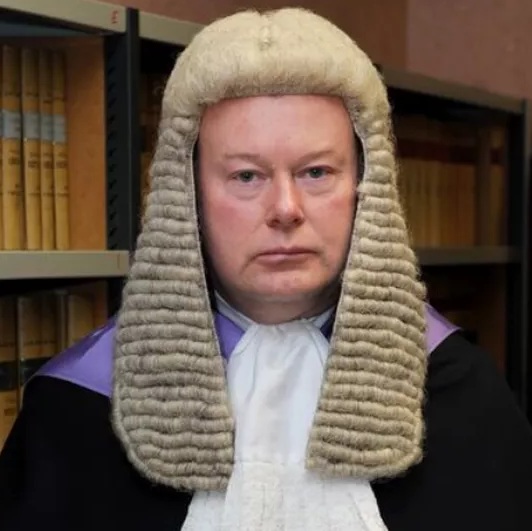
His Honour Judge Melbourne Inman KC (The Recorder of Birmingham) sentenced Lucy Connolly at Birmingham Crown Court to two years and seven months in prison for publishing written material that incited racial hatred. Lucy Connolly was ordered to serve 40% of her 31-month sentence in prison before being released on licence.
(1) It is an offence for a person, without reasonable excuse, to—
(a) deliver or cause to be delivered to the registrar, for any purpose of the Companies Acts, a document that is misleading, false or deceptive in a material particular, or
(b) make to the registrar, for any purpose of the Companies Acts, a statement that is misleading, false or deceptive in a material particular.
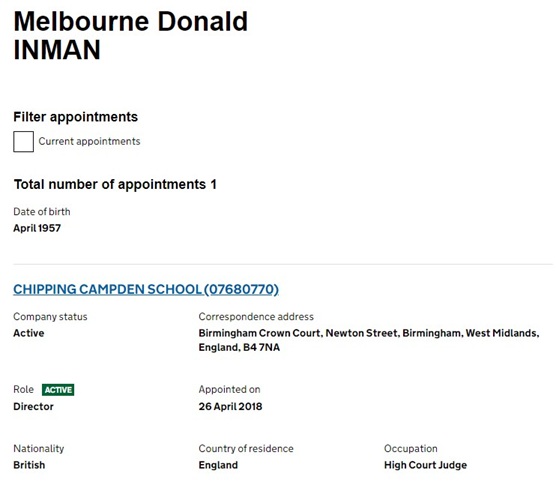
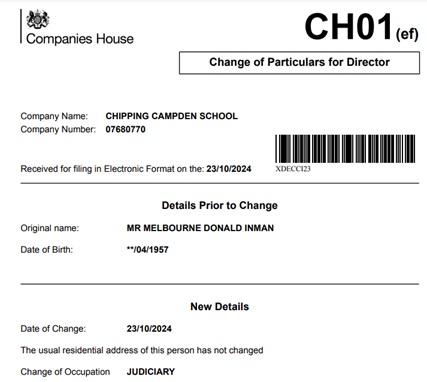
I did not believe that HHJ Melbourne Inman KC was a High Court Judge so his submission and entry at Companies House was false. I could not find any evidence that he was ever authorised to sit as a Deputy High Court Judge. Regardless of whether HHJ Inman was ever authorised to sit as a High Court Judge, his occupation is still a Circuit Judge (Senior).
Was HHJ Inman listing his occupation as a High Court Judge at Companies House an honest mistake or deliberate dishonesty (Fraud) ?
(1) A person is in breach of this section if he—
(a) dishonestly makes a false representation, and
(b )intends, by making the representation—
(i) to make a gain for himself or another, or
(ii) to cause loss to another or to expose another to a risk of loss.
(2) A representation is false if—
(a) it is untrue or misleading, and
(b) the person making it knows that it is, or might be, untrue or misleading
The three key values which are central to the role of judicial office holders (JOHs) in England and Wales are: • Independence • Impartiality • Integrity
Modes of Address B.1 – The following judges, when sitting in court, should be addressed as ‘My Lord’ or ‘My Lady’
(b) any Circuit Judge sitting as a judge of the Court of Appeal (Criminal Division) or the High Court under section 9(1) of the Senior Courts Act 1981; (d) any Senior Circuit Judge who is an Honorary Recorder.
Description B.3 – In cause lists, forms and orders members of the judiciary should be described as follows:
(a) Circuit Judges, as ‘His [or Her] Honour Judge A’. When the judge is sitting as a judge of the High Court under section 9(1) of the Senior Courts Act 1981, the words ‘sitting as a judge of the High Court’ should be added;
The Judicial Appointments Commission have published a Section 9(1) Policy which lays out the selection of persons for membership of the pool of judges who are authorised to act as judges of the High Court under s9(1) of the Senior Courts Act, as amended by the Crime and Courts Act 2013.
The Judicial Appointments Commission have also published a document Section 9(1) protocol. This protocol concerns the process by which authorisations for Recorders and Circuit Judges to sit as judges of the High Court under section 9(1) of the Senior Courts Act 1981 should take place.
Section 23 of The Courts Act 1971 covers a Circuit judge or Recorder sitting as High Court Judge.
(1) If requested to do so by or on behalf of the Lord Chancellor, a Circuit judge or Recorder shall sit as a judge of the High Court for the hearing of such case or cases or at such place and for such time as may be specified by or on behalf of the Lord Chancellor.
(2) So long as a Circuit judge or Recorder sits as a judge of the High Court in pursuance of a request under this section he shall be treated, subject to subsection (3) below, for all purposes as, and accordingly may perform any of the functions of, a puisne judge of the High Court.
(3) A Circuit judge or Recorder sitting as a judge of the High Court in pursuance of a request under this section shall not be treated as a judge of the High Court for the purpose of any provision made by or under any enactment and relating to—
(a) the appointment, retirement, removal or disqualification of judges of the High Court, (b) the tenure of office and oaths to be taken by such judges, or (c) the remuneration, allowances or pensions of such judges.
His Honour Judge Inman KC sentenced Lucy Connolly at Birmingham Crown Court to two years and seven months in prison. HHJ Inman occupation at Companies House is shown as a High Court Judge. He is a Circuit Judge.
The jurisdiction of the courts in England and Wales refers to the legal authority or power that they have to hear and determine certain types of legal cases. The jurisdiction of the courts is determined by a combination of legislation, legal precedent, and court rules.
In England and Wales, there are several levels of courts with varying degrees of jurisdiction. These include:
Magistrates’ Courts: These are the lowest level of courts in England and Wales and they have jurisdiction over a wide range of criminal offenses, such as minor assaults, theft, and driving offenses. They also have limited jurisdiction in civil cases, such as small claims and some family law matters.
County Courts: These courts have jurisdiction over a wider range of civil cases, including contract disputes, personal injury claims, and landlord-tenant disputes. They also have some limited jurisdiction in family law matters, such as divorce and child custody.
Crown Court: This court has jurisdiction over the most serious criminal offenses, such as murder, rape, and drug trafficking. It also has some limited jurisdiction over civil cases.
High Court: This is the highest level of court in England and Wales, and it has jurisdiction over the most complex civil and criminal cases. The High Court has several divisions, including the Family Division, the Chancery Division, and the King’s Bench Division.
The Supreme Court: This is the final court of appeal in the UK for civil cases, and for criminal cases from England, Wales and Northern Ireland
In addition to these courts, there are also specialist courts in England and Wales, such as the Employment Tribunal, the Immigration and Asylum Tribunal, and the Mental Health Tribunal, which have jurisdiction over specific areas of law.
It is important to understand the jurisdiction of the courts in England and Wales when bringing a legal case, as it determines which court has the power to hear and determine your case. It is advisable to seek legal advice if you are unsure about which court has jurisdiction over your case.
Find contact details and information on courts and tribunals in England and Wales, and some non-devolved tribunals in Scotland.
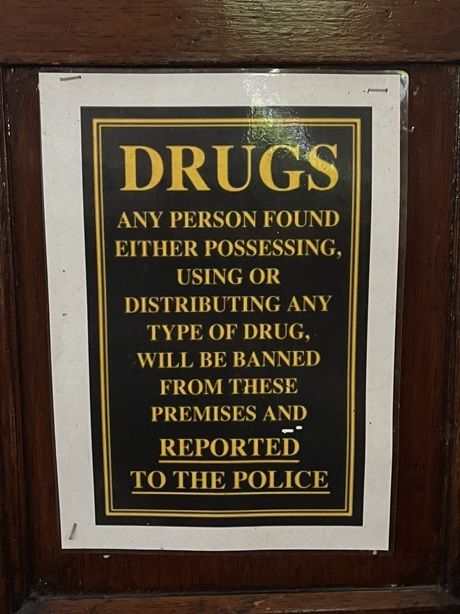
Drugs are being openly sold on the streets by drug dealers with seemingly little to no action being taken by the Police to deal with this. The streets also stink of weed.
I gave up ringing 101 and attending local policing meetings. It’s pointless the police seem more than happy for a large group of men to openly deal on the street every single day of the week and have them and their customers urinating and defecating in the streets.
Drug misuse harms the health and wellbeing of many people. There are a number of different criminal offences which should restrict the supply and use of harmful substances.
It is illegal to possess, supply and produce controlled drugs. It is also illegal to import or export drugs, or to allow your premises to be used for drug production.
The legal restrictions placed on the use of controlled drugs are aimed at preventing drug misuse. The principal offences relating to the misuse of controlled drugs are contained in the Misuse of Drugs Act 1971 (“the Act”) and most of the offences dealt with in this guidance are created by the Act. The primary objective of the Act is the control of the use and distribution of dangerous and harmful drugs. The Act classifies the drugs according to their relative degree of overall harm from misuse.
Controlled drugs fall into three different categories, Class A, B or C, according to their danger or how harmful they are. The sentences for drug offences are different for each class of drugs. Class A drugs are the most harmful, and will lead to a greater sentence.
A drug dealer is an individual who illegally sells or distributes drugs. These drugs can range from illegal substances like cocaine, heroin, methamphetamine, or marijuana (in places where it’s not legally regulated) to prescription medications that are sold without a prescription or for non-medical use.
The Statute of Limitations establishes time limits within which legal actions can be brought against individuals or entities for various offenses. There is no time limit for prosecution in England and Wales for drug dealing offences.
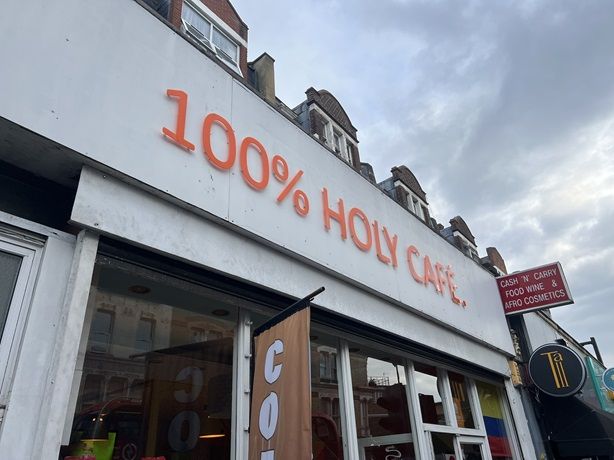
On Sunday 22nd September 2024 @ 17:40 whilst I was on the Walworth Road/Camberwell Road in SE17 close to the 100% Holy Café, I witnessed 3 drug deals being carried out brazenly in the street. I later witnessed another drug deal in a local pub by one of the same individuals.
Several Met Police cars drove past (all being driven one handed) and I attempted to flag one down. The officer in passenger seat made eye contact but they decided to ignore me. I assume the officers were coming from Walworth Police Station 12-28 Manor Place SE17 3RL.
I regularly travel through South London and I regularly see drug deals on the streets. I never see any Met Police officers on foot patrol. Met Police patrol cars just drive by seemingly oblivious to crimes being committed on the streets.
If you’re concerned about drug-related crime in your area or think someone may be a victim of drug exploitation, please call us on 101.
If it’s an emergency, please call 999. If you have a hearing or speech impairment, use our textphone service 18000. Or text us on 999 if you’ve pre-registered with the emergencySMS service
I live in Crawley West Sussex and I regularly see drug deals on the streets. I never see any Sussex Police officers on foot patrol (anytime) or in police cars at night.
The suspects are usually illegally riding a speed modified e-scooter or e-bikes and have their face covered. Home delivery of drugs by car also seems very popular in some parts of town.
Chief Superintendent Imran Asghar of Sussex Police was appointed in March 2024 and is responsible for Crawley & Mid-Sussex. On X he said that he is looking forward to working with officers/staff & communities in this region.
Superintendent Asghar EB821 can be contacted by email [email protected]. Maybe he would like to do something positive about drug crime on his “manor” ?
If you’re concerned about drug-related crime in your area or think someone may be a victim of drug exploitation, please call us on 101.
If it’s an emergency, please call 999. If you have a hearing or speech impairment, use our textphone service 18000. Or text us on 999 if you’ve pre-registered with the emergencySMS service
Drugs are being openly sold on the streets by dealers, in my opinion, with seemingly little to no action being taken by the Police (Met and Sussex) to deal with this. Is open drug dealing an issue in your area ? #Policehttps://t.co/DMblhIMXDs
Why did Sussex Police wait 9 days to inform the public ?Surely Sussex Police have a duty to let Sussex residents know that their Chief Constable has retired ?Not very transparent and almost as if the Police have something to hide.
In the same document pack, there is a copy of the letter Jo Shiner wrote to the Sussex PCC on the 14th June 2024. The Sussex PCC replied on the 25th June 2024. The Police Reform and Social Responsibility Act 2011 requires a transparent and open process. Why did the PCC stay quiet until the 10th September 2024 ?
I am still perplexed how the Chief Constable of Sussex Police can retire (and be rehired next month by the PCC), an Acting Chief Constable be appointed and the people of Sussex (and the UK) were not told.
Confirmation Hearing for the Proposed Chief Constable of Sussex Police (Pages 37 – 58)
On 10 September, the Panel was formally notified of the proposal of Sussex Police and Crime Commissioner to appoint a Chief Constable of Sussex Police. The attached report by the Clerk to the Panel provides details of the Panel’s role in the confirmation hearing for the proposed appointment of the Chief Constable of Sussex Police. The appendices and annexes to the report comprise information from the Police and Crime Commissioner regarding the proposed appointment. The Panel is to ask the candidate questions relating to their professional competence and personal independence.
On the 1st October 2024 Jo Shiner was reappointed as the Chief Constable of Sussex Police until 2027 after a short break under the Retire and Rejoin scheme.
The latest HMICFRS inspection of Sussex Police PEEL 2021/22 was published on the 13th April 2023 ? Should we continue to reward failure ? Is Jo Shiner the best person Sussex Police have for the job ?
“This way she can start claiming her pension and, on her return get her full salary without any pension deductions. Nice work if you can get it. If she has retired the job needs to go through the correct selection process.”
There was no announcement on the Sussex Police News website…..however the reason for the BBC news article and announcement may become clear. ⬇
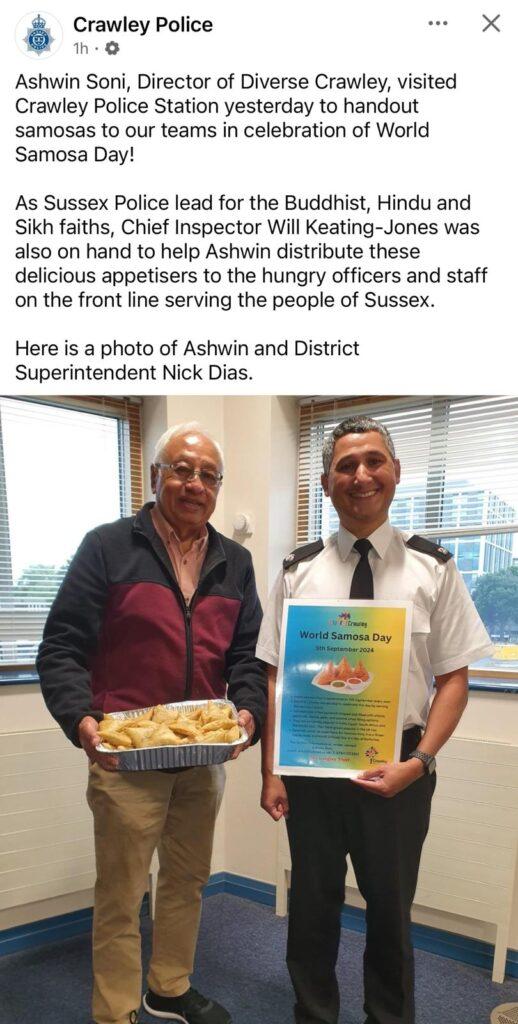
An email was sent to the Sussex Police Media Team on Monday 9th September in relation to a Facebook post about gifts of Samosa’s to Crawley Police. The email also asked questions about the Senior Leadership including Chief Constable Jo Shiner missing from the Sussex Police website……
From: Dom Watts Sent: Monday, September 9, 2024 10:06 AM To:[email protected] Cc:[email protected]; [email protected] Subject: Crawley Police and the Gifts, Gratuities and Hospitality Policy – Facebook Samosa Gifts
Dear Sussex Police Media Team
(cc Katy Bourne Sussex PCC and Sussex Police PSD)
I am a citizen journalist at the Ministry of Injustice website and also a Crawley resident. I am currently writing an article in response to a post made by Crawley Police on their Facebook page (As below) on Friday 6th September 2024 about gifts of Samosa’s to the Police on World Samosa Day (5th September 2024).
This Facebook post is another terrible social media post by Crawley Police, and is not a great optic for the Police at a time of greater scrutiny in light of public claims of two tier policing.
1.3 As a guiding principle, Police Officers, Special Constables and Police Staff must not accept the offer of any gift, gratuity, favour or hospitality without prior approval from the JFVU. This allows an independent assessment of any potential compromise or conflict of interest.
1.4 Offers of a gift, gratuity or hospitality vary widely and could range from a reasonable display of gratitude and common courtesy, which does not breach integrity of any party, through to criminal offences such as a breach of the Bribery Act 2010 (legislation.gov.uk)
3.1 All gifts, gratuities and hospitality require approval from the JFVU before they can be accepted. Police Officers, Special Constables and Police Staff must complete an application form as soon as possible or within a maximum of 7 days from the receipt of the gift, gratuity or prior to any hospitality offered. The gift, gratuity or hospitality must remain with the applicant’s line manager, until approval has been given from the JFVU.
4.3 The Gift, Gratuity and Hospitality policy is intended to manage low value items only and as a guide an upper limit of £20 is considered appropriate.
Could you please provide any comments on the following please :-
Was advice Sought from the Joint Force Vetting Unit (JFVU) in accepting these gifts ?
Have these gifts been recorded by the JFVU ?
Did Superintendent Nick Dias or Chief Inspector Will Keating-Jones accept the gifts ? Was it another officer ?
Does the photo show all the samosa’s that were gifted ? How many Samosa’s were gifted ?
Was the health and safety of the Front Line officers considered when accepting these gifts ?
What is the benefit to policing in accepting these gifts ?
Do senior officers in Sussex Police regularly take time away from policing to accept freebies and photo opportunities ?
Could you please arrange for this page to be updated along with any missing bio’s. Can you please share any publicity photos of these senior officers ?
@[email protected] If any offences have been committed by Superintendent Nick Dias, Chief Inspector Will Keating-Jones or any other officers, could you please furnish me with a crime number and PSD reference.
To be clear, I am not a racist or from the far right. My aunt is of Asian descent and makes brilliant Samosa’s !
Thanks for your time and I look forward to your response.
Regards
Email to Sussex Police Media Team 9th September 2024
Is news about gifts of Samosa’s more important to the public than the retirement of the Chief Constable ?
An email response was received from Sussex Police Media Team……..
From: <[email protected]> Sent: Monday, September 9, 2024 12:19 PM To: Dom Watts Cc:[email protected]; PSD Main <[email protected]> Subject: RE: Crawley Police and the Gifts, Gratuities and Hospitality Policy – Facebook Samosa Gifts
Good afternoon Dom,
Thank you for your email. I hope this gives some clarification regarding the samosas which were received at Crawley police station from Ashwin Soni, Director of Diverse Crawley.
Samosas were delivered to police and other emergency services by Ashwin to help celebrate World Samosa Day.
Ashwin is a valued member of the community as well as a member of multiple independent advisory groups who work closely with Sussex Police.
This kind gesture was gratefully received by Superintendent Nick Dias and Chief Inspector Will Keating-Jones, who is the Hindu Faith lead for Sussex Police, as part of their ongoing engagements with the local community and stakeholders, a core part of senior officers’ duties.
The gift of around 40 samosas was inputted on the Gifts Register and forwarded to vetting for awareness.
Thank you for highlighting information on our website.
Will Keating-Jones was promoted to Chief Inspector, which will be reflected on the website. Superintendent Imran Asghar’s rank is correct.
In relation to the Chief Constable, please can I direct your request to the Office of the Police and Crime Commissioner for Sussex?
I hope this answers any questions you may have. If you require any more information, please do let me know.
Many thanks
Email response from Sussex Police Media Team 9th September 2024
A follow up email was sent to the Sussex Police Media Team and the Sussex Police and Crime Commissioner
From: Dom Watts Sent: Tuesday, September 10, 2024 10:08 AM To: <[email protected]>; [email protected] Subject: RE: Crawley Police and the Gifts, Gratuities and Hospitality Policy – Facebook Samosa Gifts Importance: High
Good Morning xxx
Many thanks for your speedy reply, for clarifying the correct procedure was followed in relation to the “gifts” and for updating the Sussex Police Senior Leadership page.
I see that the reason for your response “In relation to the Chief Constable, please can I direct your request to the Office of the Police and Crime Commissioner for Sussex?”
was answered by the BBC @ 1.32pm the same day
@[email protected] Why did Sussex Police wait 9 days to inform the public ? Surely Sussex Police have a duty to let Sussex residents know that their Chief Constable has retired ? Not very transparent and almost as if the Police have something to hide. Could you please reply to me separately about this ?
Jo Shiner, Sussex Police Chief Constable, formally retired on the 31st August 2024 but will return in a month !
Why did Sussex Police wait 9 days to inform the public ? Not very transparent and almost as if the Police have something to hide? #Policehttps://t.co/8jZt4TcA49
The Sussex Police and Crime Panel met on Friday 27 September 2024 (10.30am start) at County Hall, Lewes. The deadline for residents to submit written questions is 12 noon on Friday 13 September 2024…..
From: Dom Watts Sent: Thursday, September 12, 2024 9:16 AM To:[email protected] Subject: Written questions to the Sussex PCP Meeting 27th September 2024
Dear Sussex Police and Crime Panel
The deadline for residents to submit written questions is 12 noon on Friday 13 September 2024.
I am perplexed how the Chief Constable of Sussex Police can retire (and be rehired next month by the PCC), an Acting Chief Constable be appointed and the people of Sussex (and the UK) were not told.
Why did Sussex Police wait 9 days to inform the public via the BBC ? Surely Sussex Police have a duty to let Sussex residents know that their Chief Constable has retired ?
Is there something to hide ? Not very transparent and almost as if the PCC/Police have something to hide.
My questions to the Sussex PCP have been accepted….
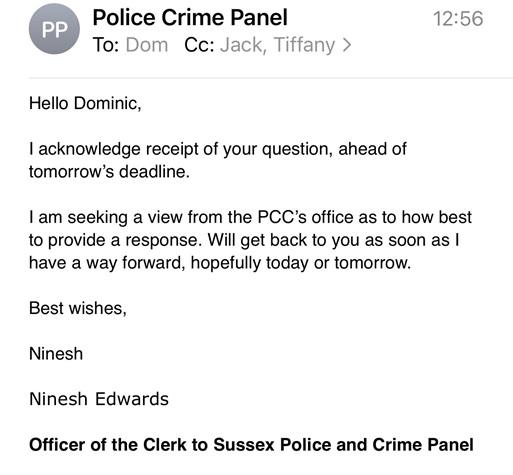
From: Ninesh Edwards <[email protected]> On Behalf Of Police Crime Panel Sent: Thursday, September 12, 2024 3:46 PM To: Dom Watts Cc: Tiffany Taylor ; Jack Bacon Subject: Your written Question
Hello again Dominic,
I can confirm that your question(s) have been accepted as written questions for the meeting on 27 September.
The PCC’s written response will be published just before the meeting (available via the link given in 3. below) and the members of the Panel can ask supplementary questions at the meeting, having read the Commissioner’s response.
You can follow the meeting live on 27 September via the webcast here: https://eastsussex.public-i.tv/core/portal/home. The meeting is being held in public, but the public can only observe (i.e. not participate). The meeting will be in Lewes, East Sussex, and will start at 10:30.
The papers for the meeting will be published here (on or around 19 September): https://sussexpcp.gov.uk/meetings/. As stated above, the report for the “Questions for the Commissioner” item will be updated on the morning of the meeting, to include the PCC’s written responses.
Jo Shiner Biography before Appointment as Chief Constable
Jo Shiner joined Sussex Police as Deputy Chief Constable at the end of 2018. She started her policing career in Norfolk in 1993, serving up to the rank of Chief Superintendent before transferring on promotion to Kent as Assistant Chief Constable in 2014.
Jo’s career in the police spans 28 years, during which time she has undertaken a wide variety of roles. These have predominantly been operational, both in uniform and within the Child and Adult Protection Unit, CID and as a firearms, public order and critical incident commander.
As Deputy Chief Constable, Jo is responsible for the smooth and effective running of Sussex Police, and delivering the services that the communities deserve. As part of this she is passionate about supporting local groups and addressing issues that really matter to our communities.
In January 2020 she took over the NPCC National Lead for the policing of Children and Young People. She is also the NPCC National Lead for police fitness.
Police and Crime Commissioners (PCCs) are directly elected politicians and are responsible for overseeing the non-operational aspects of policing. Their journey began in 2012 when they replaced the old police authorities. Since then, it is said that PCCs have been diligently working to secure an “efficient and effective” police force for their respective areas.
In England and Wales, PCCs are elected by the public to hold the police force to account on their behalf. PCCs aim to cut crime and deliver an effective and efficient police service within their police force area. Police and Crime Commissioners: make sure the police force budget is spent effectively.
Election: PCCs are elected by the public. On the 2nd May 2024, elections took place for 37 police and crime commissioners (PCCs) who set policing priorities and hold to account police forces across most of England and Wales. Police & Crime Commissioner elections are held every 4 years.
Coverage: They represent every police force area in England and Wales, except for London, Greater Manchester, and West Yorkshire (where elected mayors hold these powers). Different arrangements exist in the City of London. Scotland and Northern Ireland have separate policing structures due to devolution. Police and crime commissioners for each police area listed in Schedule 1 to the Police Act 1996 (police areas outside London).
The Powers and Functions of PCCs
Appointing and Holding to Account:
PCCs appoint and, if necessary, dismiss the chief constable. This role is critical for maintaining effective leadership within the police force.
They hold the chief constable accountable for delivering the police and crime plan, which outlines local policing priorities.
Setting Objectives and Budgets:
PCCs set the police and crime objectives for their area through a comprehensive plan.
They also determine the force budget and decide on the precept which is a council tax charge specifically for policing.
Collaboration and Coordination:
PCCs bring together various community safety and criminal justice partners to ensure that local priorities are aligned.
While they’re not responsible for operational policing (that remains with chief constables), they play a crucial role in coordinating efforts.
Operational Independence:
The relationship between PCCs and chief constables is guided by the Policing Protocol Order 2011. It emphasizes safeguarding operational independence while allowing PCCs to fulfil their statutory roles.
Additionally, the Policing and Crime Act 2017 introduced the possibility for PCCs to take on responsibility for fire and rescue governance, becoming a police, fire, and crime commissioner (PFCC).
secure an efficient and effective police for their area
appoint the Chief Constable, hold them to account, and if necessary dismiss them
set the police and crime objectives for their area through a police and crime plan
set the force budget and determine the precept [the amount people pay through council tax for policing]
contribute to the national and international policing capabilities set out by the Home Secretary
bring together community safety and criminal justice partners to make sure local priorities are joined up.
How to complain about a Police and Crime Commissioner
To complain about your Police and Crime Commissioner (PCC), PFCC, mayor or deputy mayor for policing and crime, contact your local police and crime panel. Your local council will provide contact details.
Each police force area has a Police and Crime Panel to provide checks and balances in relation to the performance of the Police and Crime Commissioner. The role of the Panel is to scrutinise the performance of the Commissioner and ensure transparency.
The Panel provides checks and balances in relation to the performance of the PCC. The Panel does not scrutinise the Chief Constable – it scrutinises the PCC’s exercise of their statutory functions. While the Panel is there to challenge the PCC, it must also exercise its functions with a view to supporting the effective exercise of the PCC’s functions. This includes :-
(a) the power of veto (outside the Metropolitan Police District), by a two-thirds majority of the total Panel membership, over the level of the PCC’s proposed precept;
(b) the power of veto (outside the Metropolitan Police District), by a two-thirds majority of the total Panel membership, over the PCC’s proposed candidate for Chief Constable;
(d) the power to review the draft Plan and make recommendations to the PCC who must have regard to them;
(e) the power to review the PCC’s Annual Report and make reports and recommendations at a public meeting, which the PCC must attend;
(f) the power to require relevant reports and information in the PCC’s possession (except those which are operationally sensitive) to enable them to fulfil their statutory obligations;
(g) the power to require the PCC to attend the Panel to answer questions;
(h) the power (outside the Metropolitan Police District) to appoint an acting Police and Crime Commissioner where the incumbent PCC is incapacitated, resigns or is disqualified, and
(i) responsibility for complaints about a PCC, although serious complaints and conduct matters must be passed to the IOPC in line with legislation.
A Police and Crime Panel does not have the power to examine the decisions reached by the Police and Crime Commissioner (PCC) and/or their office in respect of such reviews, and is not the correct body of recourse to challenge such decisions made the PCC and/or their office. Such decisions can be subject to judicial review.

 The presumption of innocence is a basic principle of the… Read more: Presumption of Innocence
 Judge Daniel Sawyer, known as His Honour Judge Daniel Sawyer,… Read more: His Honour Judge Daniel Sawyer
 Prime Minister Andy Burnham used his first United Nations General… Read more: UK National Centre for Information Defence
 On the 27th August 2026 the Crown Prosecution Service announced… Read more: Judges Behaving Badly and His Honour Judge Simon Oliver
 Jo Morris is a practising criminal barrister of Drystone Chambers… Read more: Jo Morris Barrister
 The Good Law Project is a UK campaigning organisation that… Read more: Good Law Project
 The Police Federation of England and Wales (PFEW) is the… Read more: Police Federation of England and Wales (PFEW)
 The Criminal Justice System Common Platform (also known as HMCTS… Read more: What is the Criminal Justice System (CJS) Common Platform ?
 Strategic Lawsuits Against Public Participation, or SLAPPs, are legal actions… Read more: Strategic Lawsuit Against Public Participation (SLAPPs)
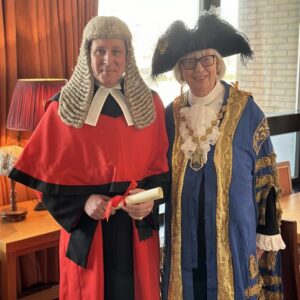 Judge Tony Alan Walter Baumgartner, known as His Honour Judge… Read more: His Honour Judge Tony Baumgartner – Recorder of Westminster
 On the 8th July 2026, the Courts and Tribunals Judiciary… Read more: New Protocol for Legal Professionals to Raise Informal Concerns About Judges Behaviour
 In April 2026, His Majesty’s Inspectorate of Constabulary and Fire… Read more: The Policing Performance System