Categories
Free Speech Legal Analysis Police

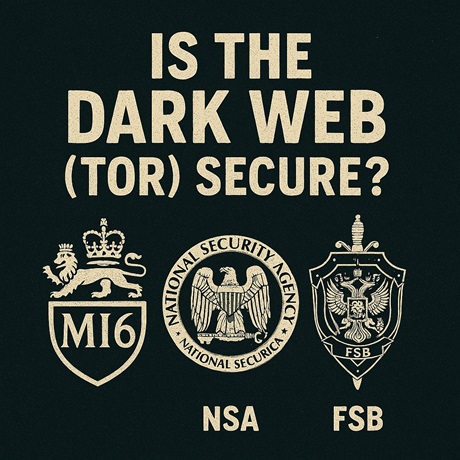
Is the Dark Web (Tor) Secure ?

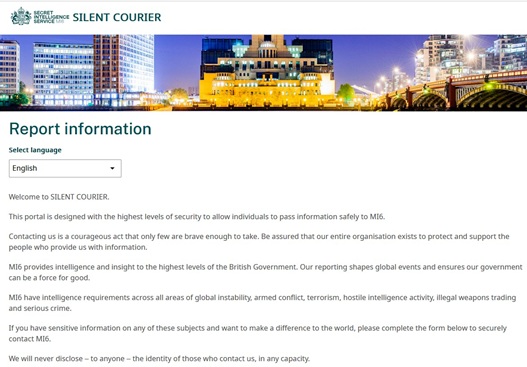
Britain’s Secret Intelligence Service (MI6) unveiled on the 19th September 2025 a dark web portal designed to lure potential informants from hostile regimes.

MI6 reveals ‘Silent Courier’ dark web portal upgrade it hopes will help it recruit new spies

Dubbed “Silent Courier” the platform aims to provide a secure channel for individuals worldwide to share sensitive information without fear of detection.

MI6 (SIS) Silent Courier

As cyber threats proliferate, the initiative underscores the agency’s pivot towards anonymous online communications while preserving its storied tradition of clandestine face-to-face operations.

This upgrade reflects MI6’s ongoing efforts to recruit spies, particularly in Russia and other high-risk areas amid rising global tensions.

The portal’s launch coincides with instructional videos released on MI6’s newly established YouTube channel, available in eight languages.

MI6 – Securely Contacting MI6 – Introducing SILENT COURIER

These resources guide users on accessing the site safely, highlighting the blend of cutting-edge technology and practical tradecraft.

Yet, at the heart of this development lies a critical question. In an era of sophisticated surveillance, is Tor the anonymity network powering the dark web truly secure ?

How to Access MI6 Silent Courier

The new “Silent Courier” is accessible exclusively via a .onion address https://mi6govukbfxe5pzxqw3otzd2t4nhi7v6x4dljwba3jmsczozcolx2vqd.onion portal is hosted on the Tor network, enabling users to connect without revealing their IP addresses or locations.

Step-by-Step Guide to Access Tor (The Onion Router)
  1. Download Tor Browser:
    • Visit the official Tor Project
    • Select the Tor Browser download for your operating system (Windows, macOS, Linux, or Android; iOS users can use third-party apps like Onion Browser).
    • Choose the latest version (e.g., Tor Browser 14.5.7 as of 19th September 2025) and your preferred language. Avoid unofficial sources to prevent malware.
  2. Install Tor Browser:
    • Run the downloaded installer and follow the prompts. It’s portable, so no deep system changes are required.
    • For security, install on a clean, updated device free of malware. MI6 recommends a freshly installed browser to avoid tracking.
  3. Launch Tor Browser:
    • Open the Tor Browser application. It looks like a modified Firefox browser, as it’s built on Firefox’s framework.
    • On first launch, click “Connect” to join the Tor network. This routes your traffic through three relays (entry, middle, exit) with layered encryption.
  4. Accessing a .onion Site (e.g., Silent Courier):

Is Tor Secure?

Tor, short for The Onion Router, is a free open-source network that routes internet traffic through multiple volunteer-operated relays, layering encryption like an onion’s peels to obscure origins.

Launched in 2002 by the US Naval Research Laboratory, Tor has become the backbone of the dark web, shielding journalists, activists, and dissidents from oppressive regimes.

But is Tor secure? The short answer is a qualified yes—for most users, it offers robust protection against casual surveillance and basic tracking. Its multi-hop architecture makes it exceedingly difficult for eavesdroppers to correlate entry and exit points, thwarting mass data collection by ISPs or governments. Independent audits, such as those by the Tor Project, consistently affirm its cryptographic strength, employing protocols like Diffie-Hellman key exchange and AES-256 encryption.

Yet, Tor is not impenetrable. Vulnerabilities arise from user error: misconfigurations, JavaScript-enabled browsers, or reusing identifiable details can de-anonymise individuals.

State actors, including the NSA, MI6 and FSB, have exploited “traffic confirmation attacks” by controlling both entry and exit nodes, as revealed in Edward Snowden’s leaks.

Moreover, Tor’s public bridges and directory authorities can be targeted and malware on a user’s device bypasses the network entirely.

Nonetheless, experts caution that no tool is fool proof as Tor excels at evasion but demands vigilance. As cybersecurity experts say, “Tor hides your path, but not your destination if you’re careless.”

Any communication using the internet involves risk: the best method to contact us depends on your personal situation and environment. Data submitted on this website is secured to the highest standard but internet browsing activity, including visits to this website, can be monitored by most hostile governments.

You can decrease this risk by:

  • Using the Tor browser or a virtual private network (VPN) to increase your privacy.
  • If using a VPN (especially in a hostile country), considering carefully the VPN provider that you choose. Do not enter any data linked to your own identity when setting up the VPN.
  • Using a device which is not registered to you.
  • Ensuring your internet browser is updated.
  • Creating a free new email address or social media account for us to reply to. Do not use a name, phone number or other data linked to your real identity when creating this account.
  • Contacting us from outside your country if you are able to travel.
MI6 (SIS) – “Silent Courier”

Is the Dark Web (Tor) Secure ? No but its better than nothing !

We support the important work of the United Kingdom Intelligence Community (UKIC) including MI5 and MI6.

Check out our articles on National Security Online Information Team, Policing by Consent, Are the Police for Hire ?, Police Impartiality, Police Public Confidence and Engagement, Police Professional Standards Department, IOPC, Crime Reporting, What is a Police and Crime Commissioner ?, Sussex Police, Policing, Police News, Two Tiered Policing, Thought Police, Police Digital Service, Wasting Police Time, R v Sussex Justices and the highly questionable Sussex Family Justice Board.


The Ministry of Injustice is not the Ministry of Justice nor is it affiliated in any way with the justice system, legal profession, police or any other law enforcement agencies.


Latest Articles


Most Popular


You should always seek formal legal advice from a qualified and reputable lawyer (solicitor or barrister).

There are a number of links to Free and Paid For Legal Resources and Legal Organisations on the Free Legal Advice , Legal Aid and Pro Bono pages.

Categories
Law Police

Police Misconduct Hearings

Across the United Kingdom, police forces strive to maintain public trust by upholding high standards of professionalism and integrity. A key mechanism for achieving this is the misconduct hearing process designed to address allegations of misconduct or gross misconduct by police officers and staff.

These hearings, detailed on police websites such as the Sussex Police misconduct hearings page, provide a transparent framework for accountability.

This article explores the purpose, structure, and public accessibility of police misconduct hearings across UK forces by highlighting their role in fostering trust and how the public can engage with the process.

Purpose and Structure of Misconduct Hearings

Misconduct hearings are convened when there is evidence that a police officer or staff member has breached the Standards of Professional Behaviour, a code governing police conduct detailed in The Police (Conduct) Regulations 2008.

These standards encompass principles such as honesty, integrity, respect, and the responsible use of authority. Misconduct hearings address less severe breaches, while gross misconduct hearings tackle actions serious enough to potentially warrant dismissal.

The process ensures allegations are thoroughly investigated, with the officer or staff member given an opportunity to explain their actions. Hearings are typically chaired by a senior police officer, such as a Chief Constable or Assistant Chief Constable (a requirement in many forces since May 2024 – The Police (Conduct) (Amendment) Regulations 2024), and include independent panel members, often with a legally qualified person to ensure impartiality.

The panel reviews evidence, hears from witnesses, and determines whether misconduct has occurred, with outcomes ranging from written warnings to dismissal without notice.

Transparency and Public Access

Transparency is a cornerstone of public confidence in UK policing.

Since the 1st May 2015, gross misconduct hearings for police officers are required to be held in public, unless there’s a compelling reason to exclude the public, a significant change brought about by the Police (Conduct) (Amendment) Regulations 2015 to improve transparency and public confidence in the police disciplinary system.

This openness allows the public to scrutinise how police forces handle allegations, reinforcing accountability. However, the Chair of a hearing may hold parts or all of a hearing in private if sensitive issues, such as national security, operational tactics, or personal confidentiality, are involved.

In such cases, the public may be temporarily excluded to ensure fairness and protect sensitive information, but these decisions are made carefully to balance transparency with operational needs. The commitment to public access demonstrates that police forces take breaches of conduct seriously and are willing to be held accountable.

How the Public Can Attend

Public attendance at misconduct hearings is actively encouraged across UK police forces, reflecting their commitment to openness. Members of the public aged 18 or over can attend as observers, though they cannot participate in the proceedings. The process for attending varies slightly between forces but generally involves registering in advance, often through an online form or by contacting the force’s Professional Standards Department.

For example, Sussex Police provides a dedicated section on their website listing upcoming hearings, including the officer’s name, hearing dates, and registration details.

Date(s): 15 – 19 September 2025

Time: 10:00

Location: Sussex Police Headquarters, Church Lane, Lewes, BN7 2DZ

It is alleged that PS Day, who was based at Brighton, sexually harassed a subordinate member of staff. If proved this matter would amount to gross misconduct.

The allegation amounts to a breach of the Standards of Professional Behaviour relating to (a) Authority, respect and courtesy; and (b) Discreditable conduct.

Public notification of misconduct hearing – Former PS Day – Sussex Police

Places are allocated on a first-come, first-served basis, with priority often given to complainants, other interested parties, and representatives of the Independent Office for Police Conduct (IOPC).

The media are also allocated seats to ensure public reporting, further enhancing transparency.

Practical Considerations for Attendees

To attend a hearing, prospective attendees should check their local police force’s website for details of upcoming hearings and registration processes. Forces typically publish hearing details at least five days in advance, though short-notice cancellations can occur due to legal or operational reasons. Attendees are advised to confirm arrangements with the force, as notifications of cancellations may not always be possible.

Most forces, like Sussex Police, note that they cannot cover travel or other expenses for attendees. Accessibility is prioritised, with venues chosen to accommodate attendees where possible, though public parking and refreshments are not always available. Attendees must adhere to conditions set by the Chair, such as prohibitions on recording or broadcasting to maintain the integrity of the process. Texting or using social media may be permitted unless specific restrictions are imposed.

Check out our articles on Police Professional Standards, Policing by Consent, Police Impartiality, Police Surveillance, Are the Police for Hire ?, Independent Office for Police Conduct (IOPC),Police Public Confidence and Engagement, Crime Reporting, What is a Police and Crime Commissioner ?, Sussex Police, Policing, Police News, Two Tiered Policing, Thought Police, Wasting Police Time, Police Community Support Officers (PCSO), Met Police, Chief Constable Jo Shiner, R v Sussex Justices and the highly questionable Sussex Family Justice Board.


The Ministry of Injustice is not the Ministry of Justice nor is it affiliated in any way with the justice system, legal profession, police or any other law enforcement agencies.


Latest Articles


Most Popular


You should always seek formal legal advice from a qualified and reputable lawyer (solicitor or barrister).

There are a number of links to Free and Paid For Legal Resources and Legal Organisations on the Free Legal Advice , Legal Aid and Pro Bono pages.
Categories
Criminal Justice Law Legal Analysis Police

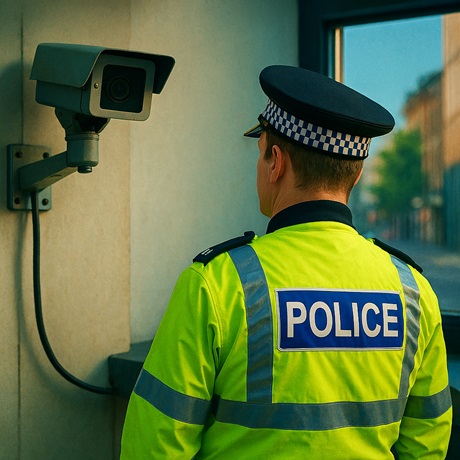
Police Surveillance

The case of R v Sutherland & Others [2002] EW Misc 1 (EWCC) stands as a seminal case that highlights the critical importance of transparency in criminal investigations and the protection of defendants’ rights to a fair trial under Article 6 of the Human Rights Act 1998.

This high-profile murder trial collapsed due to improper police conduct, leaving a lasting impact on the application of the Criminal Procedure and Investigations Act 1996 (CPIA) and the Regulation of Investigatory Powers Act 2000 (RIPA).

The case serves as a stark reminder of the boundaries of lawful surveillance and the necessity of proper disclosure in criminal proceedings.

Background of the Case

The case involved Robert Sutherland and four co-defendants, charged with murder and conspiracy to murder following a fatal incident in the Midlands.

The prosecution’s case hinged on evidence obtained through covert surveillance, including audio recordings made at Grantham and Sleaford police stations.

However, it was revealed that the police had secretly recorded privileged conversations between the defendants and their legal advisors, violating the defendants’ right to confidential legal consultation.

This misconduct led to an application to stay the proceedings on the grounds of abuse of process, arguing that the surveillance had fatally undermined the trial’s fairness.

The High Court judge agreed, ruling that the police had “made a mockery of the police caution” and “undermined the statutory right of a defendant to confer with a solicitor in private.” As a result, the case was dismissed, and all defendants were acquitted.

Impact on Disclosure Obligations

R v Sutherland & Others [2002] significantly clarified disclosure obligations under the CPIA 1996. The Act requires the prosecution to disclose all material that might undermine their case or assist the defence.

The case established that even non-incriminating surveillance evidence, such as recordings yielding no useful evidence, must be disclosed. The court emphasised that the existence of surveillance itself is material, as it may support defence arguments questioning the investigation’s thoroughness or integrity.

For example, extensive surveillance producing no incriminating results could strengthen a claim of innocence. This ruling has shaped how prosecution teams manage evidence, stressing meticulous record-keeping and transparency to ensure fairness.

Implications for Surveillance Practices

The case also exposed serious issues with police surveillance under RIPA 2000, which governs covert investigative techniques.

The unauthorised recording of privileged communications breached RIPA’s requirements for lawful, proportionate, and authorised surveillance.

The court’s strong condemnation highlighted the risks of overreach in surveillance operations and their potential to derail prosecutions.

This aspect of the case has led to increased scrutiny of police practices and reinforced the importance of independent oversight, such as by Surveillance Commissioners, to ensure compliance with RIPA.

Directed Surveillance Authority under the Regulation of Investigatory Powers Act 2000

The Regulation of Investigatory Powers Act 2000 (RIPA) provides the legal framework for authorising directed surveillance in the UK, which involves covert monitoring of individuals’ activities in non-intrusive settings, such as public places, to gather intelligence for investigations.

Directed Surveillance Authority (DSA) under RIPA requires that such operations be necessary, proportionate, and approved by a designated senior officer within a public authority, such as the police or intelligence services.

The DSA ensures compliance with strict criteria to prevent abuse, safeguarding individuals’ privacy while enabling lawful investigations. Oversight by the Investigatory Powers Commissioner’s Office (IPCO) ensures adherence to RIPA’s guidelines, with failures to comply, as seen in cases like R v Sutherland & Others [2002], potentially leading to evidence being deemed inadmissible and undermining prosecutions.

As per the requirements of R v SUTHERLAND, if the task has a RIPA / DSA authorisation, NPAS will require a full copy of the DSA authorisation detailing exactly what is (and isn’t) authorised and the means by which it can be obtained, details of the authorising officer, date authorised and the review / expiry dates before that tasking can be actioned.

National Police Air Service – NPAS – OPERATIONS CENTRE FORM – REQUEST FOR PRE-PLANNED AIR SUPPORT

Broader Consequences and Legacy

The collapse of the trial raised concerns about public confidence in the criminal justice system. The acquittal, while legally justified, left the victim’s family feeling “completely let down,” underscoring the human cost of investigative failures.

The case has been widely cited in discussions about the ethical limits of covert operations and the need for robust training for law enforcement.

The Signature Brand have integrated the case into training on disclosure and covert tactics, highlighting its practical implications. For defence lawyers, it provides a powerful tool to challenge prosecution cases by scrutinising disclosure completeness, particularly in surveillance-heavy cases.

Conclusion

R v Sutherland & Others [2002] remains a cornerstone of UK case law, reinforcing the principles of fairness, transparency, and accountability in criminal proceedings.

Its legacy continues to influence how surveillance evidence and disclosure are handled, ensuring defendants’ rights are protected while upholding judicial integrity. The case serves as a cautionary tale that procedural missteps, even if well-intentioned, can have profound consequences, highlighting the delicate balance between effective policing and adherence to the rule of law.

Check out our articles on Policing by Consent, Are the Police for Hire ?, Police Impartiality, Police Professional Standards, Independent Office for Police Conduct (IOPC),Police Public Confidence and Engagement, Crime Reporting, What is a Police and Crime Commissioner ?, Sussex Police, Policing, Police News, Two Tiered Policing, Thought Police, Wasting Police Time, Police Community Support Officers (PCSO), Met Police, Free Speech Union, Chief Constable Jo Shiner, R v Sussex Justices and the highly questionable Sussex Family Justice Board.


The Ministry of Injustice is not the Ministry of Justice nor is it affiliated in any way with the justice system, legal profession, police or any other law enforcement agencies.


Latest Articles


Most Popular


You should always seek formal legal advice from a qualified and reputable lawyer (solicitor or barrister).

There are a number of links to Free and Paid For Legal Resources and Legal Organisations on the Free Legal Advice , Legal Aid and Pro Bono pages.
Categories
Law Legal Analysis Police

Are the Police for Hire ?

A chief officer of police may, at the request of any individual or entity, provide special police services at specific premises or within any locality in the force’s jurisdiction, subject to charges set by the police authority on a scale determined by that authority. So yes the Police are available for hire !

Police forces have historically recovered costs for “special police services”. These services include policing events like football matches, concerts, or private functions where organisers request additional police presence beyond standard public duties.

Drawing on key documents from UK Parliament, National Police Chiefs’ Council (NPCC) and HM Revenue & Customs (HMRC), this article explores the legal framework, implications, and controversies surrounding charging for police services.

Legislative Framework: The Foundation of Charging

The legal basis for charging for police services is rooted in Section 25 of the Police Act 1996 which allows police authorities to provide “special police services” at the request of any person, subject to payment. These services encompass additional policing beyond core public duties, such as securing commercial events like football matches, concerts, or private functions.

Section 26 of the Police Act 1996 applies similar requirements to the provision of police services overseas.

The 2008-09 UK Parliament report by the Home Affairs Committee details how this provision enables forces to recover costs for deploying officers, vehicles, and equipment.

Section 25, however, is not prescriptive about which events should incur charges or how fees should be calculated, leading to significant variation across forces. The Parliament report highlights cases where event organisers faced unexpected costs due to inconsistent application.

To address this, Section 15 of the Police Reform and Social Responsibility Act 2011 later clarified the role of Police and Crime Commissioners (PCCs) in overseeing charging policies, ensuring greater accountability.

NPCC Guidelines: Standardising the Approach

The NPCC’s National Policing Guidelines on Charging for Police Services aim to standardise practices across England and Wales. The guidelines categorise chargeable services into three types: special police services (e.g., policing commercial events like music festivals), mutual aid (where one force assists another), and additional services (e.g., training or consultancy for external organisations).

Charges are based on the full economic cost, including officer salaries, overtime, vehicles, and administrative overheads.

For example, policing a large-scale event like Glastonbury Festival could cost organisers tens of thousands of pounds, calculated by officer hours and resources deployed.

The guidelines emphasise transparency, requiring forces to publish charging rates and consult with event organisers in advance. They also allow exemptions for non-commercial events, such as charitable fundraisers, if they serve the public interest.

However, the discretion granted to individual forces can lead to inconsistencies. A small community group organising a charity run might face charges for road closures in one force area but not another, raising concerns about fairness.

Special Police Services Costs

As an example, in the Fees and Charges for the Supply of Goods & Services 2025 document published by Sussex Police, on page 14 they publish the costs for special police services.

  SurreySussex
Uniform and CID 2025 Rates Hourly RatesDaily RatesHourly RatesDaily Rates
  ££££
  Chief SuperintendentNORMAL165.911,202.85164.911,195.58
BANK HOLIDAYN/AN/AN/AN/A
BH < 8 days’ noticeN/AN/AN/AN/A
  SuperintendentNORMAL144.541,047.93143.541,040.66
BANK HOLIDAYN/AN/AN/AN/A
BH < 8 days’ noticeN/AN/AN/AN/A
  Chief InspectorNORMAL117.12849.08116.11841.81
BANK HOLIDAYN/AN/AN/AN/A
BH < 8 days’ noticeN/AN/AN/AN/A
  InspectorNORMAL110.47800.94109.47793.67
BANK HOLIDAYN/AN/AN/AN/A
BH < 8 days’ noticeN/AN/AN/AN/A
  SergeantNORMAL114.34828.99113.34821.72
BANK HOLIDAY139.541,011.65138.541,004.38
BH < 8 days’ notice181.841,318.36180.841,311.09
  ConstableNORMAL91.10660.4590.09653.18
BANK HOLIDAY111.33807.15110.33799.88
BH < 8 days’ notice143.721,041.93142.711,034.66
Charging of special policing services provided at commercial events

Please refer to the Fees and Charges for the Supply of Goods & Services 2025 for all fees and charges for special police services.

Sussex Police also publish an Income Generation and Charging Policy.

This policy is required to ensure there is a consistent and transparent method for calculating the appropriate fees for the use of police services and/or goods that are provided by Sussex Police to outside agencies so that the ‘users’ of the service have a clear understanding of how the charges have been calculated.

Income Generation and Charging Policy (490/2024) – Sussex Police

The amount of money Brighton and Hove Albion paid to Sussex Police for special police services from 2015 to 2024 was obtained via a Freedom of Information request by Richard Lemmer.

Further to a FOI request about the provision of Metropolitan Police officers under private hire arrangements such as those specified under S.25 of the Police Act 1996, The Met Police Published the response Private hire or provision of officers under special services provisions of Police Act 1996

Football clubs are currently only legally obliged to pay for the policing on their “footprint”, usually inside the stadium and surrounding car parks; the provision of “consequential policing” outside a football match, for example at a railway station or in the city centre, is currently the responsibility of the police and is provided at their discretion and at a cost to them.

The Cost of Policing Football Matches – Home Affairs Committee

HMRC and VAT

HMRC’s VATGPB5270 guidance clarifies the tax implications of charging for police services. Core policing duties, such as responding to emergencies or maintaining public order, are classified as non-business activities and exempt from VAT, reflecting their status as statutory obligations.

In contrast, special police services provided to commercial entities, such as policing a corporate event, are considered business activities and subject to VAT.

This ensures forces recover costs without generating profit. For example, a private company hiring police for a product launch would pay the full cost plus VAT, while a community event might qualify for an exemption if deemed non-commercial.

This distinction aligns with HMRC’s broader aim to balance fiscal responsibility with the principle that core policing remains a public good.

However, the complexity of determining which services are VAT-liable could create administrative burdens for forces, particularly when dealing with mixed-purpose events.

Implications and Controversies

The “police for hire” model, grounded in the Police Act 1996 and refined by the NPCC guidelines, reflects a pragmatic response to financial pressures. Yet, it raises profound questions about the nature of policing in a resource-constrained era.

Charging for police services has practical benefits but also significant drawbacks. Charging allows forces to prioritise public safety while recouping costs from those who directly benefit, such as commercial event organisers.

However, critics argue that this practice risks creating a two-tier policing system, where wealthier organisations or individuals can afford enhanced protection, while smaller groups struggle.

This raises ethical concerns about whether access to police services is being commodified, undermining the principle of policing by consent established by Sir Robert Peel. Moreover, inconsistent application of charges across forces can erode public trust.

The NPCC guidelines aim to mitigate this, but their reliance on local discretion leaves room for variation.

Check out our articles on Policing by Consent, Police Impartiality, Police Public Confidence and Engagement, Police Professional Standards Department, IOPC, Crime Reporting, What is a Police and Crime Commissioner ?, Policing, Police News, Two Tiered Policing, Thought Police, Police Digital Service, Knowledge Hub – Police Digital Service, What is the National Police Coordination Centre (NPoCC) ?, Wasting Police Time, Police Community Support Officers (PCSO), Met Police, Sussex Police, Chief Constable Jo Shiner, R v Sussex Justices and the highly questionable Sussex Family Justice Board.


The Ministry of Injustice is not the Ministry of Justice nor is it affiliated in any way with the justice system, legal profession, police or any other law enforcement agencies.


Latest Articles


Most Popular


You should always seek formal legal advice from a qualified and reputable lawyer (solicitor or barrister).

There are a number of links to Free and Paid For Legal Resources and Legal Organisations on the Free Legal Advice , Legal Aid and Pro Bono pages.
Categories
Police

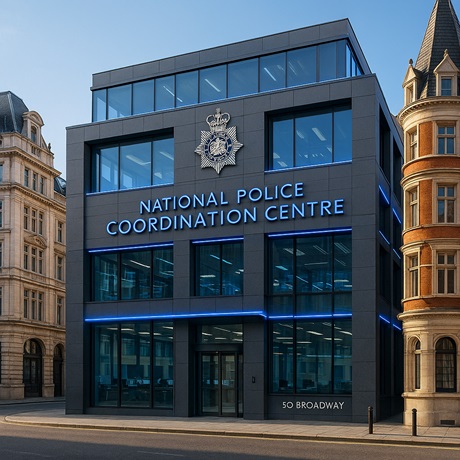
What is the National Police Coordination Centre (NPoCC) ?

The National Police Coordination Centre (NPoCC) is a UK national unit that supports police forces across the United Kingdom, Crown Dependencies, and British Overseas Territories by coordinating the deployment of police officers and staff during large-scale events, operations, and national crises, such as civil emergencies, major protests, or significant public events.

It ensures effective mobilisation of specialist resources and mutual aid across forces, maintains national capacity assessments for over 200 specialist skills, and provides strategic intelligence and briefing support, particularly for protest-related threats.

NPoCC also represents UK policing at government-level meetings, including the Civil Contingencies Committee (COBR), and supports operations like disaster victim identification and international policing efforts.

The unit is composed of officers and staff seconded from UK police forces, organised into two teams: Operations and Strategic Intelligence and Briefing (SIB). Assistant Chief Constable Mark Williams serves as the Strategic Lead and National Mobilisation Coordinator as of January 2025.

Location

NPoCC is based at 50 Broadway, London, SW1H 0BL. The National Police Chiefs’ Council (NPCC) shares the same building as the National Police Coordination Centre (NPoCC).

The office was officially opened in April 2024 by The Duke of Gloucester. The Duke of Gloucester was welcomed by NPCC Chair Chief Constable Gavin Stephens, and Assistant Chief Constable Mark Williams of the National Police Coordination Centre (NPoCC). Also in attendance was the Rt Hon Chris Philp MP, who was the Minister for Crime, Policing and Fire.

It relocated to this site following a lease agreement approved in 2023, after previously being housed at 10 Victoria Street, London, under a temporary extension of occupancy. The relocation was funded by NPoCC and the National Police Chiefs’ Council (NPCC), with no liability to the Mayor’s Office for Policing and Crime (MOPAC).

Relevant Legislation

NPoCC operates under the following legal frameworks:

  • Section 22A of the Police Act 1996: This legislation underpins the NPoCC’s operations through a collaboration agreement signed by Chief Constables, Police and Crime Commissioners (PCCs), and non-Home Office force equivalents. It facilitates the funding and coordination of NPoCC by contributions from all UK police forces and enables the NPCC, which NPoCC reports to, to function as a national coordination body.
  • Public Contracts Regulations 2015 (revoked on 24 February 2025 by the Procurement Act 2023): For contracts exceeding £213,477, NPoCC’s procurement activities, such as those related to its relocation and fit-out costs, must comply with these regulations. The 2023 relocation to 50 Broadway adhered to these rules, using existing Metropolitan Police Service (MPS) frameworks for construction and design services.
  • Police Reform and Social Responsibility Act 2011: This act defines the roles of Police and Crime Commissioners, who, along with MOPAC and the Common Council of the City of London, are part of the policing bodies contributing to NPoCC’s governance and funding.

Budget and Funding

The National Police Coordination Centre (NPoCC) does not have a publicly disclosed specific budget figure for 2025 in available records.

Its funding is derived from contributions by all UK police forces under a Section 22A Police Act 1996 collaboration agreement, managed through the National Police Chiefs’ Council (NPCC). The exact amount allocated to NPoCC is not itemised separately in public documents, as it forms part of broader NPCC and police funding streams.

For context, the overall police funding settlement for England and Wales in 2025-26 is up to £19.6 billion, an increase of £1.1 billion from 2024-25, with £17.5 billion allocated to Police and Crime Commissioners (PCCs) and including £1 billion for national policing priorities, which encompasses NPoCC’s operations.

However, the specific portion for NPoCC is not detailed, as its budget is embedded within these contributions and NPCC operational costs. Additional costs, such as the 2023 relocation to 50 Broadway, London, were covered by NPoCC and NPCC without liability to the Mayor’s Office for Policing and Crime (MOPAC), indicating shared funding mechanisms.

Without precise figures, the NPoCC’s budget is likely a small fraction of the national priorities funding, tailored to support its coordination, intelligence, and mobilisation activities across UK forces.

Check out our articles on Policing by Consent, Police Impartiality, Are the Police for Hire ?, Police Surveillance, Police Public Confidence and Engagement, Police Professional Standards Department, Are the Police for Hire ?, IOPC, Crime Reporting, What is a Police and Crime Commissioner ?, Policing, Police News, Two Tiered Policing, Thought Police, Police Digital Service, Knowledge Hub – Police Digital Service, Wasting Police Time, Police Community Support Officers (PCSO), Met Police, Sussex Police, Chief Constable Jo Shiner, R v Sussex Justices and the highly questionable Sussex Family Justice Board.


The Ministry of Injustice is not the Ministry of Justice nor is it affiliated in any way with the justice system, legal profession, police or any other law enforcement agencies.


Latest Articles


Most Popular


You should always seek formal legal advice from a qualified and reputable lawyer (solicitor or barrister).

There are a number of links to Free and Paid For Legal Resources and Legal Organisations on the Free Legal Advice , Legal Aid and Pro Bono pages.
Categories
Law Legal Analysis Police

Sussex Police and Brighton Pride 2025

Brighton Pride, officially Brighton & Hove Pride, is often cited as the UK’s largest and most popular Pride festival, drawing significant crowds and generating substantial economic impact.

Sources indicate it attracts over 300,000 attendees, with some estimates as high as 500,000 over the Pride weekend, contributing around £30.5 million to the city’s economy. The event features a major parade, a festival in Preston Park, and various parties, making it a cornerstone of Brighton’s cultural calendar.

Pride On The Park supported by Hayu is the official Brighton & Hove Pride fundraiser for our local LGBTQIA+ community groups. A glittering and truly inclusive community celebration that delivers an unforgettable day of Pride, it is unique community fundraising event that has enjoyed amazing performances from international stars including Britney Spears, Kylie Minogue, Dua Lipa, Ray,  Nile Rogers & Chic, Clean Bandit, Pet Shop Boys, Grace Jones, Years and Years, Sister Sledge, Carly Rae Jepsen, Fatboy Slim, Paloma Faith, The Human League,  Ella Elre, Jessie J amongst others.

The UK’s Biggest LGBTQ Pride Festival – Brighton Pride

Brighton Pride this year is being held between the 2nd and 3rd August 2025. Mariah Carey is the headline act for Brighton & Hove Pride 2025, performing at Pride On The Park on Saturday 2nd August. The Sugababes will headline on Sunday 3rd August.

Should the NHS take part in Pride (LGBTQIA+) Events ?

Police and Impartiality at Pride

Mr Justice Linden in Smith v Chief Constable of Northumbria Police [2025] EWHC 1805 (Admin) ruled that Northumbria Police breached their duty of impartiality by allowing uniformed officers to actively participate in the Newcastle Pride in the City 2024 event, displaying symbols like the Progress Pride flag.

The court found that such participation gave the impression of endorsing a contested ideological position—specifically, gender ideology—potentially undermining public trust in the police’s ability to act impartially, particularly in disputes involving gender-critical individuals and transgender rights supporters.

Sussex Police and Brighton Pride 2025

Sussex Police Media Team were contacted on the 31st July 2025. The Sussex Police’s responses are in bold :-

  1. Has the Chief Constable/Sussex Police decided if they will allow uniformed  officers to actively take part in Brighton Pride on the 2nd – 3rd AUGUST 2025 ?

A decision was taken in June that Sussex Police would not take part in the parade in 2025.

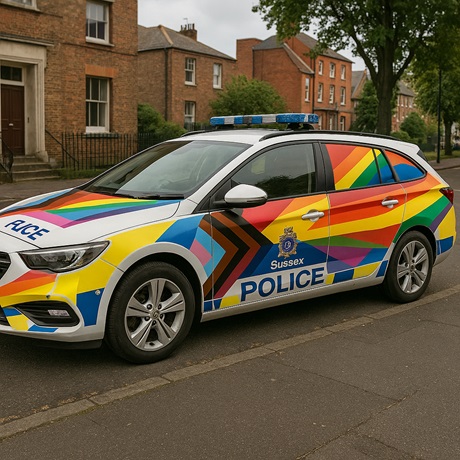
  1. Will the Sussex Police Pride Car and other Sussex Police vehicles have the PRIDE and other symbols removed ? 

We have a police vehicle which has LGBTQ+ inclusion livery. This is a response vehicle used all year round within the Brighton division. We cannot say at this point whether it will be operational at the weekend.

  1. Has any guidance been issued to officers in relation to PRIDE Brighton 2025 and other events ? For example,  Sussex police officers can only attend Brighton Pride 2025 events on a voluntary basis and not in uniform unless policing the event.

Sussex Police is not taking part in the parade this year.

Check out our articles on Sussex Police, Policing by Consent, Police Impartiality, Police Public Confidence and Engagement, Police Professional Standards Department, IOPC, Crime Reporting, What is a Police and Crime Commissioner ?, Policing, Police News, Two Tiered Policing, Are the Police for Hire ?, Thought Police, Police Digital Service, Knowledge Hub – Police Digital Service, Wasting Police Time, Police Community Support Officers (PCSO), Met Police, Chief Constable Jo Shiner, R v Sussex Justices and the highly questionable Sussex Family Justice Board.


The Ministry of Injustice is not the Ministry of Justice nor is it affiliated in any way with the justice system, legal profession, police or any other law enforcement agencies.


Latest Articles


Most Popular


You should always seek formal legal advice from a qualified and reputable lawyer (solicitor or barrister).

There are a number of links to Free and Paid For Legal Resources and Legal Organisations on the Free Legal Advice , Legal Aid and Pro Bono pages.
Categories
Police

Sussex Police – Crime Investigation Requires Improvement

The Police Effectiveness, Efficiency, and Legitimacy (PEEL) assessment for Sussex Police, conducted by His Majesty’s Inspectorate of Constabulary and Fire & Rescue Services (HMICFRS) for 2023-2025, evaluated the force’s performance across various policing functions.

The report highlights both strengths and areas for improvement, grading Sussex Police on key areas such as preventing crime, protecting vulnerable people, leadership, and resource management. Below is a summary of the key findings and recommendations.

Sussex Police PEEL Assessment – 2023–2025 24th July 2025

HMICFRS has graded Sussex Police’s performance across nine areas. They found the force was ‘good’ in one area, ‘adequate’ in seven areas and ‘required improvement’ in one area.

Read the Sussex Police Report Online or Download below.

The chief of Sussex Police (Jo Shiner KPM) said she is ‘proud of the positive changes’ that have been highlighted in the latest inspection report – but the force has been told it still needs to improve the quality of its crime investigations.

Sussex Police is mostly ‘adequate’ but force told it needs to improve the quality of its crime investigations – Sussex World

Key Findings

  1. Preventing and Deterring Crime
    • Sussex Police demonstrates a reasonable performance in preventing crime but requires improvement in its approach to tackling anti-social behavior (ASB). The force has effective processes for identifying crime trends and allocating resources but struggles with consistent community engagement to prevent ASB.
    • The report notes that the force’s neighborhood policing teams are stretched, impacting their ability to proactively address local issues.
  2. Protecting Vulnerable People
    • The force performs adequately in safeguarding vulnerable individuals, including victims of domestic abuse and children at risk. However, response times to incidents involving vulnerability are inconsistent, and there are delays in risk assessments for some cases.
    • Sussex Police has improved its response to missing persons but needs better training for staff to identify hidden vulnerabilities effectively.
  3. Investigating Crime
    • Sussex Police shows mixed performance in crime investigation. While serious crimes like homicide and sexual offenses are generally well-handled, lower-level crimes, such as theft, often lack thorough investigation due to resource constraints.
    • The force has made progress in reducing backlogs of digital forensic examinations, but further investment is needed to maintain this improvement.
    • Overall Sussex Police Investigating Crime Requires improvement
  4. Responding to the Public
    • The force’s call-handling performance is a concern, with longer-than-average wait times for non-emergency calls. Emergency (999) response times are within acceptable standards, but the force struggles to meet demand during peak periods.
    • Sussex Police has introduced initiatives to improve call management, but these are yet to yield consistent results.
  5. Leadership and Workforce
    • Leadership within Sussex Police is rated as good, with clear efforts to promote a positive culture and support staff well-being. The force has robust processes for professional development and diversity training.
    • However, workforce morale is affected by high workloads, particularly in response policing teams, and there is a need for better succession planning to address staffing gaps.
  6. Efficiency and Resource Management
    • Sussex Police is graded as requiring improvement in efficiency. While the force has made strides in financial planning, it faces challenges in optimising resources due to increasing demand and limited budgets.
    • The report praises the force’s collaboration with other agencies, such as local councils, but notes that partnerships could be better leveraged to address complex issues like ASB and youth crime.
  7. Public Trust and Legitimacy
    • The force performs well in maintaining public trust, with strong community outreach programs and transparent complaint-handling processes. However, stop-and-search practices require improvement to ensure fairness and proportionality, particularly for minority groups.
    • Sussex Police has made efforts to address disproportionality in policing but needs to enhance data analysis to monitor outcomes effectively.

Areas for Improvement

HMICFRS identified several areas where Sussex Police must improve:

  • Anti-Social Behavior: Develop a more proactive strategy to tackle ASB, including better engagement with communities and partnerships.
  • Call Handling: Invest in technology and training to reduce non-emergency call wait times and improve demand management.
  • Investigation Quality: Ensure consistent standards for investigating lower-level crimes and reduce delays in digital forensics.
  • Stop-and-Search: Enhance oversight and training to ensure stop-and-search is conducted fairly and proportionately.
  • Workforce Support: Address workload pressures and improve succession planning to maintain operational resilience.

Positive Highlights

  • Sussex Police excels in leadership development and fostering a positive workplace culture.
  • The force’s collaboration with other agencies, such as in tackling serious organised crime, is a strength.
  • Improvements in handling missing persons cases and reducing digital forensic backlogs show progress in critical areas.

Other Sussex Police Articles

Chief Constable Jo Shiner Sussex Police
Sussex Police
National Stalking Awareness Week – Sussex Police
Sussex Police, the King and High Sheriff

Conclusion

The 2023-2025 PEEL assessment paints a mixed picture of Sussex Police’s performance. While the force demonstrates strengths in leadership, community trust, and tackling serious crime, it faces challenges in resource allocation, call handling, and addressing anti-social behaviour.

HMICFRS recommends that Sussex Police prioritise improvements in these areas to enhance overall effectiveness and public service.

Check out our articles on Sussex Police, Policing by Consent, Police Impartiality, Are the Police for Hire ?, Police Public Confidence and Engagement, Police Professional Standards Department, IOPC, Crime Reporting, What is a Police and Crime Commissioner ?, Policing, Police News, Two Tiered Policing, Thought Police, Police Digital Service, Knowledge Hub – Police Digital Service, Wasting Police Time, Police Community Support Officers (PCSO), Met Police, Chief Constable Jo Shiner, R v Sussex Justices and the highly questionable Sussex Family Justice Board.


The Ministry of Injustice is not the Ministry of Justice nor is it affiliated in any way with the justice system, legal profession, police or any other law enforcement agencies.


Latest Articles


Most Popular


You should always seek formal legal advice from a qualified and reputable lawyer (solicitor or barrister).

There are a number of links to Free and Paid For Legal Resources and Legal Organisations on the Free Legal Advice , Legal Aid and Pro Bono pages.
Categories
Law Police

Police Impartiality

A High Court ruling by Mr Justice Linden KC has determined that Northumbria Police breached their duty of impartiality by allowing uniformed officers to march in a Newcastle Pride parade, displaying symbols like the Progress flag associated with transgender ideology.

The case was brought by Linzi Smith, against the Chief Constable of Northumbria Police (Vanessa Jardine), who argued that the police’s participation compromised their professional oath to act impartially.

The judge ruled that such actions could undermine public trust in the police’s ability to handle disputes fairly, particularly in conflicts involving gender-critical individuals and transgender rights supporters.

This landmark decision may lead to a ban on police marching in Pride parades across the UK and could impact their involvement in other events, such as Remembrance parades or religious festivals, prompting concerns among police chiefs about maintaining impartiality while engaging with communities.

Police officers face being banned from participating in Pride parades after a court ruled that one of Britain’s largest forces breached impartiality by marching at an LGBT+ rights event.

Police face ban from marching in Pride parades after court rules it breaches impartiality – Daily Mail

Legal Framework – The Duty of Impartiality

Mr Justice Linden in his judgment Lindsey Smith, R (on the application of) v The Chief Constable of Northumbria Police. Neutral Citation Number[2025] EWHC 1805 (Admin) Paras 61 to 67 outlines the duty of impartiality for all Police Officers.

By section 29 of the Police Act 1996 every member of a police force maintained for a police area is required, on appointment, to be attested as a constable by making the following declaration before a justice of the peace (see Schedule 4 to the 1996 Act):


‘I………………..of………………..do solemnly and sincerely declare and affirm that I
will well and truly serve the King in the office of constable, with fairness,
integrity, diligence and impartiality, upholding fundamental human rights and according equal respect to all people; and that I will, to the best of my power, cause the peace to be kept and preserved and prevent all offences against people and property; and that while I continue to hold the said office I will, to the best of my skill and knowledge, discharge all the duties thereof faithfully according to law”

The Police Regulations 2003 were made pursuant to, amongst other things, section 50 of the 1996 Act which provides that “the Secretary of State may ..make regulations as to the government, administration and conditions of service of police forces”. In effect, the 2003 Regulations therefore set out the terms and conditions which govern police officers as office holders. The matters to which regulations may relate include,
at section 50(2)(e), “the conduct, efficiency and effectiveness of members of police forces and the maintenance of discipline”. Paragraph 1 of Schedule 1 to the Police Regulations 2003, read with Regulation 6, provides as follows:

“Restrictions on the private life of members of police forces
(1) A member of a police force shall at all times abstain from any activity which is likely to interfere with the impartial discharge of his duties or which is likely to give rise to the impression amongst members of the public that it may so interfere.
(2) A member of a police force shall in particular–
(a) not take any active part in politics;
(b) not belong to any organisation specified or described in a determination of the Secretary of State.”

The Police (Conduct) Regulations 2020 also require that police officers act with impartiality. They were made pursuant to section 50 of the Police Act 1996 and paragraph 29 of Schedule 3 to the Police Reform Act 2002. Regulation 4 provides that the 2020 “Regulations apply where an allegation comes to the attention of an appropriate authority which indicates that the conduct of a police officer may amount to misconduct, gross misconduct or practice requiring improvement”. In broad terms,
the 2020 Regulations require the appropriate authority to decide whether misconduct proceedings should be brought against the officer. Under Regulation 2, “misconduct” includes “a breach of the Standards of Professional Behaviour that is so serious as to justify disciplinary action”. Regulation 5 then provides that “the Standards of Professional Behaviour established are the standards of professional behaviour described in Schedule 2”. Schedule 2 includes the following:


Honesty and Integrity
Police officers are honest, act with integrity and do not compromise or abuse their position.
Equality and Diversity
Police officers act with fairness and impartiality. They do not discriminate
unlawfully or unfairly.
Orders and Instructions
Police officers only give and carry out lawful orders and instructions. Police officers abide by police regulations, force policies and lawful orders.
Discreditable Conduct
Police officers behave in a manner which does not discredit the police service or undermine public confidence in it, whether on or off duty.”

Lindsey Smith, R (on the application of) v The Chief Constable of Northumbria Police. Neutral Citation Number[2025] EWHC 1805 (Admin)Mr Justice Linden

Are the Police Impartial ?

The impartiality of the police in England and Wales is a complex issue, with evidence suggesting both strengths and challenges. The principle of impartiality is central to policing, as outlined in the Peelian Principles, which emphasises policing by consent and fairness.

The College of Policing’s Code of Ethics (2014) explicitly requires officers to act with integrity, impartiality, and respect for all. However, public perception and specific incidents raise questions about consistency.

Data from the 2023/24 Crime Survey for England and Wales shows 56% of respondents had confidence in their local police, but trust varies significantly by demographic. For example, Black respondents (49%) reported lower confidence than White respondents (58%).

High-profile cases, like the 2021 murder of Sarah Everard by a serving police officer and the 2023 Casey Review into the Metropolitan Police, highlighted systemic issues, including institutional racism, misogyny, and bias in stop-and-search practices.

The review found disproportionate stops of Black individuals (2.5 times more likely than White individuals per 1,000 people in 2022/23).

Conversely, oversight mechanisms like the Independent Office for Police Conduct (IOPC) and community scrutiny panels aim to ensure accountability. The IOPC investigated 1,472 complaints in 2022/23, with 23% related to discriminatory behaviour, though only a fraction led to formal misconduct findings.

Police forces also undergo regular inspections by His Majesty’s Inspectorate of Constabulary, which often praises operational fairness but flags inconsistencies in diversity training and community engagement.

Social media reflect polarized views with some users praising local policing efforts, while others cite personal experiences of bias, particularly in urban areas. These anecdotes, while not statistically robust, align with survey trends showing declining trust in the police.

In short, while the legal framework for impartiality exists, systemic issues and public scepticism suggest it’s not universally achieved.

Check out our articles on Policing by Consent, Are the Police for Hire ?, Police Surveillance, Police Public Confidence and Engagement, Police Professional Standards Department, IOPC, Crime Reporting, What is a Police and Crime Commissioner ?, Policing, Police News, Two Tiered Policing, Thought Police, Police Digital Service, Knowledge Hub – Police Digital Service, Wasting Police Time, Police Community Support Officers (PCSO), Met Police, Sussex Police, Chief Constable Jo Shiner, R v Sussex Justices and the highly questionable Sussex Family Justice Board.


The Ministry of Injustice is not the Ministry of Justice nor is it affiliated in any way with the justice system, legal profession, police or any other law enforcement agencies.


Latest Articles


Most Popular


You should always seek formal legal advice from a qualified and reputable lawyer (solicitor or barrister).

There are a number of links to Free and Paid For Legal Resources and Legal Organisations on the Free Legal Advice , Legal Aid and Pro Bono pages.
Categories
Criminal Justice Free Speech Law Legal Analysis Police

Did Bobby Vylan and the BBC break the law at Glastonbury 2025 ?

The performance by Bob Vylan at Glastonbury 2025, where frontman Bobby Vylan (reportedly Pascal Robinson-Foster) led chants of “death, death to the IDF” and “from the river to the sea, Palestine will be free,” has prompted an investigation by Avon and Somerset Police to determine if any criminal offences were committed.

In any investigation by the police, it is vitally important that there should no suggestion of two tier policing or two tier justice.

His Honour Judge Melbourne Inman KC (The Recorder of Birmingham and The High Court Judge that never was) sentenced Lucy Connolly at Birmingham Crown Court to two years and seven months in prison for publishing written material that incited racial hatred.

Can you email a judge such as the Lady Chief Justice of England and Wales about a dishonest judge such as HHJ Melbourne Inman ?

Potential Offenses Under UK Law

  1. Incitement to Racial or Religious Hatred (Public Order Act 1986, Section 18)
    • Description: This section makes it an offense to use threatening, abusive, or insulting words or behaviour with the intent to stir up racial or religious hatred, or where such hatred is likely to be stirred up. The maximum penalty is seven years in prison.
    • Relevance to Bob Vylan: UK Lawyers for Israel (UKLI) have suggested that Bobby Vylan’s chants, particularly “death, death to the IDF,” may breach this section by causing harassment, alarm, or distress and potentially stirring up racial or religious hatred, given the reference to the Israeli Defense Forces (IDF). The phrase “from the river to the sea” is contentious, with some interpreting it as a call for the elimination of Israel, which could be seen as targeting Jewish self-determination or inciting hatred against Jewish people. However, others argue it is a call for Palestinian liberation, and its interpretation depends heavily on context.
    • Analysis: For a conviction, prosecutors must prove intent to stir up hatred or that hatred was likely to result. The performance context—a music festival with a politically charged atmosphere—may complicate proving intent, as artistic expression often enjoys some legal protection. However, the explicit call for “death” to a specific group (the IDF) could be seen as crossing into threatening language, especially if interpreted as targeting Israeli nationals or Jewish people broadly. The lack of immediate violence following the performance might weaken the case for “likelihood” of hatred being stirred up, but public reaction and the broadcast’s reach could be considered aggravating factors.
  2. Incitement to Violence (Common Law or Public Order Act 1986, Section 4)
    • Description: Incitement to violence is an offense under common law or Section 4 of the Public Order Act, which addresses threatening or abusive behaviour intended to cause fear of violence or provoke immediate unlawful violence. The maximum penalty under Section 4 is six months in prison.
    • Relevance to Bob Vylan: Bobby Vylan’s statement, “We are the violent punks, because sometimes you have to get your message across with violence because that is the only language some people speak,” alongside the “death to the IDF” chant, has been cited as potential incitement to violence. Shadow Home Secretary Chris Philp and former Home Secretary Baroness Smith have argued that the chant constitutes incitement, with Philp calling for prosecution.
    • Analysis: The threshold for incitement requires a clear intention to provoke violence and a likelihood of it occurring. The chant’s violent imagery could be interpreted as incitement, particularly in a charged political context. However, the festival setting, where provocative rhetoric is common in punk performances, and the absence of immediate violence may suggest the statement was performative rather than a direct call to action. Bobby Vylan’s broader comments about using violence to communicate could be scrutinised, but artistic expression and political protest often blur legal lines, making prosecution challenging without evidence of specific intent or immediate harm.
  3. Causing Harassment, Alarm, or Distress (Public Order Act 1986, Section 5)
    • Description: This section criminalises threatening or abusive words or behaviour within the hearing or sight of a person likely to be caused harassment, alarm, or distress. It carries a fine as the maximum penalty.
    • Relevance to Bob Vylan: UKLI has claimed that the chant “death, death to the IDF” could breach Section 5 by causing distress to audience members or viewers, particularly those who identify with Israel or the Jewish community.
    • Analysis: This offense has a lower threshold than Section 18, as it does not require intent to stir up hatred, only that the behaviour was threatening or abusive and likely to cause distress. The chant’s explicit call for “death” could meet this threshold, especially given its broadcast to a wide audience. However, the festival context and Bob Vylan’s history of provocative performances (e.g., addressing racism and political issues) might frame the chant as artistic or political expression, potentially protected under free speech principles. The subjective nature of “distress” makes this offense plausible but less severe.
  4. Broadcasting Material Stirring Up Racial Hatred (Public Order Act 1986, Section 22)
    • Description: This section makes it an offense for a broadcaster to transmit material that is likely to stir up racial hatred, particularly if it was reasonably practicable to remove the content before broadcast. The maximum penalty is seven years in prison.
    • Relevance to Bob Vylan and the BBC: The BBC’s live broadcast of Bob Vylan’s performance has been criticised for potentially breaching this section, as the chant was aired without being cut. UKLI and former BBC Director Danny Cohen have argued that the BBC’s failure to intervene constitutes a criminal offense, especially given prior antisemitism training for staff.
    • Analysis: While this offense primarily applies to the BBC, it indirectly implicates Bob Vylan as the source of the content. The BBC issued an on-screen warning about “very strong and discriminatory language” during the livestream, suggesting awareness of the content’s potential impact. However, the decision to continue broadcasting for over 40 minutes before removing the performance from iPlayer could be seen as a failure to exercise due diligence. For Bob Vylan, this offense would only apply if they were complicit in ensuring the broadcast, which seems unlikely. The focus here is more on the BBC’s editorial decisions than the band’s actions.

Additional Context and Considerations

  • Police Investigation: Avon and Somerset Police are reviewing video footage to assess whether any offenses were committed. This indicates that no charges have been filed as of June 30, 2025, and the investigation is ongoing. The police’s focus is on both Bob Vylan’s and Kneecap’s performances, suggesting a broader scrutiny of politically charged acts at Glastonbury.
  • Political and Public Reaction: The performance has drawn condemnation from Prime Minister Keir Starmer, Culture Secretary Lisa Nandy, and Conservative leader Kemi Badenoch, who labeled it “grotesque” and “hate speech.” The Israeli Embassy criticised the chants as advocating for the dismantling of Israel, raising concerns about normalising extremist language. Conversely, civil liberties groups have warned that prosecuting such performances risks blurring the line between censorship and accountability, highlighting the tension between free speech and hate speech laws.
  • Festival and BBC Response: Glastonbury organisers, including Emily Eavis, condemned the chants as “appalling” and emphasised that they do not endorse performers’ views. The BBC removed the performance from iPlayer and issued a statement calling the comments “deeply offensive,” but faced criticism for not cutting the live feed sooner.
  • Bob Vylan’s Statement: Bobby Vylan (reportedly Pascal Robinson-Foster) stood by his comments in a social media post, framing them as a call for a change in foreign policy and expressing solidarity with Palestinians. He acknowledged receiving both support and hatred but did not retract his statements.
  • Context of the Performance: Bob Vylan’s set included a screen displaying “Free Palestine – United Nations have called it a genocide – the BBC calls it a ‘conflict,’” reflecting their broader critique of26 of UK and US foreign policy. Their punk-rap style often involves provocative political commentary, which may argue for the chants being artistic expression.

Critical Perspective

The case highlights a tension between free speech, artistic expression, and legal boundaries around hate speech and incitement. UK hate speech laws, particularly under the Public Order Act, are designed to prevent harm but can be vague, leading to debates about their application to political or artistic statements. The phrase “from the river to the sea” is particularly contentious—interpreted by some as a legitimate call for Palestinian rights and by others as antisemitic or genocidal. The legal outcome may hinge on whether the chants are deemed to target a racial or religious group (e.g., Jewish people) or a military institution (the IDF), as well as the intent and context of the performance.

The BBC’s role raises questions about media responsibility. The broadcaster’s failure to cut the feed, despite prior antisemitism training, suggests a lapse in editorial judgment, but prosecuting a broadcaster for live content is rare and would require clear evidence of intent or negligence. The broader political context—intense public and governmental scrutiny of Israel-Palestine rhetoric—may amplify the case’s visibility but also risks politicising legal enforcement, potentially chilling free expression at cultural events like Glastonbury.

Conclusion

Bob Vylan’s performance may potentially breach Sections 5, 18, or 4 of the Public Order Act 1986, depending on interpretations of intent, context, and impact. The “death to the IDF” chant is the most likely basis for any charges due to its explicit violent imagery, though proving incitement or hatred in a festival setting is challenging. The ongoing police assessment suggests no immediate charges, and any prosecution would need to balance legal thresholds with free speech considerations. The BBC faces separate scrutiny under Section 22, but this is less directly tied to Bob Vylan’s actions.

Other legislation may also apply and be considered by the Avon and Somerset Police and the Crown Prosecution Service (CPS).

Image of Bobby Vylan – Yui Mok/PA

Check out our articles on the  Foul and Absuive Language, Justice System, Open Justice, Rule of Law, R v Sussex Justices, Victims’ Right to Review, Litigants in Person, McKenzie Friend, Do you Have to Bow to a Judge ?, Can you Email a Judge ?, Can you Criticise a Judge ? and the highly dubious Sussex Family Justice Board.


The Ministry of Injustice is not the Ministry of Justice nor is it affiliated in any way with the justice system, legal profession, police or any other law enforcement agencies.


Latest Articles


Most Popular


You should always seek formal legal advice from a qualified and reputable lawyer (solicitor or barrister).

There are a number of links to Free and Paid For Legal Resources and Legal Organisations on the Free Legal Advice , Legal Aid and Pro Bono pages.

Categories
Police

Police Public Confidence and Engagement

The Independent Office for Police Conduct (IOPC) undertake regular surveys to assess the public’s perceptions of the police, as well as their confidence in the police complaints system and the IOPC. 

The IOPC also seek regular feedback from their stakeholders to understand what is working well and where improvement may be needed.

This feedback helps shape and inform the IOPC’s wider work to influence changes in policing, ensure accountability and encourage best practice and high standards of service. The surveys are an important tool for measuring the progress of the IOPC. 

The IOPC/Police Public Perceptions Tracker Report 2024/25 published on the 17th June 2025 by the Independent Office for Police Conduct (IOPC) presents findings from a survey conducted by YouGov, tracking public attitudes towards policing and the IOPC in England and Wales.

  • Half of the pubic say they feel positive towards the police (49%) and this sentiment has remained stable over the last three years.
  • 48% of the public say they were not confidence in the police dealing fairly with complaints made against them (versus 42% who were confident).
  • A majority of the public say that they would complain if unhappy about an officer’s behaviour towards them.
  • Awareness of the IOPC is at the highest level since we were created but remains below the level when we were the IPCC.
  • A majority of the public think that the IOPC is completely or somewhat independent of the police (70%).
Public Perceptions Tracker Key findings for 2024/25 – IOPC

Must Read ! Sussex Police, the King and High Sheriff

Overview of the Police Public Perceptions Tracker Report 2024/25

  • Purpose: The report tracks public awareness of the IOPC, perceptions of its independence, confidence in the police complaints system, and attitudes towards the police, providing insights to improve policing oversight.
  • Methodology: Data was collected through online surveys conducted in four waves (April, July, November, December 2024, and January 2025) with a sample of more than 4,000 adults, weighted to represent the UK adult population. The data was gathered by YouGov.

Other Key Findings

  1. Awareness of the IOPC:
    • Awareness of the IOPC remains high, with 70% of respondents having heard of the organization, consistent with recent years.
    • However, detailed knowledge remains low, with 54% of respondents unsure about the IOPC’s specific role or activities.
  2. Perception of IOPC Independence:
    • 43% of respondents believe the IOPC is independent from of the police, a slight increase from previous years.
    • Perceptions vary by demographic: older respondents (65+) and white respondents are more likely to view the IOPC as independent, while Black respondents and younger people (18–24) are more skeptical.
  3. Confidence in the IOPC:
    • Confidence in the IOPC doing a “good job” job increased marginally to 47%**, up from 44% in 2023/24.
    • 52% believe the IOPC can help improve policing by identifying areas for learning, though only 38% are confident it holds police accountable.
  4. Likelihood of Making a Police Complaint:
    • 56% of respondents would likely make a complaint if dissatisfied with police conduct, stable compared to prior years.
    • Barriers to complaining include lack of trust in the process (34%) and fear of repercussions (22%), particularly among minority groups.
  5. Public Views on Police:
    • Negative sentiment towards the police has risen, with 28% expressing negative feelings in January 2025, up from 14% in January 2020.
    • Confidence in how police handle complaints dropped to 35%, influenced by high-profile cases like the Sarah Everard murder and other police misconduct scandals.
    • 44% believe police are effective at maintaining law and order, but only 30% trust them to act fairly.
  6. Demographic Variations:
    • Black and Asian respondents report lower confidence in the IOPC and police compared to white respondents.
    • Younger people (18–34) are less likely to trust the complaints system or feel positive about the police.
    • Women are slightly more likely than men to express concerns about police fairness and accountability.
  7. Contextual Challenges:
    • The report notes a challenging context for policing, with trust eroded by recent misconduct cases and media coverage.
    • The IOPC’s role in addressing systemic issues, like race discrimination and violence against women, is seen as critical but faces public skepticism.

Implications and Recommendations

  • Enhancing Awareness: The IOPC should focus on increasing public understanding of its role to boost trust and engagement.
  • Addressing Barriers: Targeted outreach to minority and younger groups could reduce barriers to making complaints.
  • Improving Trust: Strengthening transparency and communication about how complaints are handled may improve perceptions of police accountability.
  • Learning Opportunities: The IOPC’s work in identifying police learning opportunities is valued, but more visible outcomes could enhance public confidence.

Conclusion

The 2024/25 Public Perceptions Tracker highlights steady IOPC awareness but persistent challenges in public trust towards both the IOPC and the police. While slight improvements in confidence and perceptions of independence are noted, negative views of policing and scepticism about complaint handling underscore the need for continued reform and engagement to rebuild trust.

Check out our articles on Policing by Consent, Police Impartiality, Police Professional Standards Department, Are the Police for Hire ?, Crime Reporting, What is a Police and Crime Commissioner ?, Sussex Police, Policing, Police News, Two Tiered Policing, Thought Police, Police Digital Service, Knowledge Hub – Police Digital Service, Wasting Police Time, Police Community Support Officers (PCSO), Met Police, Chief Constable Jo Shiner, R v Sussex Justices and the highly questionable Sussex Family Justice Board.


The Ministry of Injustice is not the Ministry of Justice nor is it affiliated in any way with the justice system, legal profession, police or any other law enforcement agencies.


Latest Articles


Most Popular


You should always seek formal legal advice from a qualified and reputable lawyer (solicitor or barrister).

There are a number of links to Free and Paid For Legal Resources and Legal Organisations on the Free Legal Advice , Legal Aid and Pro Bono pages.
Rule of Law - Open Justice - Policing By Consent