Categories
Criminal Justice Law Legal Analysis Legal Professionals

What is a Defendant’s Costs Order ?

A Defendant’s Costs Order (DCO) under Section 16 of the Prosecution of Offences Act 1985, is a court order that enables a defendant who is found not guilty (or whose case is dismissed) to reclaim reasonable expenses they incurred while defending themselves in court.

These costs can include legal fees, travel expenses or other out-of-pocket costs directly related to the case.

Key Provisions of Section 16 Prosecution of Offences Act 1985

Section 16 of the Act provides the legal framework for courts to award costs to acquitted defendants. The main points are:

  1. Eligibility:
    • The defendant must be acquitted of the charges or have the case against them discontinued/dismissed.
    • The order typically applies to defendants who privately funded their defense. If legal aid was used, a DCO is generally not applicable, as the state already covered legal costs.
  2. Types of Costs Recoverable:
    • Legal costs: Fees paid to solicitors or barristers for representation.
    • Out-of-pocket expenses: Costs like travel to court, accommodation (if necessary), or loss of earnings due to court attendance.
    • Costs must be deemed reasonable and directly related to the defense.
  3. Court’s Discretion:
    • The court has the authority to decide whether to grant a DCO and how much to award.
    • Factors considered include:
      • Whether the prosecution acted unreasonably in bringing or conducting the case (e.g., insufficient evidence or procedural errors).
      • The financial impact on the defendant.
      • The reasonableness of the costs claimed.
    • If the prosecution’s case was reasonable, even if it failed, the court may refuse to award costs.
  4. Funding Source:
    • Costs awarded under a DCO are typically paid from central funds (government funds), not by the prosecution directly unless specific misconduct by the prosecution is identified.

Criminal Practice Directions

The Criminal Practice Directions 2023 (CPD) provide guidance on the application of the Criminal Procedure Rules in England and Wales, including how costs, such as a Defendant’s Costs Order (DCO) under Section 16 of the Prosecution of Offences Act 1985, are handled in criminal cases.

Specifically, Practice Direction (Costs in Criminal Proceedings) 2015 sections 2.1 (Magistrates Court), 2.2 (Crown Court), 2.3 (High Court) and 2.4 (Court of Appeal – Criminal Division) addresses the principles for awarding costs from central funds in criminal proceedings.

Application Process

  • When to Apply: The application for a DCO is usually made by the defendant or their legal representative at the end of the trial, immediately after the acquittal.
  • Evidence Required: The defendant must provide evidence of costs, such as invoices for legal fees, travel receipts, or proof of lost earnings.
  • Court Decision: The magistrates will review the application and decide whether to grant the order and what amount is reasonable. The awarded amount may not cover all expenses if some are deemed excessive.

Limitations

  • Not Automatic: A DCO is not guaranteed, even if acquitted. The court may refuse if it believes the prosecution acted appropriately or if costs are not sufficiently justified.
  • Reasonable Costs Only: The court will only cover costs considered proportionate and necessary. Extravagant legal fees or unrelated expenses are unlikely to be reimbursed.
  • No Punitive Element: The DCO is meant to compensate, not punish the prosecution, so awards are limited to actual losses.

Practical Considerations

  • Privately Funded Defendants: Those who paid for their own defense are the primary beneficiaries. If you used legal aid, you typically cannot claim additional costs under a DCO.
  • Magistrates’ Court Context: In magistrates’ courts, where cases are often less complex than in Crown Courts, the costs claimed are usually lower, but the principles of Section 16 still apply.
  • Appeals: If a DCO is refused or the amount awarded is insufficient, there may be limited grounds to appeal, typically requiring evidence of a legal error by the court.

Example Scenario

If you were charged with a minor offense (e.g., a traffic violation) in a magistrates’ court, hired a private solicitor, and were acquitted, you could apply for a DCO to recover your solicitor’s fees and travel costs to court.

If the court finds that the prosecution’s case was weak or improperly brought, they may award costs from central funds, but only up to an amount they deem reasonable.

Additional Notes

  • Time Limits: Applications for a DCO should be made promptly, typically at the hearing where the acquittal is granted, though courts may allow later applications in exceptional cases.
  • Legal Advice: A solicitor can help calculate and justify costs to maximize the chances of a successful DCO application.
  • Other Jurisdictions: This explanation applies to England and Wales. Rules in Scotland, Northern Ireland, or other jurisdictions may differ.

Check out our related articles on Public Spaces Protection Order (PSPO), Norwich Pharmacal Orders, Wasted Costs Order, Rule of Law, Open Justice, Is the Law Black and White ?, Abuse of Process, What Does Lady Justice Symbolise ?, McKenzie Friend, Can a Judge Direct a Jury to Find a Defendant Not Guilty ?,Law Society, Law Commission, McKenzie Friend Right of Audience, Solicitors, Solicitors Regulation Authority, Barristers, Bar Council of England and Wales, Bar Standards Board, Contra Mundum, R v Sussex Justices, Police Impartiality and the highly questionable Sussex Family Justice Board.


The Ministry of Injustice is not the Ministry of Justice nor is it affiliated in any way with the justice system, legal profession, police or any other law enforcement agencies.


Latest Articles


Most Popular


You should always seek formal legal advice from a qualified and reputable lawyer (solicitor or barrister).

There are a number of links to Free and Paid For Legal Resources and Legal Organisations on the Free Legal Advice , Legal Aid and Pro Bono pages.


Categories
Legal Professionals

Should a Barrister of England and Wales that Lies on their CV be Disbarred ?

In England and Wales, barristers are regulated professionals bound by strict ethical standards outlined in version 4.8 of the Bar Standards Board (BSB) Handbook.

Lying on a CV by a barrister risks serious professional and criminal consequences, but whether such misconduct warrants disbarment depends on the nature, intent and impact of the deception.

This article examines whether a barrister who falsifies their CV should be disbarred.

What is Disbarment ?

Disbarment is the formal process by which a barrister is stripped of their professional status and prohibited from practising as a barrister in England and Wales.

It is overseen by the Bar Standards Board (BSB), the regulatory body for barristers, through its Disciplinary Tribunal. When a barrister is disbarred, their name is removed from the Bar’s register, and they lose the right to represent clients in court, provide legal advice as a barrister, or hold themselves out as a member of the profession.

Disbarment is permanent unless the barrister successfully appeals or applies for readmission after a significant period, which is rare and subject to stringent conditions.

Ethical Standards and Duties

Barristers are governed by the Bar Standards Board Core Duties, particularly Core Duty 3 (acting with honesty and integrity) and Core Duty 5 (not behaving in a way that diminishes public trust in the profession).

Falsifying a CV, whether to secure pupillage, tenancy in chambers, or client instructions, breaches these duties. The severity of the lie determines the sanction. Minor exaggerations, such as overstating involvement in a case or inflating academic grades, may lead to disciplinary measures like fines, reprimands or suspension.

However, significant falsehoods, such as fabricating academic qualifications, professional credentials, or Bar membership are considered grave misconduct, potentially justifying disbarment especially if they enable unqualified practice or harm clients.

Bar Standards Board Disciplinary Process

The BSB Disciplinary Process is designed to investigate complaints against barristers and impose sanctions for breaches of the BSB Handbook, particularly Core Duties like honesty and integrity (Core Duty 3) and maintaining public trust (Core Duty 5).

Misconduct, such as falsifying a CV, can trigger this process if it undermines a barrister’s fitness to practise or the profession’s reputation.

The process is transparent, independent, and aims to protect the public while ensuring fairness for the barrister. It involves several stages, from receiving a complaint to potential tribunal hearings and sanctions, including disbarment for serious cases.

Stage 1: Receiving and Assessing Complaints

The process begins when the BSB receives a complaint, which may come from clients, colleagues, employers, courts, or the public.

For example, a complaint might allege a barrister misrepresented qualifications on their CV to secure pupillage or tenancy. The BSB’s Professional Conduct Department assesses whether the complaint raises a potential breach of the BSB Handbook.

Minor issues may be resolved informally or dismissed if they lack evidence.

If the complaint suggests serious misconduct, such as fabricating credentials, it proceeds to investigation. The BSB may also initiate investigations without a formal complaint if it becomes aware of potential misconduct such as through media reports or regulatory checks.

Complaint made to Bar Standards Board about a Barrister Lying on Their CV – 18th September 2025
Stage 2: Investigation

During the investigation, the BSB gathers evidence, which may include documents, witness statements or the barrister’s response.

For a CV-related lie, this could involve verifying academic records, professional qualifications, or employment history. The BSB may contact universities, employers, or chambers to confirm the accuracy of the barrister’s claims.

The barrister is given an opportunity to respond to the allegations. The investigation determines whether there is sufficient evidence to refer the case to a Disciplinary Tribunal or resolve it through alternative means, such as an administrative sanction (e.g., a fine or warning for minor breaches).

Stage 3: Disciplinary Tribunal

If the investigation finds evidence of serious misconduct, the case is referred to an independent Disciplinary Tribunal, administered by the Bar Tribunals and Adjudication Service (BTAS).

The tribunal, typically comprising a legally qualified chair and lay members, hears evidence from both the BSB and the barrister. For a CV lie, the tribunal assesses factors like the severity of the deception (e.g., exaggerating case experience versus fabricating a degree), intent, harm caused (to clients, courts, or competitors) and the barrister’s remorse or corrective actions.

The BSB Sanctions Guidance treats dishonesty as an aggravating factor, and tribunals may impose sanctions ranging from reprimands to disbarment.

Sanctions and Outcomes

Sanctions depend on the misconduct’s severity. Minor CV exaggerations might result in fines, reprimands, or temporary suspension, while serious falsehoods, like practising without qualifications, could lead to disbarment, removing the barrister from the profession.

The tribunal’s decision balances proportionality with the need to protect the public and uphold professional standards. Decisions are often published on the BSB and BTAS websites, reinforcing transparency.

Barristers can appeal to the High Court, but successful appeals are rare without procedural errors or new evidence.

Impact of the Lie

The consequences of the lie are critical in determining the sanction or criminal proceedings for fraud.

If the falsehood directly affects the administration of justice, for example, by misleading courts or clients about expertise, it is more likely to result in severe penalties, including disbarment.

Even if the lie is confined to a CV used to secure pupillage or employment, it remains serious, as it may deprive others of opportunities and undermine trust in the selection process.

(1) A person is in breach of this section if he—

(a) dishonestly makes a false representation, and

(b) intends, by making the representation—

(i) to make a gain for himself or another, or

(ii) to cause loss to another or to expose another to a risk of loss.

(2) A representation is false if—

(a) it is untrue or misleading, and

(b) the person making it knows that it is, or might be, untrue or misleading.

Fraud by false representation – Fraud Act 2006 – Section 2

Public confidence in the legal profession is paramount, and the BSB prioritises protecting this trust. Dishonesty, even outside direct practice, risks tarnishing the profession’s reputation particularly if it becomes public knowledge.

Precedents and Proportionality

BSB disciplinary findings provide examples of outcomes. In severe cases, such as a barrister practising without proper qualifications, disbarment is common to safeguard the public and uphold professional standards. Less egregious cases, where no direct harm occurs, might result in suspension or conditions on practice.

Barrister Anurag Mohindru KC a ‘brilliantly successful’ barrister has been disbarred for lying that he studied at Oxford – Daily Mail – 15/09/25

His Honour Judge Inman KC – the High Court Judge that never was !

Tribunals aim to balance proportionality with deterrence, ensuring sanctions reflect the misconduct’s severity while discouraging future breaches.

Conclusion

A barrister who lies on their CV should face disbarment if the deception is serious, intentional, and undermines their fitness to practise or public trust in the profession.

Minor or unintentional misrepresentations are more likely to attract lesser sanctions, such as fines or suspension. The BSB Disciplinary Tribunal makes the final determination based on evidence and context.

Read the reviews of Junior Sussex Barrister Gavin Howe and Legal 500 Junior Barrister Eleanor Battie.

Check out our related articles on Bullying, Harassment and Discrimination at the Bar, The Secret Barrister, Barristers, Direct Access Barrister, Barristers Behaving Badly, Inns of Court, Council of the Inns of Court, Bar Standards Board, Bar Tribunal and Adjudication Services, Bar Council, Rule of Law, Open Justice, Innocent until Proven Guilty and the highly questionable Sussex Family Justice Board.


The Ministry of Injustice is not the Ministry of Justice nor is it affiliated in any way with the justice system, legal profession, police or any other law enforcement agencies.


Latest Articles


Most Popular


You should always seek formal legal advice from a qualified and reputable lawyer (solicitor or barrister).

There are a number of links to Free and Paid For Legal Resources and Legal Organisations on the Free Legal Advice , Legal Aid and Pro Bono pages.
Categories
Law Legal Analysis

What are the Branches of Law ?

The United Kingdom’s legal system is a rich and intricate framework that governs society through a variety of legal branches. These branches, each with distinct purposes and applications, reflect the UK’s unique blend of common law traditions, statutory provisions, and historical practices.

Understanding these branches is essential for grasping how justice is administered in the UK, from resolving private disputes to regulating state power.

Constitutional Law

Constitutional law forms the foundation of the UK’s governance, defining the structure and powers of the state, its institutions, and their relationship with citizens.

Unlike countries with a single written constitution, the UK’s constitution is uncodified, comprising statutes, conventions, judicial precedents, and historical documents such as the Magna Carta 1215 and the Bill of Rights 1689.

Key legislation, like the Human Rights Act 1998, incorporates protections from the European Convention on Human Rights into domestic law. Constitutional law governs the roles of Parliament, the monarchy, the government, and the judiciary, ensuring a balance of power.

It also addresses devolution, defining the powers of the Scottish Parliament, Welsh Senedd, and Northern Ireland Assembly. Landmark cases, such as R (Miller) v Secretary of State for Exiting the European Union (2017), highlight its role in resolving disputes over governmental authority, particularly during Brexit.

Administrative Law

Closely linked to constitutional law, administrative law regulates the actions of public bodies, ensuring they operate within legal boundaries. It provides mechanisms, such as judicial review, to challenge decisions by government departments, local authorities, or public institutions if they are unlawful, irrational, or procedurally unfair.

For example, a citizen might seek judicial review if a local council’s planning decision violates statutory requirements. Key principles, like natural justice and fairness, underpin this branch, with cases such as Ridge v Baldwin (1964) shaping its development. Administrative law is vital for maintaining accountability, especially in an era of expanding government functions.

Criminal Law

Criminal law addresses offences against society, such as theft, assault, murder, or fraud. Its primary aim is to maintain public order by defining prohibited conduct and prescribing punishments, ranging from fines to imprisonment.

Governed by statutes like the Theft Act 1968, the Offences Against the Person Act 1861, and the Criminal Justice Act 2003, criminal law operates under a high burden of proof, “beyond reasonable doubt.”

The Crown Prosecution Service (CPS) decides whether to prosecute based on evidence and public interest. Criminal law also evolves through case law, with precedents clarifying issues like intent or self-defence. Its societal impact is profound, balancing punishment, deterrence, and rehabilitation.

Civil Law

Civil law governs disputes between private individuals or entities, such as businesses, organisations, or citizens. Unlike criminal law, its focus is on resolving disputes rather than punishing wrongdoing, often through remedies like compensation or injunctions.

Civil law encompasses areas like contract disputes, property issues, and personal injury claims. The standard of proof is lower than in criminal cases, “on the balance of probabilities.”

Statutes like the Consumer Rights Act 2015 and the Civil Procedure Rules 1998 guide civil litigation, ensuring fair and efficient resolution. Civil law’s breadth makes it a cornerstone of everyday legal interactions.

Family Law

Family law regulates personal relationships, including marriage, divorce, child custody, adoption, and domestic violence. It seeks to balance legal, emotional, and social considerations, with the welfare of children being paramount, as outlined in the Children Act 1989.

The Matrimonial Causes Act 1973 governs divorce and financial settlements, while recent reforms, like the Divorce, Dissolution and Separation Act 2020, introduced “no-fault” divorce to reduce conflict. Family courts handle sensitive cases, often involving mediation to minimise adversarial proceedings, reflecting the branch’s focus on practical resolutions.

Tort Law

Tort law, a subset of civil law, addresses civil wrongs where one party’s actions cause harm to another, such as negligence, defamation, or nuisance.

Its goal is to compensate the injured party, typically through damages. Landmark cases like Donoghue v Stevenson (1932) established the modern principle of negligence, introducing the “duty of care” concept. Statutes like the Defamation Act 2013 also shape this branch.

Tort law is dynamic, adapting to societal changes, such as addressing online defamation or environmental harm.

Contract Law

Contract law governs legally binding agreements between parties, ensuring obligations are fulfilled.

It covers issues like breaches of contract, misrepresentation, or unfair terms, with principles derived from statutes like the Sale of Goods Act 1979 and common law. Cases such as Carlill v Carbolic Smoke Ball Co (1893) illustrate foundational principles like offer and acceptance.

Contract law underpins commercial and personal transactions, fostering economic stability.

Property Law

Property law regulates the ownership, use, and transfer of assets, divided into real property (land and buildings) and personal property (e.g., goods or intellectual property).

Statutes like the Land Registration Act 2002 and the Law of Property Act 1925 govern land ownership, leases, and mortgages. Property law also intersects with inheritance and trusts, ensuring clarity in asset distribution.

Its complexity reflects the economic and social importance of property in the UK.

Equity and Trusts

Equity and trusts law addresses fairness in legal remedies, originating from historical courts of equity.

It includes trusts, where one party holds property for another’s benefit, governed by statutes like the Trustee Act 2000. Equity provides flexible remedies, such as injunctions or specific performance, complementing common law.

Its principles ensure justice in cases where strict legal rules may produce unfair outcomes.

European and International Law

Despite Brexit, international law and retained EU law significantly influence the UK. The European Union (Withdrawal) Act 2018 incorporates certain EU regulations into domestic law, particularly in trade, employment, and environmental standards.

International law encompasses treaties, customary law, and obligations under organisations like the United Nations. Examples include:

  • Trade Law: The UK adheres to World Trade Organization (WTO) rules, governing tariffs and trade disputes. Post-Brexit trade agreements, such as the UK-EU Trade and Cooperation Agreement 2020, regulate economic relations with the EU.
  • Human Rights Law: The UK is party to the European Convention on Human Rights (ECHR), enforced through the Human Rights Act 1998. Cases like Hirst v UK (2005) at the European Court of Human Rights challenged UK prisoner voting laws.
  • Environmental Law: The Paris Agreement 2015 commits the UK to reducing carbon emissions, influencing domestic policies like the Environment Act 2021. The Aarhus Convention ensures public access to environmental justice.
  • Maritime Law: The United Nations Convention on the Law of the Sea (UNCLOS) governs UK maritime boundaries. The 2016 Philippines v China arbitration, though not directly involving the UK, illustrates UNCLOS’s role in resolving territorial disputes, relevant to UK interests in global shipping lanes.
  • International Humanitarian Law: The Geneva Conventions regulate UK military conduct, ensuring protections for civilians and prisoners during conflicts, such as in Iraq or Afghanistan.
  • Sanctions and International Criminal Law: The UK uses UN and domestic sanctions to target regimes or individuals, as seen in measures against Russia post-2022 Ukraine invasion. The International Criminal Court (ICC), to which the UK is a signatory, prosecutes war crimes though enforcement challenges persist.

Check out our related articles on Rule of Law, Open Justice, What is Law, Is the Law Black and White ?, Abuse of Process, What Does Lady Justice Symbolise ?, McKenzie Friend, Can a Judge Direct a Jury to Find a Defendant Not Guilty ?,Law Society, Law Commission, McKenzie Friend Right of Audience, Solicitors, Solicitors Regulation Authority, Barristers, Bar Council of England and Wales, Bar Standards Board, Contra Mundum, R v Sussex Justices, Police Impartiality and the highly questionable Sussex Family Justice Board.


The Ministry of Injustice is not the Ministry of Justice nor is it affiliated in any way with the justice system, legal profession, police or any other law enforcement agencies.


Latest Articles


Most Popular


You should always seek formal legal advice from a qualified and reputable lawyer (solicitor or barrister).

There are a number of links to Free and Paid For Legal Resources and Legal Organisations on the Free Legal Advice , Legal Aid and Pro Bono pages.

Categories
Judiciary

His Honour Judge Hiddleston

Adam Wallace Hiddleston, known as His Honour Judge Hiddleston was born on the 1st April 1965.

HHJ Hiddleston is currently a Circuit Judge in the London Circuit. He was previously a judge in the First-Tier Tribunal’s Health, Education and Social Care Chamber (Mental Health).

Early Life and Education

HHJ Hiddleston was born in the UK and attended Loretto School in Scotland, graduating in 1981. Specific details about his higher education are not publicly documented, but he qualified as a barrister, developing expertise in criminal and administrative law before his judicial appointments.

Legal Career

His Honour Hiddleston began his career as a barrister at the 3 PB chambers in Greater London, specialising in criminal law and regulatory matters as noted in legal directories like The Law Pages. His practice involved representing clients in court, often in cases involving vulnerable individuals.

He was appointed as a Recorder in 2012 and as a Fee-paid Judge of the First-tier Tribunal assigned to the Health, Education and Social Care Chamber in 2014.This role involves hearing appeals under the Mental Health Act 1983, reviewing detentions and treatment orders to ensure compliance with legal and human rights standards.

In 2015, The Queen appointed Adam Hiddleston to be a Circuit Judge and he was deployed to the South Eastern Circuit based at Croydon Crown Court.

HHJ Hiddleston is shown on the List of Circuit Judges published on the Courts and Tribunal Judiciary website.

His Honour Judge Hiddleston London16-10-2015
List of Circuit Judges

Legal Controversy

On the 13th February 2025, Moussa Kadri, a 59-year-old Muslim man, attacked Hamit Coskun, a 51-year-old Kurdish-Armenian man, outside the Turkish consulate in London’s Knightsbridge after Coskun burned a Quran and made inflammatory statements like “Islam is religion of terrorism.”

Kadri, who pleaded guilty to assault and possessing a bladed article, slashed at Coskun with a knife, later claiming he was protecting his religion.

Attacker of Quran-burning protestor is spared jail – BBC News

At Southwark Crown Court, Judge Adam Hiddleston condemned Kadri’s actions as “disgraceful” and the use of blades as a “curse on our community,” but sentenced him to a 20-week suspended prison term for 18 months, plus 150 hours of unpaid work and 10 days of rehabilitation.

Coskun was convicted of a religiously aggravated public order offence for his “highly provocative” and hate-motivated actions, though he insisted his protest targeted Islam as an ideology, not Muslims.

REX v. Moussa KADRI Sentencing Remarks – HHJ Hiddleston

Anyone can Ask for a Crown Court sentence to be reviewed using the online service to send a request to the Attorney General’s Office. They’ll review it and decide whether to send it to the Court of Appeal, who can make a decision about the sentence.

The incident sparked debate on the two tier justice system and blasphemy laws.

This sentence will do nothing to dispel the suspicion that Britain has a two-tier criminal justice system. Had a knife-wielding white male pleaded guilty to attacking a Muslim for breaching a Christian blasphemy code, you can bet your bottom dollar he would have gone to prison.

Free Speech Union on X

The UK government reaffirmed that no blasphemy laws exist in England and Wales and they have no plans to introduce them.

This decision sends a green light to any Muslim who wants to enforce an Islamic blasphemy by taking the law into their own hands. The court is effectively saying that if you attack a blasphemer with a knife, he will be convicted of causing you harassment, alarm or distress and you won’t have to spend a day behind bars.

The Free Speech Union on X

Authorisation to sit as a High Court Judge

HHJ Hiddleston may be authorised to sit as a High Court Judge by s9(1) of the Senior Courts Act as amended by the Crime and Courts Act 2013.

According to CRIMINAL PRACTICE DIRECTIONS 2015 DIVISION XII His Honour Judge Hiddleston should be addressed as “My Lord” in court.

Modes of Address B.1 – The following judges, when sitting in court, should be addressed as ‘My Lord’ or ‘My Lady’

(b) any Circuit Judge sitting as a judge of the Court of Appeal (Criminal Division) or the High Court under section 9(1) of the Senior Courts Act 1981;
(d) any Senior Circuit Judge who is an Honorary Recorder.

Description B.3 – In cause lists, forms and orders members of the judiciary should be described as follows:

(a) Circuit Judges, as ‘His [or Her] Honour Judge A’. When the judge is sitting as a judge of the High Court under section 9(1) of the Senior Courts Act 1981, the words ‘sitting as a judge of the High Court’ should be added;

The three key values which are central to the role of judicial office holders (JOHs) in England and Wales are:
• Independence
• Impartiality
• Integrity

“Publicity is the very soul of justice. . . . It keeps the judge himself, while trying, under trial….Where there is no publicity there is no justice”

Jeremy BenthamMr Justice Cobb: ‘Justice must be seen to be done’

Image of HHJ Hiddleston : Microsoft Co-Pilot

The High Court Judge that never was – His Honour Judge Melbourne Inman KC

Check out our articles on Rule of Law, Open Justice, Judges Salaries and Fees, Dodgy JudgesMr Justice Williams, His Honour Judge Richardson, His Honour Now His Dishonour, His Honour Judge Michael Slater, His Honour Judge Martin Davis, HHJ Farquhar, Do you Have to Bow to a Judge ?, Can you Email a Judge ?, Can you Criticise a Judge ? and the highly dubious Sussex Family Justice Board.


The Ministry of Injustice is not the Ministry of Justice nor is it affiliated in any way with the justice system, legal profession, police or any other law enforcement agencies.


Latest Articles


Most Popular


You should always seek formal legal advice from a qualified and reputable lawyer (solicitor or barrister).

There are a number of links to Free and Paid For Legal Resources and Legal Organisations on the Free Legal Advice , Legal Aid and Pro Bono pages.

Categories
Free Speech Legal Analysis Police

Is the Dark Web (Tor) Secure ?

Britain’s Secret Intelligence Service (MI6) unveiled on the 19th September 2025 a dark web portal designed to lure potential informants from hostile regimes.

MI6 reveals ‘Silent Courier’ dark web portal upgrade it hopes will help it recruit new spies

Dubbed “Silent Courier” the platform aims to provide a secure channel for individuals worldwide to share sensitive information without fear of detection.

MI6 (SIS) Silent Courier

As cyber threats proliferate, the initiative underscores the agency’s pivot towards anonymous online communications while preserving its storied tradition of clandestine face-to-face operations.

This upgrade reflects MI6’s ongoing efforts to recruit spies, particularly in Russia and other high-risk areas amid rising global tensions.

The portal’s launch coincides with instructional videos released on MI6’s newly established YouTube channel, available in eight languages.

MI6 – Securely Contacting MI6 – Introducing SILENT COURIER

These resources guide users on accessing the site safely, highlighting the blend of cutting-edge technology and practical tradecraft.

Yet, at the heart of this development lies a critical question. In an era of sophisticated surveillance, is Tor the anonymity network powering the dark web truly secure ?

How to Access MI6 Silent Courier

The new “Silent Courier” is accessible exclusively via a .onion address https://mi6govukbfxe5pzxqw3otzd2t4nhi7v6x4dljwba3jmsczozcolx2vqd.onion portal is hosted on the Tor network, enabling users to connect without revealing their IP addresses or locations.

Step-by-Step Guide to Access Tor (The Onion Router)
  1. Download Tor Browser:
    • Visit the official Tor Project
    • Select the Tor Browser download for your operating system (Windows, macOS, Linux, or Android; iOS users can use third-party apps like Onion Browser).
    • Choose the latest version (e.g., Tor Browser 14.5.7 as of 19th September 2025) and your preferred language. Avoid unofficial sources to prevent malware.
  2. Install Tor Browser:
    • Run the downloaded installer and follow the prompts. It’s portable, so no deep system changes are required.
    • For security, install on a clean, updated device free of malware. MI6 recommends a freshly installed browser to avoid tracking.
  3. Launch Tor Browser:
    • Open the Tor Browser application. It looks like a modified Firefox browser, as it’s built on Firefox’s framework.
    • On first launch, click “Connect” to join the Tor network. This routes your traffic through three relays (entry, middle, exit) with layered encryption.
  4. Accessing a .onion Site (e.g., Silent Courier):

Is Tor Secure?

Tor, short for The Onion Router, is a free open-source network that routes internet traffic through multiple volunteer-operated relays, layering encryption like an onion’s peels to obscure origins.

Launched in 2002 by the US Naval Research Laboratory, Tor has become the backbone of the dark web, shielding journalists, activists, and dissidents from oppressive regimes.

But is Tor secure? The short answer is a qualified yes—for most users, it offers robust protection against casual surveillance and basic tracking. Its multi-hop architecture makes it exceedingly difficult for eavesdroppers to correlate entry and exit points, thwarting mass data collection by ISPs or governments. Independent audits, such as those by the Tor Project, consistently affirm its cryptographic strength, employing protocols like Diffie-Hellman key exchange and AES-256 encryption.

Yet, Tor is not impenetrable. Vulnerabilities arise from user error: misconfigurations, JavaScript-enabled browsers, or reusing identifiable details can de-anonymise individuals.

State actors, including the NSA, MI6 and FSB, have exploited “traffic confirmation attacks” by controlling both entry and exit nodes, as revealed in Edward Snowden’s leaks.

Moreover, Tor’s public bridges and directory authorities can be targeted and malware on a user’s device bypasses the network entirely.

Nonetheless, experts caution that no tool is fool proof as Tor excels at evasion but demands vigilance. As cybersecurity experts say, “Tor hides your path, but not your destination if you’re careless.”

Any communication using the internet involves risk: the best method to contact us depends on your personal situation and environment. Data submitted on this website is secured to the highest standard but internet browsing activity, including visits to this website, can be monitored by most hostile governments.

You can decrease this risk by:

  • Using the Tor browser or a virtual private network (VPN) to increase your privacy.
  • If using a VPN (especially in a hostile country), considering carefully the VPN provider that you choose. Do not enter any data linked to your own identity when setting up the VPN.
  • Using a device which is not registered to you.
  • Ensuring your internet browser is updated.
  • Creating a free new email address or social media account for us to reply to. Do not use a name, phone number or other data linked to your real identity when creating this account.
  • Contacting us from outside your country if you are able to travel.
MI6 (SIS) – “Silent Courier”

Is the Dark Web (Tor) Secure ? No but its better than nothing !

We support the important work of the United Kingdom Intelligence Community (UKIC) including MI5 and MI6.

Check out our articles on National Security Online Information Team, Policing by Consent, Are the Police for Hire ?, Police Impartiality, Police Public Confidence and Engagement, Police Professional Standards Department, IOPC, Crime Reporting, What is a Police and Crime Commissioner ?, Sussex Police, Policing, Police News, Two Tiered Policing, Thought Police, Police Digital Service, Wasting Police Time, R v Sussex Justices and the highly questionable Sussex Family Justice Board.


The Ministry of Injustice is not the Ministry of Justice nor is it affiliated in any way with the justice system, legal profession, police or any other law enforcement agencies.


Latest Articles


Most Popular


You should always seek formal legal advice from a qualified and reputable lawyer (solicitor or barrister).

There are a number of links to Free and Paid For Legal Resources and Legal Organisations on the Free Legal Advice , Legal Aid and Pro Bono pages.
Categories
Criminal Justice Law Legal Analysis

What is the Youth Justice Board for England and Wales ?

The Youth Justice Board (YJB) for England and Wales is dedicated to overseeing and improving youth justice services.

We are an organisation of around 100 people and our headquarters is in London.

Our vision is for a youth justice system that sees children as children, treats them fairly and helps them to build on their strengths so they can make a constructive contribution to society. This will prevent offending and create safer communities with fewer victims.

Youth Justice Board – About Us

Established under the Crime and Disorder Act 1998, the YJB is a non-departmental public body sponsored by the Ministry of Justice. Its primary role is to ensure that the youth justice system effectively prevents offending and reoffending by children and young people under 18, while safeguarding their welfare.

Below, we explore the YJB’s purpose, structure, and key functions.

Leadership

The Youth Justice Board (YJB) for England and Wales is led by a board of experts and a chief executive, with oversight from the Ministry of Justice.

  • Chair: The YJB is chaired by Keith Fraser. The chair leads the board, providing strategic direction and ensuring effective governance. Keith Fraser, appointed in 2020, brings experience from policing and public sector leadership, with a focus on diversity and inclusion in justice systems.
  • Chief Executive: Steph Roberts-Bibby serves as the Chief Executive, overseeing day-to-day operations and implementing the board’s strategies. Sturt, who joined in 2020, has a background in criminal justice, having previously held senior roles in the prison and probation services.

The Board has corporate responsibility for ensuring that the YJB fulfils its strategic objectives, which are agreed with the Secretary of State for Justice, and for ensuring the efficient and effective use of staff and other resources.

The Chair and board members are appointed by the Secretary of State for Justice.

Purpose and Objectives

The YJB aims to create a youth justice system that is fair, effective, and focused on rehabilitation. Its core mission is to prevent crime by young people through early intervention, robust supervision, and tailored support. The board strives to balance accountability with the welfare of young offenders, recognising that many have complex needs, such as mental health issues or disadvantaged backgrounds. By promoting positive outcomes, the YJB seeks to reduce reoffending rates and help young people reintegrate into society as law-abiding citizens.

A key objective is to ensure the system is child-centred. This means decisions prioritise the best interests of the child, aligning with the principles of the United Nations Convention on the Rights of the Child. The YJB also works to address disparities, ensuring equitable treatment for all young people, regardless of background.

  • using information and evidence to form an expert view of how to get the best outcomes for children who offend and for victims of crime
  • advising the Secretary of State for Justice, government departments, local authorities, those working in youth justice services and other organisations about how well the system is operating, and how improvements can be made
  • identifying and sharing best practice
  • promoting the voice of the child, including taking advice from our youth advisory panel of children and young adults who have current or previous experience of the youth justice system
  • commissioning research and publishing information in connection with good practice
  • monitoring the youth justice system and the provision of youth justice services
  • making grants, with the approval of the Secretary of State, for the purposes of the operation of the youth justice system and services
  • providing information technology related assistance for the operation of the youth justice system and services
Youth Justice Board – Our Responsibilities

Structure and Governance

The YJB is led by a board of experts appointed by the Secretary of State for Justice. This board includes professionals with expertise in youth justice, social work, policing, and education, ensuring a multidisciplinary approach. The organisation is chaired by an appointed leader, with a chief executive overseeing day-to-day operations. It operates independently but collaborates closely with government departments, local authorities, and youth offending teams (YOTs).The YJB is headquartered in London but works nationally, engaging with regional services to implement its strategies. It reports to Parliament through the Ministry of Justice and is subject to scrutiny to ensure transparency and accountability.

Key Functions

The YJB’s responsibilities are wide-ranging. It sets standards for youth justice services, monitors their performance, and provides guidance to YOTs, which are local multi-agency teams managing young offenders. The board also oversees the secure estate, ensuring safe and rehabilitative environments for young people in custody, such as young offender institutions.

Additionally, the YJB promotes evidence-based practices by commissioning research and sharing best practices. It advises ministers on youth justice policy and advocates for systemic improvements. The board also allocates funding to YOTs and other initiatives, ensuring resources are used effectively to support prevention and rehabilitation.

Impact and Challenges

Since its inception, the YJB has contributed to a significant decline in youth offending rates, with fewer young people entering the justice system. However, challenges remain, including addressing over-representation of minority groups and supporting young people with complex needs. By fostering collaboration and innovation, the YJB continues to shape a more effective and compassionate youth justice system.

For more information, visit the Youth Justice Board for England and Wales official page on the UK government website.

Check out our related articles on Rule of Law, Open Justice, Is the Law Black and White ?, Family Justice Board, Civil Justice Council, Abuse of Process, What Does Lady Justice Symbolise ?, McKenzie Friend, Wasted Costs Order, Can a Judge Direct a Jury to Find a Defendant Not Guilty ?,Law Society, Law Commission, McKenzie Friend Right of Audience, Solicitors, Solicitors Regulation Authority, Barristers, Bar Council of England and Wales, Bar Standards Board, Contra Mundum, R v Sussex Justices, Police Impartiality and the highly questionable Sussex Family Justice Board.


The Ministry of Injustice is not the Ministry of Justice nor is it affiliated in any way with the justice system, legal profession, police or any other law enforcement agencies.


Latest Articles


Most Popular


You should always seek formal legal advice from a qualified and reputable lawyer (solicitor or barrister).

There are a number of links to Free and Paid For Legal Resources and Legal Organisations on the Free Legal Advice , Legal Aid and Pro Bono pages.

Categories
Civil Justice Criminal Justice Family Law Law Legal Analysis Legal Professionals

What is a Wasted Costs Order ?

In the legal system of England and Wales, a wasted costs order is a mechanism used by courts to address improper, unreasonable, or negligent conduct by legal representatives that results in unnecessary costs in criminal, civil or family proceedings.

This article explains what a wasted costs order is, how it applies and its significance in ensuring fairness and efficiency in the judicial process.

Definition of a Wasted Costs Order

A wasted costs order is a court order that requires a legal representative—such as a solicitor, barrister, or other advocate—to personally bear the costs incurred due to their improper, unreasonable, or negligent conduct.

These costs may be payable to the opposing party, their own client, or, in criminal cases, sometimes to public funds (e.g., the Legal Aid Agency).

The concept is governed by Section 19A of the Prosecution of Offences Act 1985 for criminal cases, Section 51(6) of the Senior Courts Act 1981 for civil cases and family cases.

Further guidance provided by the Criminal Procedure Rules 2010 (CrimPR 45.8 and CrimPR 45.9), Civil Procedure Rules (CPR 46.8 and Practice Direction 46) and Family Procedure Rules (FPR 28.1), which incorporate CPR 46.8.

“Wasted costs” refer to expenses incurred unnecessarily as a direct result of a legal representative’s conduct, which could have been avoided had they acted appropriately.

This distinguishes wasted costs orders from standard cost orders, which typically arise from the outcome of a case rather than the behaviour of legal professionals.

When Can a Wasted Costs Order Be Made ?

The court has discretion to issue a wasted costs order in both civil and criminal proceedings, but it must satisfy a strict two-stage test, as established in Ridehalgh v Horsefield [1994] Ch 205 for civil cases and reflected in criminal case law such as R v P [2011] EWCA Crim 1130. The two stages are:

  1. Improper, Unreasonable, or Negligent Conduct: The court must determine that the legal representative’s actions were improper, unreasonable, or negligent. For example:
    • Improper conduct includes dishonest or unethical behaviour, such as deliberately misleading the court or pursuing a baseless case.
    • Unreasonable conduct involves actions that are vexatious or misguided, such as persisting with a hopeless defence or prosecution in a criminal case.
    • Negligent conduct refers to failing to meet the standard of care expected of a competent legal professional, such as missing court deadlines or failing to prepare adequately.
  2. Causation of Wasted Costs: The court must be satisfied that the conduct directly caused unnecessary costs. For instance, if a barrister’s failure to advise a defendant properly in a criminal case leads to an unnecessary hearing, the costs of that hearing may be deemed “wasted.”

Courts exercise significant caution when issuing wasted costs orders due to their serious professional and financial implications for legal representatives. The burden of proof lies with the party seeking the order (or the court, if acting on its own initiative), and the threshold for proving misconduct is high.

Making an Application in Criminal, Civil and Family Proceedings

Criminal Proceedings

In criminal cases, wasted costs orders are addressed under Section 19A of the Prosecution of Offences Act 1985 and CrimPR 45.8 (which covers costs resulting from unnecessary or improper acts or omissions) and CrimPR 45.9 (which specifically deals with applications for wasted costs orders against legal representatives). These orders can apply to both prosecution and defence counsel and may involve costs payable to the opposing party, the client, or public funds (e.g., legal aid). Examples of conduct leading to wasted costs in criminal cases include:

  • A prosecution lawyer pursuing a case without sufficient evidence, causing unnecessary court hearings.
  • A defence lawyer failing to advise a client properly, leading to a trial that could have been avoided through a guilty plea or withdrawal.
  • Missing procedural deadlines, resulting in wasted court time or resources.

For instance, in R v Farooqi [2013] EWCA Crim 1649, the Court of Appeal considered a wasted costs order against a barrister whose conduct was deemed improper, though the order was ultimately not imposed due to procedural issues.

The Criminal Procedure Rule Committee and Ministry of Justice publish the Application for a wasted, etc. costs order under CrimPR 45.8, 45.9 or 45.10 form which must be served on the court and other parties.

Civil Proceedings

In civil cases, wasted costs orders are governed by CPR 46.8 and Section 51(6) of the Senior Courts Act 1981. They are typically sought by the opposing party who has incurred unnecessary costs due to the other side’s legal representative’s conduct or by a client against their own lawyer. Examples include pursuing a claim with no reasonable prospect of success or failing to comply with court orders, leading to adjournments.

  • A party can apply for a wasted costs order by filing an application notice in accordance with Part 23 of the CPR or by making an oral application during a hearing.
  • The court can also make a wasted costs order of its own initiative. 
Family Proceedings

There is no specific form titled “Application for a Wasted Costs Order” for family proceedings, just as in civil proceedings. Instead, applications are made under FPR Part 18 (Applications in Family Proceedings), which mirrors CPR Part 23.

In family proceedings, the Form C2 is typically used for applications within existing proceedings (e.g., children’s cases), while Form N244 (the standard civil application form) is used for financial remedy proceedings or where no specific family form applies.

Who Can Apply for a Wasted Costs Order ?

A wasted costs order can be sought by:

  • The opposing party in criminal, civil or family proceedings, who has incurred unnecessary costs due to the other side’s legal representative’s conduct.
  • The legal representative’s own client, if they have suffered financial loss as a result of their lawyer’s actions (e.g., wasted legal fees or costs of unnecessary proceedings).
  • The court itself, which can initiate a wasted costs order on its own motion (suo motu) if it identifies egregious conduct during proceedings.

In criminal cases, the court may also consider the impact on public funds, particularly where legal aid is involved.

The court may require written submissions or a hearing to determine whether the order is justified. Appeals against wasted costs orders in criminal proceedings follow CrimPR Part 34 (for magistrates’ courts to the Crown Court) or CrimPR Part 39 (for Crown Court to the Court of Appeal).

Examples of Conduct Leading to Wasted Costs Orders

Some examples of conduct that might lead to a wasted costs order in civil or criminal proceedings include:

  • Pursuing a case (civil or criminal) with no realistic prospect of success, such as a baseless civil claim or a criminal defence lacking any evidential foundation.
  • Failing to comply with court orders or procedural rules, leading to adjournments or additional hearings.
  • Providing misleading information to the court or failing to disclose relevant facts, such as withholding key evidence in a criminal trial.
  • Acting in a way that unnecessarily prolongs proceedings, such as making frivolous applications or failing to prepare adequately for trial.

Implications and Considerations

Wasted costs orders serve as a deterrent against poor professional conduct and promote fairness and efficiency in both civil and criminal proceedings. They protect parties from bearing the financial burden of their opponent’s or their own lawyer’s misconduct and, in criminal cases, safeguard public funds.

However, courts are cautious about issuing such orders for several reasons:

  • Professional Consequences: A wasted costs order can harm a lawyer’s reputation and financial standing, so courts ensure the evidence is robust and the conduct sufficiently serious.
  • Access to Justice: Courts avoid discouraging lawyers from taking on challenging cases or acting fearlessly, particularly in criminal defence work, where robust advocacy is essential.
  • Proportionality: The costs claimed must be proportionate to the misconduct, and minor errors or oversights are unlikely to justify an order.

Legal representatives are typically given an opportunity to respond to allegations of misconduct before an order is made, ensuring fairness and due process. In criminal cases, the court may also consider the public interest and the impact on legal aid budgets.

Conclusion

In England and Wales, a wasted costs order is a vital tool to address improper, unreasonable, or negligent conduct by legal representatives in criminal, civil and proceedings.

Governed by statute and procedural rules, these orders ensure accountability, protect parties from unnecessary costs, and uphold the integrity of the judicial process.

While rarely used due to their high threshold and significant implications, wasted costs orders play a crucial role in maintaining professionalism and efficiency in the legal system. Legal representatives must act with diligence and integrity to avoid the serious consequences of such an order.

Check out our related articles on Defendant’s Costs Order, Norwich Pharmacal Orders, Public Spaces Protection Order (PSPO), Rule of Law, Open Justice, Is the Law Black and White ?, Abuse of Process, What Does Lady Justice Symbolise ?, McKenzie Friend, Can a Judge Direct a Jury to Find a Defendant Not Guilty ?,Law Society, Law Commission, McKenzie Friend Right of Audience, Solicitors, Solicitors Regulation Authority, Barristers, Bar Council of England and Wales, Bar Standards Board, Contra Mundum, R v Sussex Justices, Police Impartiality and the highly questionable Sussex Family Justice Board.


The Ministry of Injustice is not the Ministry of Justice nor is it affiliated in any way with the justice system, legal profession, police or any other law enforcement agencies.


Latest Articles


Most Popular


You should always seek formal legal advice from a qualified and reputable lawyer (solicitor or barrister).

There are a number of links to Free and Paid For Legal Resources and Legal Organisations on the Free Legal Advice , Legal Aid and Pro Bono pages.

Categories
Law Police

Police Misconduct Hearings

Across the United Kingdom, police forces strive to maintain public trust by upholding high standards of professionalism and integrity. A key mechanism for achieving this is the misconduct hearing process designed to address allegations of misconduct or gross misconduct by police officers and staff.

These hearings, detailed on police websites such as the Sussex Police misconduct hearings page, provide a transparent framework for accountability.

This article explores the purpose, structure, and public accessibility of police misconduct hearings across UK forces by highlighting their role in fostering trust and how the public can engage with the process.

Purpose and Structure of Misconduct Hearings

Misconduct hearings are convened when there is evidence that a police officer or staff member has breached the Standards of Professional Behaviour, a code governing police conduct detailed in The Police (Conduct) Regulations 2008.

These standards encompass principles such as honesty, integrity, respect, and the responsible use of authority. Misconduct hearings address less severe breaches, while gross misconduct hearings tackle actions serious enough to potentially warrant dismissal.

The process ensures allegations are thoroughly investigated, with the officer or staff member given an opportunity to explain their actions. Hearings are typically chaired by a senior police officer, such as a Chief Constable or Assistant Chief Constable (a requirement in many forces since May 2024 – The Police (Conduct) (Amendment) Regulations 2024), and include independent panel members, often with a legally qualified person to ensure impartiality.

The panel reviews evidence, hears from witnesses, and determines whether misconduct has occurred, with outcomes ranging from written warnings to dismissal without notice.

Transparency and Public Access

Transparency is a cornerstone of public confidence in UK policing.

Since the 1st May 2015, gross misconduct hearings for police officers are required to be held in public, unless there’s a compelling reason to exclude the public, a significant change brought about by the Police (Conduct) (Amendment) Regulations 2015 to improve transparency and public confidence in the police disciplinary system.

This openness allows the public to scrutinise how police forces handle allegations, reinforcing accountability. However, the Chair of a hearing may hold parts or all of a hearing in private if sensitive issues, such as national security, operational tactics, or personal confidentiality, are involved.

In such cases, the public may be temporarily excluded to ensure fairness and protect sensitive information, but these decisions are made carefully to balance transparency with operational needs. The commitment to public access demonstrates that police forces take breaches of conduct seriously and are willing to be held accountable.

How the Public Can Attend

Public attendance at misconduct hearings is actively encouraged across UK police forces, reflecting their commitment to openness. Members of the public aged 18 or over can attend as observers, though they cannot participate in the proceedings. The process for attending varies slightly between forces but generally involves registering in advance, often through an online form or by contacting the force’s Professional Standards Department.

For example, Sussex Police provides a dedicated section on their website listing upcoming hearings, including the officer’s name, hearing dates, and registration details.

Date(s): 15 – 19 September 2025

Time: 10:00

Location: Sussex Police Headquarters, Church Lane, Lewes, BN7 2DZ

It is alleged that PS Day, who was based at Brighton, sexually harassed a subordinate member of staff. If proved this matter would amount to gross misconduct.

The allegation amounts to a breach of the Standards of Professional Behaviour relating to (a) Authority, respect and courtesy; and (b) Discreditable conduct.

Public notification of misconduct hearing – Former PS Day – Sussex Police

Places are allocated on a first-come, first-served basis, with priority often given to complainants, other interested parties, and representatives of the Independent Office for Police Conduct (IOPC).

The media are also allocated seats to ensure public reporting, further enhancing transparency.

Practical Considerations for Attendees

To attend a hearing, prospective attendees should check their local police force’s website for details of upcoming hearings and registration processes. Forces typically publish hearing details at least five days in advance, though short-notice cancellations can occur due to legal or operational reasons. Attendees are advised to confirm arrangements with the force, as notifications of cancellations may not always be possible.

Most forces, like Sussex Police, note that they cannot cover travel or other expenses for attendees. Accessibility is prioritised, with venues chosen to accommodate attendees where possible, though public parking and refreshments are not always available. Attendees must adhere to conditions set by the Chair, such as prohibitions on recording or broadcasting to maintain the integrity of the process. Texting or using social media may be permitted unless specific restrictions are imposed.

Check out our articles on Police Professional Standards, Policing by Consent, Police Impartiality, Police Surveillance, Are the Police for Hire ?, Independent Office for Police Conduct (IOPC),Police Public Confidence and Engagement, Crime Reporting, What is a Police and Crime Commissioner ?, Sussex Police, Policing, Police News, Two Tiered Policing, Thought Police, Wasting Police Time, Police Community Support Officers (PCSO), Met Police, Chief Constable Jo Shiner, R v Sussex Justices and the highly questionable Sussex Family Justice Board.


The Ministry of Injustice is not the Ministry of Justice nor is it affiliated in any way with the justice system, legal profession, police or any other law enforcement agencies.


Latest Articles


Most Popular


You should always seek formal legal advice from a qualified and reputable lawyer (solicitor or barrister).

There are a number of links to Free and Paid For Legal Resources and Legal Organisations on the Free Legal Advice , Legal Aid and Pro Bono pages.

Categories
Judiciary Legal Professionals

Independent Review of Bullying, Harassment and Discrimination at the Bar

An Independent Review of Bullying, Harassment and Discrimination at the Bar was published on the on the 8th September 2025 by Baroness Harriet Harman KC . The review had been commissioned by the Bar Council in June 2024.

The review addresses the prevalence, causes, and impact of bullying, harassment, and sexual harassment at the Bar and proposes 36 recommendations, for the Bar Council, Judiciary and other bodies to consider to tackle these issues.

The report emphasises the need for “decisive and radical” reforms to address a “culture of impunity” and “collusive bystanding” that allows misconduct to persist.

This is a moment of reckoning for the Bar.

Baroness Harriet Harman KC

The BBC published an article He put his hand down my tights’: Sexual harassment widespread among barristers, review finds in relation to the Independent Review of Bullying, Harassment and Discrimination at the Bar report.

Prevalence of Misconduct

The review confirms systemic bullying, harassment, and sexual harassment within the Bar, occurring in chambers, courtrooms, and behind closed doors.

Over 170 written submissions and consultations with pupils, junior and senior barristers, and chambers staff revealed disturbing accounts, including groping, sexual propositions, and bullying by senior barristers and judges.

Research from 2023 showed 44% of barristers experienced or witnessed bullying, harassment, or discrimination over two years, with women from ethnic minorities particularly affected.

Junior barristers, pupils, and those on work experience are especially vulnerable due to power imbalances, with reporting perceived as “career suicide.”

Judicial Bullying

The report highlights “abundant, disturbing, and compelling” accounts of judicial bullying, including judges shouting, banging desks, or belittling barristers in court.

Certain judges are “widely known” for making barristers’ lives miserable, yet complaints are rare due to fear of repercussions.

The judiciary’s failure to acknowledge this issue contributes to a lack of accountability.

The Lady Chief Justice’s response to the Independent Review of Bullying, Harassment and Discrimination at the Bar was also published on the 8th September 2025.

While the majority of judges behave professionally and courteously, Baroness Harman’s review refers to too many examples of judicial bullying.

Such behaviour is unacceptable and should have no place in our justice system.

I am clear that the senior judiciary does not seek to excuse or minimise bullying by judges. I am absolutely committed to a modern, diverse and inclusive judiciary that upholds our values of integrity, fairness and respect to all.

We have clear standards of behaviour expected from all judicial office holders, which is supported by training and support for judges at all levels, particularly those with leadership responsibilities. We have been focussing on judicial conduct in and out of court for many years.  

The Rt Hon the Baroness Carr of Walton-on-the-Hill, Lady Chief Justice of England and Wales

Culture of Impunity

A “culture of denial” and fear of career repercussions discourage victims from reporting, leaving perpetrators, particularly those in senior positions, unaccountable.

The complaints system lacks transparency and efficacy, with delays (e.g., the Jo Sidhu KC case took two years) and lenient sanctions undermining confidence.

Impact

Victims experience humiliation, isolation, and career damage, with some leaving the profession.

Misconduct undermines the Bar’s reputation and the rule of law, which relies on high ethical standards.

Judicial bullying can distort case outcomes, affecting justice delivery.

Key Recommendations

  1. Code of Conduct and Training (Recommendations 1–4, 12):
    • Clarify the Bar Standards Board (BSB) Code of Conduct to explicitly address bullying, harassment, and sexual harassment, including personal vs. professional relationships.
    • Mandate anti-bullying and anti-harassment training for all barristers.
  2. Complaints System Overhaul (Recommendations 5–8, 15–20):
    • Introduce time limits for processing complaints, provide victim support services, and ensure regular updates for complainants.
    • Train BSB staff in handling vulnerable witnesses and review case handling, especially when criminal investigations are involved.
    • Improve transparency and consistency in complaints processes across the Inns of Court.
  3. Safeguarding Vulnerable Groups (Recommendation 11):
    • Proscribe sexual relationships between barristers/employees and pupils, mini-pupils, or work experience students as serious misconduct.
  4. Judicial Accountability (Recommendations 30–35):
    • Remove time limits for complaints to the Judicial Conduct Investigations Office (JCIO).
    • Introduce independent court monitors to observe judicial behavior and provide audio recordings of proceedings to professional court users.
    • Include an independent person in judicial misconduct sanction decisions alongside the Lady Chief Justice and Lord Chancellor to address perceptions of leniency.
  5. Commissioner for Conduct (Recommendation 36):
    • Appoint a Commissioner for Conduct to oversee efforts to tackle bullying, harassment, and sexual harassment.
  6. Sanctions and Deterrence (Recommendations 25–26, 29):
    • Implement “career-limiting or career-ending” sanctions to deter misconduct, with prior findings considered in career progression (e.g., silk or judicial appointments).
    • Chambers’ constitutions should outline sanctions for misconduct.
  7. Online Abuse (Recommendation 24):
    • Regulate online bullying, harassment, and sexual harassment, including inappropriate behavior on platforms like LinkedIn.
What can you do when a barrister or judge bullies or harasses you? – Art of Law

Conclusion

The report underscores that bullying, harassment, and sexual harassment are systemic issues at the Bar, driven by power imbalances and a lack of accountability.

It calls for transformative changes to protect victims, restore trust in the complaints system, and uphold the Bar’s ethical standards and reputation. The proposed reforms aim to shift the “jeopardy” from victims to perpetrators, ensuring a safer and more equitable working environment for all legal professionals

A Statement of Expected Behaviour sets standards expected of all judicial office holders. This is included in the Judicial Guide to Conduct and the Equal Treatment Bench Book.  

Check out our related articles on Rule of Law, Open Justice, Is the Law Black and White ?, Abuse of Process, What Does Lady Justice Symbolise ?, McKenzie Friend, Can a Judge Direct a Jury to Find a Defendant Not Guilty ?, Law Society, Law Commission, McKenzie Friend Right of Audience, Solicitors, Solicitors Regulation Authority, Barristers, Bar Council of England and Wales, Bar Standards Board, Contra Mundum, R v Sussex Justices, Police Impartiality and the highly questionable Sussex Family Justice Board.


The Ministry of Injustice is not the Ministry of Justice nor is it affiliated in any way with the justice system, legal profession, police or any other law enforcement agencies.


Latest Articles


Most Popular


You should always seek formal legal advice from a qualified and reputable lawyer (solicitor or barrister).

There are a number of links to Free and Paid For Legal Resources and Legal Organisations on the Free Legal Advice , Legal Aid and Pro Bono pages.

Categories
Judiciary

The Hon Mr Justice Jay

Sir Robert Maurice Jay, styled The Hon. Mr Justice Jay, is a prominent figure in the English judiciary, known for his intellectual rigor, sharp legal mind, and a career marked by both acclaim and controversy.

Born on the 20th September 1959, Mr Justice Jay has served as a High Court judge in the King’s Bench Division since June 2013, following a distinguished career as a barrister and his high-profile role as Leading Counsel to the Leveson Inquiry into press ethics.

Mr Justice Jay is married to Deborah, an author, and they have a daughter. He is known for his intellectual pursuits outside the courtroom, with interests in history, art, classical music (particularly Wagner’s Ring Cycle), chess, cookery, golf and cycling. These hobbies reflect the same meticulous and analytical approach that supposedly characterizes his legal work.

While Judge Jay’s legal acumen is widely respected, his judicial conduct has faced significant scrutiny, particularly in the high-profile libel case of Serafin v Malkiewicz and also wishing an al-Qaeda 7/7 terrorist kingpin ‘all the best’.

Early Life and Education

Robert Jay was born to Professor Barrie Samuel Jay, a consultant surgeon at Moorfields Eye Hospital, and Marcelle Ruby Jay, a geneticist. Educated at King’s College School in Wimbledon, Jay excelled academically, earning an Open Scholarship to New College, Oxford, where he obtained a first-class degree in jurisprudence.

A contemporary of actor Hugh Grant, Jay’s intellectual prowess was evident early on. He undertook pupillage under Simon D. Brown (later Baron Brown of Eaton-Under-Heywood) and was called to the Bar at Middle Temple in 1981.

Legal Career and Rise to Prominence

Jay’s early career as a barrister focused on public law, general common law, group litigation, and public inquiries. He was appointed Queen’s Counsel (now King’s Counsel) in 1998 and served as a Recorder from 1999 and a Deputy High Court Judge from 2008.

In 2011, he was elected Head of Chambers at 39 Essex Chambers, cementing his reputation as a leading legal mind. His appointment as Leading Counsel to the Leveson Inquiry (2011–2012) brought him into the public eye. The inquiry, which investigated the culture, practices, and ethics of the British press following the phone-hacking scandal, showcased Jay’s incisive questioning and command of complex legal and ethical issues. His use of esoteric vocabulary—words like “condign,” “pellucidly,” and “adumbrate”, and memorable asides, such as describing evidence as “light refracted through two intermediate prisms,” earned him both admiration and amusement.

In 2013, Jay was appointed a High Court judge, sitting in the King’s Bench Division, where he has presided over a range of cases, including defamation, fraud, and immigration appeals as a member of the Special Immigration Appeals Commission.

His judicial decisions have been praised for their intellectual depth, such as in the libel case of Serafin v Malkiewicz, where the Supreme Court commended his 70-page judgment as “intricately constructed and beautifully written.”

The Serafin v Malkiewicz Controversy

Despite his accolades, Mr Justice Jay’s judicial career has not been without controversy. The most significant criticism arose from his handling of the 2017 libel case Serafin v Malkiewicz, involving Jan Serafin, a Polish businessman and litigant in person, who sued the Polish-language magazine Nowy Czas over defamatory allegations. Jay dismissed Serafin’s claim after a seven-day trial, but his conduct during the proceedings drew sharp rebuke from higher courts.

The Court of Appeal, in a 2019 ruling, Serafin v Malkiewicz & Ors [2019] EWCA Civ 852 , described Mr Justice Jay’s behaviour as “threatening, overbearing, and, frankly, bullying” noting that he had “cast off the mantle of impartiality” by aggressively cross-examining Serafin and accusing him of lying. The court found that Jay’s interventions rendered the trial unfair, particularly given Serafin’s lack of legal representation and limited English proficiency.

The Supreme Court, in a unanimous 2020 ruling, Serafin (Respondent) v Malkiewicz and others (Appellants) UKSC/2019/0156, led by Lord Wilson, went further, stating that Jay had “harassed and intimidated” Serafin with “immoderate, ill-tempered and at times offensive language.” The trial was declared unfair, and a retrial was ordered, with the Supreme Court expressing “deep regret” that the justice system had failed both parties.

The Serafin case highlighted broader issues about judicial conduct toward litigants in person, particularly those navigating complex legal proceedings without representation. Critics argued that Jay’s approach failed to accommodate Serafin’s vulnerabilities, raising questions about impartiality and fairness in the judiciary.

The case also had implications for defamation law, as the Supreme Court clarified aspects of the public interest defense under the Defamation Act 2013, emphasizing that journalists need not always seek pre-publication comment from claimants.

Controversy Surrounding Mr Justice Jay’s Remarks in Haroon Aswat Case

On September the 8th 2025, a report by The Sun “Judge sparks fury after wishing 7/7 kingpin ‘all the best’ as he prepares to walk free despite fears he’s still a threat” sparked outrage after it revealed that High Court judge Sir Robert Jay, styled Mr Justice Jay, wished “all the best” to Haroon Aswat, a convicted terrorist linked to al-Qaeda, during a hearing at London’s Royal Courts of Justice.

Aswat, a 50-year-old British man from Batley, West Yorkshire, is due to be released from a psychiatric hospital and return to live with his family, prompting significant concern from counter-terrorism officials and the public. This article examines the details of the case, Jay’s controversial remarks, and the broader implications, drawing on available information and critically assessing the situation.

Judge “Best Wishes” to a terrorist ?BlackBelt Barrister
Background on Haroon Aswat

Haroon Rashid Aswat, born on September 22, 1974, in Yorkshire to a Muslim family with roots in Gujarat, India, has a long history of association with extremist activities. In the 1990s, he was linked to radical cleric Abu Hamza al-Masri and the Finsbury Park Mosque, where he helped organize groups to engage in terrorism in Jammu and Kashmir and Bosnia. Aswat was convicted in the United States in 2015 for conspiring to establish a terrorist training camp in Oregon in 1999, alongside Abu Hamza, to train recruits for al-Qaeda. He pleaded guilty to terrorism charges and was sentenced to 20 years, later reduced to seven years due to time served in UK custody.

Aswat’s connection to the July 7, 2005, London bombings, which killed 52 people and injured over 770, has been particularly contentious. Although never charged in connection with the attacks, police traced 20 calls from the suicide bombers to a phone linked to Aswat. He has also claimed involvement in both the 7/7 bombings and the 9/11 attacks in the US, describing himself as a “terrorist” and “foot soldier” of al-Qaeda who does not “shy away from responsibility.” These statements, made while in US custody, raised alarms about his ongoing extremist ideology.

Aswat was deported to the UK in 2022 after serving his sentence and has since been detained under the Mental Health Act at Bethlem Royal Hospital (often referred to as Bedlam) due to a diagnosis of paranoid schizophrenia. His release, expected in the near future following effective psychiatric treatment, has sparked concern due to a legal loophole preventing full risk assessments for psychiatric patients.

The Hearing and Mr Justice Jay’s Remarks

During a High Court hearing on the 1st April 2025, Mr Justice Jay approved a terrorist notification order for Aswat, requiring him to regularly inform police of details such as his address, foreign travel, and vehicle registration. This order was intended to allow authorities to monitor Aswat, who has been assessed by police, including Detective Inspector Karen Bradley, as posing a “risk to national security.” Despite these concerns, no formal terrorist risk assessment has been conducted since his return to the UK, largely due to restrictions on assessing individuals under psychiatric care.

According to a court transcript obtained by The Sun, Jay concluded the hearing with remarks that have drawn widespread criticism:

I have to wish you all the best and say to you that the way forward is to keep on your medication, listen to the advice you are going to get, and keep out of the sort of things you were doing.

These comments, directed at a man with a history of terrorist activities and expressed extremist views, were perceived as overly lenient and inappropriate particularly given warnings from counter-terrorism officials.

Detective Chief Superintendent Gareth Rees of the Metropolitan Police’s Counter Terrorism Command highlighted Aswat’s positive reflections on his time with al-Qaeda and his aspirations to reconnect with the group, underscoring the ongoing threat he poses.

Public and Official Reaction

The remarks triggered a firestorm of criticism. The Sun and Daily Mail reported public and official “fury,” with Shadow Justice Secretary Robert Jenrick stating,

This despicable man was behind one of the most deadly attacks in modern history. He should never experience freedom again.

Jenrick’s comments reflect a broader sentiment that Aswat’s release, particularly without robust surveillance such as GPS monitoring or an ankle tag, is a failure of the justice system. A 2022 psychiatric report by Dr. Richard Taylor noted that Aswat continued to express “violent extremist Islamic ideology” despite being mentally stable, further fueling concerns about his release.

The Home Office responded by emphasising that “protecting the British public is the very first priority” and that “robust counter-terrorism risk management measures” are in place. However, the absence of a full risk assessment and the reliance on a notification order—rather than more stringent monitoring—has raised doubts about the adequacy of these measures. A government source claimed Aswat would be subject to “robust monitoring” for 30 years, but critics argue this falls short given his history and the legal constraints on surveillance due to his psychiatric status.

Image of Mr Justice Jay : Getty Images

Check out our articles on Rule of Law, Open Justice, Judges Salaries and Fees, Dodgy JudgesMr Justice Williams, His Honour Judge Melbourne Inman KC, His Honour Judge Richardson, His Honour Now His Dishonour, His Honour Judge Michael Slater, His Honour Judge Martin Davis, HHJ Farquhar, Do you Have to Bow to a Judge ?, Can you Email a Judge ?, Can you Criticise a Judge ? and the highly dubious Sussex Family Justice Board.


The Ministry of Injustice is not the Ministry of Justice nor is it affiliated in any way with the justice system, legal profession, police or any other law enforcement agencies.


Latest Articles


Most Popular


You should always seek formal legal advice from a qualified and reputable lawyer (solicitor or barrister).

There are a number of links to Free and Paid For Legal Resources and Legal Organisations on the Free Legal Advice , Legal Aid and Pro Bono pages.
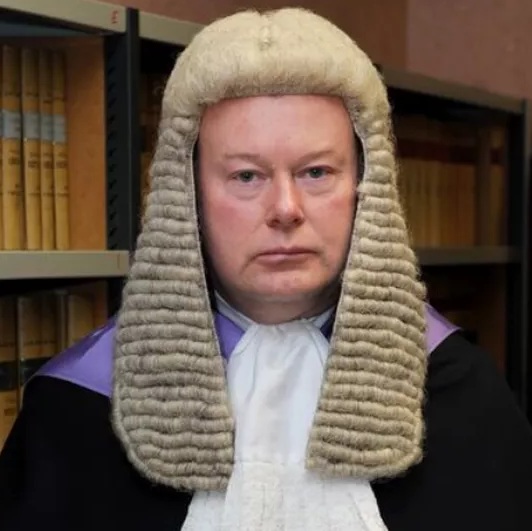
Rule of Law - Open Justice - Policing By Consent