Categories
Criminal Justice Law Police

National Firearms Amnesty

Police forces across the country are taking part in a four-week Firearms Amnesty for five types of BRUNI-manufactured side / top-venting blank firers  (TVBFs) which are now illegal to possess following testing by the National Crime Agency and policing.  

The amnesty takes place between February 2nd and 27th 2026, after which anyone in possession of one of the specified TVBFs could be subject to prosecution and up to 10 years’ imprisonment.  

Owners of these TVBFs are being forewarned ahead of the law change, however, and will be given the chance to surrender these weapons to the police without fear of prosecution. 

During the amnesty period, those handing in a BRUNI TVBFs will not face prosecution for the illegal possession and will not have to give their details. However, the history of any live firearms handed in will be checked for evidence  of its use in crime. 

What are TVBFs? 

Top/side venting blank firers (TVBFs) are legal to buy in the UK without a licence by over 18s unless they are readily convertible. Tests by the National Crime Agency and policing have shown that the following BRUNI models are readily convertible and are therefore illegal:  

  • 8mm PAK Bruni BBM New Police blank firing self-loading pistol 
  • 8mm PAK Bruni BBM Model 96 blank firing self-loading pistol 
  • 8mm PAK Bruni BBM Model ‘GAP’ blank firing self-loading pistol 
  • .380R (9mmK) PAK Bruni BBM ME Ranger single-action blank firing revolver 

In their original state TVBFs have a fully blocked barrel designed to discharge only blank cartridges. When discharged, combustion gases vent from the top of the weapon. TVBFs are sold with at least 50 per cent of their visible surface painted a bright colour. However, as well as converting them from blank firers to live firearms, criminals may also paint them black, so they look like an original lethal purpose (OLP) weapon. 

Check out the article on the Firearms Amnesty 2025

Why the Amnesty?

The primary aim of this amnesty is to remove these potentially dangerous weapons from the public domain, reducing the risk they pose when falling into the wrong hands. According to the NPCC, while gun crime in the UK remains relatively low compared to other countries, the conversion of these blank-firing guns into lethal weapons presents a significant emerging threat. Since 2021, over 800 converted TVBFs have been recovered in criminal circumstances, highlighting the urgency of this initiative.

How the Gun Amnesty Works

During the amnesty period, individuals who possess any of these four models can surrender them at local police stations without facing prosecution for the illegal possession of these now-banned firearms. This leniency is intended to encourage those who might have these guns for legitimate, non-criminal purposes to hand them over.

The guns will not only be removed from circulation but will also be analysed to see if they have been involved in previous criminal acts, thereby potentially aiding in ongoing investigations.

Public Response and Implications

The response from the public has been cautiously optimistic. Many see this amnesty as a chance to rectify unintended possession of these newly classified illegal firearms. There’s an acknowledgment among communities that while these guns might have been bought legally or even as souvenirs from trips, their potential for misuse is now too significant to ignore.

Law enforcement officials, including Assistant Chief Constable Tim Metcalfe, the NPCC Lead for the Criminal Use of Firearms, have stressed the importance of public cooperation. “This initiative is about protecting our communities by ensuring these firearms don’t end up being used for criminal intent,” Metcalfe stated. “We urge anyone with these weapons to do the responsible thing and surrender them.”

Legal Implications Post Amnesty

Post-amnesty, the possession of these TVBFs will be strictly prohibited, with severe penalties including up to 10 years in prison for those caught with one. This crackdown is part of broader efforts by UK law enforcement to control the proliferation of firearms and reduce gun-related crimes.

The amnesty also serves as a reminder of the broader issue of firearm conversion in the UK, prompting discussions on the need for tighter regulations on the import and sale of blank-firing guns and other similar devices.

Check out our articles on Policing, Police News, Policing by Consent, Two Tiered Policing, Wasting Police Time, Met Police, Sussex Police, R v Sussex Justices and the highly questionable Sussex Family Justice Board.


The Ministry of Injustice is not the Ministry of Justice nor is it affiliated in any way with the justice system, legal profession, police or any other law enforcement agencies.


Latest Articles


Most Popular


You should always seek formal legal advice from a qualified and reputable lawyer (solicitor or barrister).

There are a number of links to Free and Paid For Legal Resources and Legal Organisations on the Free Legal Advice , Legal Aid and Pro Bono pages.


Categories
Legal Professionals

What is the Cab Rank Rule for Barristers ?

The cab rank rule constitutes a fundamental ethical obligation for barristers practising in England and Wales and is enshrined in the Bar Standards Board (BSB) Handbook at rule rC29.

Pursuant to rC29, where a self-employed barrister (or, in specified circumstances, an authorised individual within a BSB entity or a BSB entity itself) receives instructions from a professional client such as a solicitor and those instructions are appropriate having regard to the barrister’s experience, seniority, and field of practice, the barrister must accept them.

This obligation applies irrespective of:

  • the identity of the client;
  • the nature of the case;
  • any personal beliefs the barrister may hold concerning the client’s character, reputation, motives, cause, conduct, guilt, or innocence; or
  • any disapproval of the client’s political, moral, social, or other views or causes.

The rule serves to promote access to justice, uphold the rule of law, safeguard barrister independence, and prevent discrimination in the acceptance of professional instructions.

It ensures that representation is available even in controversial, unpopular, or morally challenging matters. The principle is commonly analogised to a taxi at a cab rank, which must accept the next passenger regardless of their identity or destination (subject to reasonable limitations).

The obligation applies principally to self-employed barristers instructed via professional clients. It does not extend in the same manner to direct public access instructions, to solicitors, or to employed barristers outside independent practice.

Rule rC29 is expressly made subject to the exceptions in rC30. These include circumstances where for example:

  • the barrister is required to refuse the instructions under rule rC21 (rC30.1); or
  • acceptance would necessitate working outside ordinary hours, cancelling existing commitments, exceeding available professional indemnity insurance limits, or involve other specified grounds (such as foreign work in certain cases or refusal of standard contractual terms).
  • you are a King’s Counsel, and the acceptance of the instructions would require you to act without a junior in circumstances where you reasonably consider that the interests of the client require that a junior should also be instructed;

Rule rC21 mandates refusal (or, if already accepted, cessation and return) of instructions in various situations, including where:

  • the work would require action contrary to law or the Handbook;
  • the barrister lacks requisite authorisation, competence, or experience (including in relation to vulnerable clients);
  • there is insufficient time to prepare adequately (subject to limited exceptions for urgent matters);
  • a conflict of interest exists;
  • the barrister’s independence would be compromised (rC21.10, linked to Core Duty CD4); or
  • other specified professional obligations would be breached.

Cab Rank Application to Pro Bono Work

The cab rank rule does not require barristers to accept pro bono (unpaid) instructions.

In the article Barrister Starmer led ‘witch-hunt’ against Iraq veterans, Sir Keir Starmer KC chose to work for free (pro bono) alongside the now Attorney General Lord Hermer and the now disgraced solicitor Phil Shiner on a human rights claim in 2007 that reshaped the law governing troops in war zones.

While the current BSB Handbook does not contain an explicit standalone exception for inadequate remuneration, established BSB guidance and interpretations—rooted in prior provisions of the Code of Conduct (e.g., paragraphs 603–606)—confirm that barristers are not obliged to accept instructions where no proper professional fee is offered or where remuneration is inadequate, including unpaid pro bono work.

The rule is predicated on professional (remunerated) practice and is designed to secure representation in paid cases—particularly those involving controversial clients or causes where funding is available but barristers might otherwise decline due to personal views. It does not impose a duty to provide gratuitous services.

Barristers are encouraged to undertake pro bono work voluntarily, and many do so through established schemes such as Advocate (the Bar Pro Bono Unit), which facilitates substantial pro bono assistance annually. Such contributions reflect professional ethos, charitable commitment, and public service, but they remain discretionary rather than mandatory under the cab rank principle.

In conclusion, the cab rank rule compels acceptance of appropriate paid instructions from professional clients irrespective of personal views, subject to the exceptions in rC30 (including those arising under rC21). It remains a vital safeguard of access to justice and barrister independence, while explicitly not extending to compel unpaid or inadequately remunerated engagements.

Read the reviews of Junior Sussex Barrister Gavin Howe and Legal 500 Junior Barrister Eleanor Battie.

Check out our related articles on Rule of Law, Open Justice, What is Law, Is the Law Black and White ?, Branches of Law, Bullying, Harassment and Discrimination at the Bar, Blackbelt Barrister, The Secret Barrister, Barristers, Direct Access Barrister, Professional Ethics Exam for Barristers, Barristers Behaving Badly, Inns of Court, Council of the Inns of Court, Bar Standards Board, Bar Tribunal and Adjudication Services, Bar Council, Innocent until Proven Guilty and the highly questionable Sussex Family Justice Board.


The Ministry of Injustice is not the Ministry of Justice nor is it affiliated in any way with the justice system, legal profession, police or any other law enforcement agencies.


Latest Articles


Most Popular


You should always seek formal legal advice from a qualified and reputable lawyer (solicitor or barrister).

There are a number of links to Free and Paid For Legal Resources and Legal Organisations on the Free Legal Advice , Legal Aid and Pro Bono pages.
Categories
Criminal Justice Judiciary Legal Professionals

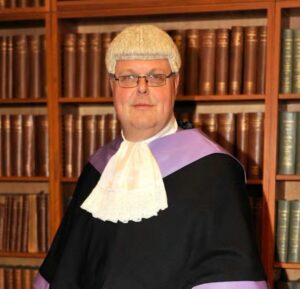
Her Honour Judge Nirmal Shant KC

Judge Nirmal Shant, known as Her Honour Judge Nirmal Shant KC, is a Senior Circuit Judge and Resident Judge based at Nottingham Crown Court

Interview with Her Honour Judge Nirmal Shant

The Lord Chief Justice of England and Wales, the Right Honourable The Lord Burnett of Maldon has appointed Her Honour Judge Nirmal Shant QC to be a Senior Circuit Judge, Resident Judge based at Nottingham Crown Court, with effect from 1 September 2022.

Senior Circuit Judge, Resident Judge Appointment: Nirmal Shant KC

HHJ Shant is shown on the List of Circuit Judges published on the Courts and Tribunal Judiciary website.

Her Honour Judge Shant KCMidlands30-03-2015
List of Circuit Judges

HHJ Shant is shown on the Resident Judges list published on the Courts and Tribunal Judiciary website.

CircuitCourtJudgesDate of appointment
 MidlandNottingham Crown CourtHHJ Nirmal Shant KC01-09-22
Resident Judges

Her Honour Judge Shant KC Bio

Born in India, Her Honour Judge Shant migrated to the United Kingdom at the age of two with her family. The family later returned to India for much of her early childhood before settling permanently in the UK when she was 11.

Read the article on the website Sikhs in Law entitled Spirituality and Success: Judge Shant KC

Despite facing limited expectations at school, where a careers advisor once suggested she apply for a job at Woolworths rather than pursue law, she remained determined.

In 1979, she enrolled to study law at the University of Leicester, graduating and being called to the Bar in 1984.

Judge Shant began her career as a junior criminal barrister, building a strong practice in the East Midlands and beyond. She secured tenancy at the respected 1 High Pavement Chambers in Nottingham, where she prosecuted and defended cases in Crown Courts for over three decades.

Her expertise in criminal law, including fraud, led to her appointment as Queen’s Counsel in 2006 (some sources note 2007 or 2008), making her one of the first women to take silk in the Midlands and among the early black and minority ethnic barristers to achieve this prestigious rank in the region.

In 2001, she was appointed a Recorder, marking her entry into the judiciary. She became one of the first Asian Recorders in the area. In 2015, she was appointed a full Circuit Judge by the Judicial Appointments Commission and assigned to Derby Crown Court.

The following year, in 2016, she was promoted to Resident Judge at Derby Crown Court, a leadership position where she not only presided over serious criminal cases but also managed court administration, case listing, and the welfare of staff and fellow judges. She served as the first female Honorary Recorder of Derby.

Her Honour Judge Nirmal Shant KC was awarded Honorary Doctor of the University (HonDUniv) in July 2022 by the University of Derby in recognition of her outstanding contribution to promoting justice within Derby and Derbyshire, and her support for Derby Law School.

In August 2022, the Lord Chief Justice appointed her as a Senior Circuit Judge and Resident Judge at Nottingham Crown Court, effective from 1st September 2022. She also assumed the role of Honorary Recorder of Nottingham, the highest judicial position in the city and county.

Legal Controversy – The Sheraz Malik Rape Case Reporting Restriction

In late 2025 and early 2026, HHJ Shant attracted media attention and criticism in connection with her handling of a pre-trial hearing in the case of Sheraz Malik, a 28-year-old Pakistani national charged with raping an 18-year-old woman in Sutton Lawn park, Sutton-in-Ashfield, Nottinghamshire, on 29 June 2025.

At a hearing in September 2025 at Nottingham Crown Court, Judge Shant imposed a reporting restriction under the Contempt of Court Act 1981, postponing publication of Malik’s immigration status as an asylum seeker until the conclusion of his trial. She cited a “substantial risk of prejudice to the administration of justice” if the information were made public prematurely, in line with standard judicial guidance designed to protect jury impartiality by limiting exposure to potentially inflammatory or irrelevant details.

The trial venue was also moved from Nottingham to Birmingham Crown Court after social media comments by Reform UK MP Lee Anderson (MP for Ashfield) risked prejudicing local jurors; Judge Shant wrote to the MP requesting removal of the posts to safeguard a fair trial.

Malik was convicted on 26th January 2026 at Birmingham Crown Court of two counts of rape (unanimous verdicts) and acquitted on a third.

The restriction was lifted post-verdict, allowing media to report that Malik was an asylum seeker born in Pakistan who had previously lived in Italy, Germany, and France before arriving in the UK.

The decision drew criticism from some quarters, including MP Anderson and outlets such as The Sun, Daily Mail, and GB News, who argued it limited public transparency and that the information should have been available earlier. Critics portrayed it as a “gagging order” that concealed relevant context, particularly given the offence’s location in Anderson’s constituency and broader debates on immigration and crime.

However, the ruling aligned with established UK legal principles prioritising fair trial rights over immediate public disclosure of non-essential facts. No appeal, formal complaint, or disciplinary action against Judge Shant arose from the case, and mainstream coverage (e.g., BBC, Nottingham Post) presented it as a procedural measure rather than misconduct.

Public and media reactions reflected wider societal divisions on such issues, but nothing indicates systemic criticism of her judicial conduct.

JUDGE SHANT KC STOPPED JURY AND PUBLIC FROM LEARNING THAT RAPIST WAS ILLEGAL MIGRANT

Authorisation to sit as a High Court Judge

HHJ Shan KC may be authorised to sit as a High Court Judge by s9(1) of the Senior Courts Act as amended by the Crime and Courts Act 2013.

According to CRIMINAL PRACTICE DIRECTIONS 2015 DIVISION XII Her Honour Judge Shant should be addressed as “My Lady” in court.

Modes of Address B.1 – The following judges, when sitting in court, should be addressed as ‘My Lord’ or ‘My Lady’

(b) any Circuit Judge sitting as a judge of the Court of Appeal (Criminal Division) or the High Court under section 9(1) of the Senior Courts Act 1981;
(d) any Senior Circuit Judge who is an Honorary Recorder.

Description B.3 – In cause lists, forms and orders members of the judiciary should be described as follows:

(a) Circuit Judges, as ‘His [or Her] Honour Judge A’. When the judge is sitting as a judge of the High Court under section 9(1) of the Senior Courts Act 1981, the words ‘sitting as a judge of the High Court’ should be added;

The three key values which are central to the role of judicial office holders (JOHs) in England and Wales are:
• Independence
• Impartiality
• Integrity

“Publicity is the very soul of justice. . . . It keeps the judge himself, while trying, under trial….Where there is no publicity there is no justice”

Jeremy BenthamMr Justice Cobb: ‘Justice must be seen to be done’

Image of HHJ Shant KC : Nottinghamshire Live

The High Court Judge that never was – His Honour Judge Melbourne Inman KC

Check out our articles on Rule of Law, Open Justice, Judges Salaries and Fees, Dodgy JudgesMr Justice Williams, His Honour Now His Dishonour, His Honour Judge Stuart Farquhar, Do you Have to Bow to a Judge ?, Can you Email a Judge ?, Can you Criticise a Judge ? and the highly dubious Sussex Family Justice Board.


The Ministry of Injustice is not the Ministry of Justice nor is it affiliated in any way with the justice system, legal profession, police or any other law enforcement agencies.


Latest Articles


Most Popular


You should always seek formal legal advice from a qualified and reputable lawyer (solicitor or barrister).

There are a number of links to Free and Paid For Legal Resources and Legal Organisations on the Free Legal Advice , Legal Aid and Pro Bono pages.

Categories
Law Police

Sack Chief Constable Craig Guildford ?

In the United Kingdom, chief constables hold one of the most senior positions in policing, leading territorial police forces and bearing ultimate responsibility for operational decisions.

Their role is pivotal in maintaining public safety, upholding the law and ensuring accountability.

However, when performance falters or controversies arise, mechanisms exist to hold them to account, including dismissal.

This article explores the procedures for dismissing a chief constable, drawing on relevant legislation and safeguards, and examines the high-profile case involving Craig Guildford Chief Constable of West Midlands Police.

The disgraced chief constable of West Midlands Police Craig Guildford retired on the 16th January 2026 with a full pension after eventually giving in to mounting calls to quit over the Maccabi Tel Aviv fan ban. 

The Legal Framework

The primary legislation governing the appointment and removal of chief constables is the Police Reform and Social Responsibility Act 2011.

This Act established Police and Crime Commissioners (PCCs) who are elected officials tasked with overseeing police forces in England and Wales (with equivalent arrangements in Scotland and Northern Ireland under different structures).

Under Section 38(3) of the Act, a PCC has the authority to call upon a chief constable to resign or retire.

This power is not absolute; it must be exercised reasonably and fairly, in line with public law principles.

Historically, the Home Secretary had limited direct involvement in such matters, but recent developments have expanded this role.

In January 2026, Home Secretary Shabana Mahmood announced plans to introduce new statutory powers allowing the Home Secretary to force the retirement, resignation, or suspension of chief constables on performance grounds.

This move aims to address perceived gaps in accountability, particularly in cases where local oversight may be insufficient.

The Policing Protocol Order 2011 further outlines the relationships between PCCs, chief constables, and other bodies, emphasising that while chief constables retain operational independence, PCCs are responsible for holding them accountable.

Dismissal is typically pursued for reasons such as misconduct, poor performance, or loss of public confidence.

The Step-by-Step Process for Dismissal

Dismissing a chief constable is a structured process designed to ensure fairness and transparency. It cannot be done arbitrarily and involves multiple stakeholders.

Here is an overview of the key steps, based on Regulation 11A of the Police Regulations 2003 (as amended):

  1. Initiation by the PCC: The process begins when the PCC proposes to call upon the chief constable to resign or retire. They must provide a written explanation of the reasons, which could include failures in leadership, operational mishandlings, or ethical breaches.
  2. Consultation with His Majesty’s Chief Inspector of Constabulary (HMCIC): The PCC must obtain written views from HM Chief Inspector of Constabulary and have regard to them. This independent assessment helps evaluate the validity of the concerns.
  3. Notification and Response: The chief constable is notified and given the opportunity to make written representations. Copies of the HMCIC views and the PCC’s explanation are provided to both the chief constable and the local Police and Crime Panel (PCP).
  4. Role of the Police and Crime Panel: The PCP, composed of local councillors and independent members, reviews the proposal. They must make a recommendation within six weeks, either supporting or opposing the dismissal, and may consult HMIC. While the PCC is not bound by the PCP’s view, they must consider it. bbc.com The PCP also has veto powers in certain appointment processes, underscoring their scrutiny role.
  5. Final Decision and Suspension: If the PCC proceeds, they issue the call to resign or retire. In urgent cases, the chief constable can be suspended pending the outcome, but this requires similar consultations. publications.parliament.uk The chief executive of the PCC’s office is notified throughout.
  6. Appeals and Judicial Review: A chief constable can challenge the decision through judicial review if they believe it was irrational, unfair, or unlawful. Past cases, such as the reinstatement of Lincolnshire’s chief constable in 2013, highlight how courts can intervene.

With the impending Home Secretary powers, Home Secretary to introduce power to sack chief constables, an additional layer may allow direct intervention, bypassing or supplementing the PCC process in national interest cases.

Safeguards and Challenges

These procedures include built-in safeguards to prevent misuse of power. The involvement of HMCIC and the PCP ensures independent oversight, while the requirement for written explanations promotes transparency.

However, critics argue that the system can be politicised, as PCCs are elected and may face pressures from public opinion or party lines. The government’s defence is that these checks balance accountability with fairness.

Craig Guildford and West Midlands Police

A recent example of this process was the controversy surrounding Craig Guildford, who had been Chief Constable of West Midlands Police since December 2022.

Craig Guildford, who previously led Nottinghamshire Police, has faced intense scrutiny following a decision to ban fans of Israeli club Maccabi Tel Aviv from attending a Europa League match against Aston Villa in November 2025.

A damning report by Sir Andy Cooke QPM DL HM Chief Inspector of Constabulary, Inspection of police forces’ contributions to safety advisory groups: West Midlands Police, found that the ban was based on “exaggerated and untrue” intelligence, including evidence possibly generated by AI, which Craig Guildford later apologised for presenting to MPs.

The report criticised the force’s handling, leading Home Secretary Shabana Mahmood to declare on the 14th January 2026 that she had “lost confidence” in Guildford.

This sentiment was echoed by Downing Street the following day, with No 10 stating it “no longer has confidence” in him.

Politicians from across the spectrum have called for his resignation or dismissal, describing his continued tenure as “astonishing.”

The Independent Office for Police Conduct (IOPC) is now considering an investigation using special powers.

On the 16th January 2026 the disgraced chief constable of West Midlands Police Craig Guildford retired with a full pension.

The Chief Constable, Craig Guildford, has today retired from West Midlands Police with immediate effect. In doing so, he has acted with honour and in the best interests of West Midlands Police and our region. I welcome his decision.

I am pleased this outcome has been reached having regard to due process and the law. That has prevented what might otherwise have been a complex procedure, that would have caused significant distraction, impact and cost to West Midlands Police and the wider West Midlands. It was important this matter was resolved in a balanced, calm, fair, measured and respectful manner.

West Midlands Police and Crime Commissioner Simon Foster – Chief Constable Craig Guildford retires

Craig Guildford’s brief retirement in November 2024 to safeguard his pension before reappointment has drawn further criticism.

In November 2024, he retired as Chief Constable of West Midlands Police for one month in order to protect his pension, which would otherwise have fallen in value after 30 years’ unbroken service, before taking up the post again. Scott Green served as Acting Chief Constable in the interim.

Chief Constable Craig Guildford West Midlands Police – Wikipedia

Image of Craig Guildford Chief Constable of West Midlands PoliceRichard Vernalls/PA and Grok AI

Check out our articles on Policing by Consent, Police Professional Standards, Police Misconduct Hearings, Police Impartiality, Police Surveillance, Are the Police for Hire ?, Independent Office for Police Conduct (IOPC),Police Public Confidence and Engagement, Crime Reporting, What is a Police and Crime Commissioner ?, Sussex Police, Policing, Police News, Two Tiered Policing, Thought Police, Wasting Police Time, Police Community Support Officers (PCSO), Met Police, Chief Constable Jo Shiner, R v Sussex Justices and the highly questionable Sussex Family Justice Board.


The Ministry of Injustice is not the Ministry of Justice nor is it affiliated in any way with the justice system, legal profession, police or any other law enforcement agencies.


Latest Articles


Most Popular


You should always seek formal legal advice from a qualified and reputable lawyer (solicitor or barrister).

There are a number of links to Free and Paid For Legal Resources and Legal Organisations on the Free Legal Advice , Legal Aid and Pro Bono pages.

Categories
Legal Professionals

Professional Ethics Exam for Barristers

The journey to becoming a barrister in England and Wales involves rigorous training, with professional ethics forming a cornerstone of the profession.

In England and Wales, barristers are regulated professionals bound by strict ethical standards outlined in version 4.8 of the Bar Standards Board (BSB) Handbook.

As part of reforms to Bar training introduced by the Bar Standards Board (BSB), the assessment of professional ethics has been divided between the vocational component and the pupillage or work-based learning stage.

This ensures that aspiring barristers develop a robust understanding of ethical principles at different points in their training.

During the vocational component, Authorised Education and Training Organisations provide tuition and assessment in professional ethics to a foundation level as part of the Bar Training course.

For more details on this stage, see the Vocational Component.

In contrast, the pupillage stage focuses on assessing specified learning outcomes at the standard expected of barristers on their first day of practice, as outlined in the Professional Statement.

Following a transition period, passing the Professional Ethics assessment during pupillage is now mandatory for all pupils, unless they have been granted a specific exemption by the BSB.

Graduates of the Bar Professional Training Course (BPTC) who commenced pupillage before 1st May 2024 remain exempt from this requirement.

Transferring qualified lawyers undertaking pupillage or work-based learning may also need to complete the assessment, with the default assumption being that they must sit the exam unless an exemption is authorised. For exemption queries, individuals should contact the BSB’s Authorisations team.

Format of the Assessment

The Professional Ethics assessment is an open-book examination centrally set and marked by the BSB. It consists of twelve short-answer questions, each equally weighted, and requires responses in narrative prose. These questions present scenarios drawn from professional practice, where candidates must identify ethical issues, apply relevant principles, critically analyse the situation, and propose appropriate resolutions. No specialist knowledge of particular areas of law is needed, as the ethical principles are applicable across various fields, such as criminal or civil practice.

Candidates are expected to draw on the provisions of the BSB Handbook, associated guidance, and other syllabus materials to provide comprehensive analyses supported by sound reasoning. The exam lasts three hours, during which candidates manage their own time allocation.

The only permitted material is the BSB Handbook, accessible electronically during the test. At test centres, it is available online but not downloadable, with search functionality limited to the Handbook’s own tool and no keyboard shortcuts for copying and pasting.

For remote online invigilation, a downloadable PDF version is provided, allowing full search capabilities and keyboard shortcuts.

A side-by-side view of the exam and Handbook is possible on screens with a minimum resolution of 1920×1080 pixels, which all test centre screens support. Paper copies of the Handbook can be requested as a reasonable adjustment. There is no prescribed programme of study prior to the exam, but a practice assessment is available for developmental purposes, along with a downloadable syllabus.

Practice assessments can be accessed via the Surpass platform, where candidates can attempt them unlimited times. Responses are not saved or marked automatically, but can be copied for self-evaluation against provided mark schemes. It is recommended to trial the practice exam to familiarise oneself with the computer-based format, regardless of whether the actual exam is taken at a centre or remotely.

Key Documents and Resources

Several essential documents are available to support candidates in understanding and preparing for the assessment.

The Exam Requirements outline the rules, replacing previous versions and linking to the Exams Misconduct Policy. The 2026 Syllabus and its version with tracked changes provide detailed learning outcomes.

An Approach Paper from April 2020 explains the new assessment methodology, while the Ethics Assessment Guidance further details the expected outcomes. Exam-specific resources include Candidate Instructions and mark schemes for practice papers: Paper 1 Mark Scheme and Paper 2 Mark Scheme.

For transparency, the Professional Ethics Chair’s Report Part 1 and Part 2 for July 2025 offer insights into the exam process. Additional policies cover Adjustments and Other Arrangements, Extenuating Circumstances, Feedback and Candidate Review Regulations.

The Bar Qualification Manual details pupil supervisor duties, and Pupil Supervisor Training Outcomes are also available. For historical context, see Sample Questions and Mark Scheme from the previous BPTC, the New Mark Scheme and further Assessment Guidance.

Exam Sittings and Dates

The Professional Ethics assessment is offered three times annually, typically in early January, late April, and late July.

For 2026, the January sitting includes deadlines for adjustments applications on 17th November 2025, exam booking from 25th November to 9th December 2025, the exam on Tuesday 13th January at 10am, and results by the end of Thursday 12th March 2026.

April 2026 features booking from 3rd March to 17th March, the exam on 28th April at 10am, with results to be confirmed.

The July sitting is on 28th July at 10am, with booking and results dates also to be confirmed.

There is no requirement to take the exam during the first six months of pupillage (the non-practising period), but candidates must have completed at least three months of pupillage beforehand to benefit from discussions with supervisors and colleagues on real-life ethical scenarios.

TQLs with reduced pupillage periods are exempt from this three-month rule. The exam is delivered online, with options for remote proctoring or attending a test centre in the UK (and potentially overseas).

Fees and Costs

The first and second attempts at the Professional Ethics assessment are covered by the practising certificate fee, incurring no additional cost to the candidate. However, any subsequent resits cost £832.

It is advisable to include agreements on who bears the cost of resits, whether chambers, the employer or the pupil, in the written pupillage agreement. Funding for further attempts is at the discretion of chambers or employers.

Preparation and Support

No mandatory preparatory course is required, and the BSB does not develop or endorse any specific materials from third parties. Candidates are encouraged to familiarise themselves with the syllabus and guidance documents. Recommended resources include the ICCA Pupillage Ethics Materials, available for £150 (or £75 for ICCA alumni) with 12 months’ access and training from the Northern Circuit.

Pupil supervisors play a key role in providing a suitable training programme to meet the competences in the Professional Statement. They should support pupils in engaging actively with exam preparation, including guidance on registration, booking, adjustments, and results. Supervisors do not need to be ethics experts in specific practice areas, as the issues are general.

Pupillage plans can be adjusted if needed, and supervisors should refer to the Bar Qualification Manual for their responsibilities.

If significant time has passed since completing Bar training, candidates should re-familiarise themselves with relevant ethical areas. Taking the assessment closer to authorisation to practise is considered good practice.

There is no mandated time off for study, as preparation materials are designed for self-study, but arrangements should be discussed with the pupil.

Passing the Assessment and Results

The assessment is competency-based, with candidates needing to demonstrate the skills and knowledge expected in the Professional Statement.

To pass, a candidate typically requires at least eight satisfactory answers out of twelve, with borderline cases reviewed holistically. Receiving three or more ‘Unacceptable’ ratings on sub-parts results in a ‘Not Competent’ outcome, and blank answers count as ‘Unacceptable’. There is no fixed pass rate; success depends on meeting the required standard.

For comparison, the previous BPTC ethics exam had a pass rate of around 70%, but the pupillage assessment is open-book with more time allocated, and candidates have already passed vocational training and been selected for pupillage.

Passing is essential for sign-off from pupillage; failure by the end may require an extension, with funding decisions made by chambers or employers as per the pupillage agreement. Results are uploaded to the MyBar portal.

Read the reviews of Junior Sussex Barrister Gavin Howe and Legal 500 Junior Barrister Eleanor Battie.

Check out our related articles on Rule of Law, Open Justice, What is Law, Is the Law Black and White ?, Branches of Law, Bullying, Harassment and Discrimination at the Bar, Blackbelt Barrister, The Secret Barrister, Barristers, Direct Access Barrister, Barristers Behaving Badly, Inns of Court, Council of the Inns of Court, Bar Standards Board, Bar Tribunal and Adjudication Services, Bar Council, Innocent until Proven Guilty and the highly questionable Sussex Family Justice Board.


The Ministry of Injustice is not the Ministry of Justice nor is it affiliated in any way with the justice system, legal profession, police or any other law enforcement agencies.


Latest Articles


Most Popular


You should always seek formal legal advice from a qualified and reputable lawyer (solicitor or barrister).

There are a number of links to Free and Paid For Legal Resources and Legal Organisations on the Free Legal Advice , Legal Aid and Pro Bono pages.
Categories
Criminal Justice Government Law Legal Analysis Legal Professionals

Crown Prosecution Service (CPS) Complaints and Feedback

The Crown Prosecution Service (CPS) plays a vital role in the UK’s criminal justice system, ensuring offenders are brought to justice while supporting victims and witnesses.

However, like any public organisation, the CPS may occasionally fall short of expectations. This article explores the CPS’s guidance on providing feedback or making a complaint based on their official policy.

The most senior judge in England and Wales, The Lady Chief Justice Sue Carr has criticised the Crown Prosecution Service (CPS) over “fundamental errors” in a press release concerning the sentencing of three boys who were spared custody for the rape of two girls in Fordingbridge.

Judge Nicholas Rowland was ‘wrong’ to spare boy rapists from custody, court told – BBC News

HM Crown Prosecution Service Inspectorate (HMCPSI) has a statutory duty to inspect the operation of the Crown Prosecution Service (CPS) and the Serious Fraud Office (SFO).

For reasons unknown, the CPS – Crown Prosecution Service (cps.gov.uk) didn’t renew the registration of the domain cpsgov.uk. So we did 🙂

Charlies Prosecution Service (CPS)
Coming Soon at https://cpsgov.uk – Charlie’s Prosecution Service

The CPS’s Commitment to High Standards

The CPS is dedicated to upholding principles of independence, fairness, honesty, openness, respect, and professional excellence. Their complaints handling is guided by standards such as the CPS Complaints Handling Standard, the Code of Practice for Victims of Crime, and the Principles of Good Complaints Handling from the Parliamentary and Health Service Ombudsman (PHSO).

All complaints are managed confidentially by trained Complaints Coordinators, ensuring fair and sensitive treatment without discrimination based on gender, sexual orientation, race, ethnicity, disability, religion, or belief. Defendants’ complaints are treated equally to those from victims or witnesses.

External oversight is provided by the Independent Assessor of Complaints (IAC), who scrutinises the process to maintain high service levels.

For more on the IAC’s role, visit the CPS website.

What the CPS Complaints and Feedback Policy Covers

Feedback includes positive or negative comments on CPS policies, procedures, services, or performance. Anyone can provide it at any time, with no restrictions. Examples might include praising a new policy or expressing dissatisfaction with a case outcome reported in the media.

Feedback is acknowledged, recorded, and analysed to improve services and promote best practices.

Complaints are expressions of dissatisfaction from those directly involved in a CPS service. They can be:

  • Legal: Related to decisions, such as charging choices.
  • Service: Concerning conduct, like not allowing a victim to read their personal statement in court.
  • Mixed: Combining both elements.

Professional disagreements (e.g., between police and prosecutors) are excluded.

Exclusions from the Policy

Certain matters fall outside the policy:

  • Victims’ Right to Review (VRR): For decisions not to charge or to end proceedings. This stems from the 2011 Killick case and is handled separately. Dissatisfaction with VRR outcomes cannot become a formal complaint. Learn more about VRR on the CPS VRR page.
  • Defence Applications or Appeals: Not for dropping cases or overturning convictions; seek independent legal advice.
  • Ongoing Proceedings: Responses may be limited to avoid prejudice.
  • Civil Claims: Complaints pause if civil action is initiated.
  • Abusive or Persistent Complaints: May be declined.
  • Other Organisations: Direct complaints about police, courts, or judiciary to them (contacts below).
  • Recruitment or Employment: Handled under separate policies.

CPS Complaints Procedure

Complaints can be made by the affected individual or a nominated representative (with written consent).

The process has three stages for service/mixed complaints, but legal complaints end at Stage Two.

Early Resolution

Contact your local CPS office first for informal resolution within three working days, possibly via explanation or apology.

Stage One: Local Review

Submit formally to the originating CPS office. A relevant manager investigates and responds within 20 working days (or notifies of delays).

Stage Two: Senior Review

If unsatisfied, escalate to the Deputy Chief Crown Prosecutor or equivalent within one month. Response within 20 working days.For legal complaints, this concludes the process.

Stage Three: Independent Review

For service complaints, refer to the IAC within one month of Stage Two. The IAC, independent of CPS, reviews service quality and procedure adherence, responding within 40 working days.

Contact: Independent Assessor of Complaints, 102 Petty France, London SW1H 9EA; Email: [email protected] (mailto:[email protected]); Phone: 020 3357 0893 (10am-4pm, Monday-Friday).

If involving Victims’ Code breaches, victims can escalate to the PHSO via an MP after IAC review.

PHSO details: Parliamentary and Health Service Ombudsman.

How to Provide Feedback to the CPS

There is no time limit, and feedback can be submitted via:

  • Online: Use the CPS Feedback Form.
  • Email: Download the form and email to your local CPS Area (addresses on the CPS Areas page).
  • Post: Send written feedback or the form to local CPS addresses.
  • Telephone: Call local CPS offices (numbers on the website).

All feedback helps refine services for the public.

Handling and Outcomes

Complaints are handled confidentially and fairly. You’ll be informed if upheld (wholly/partly) or not. If justified, expect an apology, corrective action and prevention measures.

In rare cases of severe distress or loss due to maladministration, a consolatory payment may be offered.

Check out our related articles on the Crown Prosecution Service (CPS), Director of Public Prosecutions (DPP), HM Crown Prosecution Service Inspectorate (HMCPSI), Rule of Law, Open Justice, Victims’ Right to Review (VRR), Is the Law Black and White ?, Abuse of Process, What Does Lady Justice Symbolise ?, McKenzie Friend, Can a Judge Direct a Jury to Find a Defendant Not Guilty ?,Law Society, Law Commission, McKenzie Friend Right of Audience, Solicitors, Solicitors Regulation Authority, Barristers, Bar Council of England and Wales, Bar Standards Board, Contra Mundum, R v Sussex Justices, Police Impartiality and the highly questionable Sussex Family Justice Board.


The Ministry of Injustice is not the Ministry of Justice nor is it affiliated in any way with the justice system, legal profession, police or any other law enforcement agencies.


Latest Articles


Most Popular


You should always seek formal legal advice from a qualified and reputable lawyer (solicitor or barrister).

There are a number of links to Free and Paid For Legal Resources and Legal Organisations on the Free Legal Advice , Legal Aid and Pro Bono pages.

Categories
Criminal Justice Government Judiciary Legal Professionals

Minister of State for Courts and Legal Services

The role of Minister of State for Courts and Legal Services is a key position within the Ministry of Justice (MoJ), focusing on the operational and policy aspects of the UK’s justice system.

As of January 2026, this post is held by Sarah Sackman KC MP, who brings a wealth of legal expertise to the role.

Sarah Sackman KC MP on Government Plans to scrap Jury trials for crimes with sentences of less than three years

Appointment and Background

Sarah Sackman KC MP was appointed Minister of State in the Ministry of Justice on the 2nd December 2024. Prior to this, she served as Solicitor General for England and Wales from July 2024 until her promotion.

Elected as the Member of Parliament for Finchley and Golders Green in the July 2024 general election, Sackman has a distinguished legal career. Called to the Bar in 2008, she practised as a barrister at Francis Taylor Building and later at Matrix Chambers, specialising in public law, election law, planning, environment and rating law.

Her appointment as King’s Counsel (KC) reflects her standing in the legal profession.The previous holder of the role was The Rt Hon Heidi Alexander MP, who served briefly in 2024.

Sarah Sackman is married to Daniel Benjamin Squires KC, who represented double killer Fuad Awale.

David Lammy, the Justice Secretary, agreed to pay £7,500 in compensation and foot a £234,000 legal bill for Awale after a judge ruled that his treatment in jail breached his human rights.

Key Responsibilities

The Minister of State for Courts and Legal Services oversees a broad portfolio critical to the functioning of the justice system. These include:

  • Criminal courts policy
  • Legal Aid and administration of the Legal Aid Agency
  • Civil Justice
  • Legal Support and Dispute Resolution
  • Legal Services
  • Administration of His Majesty’s Courts and Tribunals Service
  • Magistrates Policy
  • Open Justice
  • Tribunals Policy (including fees)
  • Irregular Migration
  • Judicial Review
  • Leading the MoJ’s mission to “Kickstart economic growth”

This role plays a vital part in ensuring access to justice, efficiency in the courts, and reforms to legal aid and tribunals.

Recent Developments and Priorities

Since taking office, Sarah Sackman has been associated with several initiatives aimed at improving access to justice and modernising the legal system. Notable announcements linked to the role include:

  • Multi-million-pound investments in legal aid to support victims and enhance access to justice.
  • Measures to increase protection for victims of violence, such as scrapping certain fees.
  • Reforms to enable claimants to challenge powerful organisations in court more effectively.
  • Recognition of cryptocurrency as personal property, positioning the UK as a leader in this emerging area.
  • Investments in court infrastructure, such as new Crown Courtrooms, and promotion of UK legal services internationally.

These efforts supposedly align with the government’s broader goals of delivering “swift and fair” justice, boosting economic growth through a robust legal sector, and ensuring transparency and fairness in the courts.

Daily analysis of Crown Court usage – On the 7th January 2026, 75 out of the 516 Crown courtrooms in England & Wales are not sitting. A staggering 15% of them.

The position underscores the importance of a well-functioning justice system in upholding the rule of law and supporting economic stability.

With her background as a practising barrister and recent experience as Solicitor General, Sarah Sackman is well-placed to drive forward reforms in this challenging but essential area of public policy.

Photo Credit : Sarah Sackman KC MP

Check out our articles on the Justice Secretary, Lady Chief Justice, Lord Chancellor, Attorney General, Solicitor General, Government Legal Department, Rule of Law, R v Sussex Justices and the highly questionable Sussex Family Justice Board.


The Ministry of Injustice is not the Ministry of Justice nor is it affiliated in any way with the justice system, legal profession, police or any other law enforcement agencies.


Latest Articles


Most Popular


You should always seek formal legal advice from a qualified and reputable lawyer (solicitor or barrister).

There are a number of links to Free and Paid For Legal Resources and Legal Organisations on the Free Legal Advice , Legal Aid and Pro Bono pages.

Categories
Law Legal Analysis

What is International Law ?

International law consists of rules, norms and principles governing relations between sovereign states and other international entities.

It promotes peaceful interactions, dispute resolution and cooperation on transnational issues. Unlike domestic law, it primarily relies on state consent and voluntary compliance.

Historical Development of International Law

The concept of law governing relations between nations dates back to ancient times, but modern terminology emerged in the late 18th century. Jeremy Bentham, the English philosopher and jurist (1748–1832), coined the term “international law” in his 1789 work An Introduction to the Principles of Morals and Legislation. He proposed replacing the older phrase “law of nations” (jus gentium) with “international law” to better describe law between nations rather than within them.

Bentham wrote several essays between 1786 and 1789, later compiled as Principles of International Law. He advocated codification of international rules, proposed an international court for dispute resolution, and outlined a plan for universal and perpetual peace based on utilitarian principles, maximising happiness and minimising harm across nations.

Sources of International Law

These are specified in Article 38 of the Statute of the International Court of Justice (ICJ):

  • Treaties and conventions, such as the United Nations Charter, prohibiting the use of force except in self-defence or with Security Council authorisation.
  • Customary international law, from consistent state practice accepted as binding (e.g., prohibition of genocide).
  • General principles of law recognised by nations (e.g., pacta sunt servanda—agreements must be honoured).
  • Judicial decisions and scholarly writings as subsidiary sources.

It covers human rights Universal Declaration of Human Rights, humanitarian law, environmental protection Paris Agreement, trade and maritime issues.

Enforcement of International Law

Enforcement is challenging without a central authority. The UN Security Council can impose sanctions or authorise force, but permanent members (China, France, Russia, UK, US) hold veto power. The ICJ resolves disputes between consenting states.

The International Criminal Court (ICC) prosecutes individuals for grave crimes, though major powers like the US are not parties.

US Military Action in Venezuela (January 2026) – International Law

On the 3rd January 2026, the United States conducted airstrikes in Venezuela, including targets in Caracas, and captured former Venezuelan President Nicolás Maduro and his wife Cilia Flores.

They were extradited to the US to face drug trafficking and narco-terrorism charges. Maduro pleaded not guilty in a New York federal court on the 5th January 2026.

The operation has faced widespread international criticism as a violation of state sovereignty and the UN Charter’s prohibition on the use of force.

The UN held emergency meetings, with allies and others condemning it as unlawful aggression. This illustrates tensions between unilateral actions by powerful states and core principles of international law.

Prime Minister Sir Keir Starmer, a former barrister and KC, has refused to be drawn on whether or not US President Donald Trump’s military action against Venezuela may have broken international law.

Additional Examples of International Law

International law features in ongoing conflicts, such as Russia-Ukraine (ICC probes into war crimes; ICJ on territorial integrity) and South China Sea disputes under the United Nations Convention on the Law of the Sea (UNCLOS).

Significance and Challenges

International law establishes a framework for global order but struggles with enforcement and geopolitical influences. Jeremy Bentham’s vision of codified rules and institutions remains influential, yet events like the Venezuela incident highlight persistent vulnerabilities when compliance is uneven.

Adherence remains essential for addressing shared challenges like security and climate change.

Check out our related articles on Rule of Law, Open Justice, What is Law, Is the Law Black and White ?, Branches of Law, Bullying, Harassment and Discrimination at the Bar, The Secret Barrister, Barristers, Direct Access Barrister, Barristers Behaving Badly, Inns of Court, Council of the Inns of Court, Bar Standards Board, Bar Tribunal and Adjudication Services, Bar Council, Innocent until Proven Guilty and the highly questionable Sussex Family Justice Board.


The Ministry of Injustice is not the Ministry of Justice nor is it affiliated in any way with the justice system, legal profession, police or any other law enforcement agencies.


Latest Articles


Most Popular


You should always seek formal legal advice from a qualified and reputable lawyer (solicitor or barrister).

There are a number of links to Free and Paid For Legal Resources and Legal Organisations on the Free Legal Advice , Legal Aid and Pro Bono pages.
Categories
Criminal Justice Judiciary Legal Professionals

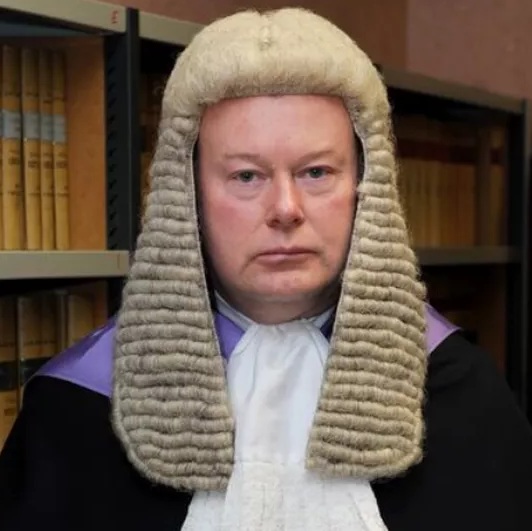
His Honour Judge Fuller KC

Jonathan Paul Fuller, known as His Honour Judge Jonathan Paul Fuller KC was born on the 27th February 1954.

His Honour Judge Jonathan Fuller KC was appointed as a Circuit Judge on the 3rd October 2014 and sits primarily on the South West Circuit at Bournemouth Crown Court.

As a Circuit Judge, Judge Fuller is authorised to hear serious criminal cases in the Crown Court, as well as certain civil and family matters.

Name:Jonathan Paul Fuller KC
Position:Self Employed Barrister
Year of Call:1977
Chambers:187 Chambers
Contact Chambers:Greater London
Profile:www.187fleetstreet.com
Practising Status:Bar Standards Board
Criminal Cases:Defending:
RW (2014-02-14)

B (2013-12-18)

SE (2012-12-14)


Prosecuting:
Donna Louise Chalk (2013-06-26)

Ryan Ian Woodmansey (2013-06-26)

Andrew William Christopher Dwyer-Skeats (2013-06-26)

Lee Matthew Nicholls (2013-06-26)
Jonathan Paul Fuller KC on Lawpages

HHJ Fuller is shown on the List of Circuit Judges published on the Courts and Tribunal Judiciary website.

His Honour Judge Fuller KCSouth West03-10-2014
List of Circuit Judges

Legal Controversy

Luke Yarwood who posted two anti-immigration tweets on X was handed a 18-month jail sentence by Judge Fuller at Bournemouth Crown Court on the 17th December 2025.

Head for the hotels housing them and burn them to the ground

I think it’s time for the British to gang together, hit the streets and start the slaughter.

Violence and murder is the only way now. Start off burning every migrant hotel then head off to MPs’ houses and Parliament, we need to take over by FORCE.

Luke Yarwood

The posts were only viewed 33 times.

His barrister argued the posts had 33 views between them and were the ‘impotent rantings of a socially isolated man’ that had no ‘real-world’ consequences.

But Judge Jonathan Fuller said Yarwood’s ‘odious’ tweets were designed to stir up racial hatred and incite violence, and jailed him.

Twitter user is jailed by Judge Fuller for 18 months for two anti-immigration tweets made after Christmas market car attack that were viewed just 33 times – Daily Mail

His case has been compared with Lucy Connolly, who pleaded guilty inciting racial hatred after sending the X post on the day of the Southport attacks. She was sentenced by Judge Melbourne Inman.

This is not a court of politics but law. You are entitled to express your views, but freedom of speech is not an absolute right, it’s a qualified one. 

What the law prohibits is the stirring up of racial hatred.

The continuing safety and stability of our communities are undermined by actions such as yours.

The tweets speak for themselves, they are odious in the extreme. There could be few clearer examples of words specifically designed to stir up racial hatred and incite violence.

They are serious offences that could have had serious consequences and can only be marked by a sentence of immediate imprisonment.

His Honour Judge Fuller KC
Nick Dickson about Judge Fuller on X

Authorisation to sit as a High Court Judge

HHJ Fuller KC may be authorised to sit as a High Court Judge by s9(1) of the Senior Courts Act as amended by the Crime and Courts Act 2013.

According to CRIMINAL PRACTICE DIRECTIONS 2015 DIVISION XII His Honour Judge Fuller should be addressed as “My Lord” in court.

Modes of Address B.1 – The following judges, when sitting in court, should be addressed as ‘My Lord’ or ‘My Lady’

(b) any Circuit Judge sitting as a judge of the Court of Appeal (Criminal Division) or the High Court under section 9(1) of the Senior Courts Act 1981;
(d) any Senior Circuit Judge who is an Honorary Recorder.

Description B.3 – In cause lists, forms and orders members of the judiciary should be described as follows:

(a) Circuit Judges, as ‘His [or Her] Honour Judge A’. When the judge is sitting as a judge of the High Court under section 9(1) of the Senior Courts Act 1981, the words ‘sitting as a judge of the High Court’ should be added;

The three key values which are central to the role of judicial office holders (JOHs) in England and Wales are:
• Independence
• Impartiality
• Integrity

“Publicity is the very soul of justice. . . . It keeps the judge himself, while trying, under trial….Where there is no publicity there is no justice”

Jeremy BenthamMr Justice Cobb: ‘Justice must be seen to be done’

Image of HHJ Fuller : Grok

The High Court Judge that never was – His Honour Judge Melbourne Inman KC

Check out our articles on Rule of Law, Open Justice, Judges Salaries and Fees, Dodgy JudgesMr Justice Williams, His Honour Now His Dishonour, His Honour Judge Stuart Farquhar, Do you Have to Bow to a Judge ?, Can you Email a Judge ?, Can you Criticise a Judge ? and the highly dubious Sussex Family Justice Board.


The Ministry of Injustice is not the Ministry of Justice nor is it affiliated in any way with the justice system, legal profession, police or any other law enforcement agencies.


Latest Articles


Most Popular


You should always seek formal legal advice from a qualified and reputable lawyer (solicitor or barrister).

There are a number of links to Free and Paid For Legal Resources and Legal Organisations on the Free Legal Advice , Legal Aid and Pro Bono pages.

Categories
Civil Justice Criminal Justice Family Law Law Legal Analysis Legal Professionals

Art of Law

Art of Law is a Youtube channel run by Alan Robertshaw who is an experienced barrister of England and Wales.

This channel provides you with free legal guidance and explains different aspects of law, legal principles, and, procedures for media and art law. Legal advice can be very expensive and you will usually have no knowledge when you encounter a legal problem.

Art of Law

Alan Robertshaw was Called to the Bar in October 1997 (Middle Temple). He has Full Rights of Audience and his areas of practice are Defamation, Intellectual property, Other and Other common law.

Alan is authorised by the Bar Standards Board to accept direct public access work and to conduct litigation.

Alan was formerly at 1 Dr Johnson’s Buildings and then Goldsmith Chambers where he still remains a door tenant.

Art of Law should should not be confused with The BlackBelt Barrister or the Secret Barrister.

Art of Law is not a replacement for formal legal advice but it is highly informative and may help you to understand more about the law.

Highly Recommended ★★★★★

Latest Art of Law YouTube Videos

Read the reviews of Junior Sussex Barrister Gavin Howe and Legal 500 Junior Barrister Eleanor Battie.

Check out our related articles on Rule of Law, Open Justice, What is Law, Is the Law Black and White ?, Branches of Law, Bullying, Harassment and Discrimination at the Bar, The Secret Barrister, Barristers, Direct Access Barrister, Barristers Behaving Badly, Inns of Court, Council of the Inns of Court, Bar Standards Board, Bar Tribunal and Adjudication Services, Bar Council, Innocent until Proven Guilty and the highly questionable Sussex Family Justice Board.


The Ministry of Injustice is not the Ministry of Justice nor is it affiliated in any way with the justice system, legal profession, police or any other law enforcement agencies.


Latest Articles


Most Popular


You should always seek formal legal advice from a qualified and reputable lawyer (solicitor or barrister).

There are a number of links to Free and Paid For Legal Resources and Legal Organisations on the Free Legal Advice , Legal Aid and Pro Bono pages.

Rule of Law - Open Justice - Policing By Consent